Link Copied!
Horace Mann Quotes (1796-1859)









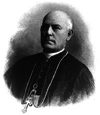



About Horace Mann
Horace Mann (4 May 1796 – 2 August 1859) was an American education reformer and abolitionist
Best Horace Mann Quotes
Shortest
Earliest
Explore our curated collection of the most famous and impactful Horace Mann quotes.
“Observation — activity of both eyes and ears.”

“God draweth straight lines but we call them crooked.”
“Be sure of the fact, before you lose time in searching for a cause.”
“Affectation hides three times as many virtues as charity does sins.”



“Habit is a cable. We weave a thread of it every day, and at last we cannot break it.”
“A human being is not attaining his full heights until he is educated.”

“The object of punishment is, prevention from evil; it never can be made impulsive to good.”

“It is more difficult, and it calls for higher energies of soul, to live a martyr than to die one.”
“He who cannot resist temptation is not a man. He is wanting in the highest attributes of humanity.”

“Jails and prisons are the complement of schools; so many less as you have of the latter, so many more must you have of the former.”
“Unfaithfulness in the keeping of an appointment is an act of clear dishonesty. You may as well borrow a person's money as his time.”

“A teacher who is attempting to teach without inspiring the pupil with a desire to learn, is hammering on cold iron.”


Horace Mann Quotes by Topic
Find exactly what you are looking for by browsing this categorized list of Horace Mann quotes by topic.
Horace Mann on Action 2 quotes
“It is well to think well. It is divine to act well.”

Horace Mann on Victory 2 quotes
View all 2 quotes on Victory →Horace Mann on Education 2 quotes
“Finally, education alone can conduct us to that enjoyment which is, at once, best in quality and infinite in quantity.”

Horace Mann on Philanthropy
“To pity distress is but human; to relieve it is Godlike.”
Horace Mann on Knowledge
Horace Mann on Virtue
“Affectation hides three times as many virtues as charity does sins.”

Horace Mann on Affectation
“Affectation hides three times as many virtues as Charity does sins.”
Horace Mann on Charity
“Affectation hides three times as many virtues as charity does sins.”
Horace Mann on Sin
“Affectation hides three times as many virtues as charity does sins.”

Horace Mann on Punishment
“The object of punishment is, prevention from evil; it never can be made impulsive to good.”
Quotes About Horace Mann
Gain deeper perspective through quotes about Horace Mann from others.
George Combe on Horace Mann
“He is a delightful companion and friend, and among all the excellent men whom we met in Boston, none entwined themselves more deeply and closely with our affections than Horace Mann.”
Tim LaHaye on Horace Mann
“The process did not begin with Horace Mann, although he probably did more to humanize American education in the nineteenth century than any other educator, and thus we tend to trace humanistic roots back to him. Mann was vigorously opposed by ministers of his day, who foresaw the shift from a biblical to a humanistic base for education, but their resistance was gradually overcome.”
Lucretia Mott on Horace Mann
“I would ask, if this modesty is not attractive also, when manifested in the other sex? It was strikingly marked in Horace Mann, when presiding over the late National Educational Convention in this city. The retiring modesty of William Ellery Channing was beautiful, as well as of many others who have filled elevated stations in society. These virtues, differing as they may in degree in man and woman, are of the same nature, and call forth our admiration wherever manifested.”

R. J. Rushdoony on Horace Mann
“Control of children and their education is control of the future. Humanists have always understood this. Horace Mann, James G. Carter, and their many associates (including Senator Charles G. Sumner) were all Unitarians; they hated the Puritan faith of their forefathers with a passion. Their purpose in promoting state control of education was twofold. First, they rightfully understood that the only way to destroy Biblical faith was to control the schools and, little by little, remove Christianity and introduce Humanism. Second, they were Centralists or statist, men who believed that salvation comes by work of statist legislation or law.”
Roger Lea Williams on Horace Mann
“The 1830s, in fact, gave rise to an educational awakening, led by such reformers as Horace Mann, James G. Carter, Henry Barnard, and William Russell, all of whom used Massachusetts and other New England states as their laboratory. Their crusading helped to generate public support for common schools. Mann, acknowledged as the father of the common school movement, argued that these institutions should be publicly controlled, publicly supported, and open to all.”
John Dewey on Horace Mann
“Anyone who has read anything of Horace Mann knows that he is a sort of patron saint of progressive education not only because of his ideas (very advanced for his day) about the way children should be treated, not only because he advocated a personal and humane atmosphere in the school in the relation of children and teachers, but because, above all, he was the prophet of the idea of the absolute necessity of free public education for the existence and preservation of a democratic way of life; or, as he said in the phraseology of his time, "republican institutions of self-government."”
Misattributed Quotes
Quotes mistakenly credited to Horace Mann
“Much that we call evil is really good in disguises; and we should not quarrel rashly with adversities not yet understood, nor overlook the mercies often bound up in them.”
“Do not think of knocking out another person's brains because he differs in opinion from you. It would be as rational to knock yourself on the head because you differ from yourself ten years ago.”
“Be sure of the fact before you lose time in searching for a cause.”
“Character is what God and the angels know of us; reputation is what men and women think of us.”
About Horace Mann
Horace Mann (4 May 1796 – 2 August 1859) was an American education reformer and abolitionist