Link Copied!
Hilaire Belloc Quotes (1870-1953)
Writer, Poet, Activist
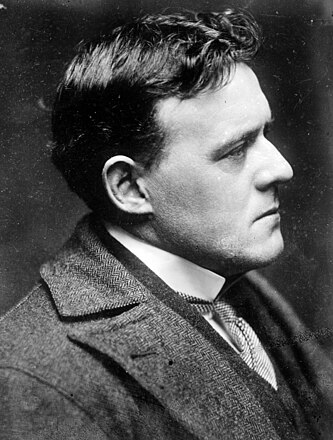








About Hilaire Belloc
Joseph Hilaire Pierre René Belloc (27 July 1870 – 16 July 1953) was a Franco-English writer and poet, known chiefly for his essays and children's books; he was sometimes referred to by the nickname "Old Thunder". Belloc was also an orator, poet, sailor, satirist, writer of letters, soldier, and political activist.
Best Hilaire Belloc Quotes
Shortest
Earliest
Explore our curated collection of the most famous and impactful Hilaire Belloc quotes.


“[A]lways keep a-hold of Nurse
For fear of finding something worse”
For fear of finding something worse”
“[P]rofessional politics is a trade in which the sly outweigh the wise.”

“It is sometimes necessary to lie damnably in the interests of the nation.”


“[I]n words lie the seeds of all dissension, and love at its most profound is silent.”

“[N]othing is worthwhile on this unhappy earth except the fulfilment of a man's desire.”
“Be content to remember that those who can make omelettes properly can do nothing else.”


“Then he added, as men will who are of infinite imagination and crammed with desires, 'My wants are few.'”

“By thee do seers the inward light discern;
By thee the statue lives, the Gods return.”
By thee the statue lives, the Gods return.”
“In soft deluding lies let fools delight.
A shadow marks our days, which end in Night.”
A shadow marks our days, which end in Night.”
Hilaire Belloc Quotes by Topic
Find exactly what you are looking for by browsing this categorized list of Hilaire Belloc quotes by topic.
Hilaire Belloc on Friendship 3 quotes
“You do retain the song we set, And how it rises, trips and scans? You keep the sacred memory yet, Republicans? Republicans?”

Hilaire Belloc on Barbarian 2 quotes
“The Barbarian hopes — and that is the very mark of him — that he can have his cake and eat it too. He will consume what civilisation has slowly produced after generations of selection and effort but he will not be at pains to replace such goods nor indeed has he a comprehension of the virtue that has brought them into being. Discipline seems to him irrational, on which account he is for ever marvelling that civilisation should have offended him with priests and soldiers.”
Hilaire Belloc on Wind
Hilaire Belloc on Heroes
Hilaire Belloc on Firearm
“Whatever happens, we have got The Maxim gun, and they have not.”

Hilaire Belloc on Song
Hilaire Belloc on Soup
“Birds in their little nests agree With Chinamen, but not with me.”

Hilaire Belloc on Eyes
Hilaire Belloc on Upas
Hilaire Belloc on Children
“She was not really bad at heart, But only rather rude and wild: She was an aggravating child.”

Hilaire Belloc on England
“The south-west wind roaring in from the Atlantic.... is, I think the presiding genius of England.”

Hilaire Belloc on Hippopotamus
“I shoot the Hippopotamus With bullets made of platinum, Because if I use leaden ones His hide is sure to flatten 'em.”

What Hilaire Belloc Said About Others
Discover personal opinions Hilaire Belloc shared regarding contemporaries.
Hilaire Belloc on P. G. Wodehouse 2 quotes
“His object is comedy in the most modern sense of that word: that is, his object is to present the laughable, and he does this with such mastery and skill that he nearly always approaches, and often reaches, perfection.”

Hilaire Belloc on William Thomas Beckford
“One of the vilest men of his time.”

Hilaire Belloc on John Calvin
“John Calvin whose peculiar fad It was to call God murderous, Which further led that feverish cad To burn alive the Servetus.”

Hilaire Belloc on Algernon Blackwood
“Here on the table is a book of such a sort as does from time to time appear, making, one supposes, no particular pretence to fame, and yet exceedingly well done, because it is instinct with this national power, and everyone who has a shelf for the horrible in his library will welcome it and give it its place.”
Hilaire Belloc on J. B. Bury
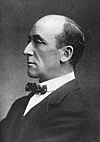
“It is clear that in all these examples, which I have taken at random up and down the book, the writer is doing what we so continually find upon the part of academic authorities, particularly when they are indulging in an attack upon the Catholic Church—he is repeating what some other man of the same kind has said before him, and that other man is repeating something that was said before him. He has not been at the pains of consulting original authorities; and the result is valueless and inaccurate history, always wrong and sometimes the exact opposite of the truth.”

Hilaire Belloc on David Lloyd George
“David Lloyd George excelled even the ruck of politicians in his desire for what he thought was fame, as well as his extravagant greed for money. The two things do not usually go together but in his case it was difficult to say which was the stronger. He fully achieved both. Lloyd George began as a small Nonconformist Radical member of Parliament. He was a fluent speaker and appealed strongly to the audiences which in an earlier generation had also been appealed to by Spurgeon, Moody and Sankey and people of that kind. He may possibly like other men of the sort who enter public life had some sort of convictions when he begun, but he had certainly lost them by the year 1900 and was purely on the make.”

Hilaire Belloc on Normans
“They have been written of enough to-day, but who has seen them from close by or understood that brilliant interlude of power?The little bullet-headed men, vivacious, and splendidly brave, we know that they awoke all Europe, that they first provided settled financial systems and settled governments of land, and that everywhere, from the Grampians to Mesopotamia, they were like steel when all other Christians were like wood or like lead.We know that they were a flash. They were not formed or definable at all before the year 1000; by the year 1200 they were gone. Some odd transitory phenomenon of cross-breeding, a very lucky freak in the history of the European family, produced the only body of men who all were lords and who in their collective action showed continually nothing but genius.We know that they were the spear-head, as it were, of the Gallic spirit: the vanguard of that one of the Gallic expansions which we associate with the opening of the Middle Ages and with the crusades. ... We know all this and write about it; nevertheless, we do not make enough of the Normans in England.Here and there a man who really knows his subject and who disdains the market of the school books, puts as it should be put their conquest of this island and their bringing into our blood whatever is still strongest in it. Many (descended from their leaders) have remarked their magical ride through South Italy, their ordering of Sicily, their hand in Palestine. As for the Normans in Normandy, of their exchequer there, of what Rouen was—all that has never been properly written down at all. Their great adventure here in England has been most written of by far; but I say again no one has made enough of them; no one has brought them back out of their graves. The character of what they did has been lost in these silly little modern quarrels about races, which are but the unscholarly expression of a deeper hypocritical quarrel about religion.Yet it is in England that the Norman can be studied as he can be studied nowhere else. He did not write here (as in Sicily) upon a palimpsest. He was not merged here (as in the Orient) with the rest of the French. He was segregated here; he can be studied in isolation; for though so many that crossed the sea on that September night with William, the big leader of them, held no Norman tenure, yet the spirit of the whole thing was Norman: the regularity, the suddenness, the achievement, and, when the short fighting was over, the creation of a new society. It was the Norman who began everything over again—the first fresh influence since Rome.The riot of building has not been seized. The island was conquered in 1070. It was a place of heavy foolish men with random laws, pale eyes, and a slow manner; their houses were of wood : sometimes they built (but how painfully, and how childishly!) with stone. There was no height, there was no dignity, there was no sense of permanence. The Norman Government was established. At once rapidity, energy, the clear object of a united and organised power followed. And see what followed in architecture alone, and in what a little space of the earth, and in what a little stretch of time—less than the time that separates us to-day from the year of Disraeli's death or the occupation of Egypt.The Conquest was achieved in 1070. In that same year they pulled down the wooden shed at Bury St. Edmunds, 'unworthy,' they said, 'of a great saint,' and began the great shrine of stone. Next year it was the castle at Oxford, in 1075 Monkswearmouth, Jarrow, and the church at Chester; in 1077 Rochester and St Alban's; in 1079 Winchester. Ely, Worcester, Thorney, Hurley, Lincoln, followed with the next years; by 1089 they had tackled Gloucester, by 1092 Carlisle, by 1093 Lindisfarne, Christchurch, tall Durham. ... And this is but a short and random list of some of their greatest works in the space of one boyhood. Hundreds of castles, houses, village churches are unrecorded.Were they not indeed a people? ...One may say of the Norman preceding the Gothic what Dante said of Virgil preceding the Faith: Would that they had been born in a time when they could have known it! But the East was not yet open. The mind of Europe had not yet received the great experience of the Crusades; the Normans had no medium wherein to express their mighty soul, save the round arch and the straight line, the capital barbaric or naked, the sullen round shaft of the pillar—more like a drum than like a column. They could build, as it were, with nothing but the last ruins of Rome. They were given no forms but the forms which the fatigue and lethargy of the Dark Ages had repeated for six hundred years. They were capable, even in the north, of impressing even these forms with a superhuman majesty.”

Quotes About Hilaire Belloc
Gain deeper perspective through quotes about Hilaire Belloc from others.
Roy Campbell on Hilaire Belloc
“I don't know if I told you, that in Rome Hilaire Belloc turned up (a wonderful old man!) ... He is a very great writer and with Maurras and Daudet in France, and his friend Chesterton, they have all been forerunners of the Right movement. He thinks I have done a really good thing with Flowering Rifle, and that my other work will not even count beside it in the long run. His word is worth more than the whole of Fleet Street.”
J. B. Morton on Hilaire Belloc
“His wit was French, but his humour English. He was profoundly moved by the beauty of English landscape, but preferred the French way of living. His military temper, his love of justice rather than order, the logical processes of his thought were French. At sea he was English, but Irish in that recurring dream of a landfall which is not of this world. Some have called him, for his hearty pugnacity, a figure as English as Cobbett. Others have emphasized his many un-English qualities. In appearance he seemed to be an Englishman dressed as a Frenchman.”
About Hilaire Belloc
Joseph Hilaire Pierre René Belloc (27 July 1870 – 16 July 1953) was a Franco-English writer and poet, known chiefly for his essays and children's books; he was sometimes referred to by the nickname "Old Thunder". Belloc was also an orator, poet, sailor, satirist, writer of letters, soldier, and political activist.