Link Copied!
Hermann Minkowski Quotes (1864-1909)
Mathematician
About Hermann Minkowski
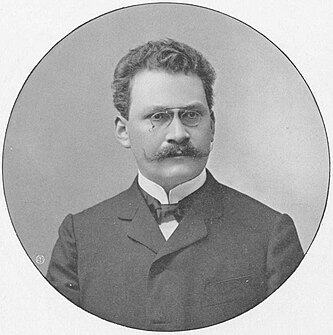
Hermann Minkowski (22 June 1864 – 12 January 1909) was a German mathematician and professor. He showed in 1907 that the special theory of relativity of 1905, developed by his former student Albert Einstein, could be understood geometrically as a theory of four-dimensional space-time, now known as the "Minkowski spacetime". Minkowski is also recognized for his contribution to the geometrical theory of numbers.
Best Hermann Minkowski Quotes
Shortest
Earliest
Explore our curated collection of the most famous and impactful Hermann Minkowski quotes.
“Oh, that Einstein, always cutting lectures... I really would not believe him capable of it.”
“It came as a tremendous surprise, for in his student days Einstein had been a lazy dog... He never bothered about mathematics at all.”
“The assumption of the contraction of the electron in Lorentz's theory must be introduced at an earlier stage than Lorentz has actually done.”
“The word postulate of relativity... appears to me very stale... I should rather like to give this statement the name Postulate of the absolute world (or briefly, world-postulate).”
“The rigid electron is in my view a monster in relation to Maxwell's equations, whose innermost harmony is the principle of relativity.”
“It would be very unsatisfactory if the new way of looking at the time-concept, which permits a Lorentz transformation, were to be confined to a single part of Physics.”
“The whole world appears resolved into such world-lines. And I should like to say beforehand that, according to my opinion, it would be possible for the physical laws to find their fullest expression as correlations of these world-lines.”
“Many authors say that classical mechanics stand in opposition to the relativity postulate, which is taken to be the basic of the new Electro-dynamics”
“The views of space and time which I wish to lay before you have sprung from the soil of experimental physics, and therein lies their strength. They are radical. Henceforth, space by itself, and time by itself, are doomed to fade away into mere shadows, and only a kind of union of the two will preserve an independent reality.”
“By laying down the relativity postulate from the outset, sufficient means have been created for deducing henceforth the complete series of Laws of Mechanics from the principle of conservation of energy (and statements concerning the form of the energy) alone.”

“H. A. Lorentz has found out the Relativity theorem and has created the Relativity postulate as a hypothesis that electrons and matter suffer contractions in consequence of their motion according to a certain law. A. Einstein has brought out the point very clearly, that this postulate is not an artificial hypothesis but is rather a new way of comprehending the time-concept, which is forced upon us by observation of natural phenomena.”
Hermann Minkowski Quotes by Topic
Find exactly what you are looking for by browsing this categorized list of Hermann Minkowski quotes by topic.
Hermann Minkowski on Special relativity 3 quotes
“The word postulate of relativity... appears to me very stale... I should rather like to give this statement the name Postulate of the absolute world (or briefly, world-postulate).”
Hermann Minkowski on Electron 2 quotes
“The rigid electron is in my view a monster in relation to Maxwell's equations, whose innermost harmony is the principle of relativity.”
Quotes About Hermann Minkowski
Gain deeper perspective through quotes about Hermann Minkowski from others.
Birgit Bergmann on Hermann Minkowski
“Not only the physical but also the intellectual landscape of German-language mathematics in the early 1930s would be impossible to imagine without Gernan-Jewish mathematicians. Indeed, some fields of mathematics were completely transformed by their contributions. Number theory was transformed by Hermann Minkowski and Edmund Landau, algebra by Ernst Steinitz and Emmy Noether, set theory and general topology by Felix Hausdorff, Abraham Fraenkel and several others—to mention but a few examples.”
Leo Corry on Hermann Minkowski
“David Hilbert—the undisputed, foremost living mathematician in the world and lifelong close friend and collaborator of the by then deceased Minkowski—had already presented to the Göttingen Academy his own version of the same equations a few days earlier [than Einstein]. Although Minkowski and Hilbert accomplished their most important achievements in pure mathematical fields, their respective contributions to relativity should in no sense be seen as merely occasional excursions into the field of theoretical physics. Minkowski and Hilbert were motivated by much more than a desire to apply their exceptional mathematical abilities opportunistically... On the contrary, Minkowski's and Hilbert's contributions to relativity are best understood as an organic part of their overall scientific careers.”
A. D'Abro on Hermann Minkowski
“With the rejection of such classical absolutes as length and duration, our ability to conceive of an objective impersonal world, independent of the presence of an observer, seems to be imperiled. The great merit of Minkowski was to show that an absolute world could nevertheless be imagined, although it was a far different world from that of classical physics. In Minkowski's world the absolute which supersedes the absolute length and duration of classical physics is the Einsteinian interval. ... Thus suppose that, as measured in our Galilean frame of reference, two flashes occur at points A and B, situated at a distance l apart, and suppose the flashes are separated in time by an interval t. If we change our frame of reference, both l and t will change in value, becoming l' and t' respectively, exhibiting by their changes the relativity of length and duration. In Minkowski's words, "Henceforth space and time themselves are mere shadows." On the other hand, the mathematical construct l^2 - c^2t^2 will remain invariant, and so we shall have l^2 - c^2t^2 = l'^2 - c^2t'^2. It is this invariant expression, which involves both length and duration, or both space and time, which constitutes the Einsteinian interval; and the objective world which it cannotes is the world of four-dimensional space-time. The Einsteinian interval... remains the same for all observers, just as distance alone or duration alone were mistakenly believed to remain the same for all observers in classical physics. ...the Einsteinian interval still remains an invariant as measured for all frames of reference, whether accelerated or not. In the case of accelerated frames, however, we must restrict our attention to Einsteinan intervals of infinitesimal magnitude, and then add up the intervals when finite magnitudes are involved.”
Albert Einstein on Hermann Minkowski 2 quotes
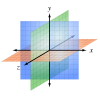
“A four dimensional continuum described by the co ordinates x1, x2, x3, x4, was called "world" by Minkowski, who also termed a point-event a "world point." From a "happening" in three-dimensional space, physics becomes, as it were, an "existence" in the four-dimensional world. This four dimensional "world" bears a close similarity to the three-dimensional "space" of Euclidean analytical geometry. ...We can regard Minkowski's "world" in a formal manner as a four-dimensional Euclidean space (with imaginary time co-ordinate); the Lorentz transformation corresponds to a "rotation" of the co-ordinate system in the four-dimensional world.”

Morris Kline on Hermann Minkowski
“The geometrical theory of numbers... first gained prominence when Hermann Minkowski (1793-1909), who served as professor of mathematics at several universities, published his Geometrie der Zahlen (1896).”
Jürgen Neffe on Hermann Minkowski
“Minkowski's idea and the solution of the twin paradox can best be explained by means of an analogy between space and spacetime... Time as a fourth dimension rests vertically on the other three—just as in space the vertical juts out of the two-dimensional plane as a third dimension. Distances through spacetime comprise four dimensions, just as space has three. The more you go in one direction, the less is left for the others. When a rigid body is at rest and does not move in any of the three dimensions, all of its motion takes place on the time axis. It simply grows older. ...The faster he moves away from his frame of reference... and covers more distance in the three dimensions of space, the less of his motion through spacetime as a whole is left over for the dimension of time. ...Whatever goes into space is deducted from time. ...In comparison with the distances light travels, all distances in the dimensions of space, even those involving airplane travel, are so very small that we essentially move only along the time axis, and we age continually. Only if we are able to move away from our frame of reference very quickly, like the traveling twin... would the elapsed time shrink to near zero, as it approached the speed of light. Light itself... covers its entire distance through spacetime only in the three dimensions of space... Nothing remains for the additional dimension... the dimension of time... Because light particles do not move in time, but with time, it can be said that they do not age. For them "now" means the same thing as "forever." They always "live" in the moment. Since for all practical purposes we do not move in the dimensions of space, but are at rest in space, we move only along the time axis. This is precisely the reason we feel the passage of time. Time virtually attaches to us.”
Hans C. Ohanian on Hermann Minkowski
“When he enrolled as a student in the Polytechnic, Einstein developed a know-it-all attitude, and he paid little attention to Minkowski's lectures and skipped many. Minkowski described him as a "lazy dog," and years later, upon the publication of the theory of relativity, he commented, "I really would not have believed him capable of it."”
Daniel Peterson on Hermann Minkowski
“Ever since Hermann Minkowski's now infamous comments in 1908 concerning the proper way to view space-time, the debate has raged as to whether or not the universe should be viewed as a four-dimensional, unified whole wherein the past, present, and future are regarded as equally real or whether the views espoused by the possibilists, historicists, and presentests regarding the unreality of the future (and, for presentests, the past) are more accurate. Now, a century after Minkowski's proposed block universe first sparked debate, we present a new, more conclusive argument in favor of eternalism.”
Ian Stewart on Hermann Minkowski
“In a Newtonian view, space and time are separate and different. Symmetries of the laws of physics are combinations of rigid motions of space and an independent shift in time. But... these transformations do not leave Maxwell's equations invariant. Pondering this, the mathematicians Henri Poincaré and Hermann Minkowski were led to a new view of the symmetries of space and time, on a purely mathematical level. If they had described these symmetries in physical terms, they would have beaten Einstein to relativity, but they avoided physical speculations. They did understand that symmetries in the laws of electromagnetism do not affect space and time independently but mix them up. The mathematical scheme describing these intertwined changes is known as the Lorentz group, after the physicist, Hendrik Lorentz.”
Kip S. Thorne on Hermann Minkowski
“Minkowski, building on Einstein's work, had now discovered that the Universe is made of a four-dimensional "spacetime" fabric that is absolute, not relative.”
Friedel Weinert on Hermann Minkowski
“Minkowski calls a spatial point existing at a temporal point a world point. These coordinates are now called 'space-time coordinates'. The collection of all imaginable value systems or the set of space-time coordinates Minkowski called the world. This is now called the manifold. The manifold is four-dimensional and each of its space-time points represents an event.”
Gerald James Whitrow on Hermann Minkowski
“In 1908 the famous mathematician Minkowski made a remarkable discovery concerning the Lorentz formulae. He showed that, although each observer has his own private space and private time, a public concept which is the same for all observers can be formed by combining space and time as a kind of 'distance' by multiplying it by the velocity of light, c; in other words, with any time interval we can associate a definite spatial interval, namely the distance which light can travel in empty space in that period. If, according to a particular observer, the difference in time between any two events is T, this associated spatial interval is cT. Then, if R is the space-distance between these two events, Minkowski showed that the difference of the squares of cT and R has the same value for all observers in uniform relative motion. The square root of this quantity is called the space-time interval between two events. Hence, although time and three-dimensional space depend on the observer, this new concept of space-time is the same for all observers.”

John A. Winnie on Hermann Minkowski
“According to the special theory there is a finite limit to the speed of causal chains, whereas classical causality allowed arbitrarily fast signals. Foundational studies... soon revealed that this departure from classical causality in the special theory is intimately related to its most dramatic consequences: the relativity of simultaneity, time dilation, and length contraction. By now it had become clear that these kinematical effects are best seen as consequences of Minkowski space-time, which in turn incorporates a nonclassical theory of causal structure. However, it has not widely been recognized that the converse of this proposition is also true: the causal structure of Minkowski space-time contains within itself the entire geometry (topoligical and metrical structure) of Minkowski space-time. ...The problem of the independence of topological and metrical structures of space-time was clearly recognized by early writers on relativity such as Russell (1954) and, of course, Eddington...”
About Hermann Minkowski
Hermann Minkowski (22 June 1864 – 12 January 1909) was a German mathematician and professor. He showed in 1907 that the special theory of relativity of 1905, developed by his former student Albert Einstein, could be understood geometrically as a theory of four-dimensional space-time, now known as the "Minkowski spacetime". Minkowski is also recognized for his contribution to the geometrical theory of numbers.