Link Copied!
Herbert Butterfield Quotes (1900-1979)
Philosopher




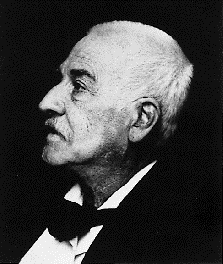





About Herbert Butterfield
Herbert Butterfield (October 7, 1900 – July 20, 1979) was a British historian and philosopher of history who is remembered chiefly for a slim volume entitled, The Whig Interpretation of History (1931).
Best Herbert Butterfield Quotes
Shortest
Earliest
Explore our curated collection of the most famous and impactful Herbert Butterfield quotes.
“The raconteur knows too well that, if he investigates the truth of the matter, he is only too likely to lose his good story.””
Unsourced — Primary work/page citation not yet verified in the QuotesCosmos archive. Per our Unnamed Sources & Verification Policy, quotes without confirmed primary editions are explicitly marked Unsourced while under editorial review.
“Every age likes its historians to place events in a framework that corresponds with contemporary prejudices and answers to contemporary political desires.”
Unsourced — Primary work/page citation not yet verified in the QuotesCosmos archive. Per our Unnamed Sources & Verification Policy, quotes without confirmed primary editions are explicitly marked Unsourced while under editorial review.
“About the scientific revolution: it “outshines everything since the rise of Christianity and reduces the Renaissance and Reformation to the rank of mere episodes”.”

Unsourced — Primary work/page citation not yet verified in the QuotesCosmos archive. Per our Unnamed Sources & Verification Policy, quotes without confirmed primary editions are explicitly marked Unsourced while under editorial review.
“The study of the past with one eye upon the present is the source of all sins and sophistries in history. It is the essence of what we mean by the word "unhistorical".””

Unsourced — Primary work/page citation not yet verified in the QuotesCosmos archive. Per our Unnamed Sources & Verification Policy, quotes without confirmed primary editions are explicitly marked Unsourced while under editorial review.
“One of the paradoxes of history has been the way in which the name of England has come to be so closely associated with liberty on the one hand and tradition on the other hand.”
Unsourced — Primary work/page citation not yet verified in the QuotesCosmos archive. Per our Unnamed Sources & Verification Policy, quotes without confirmed primary editions are explicitly marked Unsourced while under editorial review.
“Since the 17th century England has had a happier fate than most of the countries of continental Europe. In particular she has been spared the most violent cataclysms and the bitterness of civil war.”

Unsourced — Primary work/page citation not yet verified in the QuotesCosmos archive. Per our Unnamed Sources & Verification Policy, quotes without confirmed primary editions are explicitly marked Unsourced while under editorial review.
“A man who has written a single lyric may outlast the centuries, living on in perpetual youth; but the author of a hundredweight of heavy historical tomes has them piled upon his grave, to hold him securely down.”
Unsourced — Primary work/page citation not yet verified in the QuotesCosmos archive. Per our Unnamed Sources & Verification Policy, quotes without confirmed primary editions are explicitly marked Unsourced while under editorial review.
“And who amongst us would exchange the long line of amiable or prudent statesmen in English history, for all those masterful and awe-inspiring geniuses who have imposed themselves on France and Germany in modern times?”
Unsourced — Primary work/page citation not yet verified in the QuotesCosmos archive. Per our Unnamed Sources & Verification Policy, quotes without confirmed primary editions are explicitly marked Unsourced while under editorial review.
“It is not clear that continental countries, which have had their revolutions, followed by counter-revolutions, have greatly improved on the English rate of progress, in spite of what they paid in havoc and bloodshed precisely for the sake of speed.”
Unsourced — Primary work/page citation not yet verified in the QuotesCosmos archive. Per our Unnamed Sources & Verification Policy, quotes without confirmed primary editions are explicitly marked Unsourced while under editorial review.
“If history can do anything it is to remind us of those complications that undermine our certainties, and to show us that all our judgements are merely relative to time and circumstance. ...we can never assert that history has proved any man right in the long run.”

Unsourced — Primary work/page citation not yet verified in the QuotesCosmos archive. Per our Unnamed Sources & Verification Policy, quotes without confirmed primary editions are explicitly marked Unsourced while under editorial review.
“But the greatest menace to our civilization today is the conflict between giant organized systems of self-righteousness—each system only too delighted to find that the other is wicked—each only too glad that the sins give it the pretext for still deeper hatred and animosity.”

Unsourced — Primary work/page citation not yet verified in the QuotesCosmos archive. Per our Unnamed Sources & Verification Policy, quotes without confirmed primary editions are explicitly marked Unsourced while under editorial review.
“Considering the part played by the sciences in the story of our Western civilization, it is hardly possible to doubt the importance which the history of science will sooner or later acquire both in its own right and as the bridge which has been so long needed in between the Arts and the Sciences.”
Unsourced — Primary work/page citation not yet verified in the QuotesCosmos archive. Per our Unnamed Sources & Verification Policy, quotes without confirmed primary editions are explicitly marked Unsourced while under editorial review.
“Humanism and Humanitarianism, Liberalism and Internationalism...emerge as a result of a tendency to translate into secular terms certain movements and aspirations which had characterised a Christian civilisation... humanitarianism, for example, is an anaemic substitute for the doctrine of New Testament love.”

Unsourced — Primary work/page citation not yet verified in the QuotesCosmos archive. Per our Unnamed Sources & Verification Policy, quotes without confirmed primary editions are explicitly marked Unsourced while under editorial review.
“We have to be on our guard when the whig historian tells us... that the Reformation is justified because it ultimately led to liberty... for it is possible to argue against the whig historian that the ultimate issue which he applauds only came in the long run from the fact that, in its immediate results, The Reformation was disastrous to liberty.”
Unsourced — Primary work/page citation not yet verified in the QuotesCosmos archive. Per our Unnamed Sources & Verification Policy, quotes without confirmed primary editions are explicitly marked Unsourced while under editorial review.
“Whatever we may feel about the defects of our own Whig interpretation of history, we have reason to be thankful for its influence on our political tradition; for it was to prove of the greatest moment to us that by the early seventeenth century our antiquarians had formulated our history as a history of liberty.”
Unsourced — Primary work/page citation not yet verified in the QuotesCosmos archive. Per our Unnamed Sources & Verification Policy, quotes without confirmed primary editions are explicitly marked Unsourced while under editorial review.
“In the crisis of 1940 our leaders continually reminded us of those resources in the past which can be drawn upon to fortify a nation at war. While plunging into a sea of changes, novelties and inventions, England resumed contact with her traditions and threw out ropes to the preceding generations, as though in time of danger it was a good thing not to lose touch with the rest of the convoy.”
Unsourced — Primary work/page citation not yet verified in the QuotesCosmos archive. Per our Unnamed Sources & Verification Policy, quotes without confirmed primary editions are explicitly marked Unsourced while under editorial review.
“It is always difficult to represent the place that power actually holds in the workings of politics and in the processes of history. Some men seem ready to speak as though power did not exist (because in their view it ought not to exist); and if others are emphatic about the reality of its presence they are assumed to be in favour of force, merely because they recognise its operation in the world.”

Unsourced — Primary work/page citation not yet verified in the QuotesCosmos archive. Per our Unnamed Sources & Verification Policy, quotes without confirmed primary editions are explicitly marked Unsourced while under editorial review.
“All we can say now is that the government of England did not in fact develop into a despotism. In any case a tory historiography based on this monarchical supposition cannot exist in England in the 20th century. It is possible to be a tory historian in detail—to be kind to Charles I or Charles II or George III. It is not possible to have a tory structure of English history as a counterpart to that of the whigs.”

Unsourced — Primary work/page citation not yet verified in the QuotesCosmos archive. Per our Unnamed Sources & Verification Policy, quotes without confirmed primary editions are explicitly marked Unsourced while under editorial review.
“Perhaps only in the shock of 1940 did we realize to what a degree the British Empire had become an organization for the purpose of liberty. What power is in this English tradition which swallows up monarchy, toryism, imperialism, yet leaves each of them still existing, each part of a wider synthesis. And how cunningly did the whig interpretation assert itself in all the utterances of Englishmen in 1940—throbbing and alive again, and now projected upon an extended map.”
Unsourced — Primary work/page citation not yet verified in the QuotesCosmos archive. Per our Unnamed Sources & Verification Policy, quotes without confirmed primary editions are explicitly marked Unsourced while under editorial review.
“When the sins and errors of an age have made the world impossible to live in, the next generation, seeking to make life tolerable again, may be able to find no way save by surrender of cherished ideals, and so may find themselves compelled to cast about for new dreams and purposes. An important aspect of the historical process is the work of the new generation... being driven to something like a creative act for the very reason that life on the old terms has become impossible.”

Unsourced — Primary work/page citation not yet verified in the QuotesCosmos archive. Per our Unnamed Sources & Verification Policy, quotes without confirmed primary editions are explicitly marked Unsourced while under editorial review.
“An American writer, studying English nationalism in the age of Cromwell, reminds us of the influence of the Old Testament—the belief that we were God's Chosen People—which still leaves its mark on the character of our national tradition. It may have led us to hypocrisy at times—saddling us with too great a burden of self-righteousness. But, says this writer, at least it has prevented English nationalism from becoming so completely amoral as that of some of the modern pagan forms of state.”

Unsourced — Primary work/page citation not yet verified in the QuotesCosmos archive. Per our Unnamed Sources & Verification Policy, quotes without confirmed primary editions are explicitly marked Unsourced while under editorial review.
“When men parted first from their Christianity and then from their deism, the deification of the state was bound to be achieved in a comparatively short space of time; for no system can pretend to face all weathers when it has been reduced to naked individualism and the mere assertion of individual rights. Men make gods now, not out of wood and stone, which though a waste of time is a comparatively harmless proceeding, but out of their abstract nouns, which are the most treacherous and explosive things in the world.”

Unsourced — Primary work/page citation not yet verified in the QuotesCosmos archive. Per our Unnamed Sources & Verification Policy, quotes without confirmed primary editions are explicitly marked Unsourced while under editorial review.
“And when we are told to consider the glories of the French Revolution let us not forget that there is a secret treasure of subtle riches which England enjoys as a result of the continuity of her history. Great changes have occurred in this country while deep below the surface the continuity has been maintained as a living thing. And when a cleavage has been made it has not been a matter of mere indifference that—instead of glorying in the cleavage—we have sent the shuttles backwards and forwards in order to tie up the past with the present again.”
Unsourced — Primary work/page citation not yet verified in the QuotesCosmos archive. Per our Unnamed Sources & Verification Policy, quotes without confirmed primary editions are explicitly marked Unsourced while under editorial review.
“It is a similar case of Christian hang-over that exists in 20th-century England; and if some writers have slipped into the terminology of modern Germans, yet Englishmen in their hearts have never been worshippers of the deified state. Their hold on their "individualism" is stronger than that of the secular liberals of the continent, because it is rooted in tradition and sentiment. The individualism on the one hand, the love of country on the other hand, are less likely to be dangerous when growing in this kind of earth—less likely to devour one another.”
Unsourced — Primary work/page citation not yet verified in the QuotesCosmos archive. Per our Unnamed Sources & Verification Policy, quotes without confirmed primary editions are explicitly marked Unsourced while under editorial review.
“It is like the Bishop who said that if we totally disarmed he had too high an opinion of human nature to think that anybody would attack us. There might be great virtue in disarming and consenting to be made martyrs for the sake of the good cause; but to promise that we should not have to endure martyrdom in that situation, or to rely on such a supposition, is against both theology and history. It is essential not to have faith in human nature. Such faith is a recent heresy and a very disastrous one.”

Unsourced — Primary work/page citation not yet verified in the QuotesCosmos archive. Per our Unnamed Sources & Verification Policy, quotes without confirmed primary editions are explicitly marked Unsourced while under editorial review.
“Under the whig system, reforms have been overdue on many occasions; yet by the passage of time they have been able to come by a more easy and natural route, and with less accompaniment of counter-evil; and we have at least been spared that common nemesis of revolutions—the generation of irreconcilable hatreds within the state. And while conflict can be mitigated in this way, the world has a chance to grow in reasonableness. So in fact it has happened that the transition to democracy in England was happier, more assured, less violent than in some other countries of the continent.”
Unsourced — Primary work/page citation not yet verified in the QuotesCosmos archive. Per our Unnamed Sources & Verification Policy, quotes without confirmed primary editions are explicitly marked Unsourced while under editorial review.
“Let us praise, not revolution and war, but man's reconciling mind which acts the good fairy over the worst that human wilfulness may have decreed—which begins to play providence upon the past almost as soon as it has happened, redeeming the mistakes, changing evil into good and turning necessity into opportunity. Let us praise man’s reconciling mind—in other words, the wisdom of the whigs, who turned the disasters of our 17th-century Civil War into reflection and experience; and who, precisely because they were lovers of liberty, checked their wantonness and decreed: "This at least shall never happen again".”

Unsourced — Primary work/page citation not yet verified in the QuotesCosmos archive. Per our Unnamed Sources & Verification Policy, quotes without confirmed primary editions are explicitly marked Unsourced while under editorial review.
“Because many English institutions have century upon century of the past, lying fold upon fold within them—because they preserve somewhat in the present all the previous stages of their being—they possess not merely the kind of romantic colouring which is so dear to the historical novelist, but something like the life of organic creatures; they show therefore greater elasticity in the face of those crises which are beyond prediction than do the paper constructions of yesterday. Such institutions, in their customary acceptance and in the common sentiment that they inspire, provide also the basis for at least a minimum of national unity.”
Unsourced — Primary work/page citation not yet verified in the QuotesCosmos archive. Per our Unnamed Sources & Verification Policy, quotes without confirmed primary editions are explicitly marked Unsourced while under editorial review.
“Much as it may hurt us, we really have no choice but to move further to a more positive kind of internationalism, which welcomes the new world with open arms, prepares changes in the status quo before the cry for them becomes desperate, and greets the rise of new nations with unreserved joy. If the western world has to be ranged against the world behind the Iron Curtain, surely it is to our interest to see the Middle East, and indeed the whole Afro-Asian block, rise as quickly as possible to real equality and independence, so that they play a genuinely autonomous part in the world's diplomacy. Since the Asiatic countries are so exposed to the threat of Communism, it is difficult to believe that their power—freely exercised—would not operate to our own benefit.”

Unsourced — Primary work/page citation not yet verified in the QuotesCosmos archive. Per our Unnamed Sources & Verification Policy, quotes without confirmed primary editions are explicitly marked Unsourced while under editorial review.
“I wonder nowadays whether the neglect of military history and war does not have the effect of giving some people an anaemic and unreal idea of the deeper processes of mundane history. Indeed, it is possible that our conventional history-teaching underestimates the part played by war in the development of our civilisation and our economy, as well as in the rise of the modern state. It has been noted that great constitutional concessions were won from English kings who were usually unsuccessful in their foreign policy; and certainly it is not easy to know what would have happened if King John or Charles I or James II had been more fortunate in this field. Ranke thought that the disgrace suffered by the French monarchy in its foreign policy had much to do with the outbreak of the French Revolution.”
Unsourced — Primary work/page citation not yet verified in the QuotesCosmos archive. Per our Unnamed Sources & Verification Policy, quotes without confirmed primary editions are explicitly marked Unsourced while under editorial review.
“Down to the 20th century the English liberals were affected by the persistence of their alliance with Nonconformity. The churches in their turn, since they were not politically endangered, saw no necessity to lock themselves away in a political die-hard-ism. So the new and the old were allowed to mingle and frontiers were blurred, producing another piece of that English history which, like a weed, grows over the fences, chokes and smothers the boundaries—luxurious and wanton as life itself—to drive the geometers and the heavy logicians to despair. The whigs, and indeed the English in general, were saved from some of the excesses of that secular liberalism which came to prevail on the continent, and which, though never entirely absent here, has not yet been allowed to govern the character of our politics.”
Unsourced — Primary work/page citation not yet verified in the QuotesCosmos archive. Per our Unnamed Sources & Verification Policy, quotes without confirmed primary editions are explicitly marked Unsourced while under editorial review.
“Let us praise as a living thing the continuity of our history, and praise the whigs who taught us that we must nurse this blessing—reconciling continuity with change, discovering mediations between past and present, and showing what can be achieved by man's reconciling mind. Perhaps it is not even the whigs that we should praise, but rather something in our traditions which captured the party at the moment when it seemed ready to drift into unmeasurable waters. Perhaps we owe most in fact to the solid body of Englishmen, who throughout the centuries have resisted the wildest aberrations, determined never for the sake of speculative ends to lose the good they already possessed; anxious not to destroy those virtues in their national life which need long periods of time for their development; but waiting to steal for the whole nation what they could appropriate in the traditions of monarchy, aristocracy, bourgeoisie and church.”
Unsourced — Primary work/page citation not yet verified in the QuotesCosmos archive. Per our Unnamed Sources & Verification Policy, quotes without confirmed primary editions are explicitly marked Unsourced while under editorial review.
“Some nations have had a broken and tragic past. Others are new or have only recently arisen after a long submergence. Some have been torn by a terrible breach between past and present—a breach which, though it happened long ago, they have never been able to heal and overcome. We in England have been fortunate and we must remember our good fortune, for we have actually drawn strength from the continuity of our history. We have been wise, for we have taken care of the processes which serve to knit the past and the present together; and when great rifts have occurred—in the Reformation or the Civil Wars, for example—a succeeding generation has done its best to play providence upon the tears and rents that have been made in the fabric of our history. Englishmen in the after-period have actually thrown back the needle, seeking by a thousand little stitches to join the present with the past once more. So we are a country of traditions and there remains a living continuity in our history.”

Unsourced — Primary work/page citation not yet verified in the QuotesCosmos archive. Per our Unnamed Sources & Verification Policy, quotes without confirmed primary editions are explicitly marked Unsourced while under editorial review.
“It is more clear that two world wars in the twentieth century were largely responsible for the success of Communism over one great part of the globe, and the speeding up of egalitarianism over another great area. I remember feeling shocked when I found Ranke arguing that, in spite of Goethe, German culture and German cultural influence gained their great momentum with the rise of German power and confidence in the nineteenth century. Yet when I reflect on the cultural leadership which the United States and Russia have come to enjoy since the Second World War—and when I compare this with the situation twenty years ago—I am staggered to see how such matters are affected by a mere redistribution of power. The Golden Age of Spain at one time, of Holland at another time, and of France in the age of Louis XIV seem to give support to the same argument.”
Unsourced — Primary work/page citation not yet verified in the QuotesCosmos archive. Per our Unnamed Sources & Verification Policy, quotes without confirmed primary editions are explicitly marked Unsourced while under editorial review.
“It was said in the middle ages that God uses intermediate agents to make the material world, mere animal life and the human body; but he creates every human soul with His own hands. Human beings, though fallen from the state of innocence, move as gods and bear the image of God; they are not part of the litter of the earth, to be left uncounted like the sands of the sea. Each is a precious jewel, each a separate well of life, each we may say a separate poem; so that, without taking them in the mass, every single one of them has a value incommensurate with anything else in the created universe. In the light of this doctrine, the riches of human personality, the possibilities that lie in human nature and the fulness of the word humanity itself, were fostered and treasured by the teaching of the church. Even if only a shadow of the Christian tradition still hangs across our path, we can hardly surrender to the mythology of the deified state.”

Unsourced — Primary work/page citation not yet verified in the QuotesCosmos archive. Per our Unnamed Sources & Verification Policy, quotes without confirmed primary editions are explicitly marked Unsourced while under editorial review.
“When human beings lost the unique place which in Christianity they had held amongst all created things, and became no longer the end and purpose of the created universe, but a mere part of nature, the highest of the animals—a more intricate organization of matter than the beasts of the field, but part and parcel of the same system—then, fallen as they were from the dignity of eternal souls, it was easy to think of them as not (from a terrestrial point of view) ends in themselves, but as means to an end; each of them not a whole, but a part of some higher system, some super-person, whether the Volk or the New Order or the deified State. Once that superpersonality has been brought into existence, then the Rubicon has been crossed; for nothing—nothing at least in the universe of modern rationalism—can prevent the Leviathan from growing until it has swallowed every right of the individual.”

Unsourced — Primary work/page citation not yet verified in the QuotesCosmos archive. Per our Unnamed Sources & Verification Policy, quotes without confirmed primary editions are explicitly marked Unsourced while under editorial review.
“It is typical of the English that, retaining what was a good in the past, but reconstruing it—reconstruing the past itself if necessary—they have clung to the monarchy, and have maintained it down to the present, while changing its import and robbing it of the power to do harm. It is typical of them that from their 17th-century revolution itself and from the very experiment of an interregnum, they learned that there was still a subtle utility in kingship and they determined to reconstitute their traditions again, lest they should throw away the good with the bad. In all this there is something more profound than a mere sentimental unwillingness to part with a piece of ancient pageantry—a mere disinclination to sacrifice the ornament of a royal court. Here we have a token of that alliance of Englishmen with their history which has prevented the uprooting of things that have been organic to the development of the country; which has enriched our institutions with echoes and overtones; and which has proved—against the presumption and recklessness of blind revolutionary overthrows—the happier form of co-operation with Providence.”
Unsourced — Primary work/page citation not yet verified in the QuotesCosmos archive. Per our Unnamed Sources & Verification Policy, quotes without confirmed primary editions are explicitly marked Unsourced while under editorial review.
“The hardest strokes of heaven fall in history upon those who imagine that they can control things in a sovereign manner, as though they were kings of the earth, playing Providence not only for themselves but for the far future—reaching out into the future with the wrong kind of far-sightedness, and gambling on a lot of risky calculations in which there must never be a single mistake. And it is a defect in such enthusiasts that they seem unwilling to leave anything to Providence, unwilling even to leave the future flexible, as one must do; and they forget that in any case, for all we know, our successors may decide to switch ideals and look for a different utopia before any of our long shots have reached their objective, or any of our long-range projects have had fulfillment. It is agreeable to all the processes of history, therefore, that each of us should rather do the good that is straight under our noses. Those people work more wisely who seek to achieve good in their own small corner of the world and then leave the leaven to leaven the whole lump, than those who are for ever thinking that life is vain unless one can act through the central government, carry legislation, achieve political power and do big things.”
Unsourced — Primary work/page citation not yet verified in the QuotesCosmos archive. Per our Unnamed Sources & Verification Policy, quotes without confirmed primary editions are explicitly marked Unsourced while under editorial review.
“Macaulay refers to the fact that England has always taken particular pride in the maintenance of her institutional continuity. Our statesmen and lawyers have been under the influence of the past to a greater degree than those of other countries. From the 17th century our greatest innovators have tried to show that they were not innovators at all but restorers of ancient ways. And so it is that even when we have a revolution we look to the past and try to carry it out in accordance with ancient precedents. It is different in France as Macaulay explains—different especially since the Revolution of 1789. A Frenchman has no need to exaggerate the power of Louis XIV or underrate the ancient rights of the Parlement of Paris. He can take the view that the year 1789 rules a line across the story, he can say that modern France has a new start at the Revolution; while in modern England, if an unusual problem arises, the procedure may have to be determined upon precedents that go back to the middle ages. So in all English controversies both parties have referred to history in order to discover what they wished to discover—both parties have had a colossal vested interest in the historical enquiries that were taking place”

Unsourced — Primary work/page citation not yet verified in the QuotesCosmos archive. Per our Unnamed Sources & Verification Policy, quotes without confirmed primary editions are explicitly marked Unsourced while under editorial review.
“Because we in England have maintained the threads between past and present, we do not, like some younger states, have to go hunting for our own personalities. We do not have to set about the deliberate manufacture of a national consciousness, or to strain ourselves, like the Irish, in order to create a "nationalism" out of the broken fragments of tradition, out of the ruins of a tragic past. We do not have to go toiling to acquire on a slow hire-purchase system a tradition of our own. Then again—because our history is here and alive, giving meaning to the present, and because from it there emerges an increasing purpose, we know our way somewhat—know what we stand for in the present conflict, and what to have in mind in the leadership or government of an empire. We do not, like the modern Germans, flounder, looking for something to live for, as people without direction—plunging now towards one point of the compass and now to its opposite, hunting for a target anywhere. Above all, because we have kept continuity in spite of great changes, gathering up the past with us as we marched into the future, and waiting at times so that we could all move forward together as a nation, we have not been ravaged and destroyed by a tragic irredeemable cleavage within the state—a Tradition confronted by a Counter-Tradition as in the case of 19th- and 20th-century France.”

Unsourced — Primary work/page citation not yet verified in the QuotesCosmos archive. Per our Unnamed Sources & Verification Policy, quotes without confirmed primary editions are explicitly marked Unsourced while under editorial review.
Herbert Butterfield Quotes by Topic
Find exactly what you are looking for by browsing this categorized list of Herbert Butterfield quotes by topic.
Herbert Butterfield on Aristotelian physics 2 quotes
“[T]he Aristotelian doctrine of inertia was a doctrine of rest—it was motion, not rest, that always required to be explained.”

Unsourced — Primary work/page citation not yet verified in the QuotesCosmos archive. Per our Unnamed Sources & Verification Policy, quotes without confirmed primary editions are explicitly marked Unsourced while under editorial review.
Herbert Butterfield on Science in classical antiquity 2 quotes
“[T]he Aristotelian doctrine of inertia was a doctrine of rest—it was motion, not rest, that always required to be explained.”

Unsourced — Primary work/page citation not yet verified in the QuotesCosmos archive. Per our Unnamed Sources & Verification Policy, quotes without confirmed primary editions are explicitly marked Unsourced while under editorial review.
Herbert Butterfield on French Revolution 2 quotes
“I do not know who could deny that the French Revolution brought tragedy for the generation upon which it fell—tragedy for France and for Europe not unlike that which resulted from the Nazi Revolution of 1933.”

Unsourced — Primary work/page citation not yet verified in the QuotesCosmos archive. Per our Unnamed Sources & Verification Policy, quotes without confirmed primary editions are explicitly marked Unsourced while under editorial review.
Herbert Butterfield on Renaissance 2 quotes
“Most of the basic ideas in the Renaissance view of history are still clearly present in the controversies in the latter half of the seventeenth century; but the famous quarrel between the Ancients and the Moderns—the controversy in the course of which a more modern view of progress was hammered out—is already visible at the time of the Renaissance.”
Unsourced — Primary work/page citation not yet verified in the QuotesCosmos archive. Per our Unnamed Sources & Verification Policy, quotes without confirmed primary editions are explicitly marked Unsourced while under editorial review.
Herbert Butterfield on History of mathematics 2 quotes
“[T]he whole Newtonian synthesis would never have been achieved—without, first, the analytical geometry of René Descartes and, secondly, the infinitesimal calculus of Newton and Leibnitz. Not only, then, did the science of mathematics make a remarkable development in the seventeenth century, but in dynamics and in physics the sciences give the impression that they were pressing upon the frontiers of the mathematics all the time. Without the achievements of the mathematicians the scientific revolution as we know it, would not have been possible.”

Unsourced — Primary work/page citation not yet verified in the QuotesCosmos archive. Per our Unnamed Sources & Verification Policy, quotes without confirmed primary editions are explicitly marked Unsourced while under editorial review.
What Herbert Butterfield Said About Others
Discover personal opinions Herbert Butterfield shared regarding contemporaries.
Herbert Butterfield on Edmund Burke 2 quotes
“[I]t was Edmund Burke who—having recovered contact with the historical achievements of Restoration England—exerted the presiding influence over the historical movement of the nineteenth century.”

Unsourced — Primary work/page citation not yet verified in the QuotesCosmos archive. Per our Unnamed Sources & Verification Policy, quotes without confirmed primary editions are explicitly marked Unsourced while under editorial review.
Herbert Butterfield on René Descartes 2 quotes
“[B]elievers in the plenum... the Cartesian idea of a space entirely filled with matter—contributed... to what was to become the Newtonian synthesis. Descartes himself achieved the modern formulation of the law of inertia... working it out by a natural deduction from his theory of the conservation of momentum, his theory that the amount of motion in the universe always remains the same. It was he rather than Galileo who fully grasped this principle of inertia and formulated it in all its clarity. ...The modern doctrine of inertia had been put forward by Descartes and was quickly gaining acceptance, though people like Borelli... still seemed to think that they had to provide a force actually pushing the planets along...”

Unsourced — Primary work/page citation not yet verified in the QuotesCosmos archive. Per our Unnamed Sources & Verification Policy, quotes without confirmed primary editions are explicitly marked Unsourced while under editorial review.
Herbert Butterfield on Edward Coke 2 quotes
“The name of Sir Edward Coke, who lived from 1551 to 1634, is important in the development of English historical study, the evolution of the common law, and the parliamentary conflict with the early Stuarts. Coke used the historical methods of the time in order to magnify the claims of the common law; in order to codify our legal traditions in opposition to royal authority; and, particularly in the 1620's, in order to provide the House of Commons with material for a conflict with the crown on questions of historical interpretation. He helped to secure that the traditional system of English law should win the victory in the 17th century not only over the king but also over rival systems of law which could claim to be perhaps more efficient, perhaps even more up-to-date”

Unsourced — Primary work/page citation not yet verified in the QuotesCosmos archive. Per our Unnamed Sources & Verification Policy, quotes without confirmed primary editions are explicitly marked Unsourced while under editorial review.
Herbert Butterfield on Bernard Le Bovier de Fontenelle 2 quotes
“Fontenelle provides an example of the transfer of the scientific spirit, and the application of methodical doubt, in... the History of Oracles. In a sense he is one of the predursors of the comparative method in the history of religion—the collection of myths of all lands to throw light on the development of human reason. ...he recommends the study of primitive tribes in our own day ...He treats myths as... a natural product, subject to scientific analysis—not the fruits of conscious imposture but the characteristic of a certain stage in human development. The human mind he regards as... the same in all times and ages, but subject to local influences... Here is a self-conscious attempt to show how the scientific method could receive extended application and could be transferred from the examination of purely material phenomena even into... human studies.”

Unsourced — Primary work/page citation not yet verified in the QuotesCosmos archive. Per our Unnamed Sources & Verification Policy, quotes without confirmed primary editions are explicitly marked Unsourced while under editorial review.
Herbert Butterfield on Robert Hooke 2 quotes
“By 1678 he had formulated the idea of gravitation as a universal principle; and by 1679 he, too, had discovered that the diminution of the force of gravity is proportional to the square of the distance. In this period it would appear that Newton... seemed to be less sure of his apprehension than Hooke. At the same time [Newton] was called upon for mathematical help... Hooke was to claim the priority in respect of the whole gravitational theory, and because Newton had been secretive about his work in 1665-66, because many of Hooke's own papers disappeared, and because Newton's memory was defective sometimes—or his accounts unreliable—the controversy... has been renewed in recent years. But... Hooke did not produce the mathematical demonstrations of his system. ...in the crucial period he was developing his mathematical powers more than was once imagined... His reputation has risen, with... research... though the glory of Newton has not been eclipsed.”

Unsourced — Primary work/page citation not yet verified in the QuotesCosmos archive. Per our Unnamed Sources & Verification Policy, quotes without confirmed primary editions are explicitly marked Unsourced while under editorial review.
Quotes About Herbert Butterfield
Gain deeper perspective through quotes about Herbert Butterfield from others.
Carl Becker on Herbert Butterfield
“His little book is full of admirable passages which historians may well read and ponder; but I have a feeling that the impulse to which we owe it was not so much intellectual curiosity about the nature of history and the function of historical writing as it was an emotional revulsion against the deification of Martin Luther and the glorification of "modern progress." Wishing, naturally enough, to exalt a difference of opinion to the level of a philosophical principle, he persuades himself that history, apprehended by a kind of objective "creative act of the historical imagination," can be made to teach eternal truths. I suspect that his "creative act of the historical imagination," although different in emphasis, is not different in kind, from that employed by the whig historians.”
Unsourced — Primary work/page citation not yet verified in the QuotesCosmos archive. Per our Unnamed Sources & Verification Policy, quotes without confirmed primary editions are explicitly marked Unsourced while under editorial review.
Maurice Cowling on Herbert Butterfield 3 quotes
“History and the Marxian Method was the outcome of an unconscious compact which Butterfield had made with those of his pupils who were Marxists—a diplomatic attempt to keep them on the rails of orthodox historical study by widening the range of "bourgeois history". It accepted as the "clue" to a great deal of bourgeois thinking the assumption that "in the last analysis ideas...determine the course of history", and it accepted the Marxist allegation that this sort of analysis lay "in the centre of our bourgeois system". It presented Marxism as a valuable ally in the fight against Whiggery and Liberalism.”

Unsourced — Primary work/page citation not yet verified in the QuotesCosmos archive. Per our Unnamed Sources & Verification Policy, quotes without confirmed primary editions are explicitly marked Unsourced while under editorial review.
John W. Derry on Herbert Butterfield
“His lectures gave meaning to the study of the past in a way which transcended the technicalities of research or the pressures of routine learning. Among undergraduates his influence was immense: his work added another dimension to historical study.”
Unsourced — Primary work/page citation not yet verified in the QuotesCosmos archive. Per our Unnamed Sources & Verification Policy, quotes without confirmed primary editions are explicitly marked Unsourced while under editorial review.
Geoffrey Elton on Herbert Butterfield 4 quotes
“Time and again he pointed to the need to look at the past in its own terms and to grasp the meaning of words and ideas in the context of their own time, to the essentially relativist character of historical interpretation, to the absence of foreknowledge in the historical agent, and to the weight of the unpredictable and contingent.”
Unsourced — Primary work/page citation not yet verified in the QuotesCosmos archive. Per our Unnamed Sources & Verification Policy, quotes without confirmed primary editions are explicitly marked Unsourced while under editorial review.
Arthur Koestler on Herbert Butterfield
“The reader with a scientific education is asked to forbear with explanations which might seem an insult to his intelligence. So long as in our education system a state of cold war is maintained between the Sciences and the Humanities, this predicament cannot be avoided. One significant step toward ending this cold war was Professor Herbert Butterfield's Origin Modern Science, first published in 1949. Apart from this work's profundity and excellence per se, I was much impressed by the fact that the Professor of Modern History at Cambridge should venture into mediaeval Science and undertake such a gulf-bridging task. Perhaps the age of specialists is in need of creative trespassers.”
Unsourced — Primary work/page citation not yet verified in the QuotesCosmos archive. Per our Unnamed Sources & Verification Policy, quotes without confirmed primary editions are explicitly marked Unsourced while under editorial review.
About Herbert Butterfield
Herbert Butterfield (October 7, 1900 – July 20, 1979) was a British historian and philosopher of history who is remembered chiefly for a slim volume entitled, The Whig Interpretation of History (1931).