Link Copied!
Henry Sidgwick Quotes (1838-1900)
Philosopher
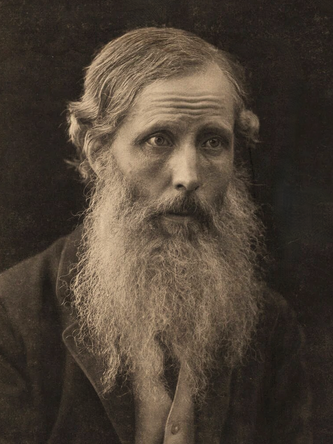
About Henry Sidgwick
Henry Sidgwick (31 May 1838 – 28 August 1900) was an English utilitarian philosopher and economist.
Best Henry Sidgwick Quotes
Shortest
Earliest
Explore our curated collection of the most famous and impactful Henry Sidgwick quotes.
“For philosophy and history alike have taught...to seek not what is "safe," but what is true.”

“A universal refusal to propagate the human species would be the greatest of conceivable crimes from a Utilitarian point of view”
“Each person is morally obliged to regard the good of anyone else as much as his own good, except when he judges it to be less, when impartially viewed, or less certainly knowable or attainable by him.”
“The good of any one individual is of no more importance, from the point of view...of the Universe, than the good of any other; unless, that is, there are special grounds for believing that more good is likely to be realized in the one case than in the other.”

“it seems scarcely extravagant to say that, amid all the profuse waste of the means of happiness which men commit, there is no imprudence more flagrant than that of Selfishness in the ordinary sense of the term,—that excessive concentration of attention on the individual’s own happiness which renders it impossible for him to feel any strong interest in the pleasures and pains of others.”

“I may begin by laying down as a principle that ‘all pain of human or rational beings is to be avoided’; and then afterwards may be led to enunciate the wider rule that ‘all pain is to be avoided’; it being made evident to me that the difference of rationality between two species of sentient beings is no ground for establishing a fundamental ethical distinction between their respective pains.”
“it is reasonable for a Utilitarian to praise any conduct more felicific in its tendency than what an average man would do under the given circumstances:—being aware of course that the limit down to which praiseworthiness extends must be relative to the particular state of moral progress reached by mankind generally in his age and country; and that it is desirable to make continual efforts to elevate this standard.”
“How far we are to consider the interests of posterity when they seem to conflict with those of now-existing human beings? The answer to this, though, seems clear: the time at which a man exists can’t affect the value of his happiness from a universal point of view; so the interests of posterity must concern a utilitarian as much as those of his contemporaries—except in that the effect of his actions on the lives and even the existence of posterity must be more uncertain.”
“Plato’s reason for claiming that the life of the Philosopher has more pleasure than that of the Sensualist is palpably inadequate. The philosopher, he argues, has tried both kinds of pleasure, sensual as well as intellectual, and prefers the delights of philosophic life; the sensualist ought therefore to trust his decision and follow his example. But who can tell that the philosopher’s constitution is not such as to render the enjoyments of the senses, in his case, comparatively feeble?”

“It is sometimes said that we live in an age that rejects authority. The statement, thus qualified, seems misleading; probably there never was a time when the number of beliefs held by each individual, undemonstrated and unverified by himself, was greater. But it is true that we only accept authority of a peculiar sort; the authority, namely, that is formed and maintained by the unconstrained agreement of individual thinkers, each of whom we believe to be seeking truth with single-mindedness and sincerity, and declaring what he has found with scrupulous veracity, and the greatest attainable exactness and precision.”

“We have next to consider who the “all” are, whose happiness is to be taken into account. Are we to extend our concern to all the beings capable of pleasure and pain whose feelings are affected by our conduct? or are we to confine our view to human happiness? The former view is the one adopted by Bentham and Mill, and (I believe) by the Utilitarian school generally: and is obviously most in accordance with the universality that is characteristic of their principle. It is the Good Universal, interpreted and defined as ‘happiness’ or ‘pleasure,’ at which a Utilitarian considers it his duty to aim: and it seems arbitrary and unreasonable to exclude from the end, as so conceived, any pleasure of any sentient being.”
“[T]he inhuman severity of the paradox that ‘pleasure and pain are indifferent to the wise man,’ never failed to have a repellent effect; and the imaginary rack on which an imaginary sage had to be maintained in perfect happiness, was at any rate a dangerous instrument of dialectical torment or the actual philosopher. Christianity extricated the moral consciousness from this dilemma between base subserviency and inhuman indifference to the feelings of the moral agent. It compromised the long conflict between Virtue and Pleasure, by transferring to another world the fullest realisation of both; thus enabling orthodox morality to assert itself, as reasonable and natural, without denying the concurrent reasonableness and naturalness of the individual’s desire for bliss without allow.”
“It is in their purely physical aspect, as complex processes of corporeal change, that [physical processes] are means to the maintenance of life: but so long as we confine our attention to their corporeal aspect,—regarding them merely as complex movements of certain particles of organised matter—it seems impossible to attribute to these movements, considered in themselves, either goodness or badness. I cannot conceive it to be an ultimate end of rational action to secure that these complex movements should be of one kind rather than another, or that they should be continued for a longer rather than a shorter period. In short, if a certain quality of human Life is that which is ultimately desirable, it must belong to human Life regarded on its psychical side, or, briefly, Consciousness.”

“Is it total or average happiness that we seek to make a maximum?...we foresee as possible that an increase in [population] numbers will be accompanied by a decrease in average happiness...if we take Utilitarianism to prescribe, as the ultimate end of action, happiness on the whole...it would follow that, if the additional population enjoy on the whole positive happiness, we ought to weigh the amount of happiness gained by the extra number against the amount lost by the remainder. So that, strictly conceived, the point up to which, on Utilitarian principles, population ought to be encouraged to increase, is not that at which average happiness is the greatest possible...but that at which the product formed by multiplying the number of persons living into the amount of average happiness reaches its maximum.”
“Now, I agree with Mill in holding that the scientific study of the structures and functions of the different governments that have actually existed in human societies cannot well be pursued in complete separation from the scientific study of other important elements of the societies in question: whether the aim of the student is to ascertain the causes of the differences in such governments or to examine their effects. But I do not think that there is any fundamental difference, in this respect, between the study of political relations and the study of economic relations, or, again, of religion, of art, of science and philosophy, as factors of social life. In each of these eases the student concentrates his attention on one element of human history which can only be partially separated from other components of the whole complex fact of social development. Experience seems to show that this kind of concentration, and consequent partial separation of historical and sociological study into special branches, is unavoidable in the division of intellectual labour which the growth of our knowledge renders necessary in a continually increasing degree.”
“[T]he history of thought […] reveal[s] discrepancy between the intuitions of one age and those of a subsequent generation. But where the conflicting beliefs are not contemporaneous, it is usually not clear that the earlier thinker would have maintained his conviction if confronted by the arguments of the later. The history of thought, however, I need hardly say, affords abundant instances of similar conflict among contemporaries; and as conversions are extremely rare in philosophical controversy, I suppose the conflict in most cases affects intuitions—what is self-evident to one mind is not so to another. It is obvious that in any such conflict there must be error on one side or the other, or on both. The natural man will often decide unhesitatingly that the error is on the other side. But it is manifest that a philosophic mind cannot do this, unless it can prove independently that the conflicting intuitor has an inferior faculty of envisaging truth in general or this kind of truth; one who cannot do this must reasonably submit to a loss of confidence in any intuition of his own that thus is found to conflict with another’s.”
“Many religious persons think that the highest reason for doing anything is that it is God’s Will: while to others ‘Self-realisation’ or ‘Self-development’, and to others, again, ‘Life according to nature’ appear the really ultimate ends. And it is not hard to understand why conceptions such as these are regarded as supplying deeper and more completely satisfying answers to the fundamental question of Ethics, than those before named: since they do not merely represent I what ought to be, as such; they represent it in an apparently simple relation to what actually is. God, Nature, Self, are the fundamental facts of existence; the knowledge of what will accomplish God’s Will, what is, ‘according to Nature’, what will realise the true Self in each of us, would seem to solve the deepest problems of Metaphysics as well as of Ethics. But […] [t]he introduction of these notions into Ethics is liable to bring with it a fundamental confusion between “what is” and “what ought to be”, destructive of all clearness in ethical reasoning: and if this confusion is avoided, the strictly ethical import of such notions, when made explicit, appears always to lead us to one or other of the methods previously distinguished.”

Henry Sidgwick Quotes by Topic
Find exactly what you are looking for by browsing this categorized list of Henry Sidgwick quotes by topic.
Henry Sidgwick on Utilitarianism 3 quotes
“The good of any one individual is of no more importance, from the point of view...of the Universe, than the good of any other; unless, that is, there are special grounds for believing that more good is likely to be realized in the one case than in the other.”

Henry Sidgwick on Thought
Henry Sidgwick on Population ethics
“Is it total or average happiness that we seek to make a maximum?...we foresee as possible that an increase in [population] numbers will be accompanied by a decrease in average happiness...if we take Utilitarianism to prescribe, as the ultimate end of action, happiness on the whole...it would follow that, if the additional population enjoy on the whole positive happiness, we ought to weigh the amount of happiness gained by the extra number against the amount lost by the remainder. So that, strictly conceived, the point up to which, on Utilitarian principles, population ought to be encouraged to increase, is not that at which average happiness is the greatest possible...but that at which the product formed by multiplying the number of persons living into the amount of average happiness reaches its maximum.”

What Henry Sidgwick Said About Others
Discover personal opinions Henry Sidgwick shared regarding contemporaries.
Henry Sidgwick on Henry James Sumner Maine
“I have been reading Maine in the Quarterly—the best anti-democratic writing that we have had. He dined with us this evening: seems really concerned that we have no proper constitution in England: thinks it would be a real gain to have a constitutional code settled by Act of Parliament. Of course it could not have binding force for future Parliaments, but—there is valuable efficacy in the written word; if judiciously written it would be difficult to alter. The genuine alarm that M. seems to feel at the existing state of things in England impressed me much, since his intellect has always seemed to me a very cool and disengaged one.”

Henry Sidgwick on Bernard Mandeville
“He can hardly be called a "moralist;" and though it is impossible to deny him a considerable share of philosophical penetration, his anti-moral paradoxes have not even apparent coherence. He is convinced that virtue (where it is more than a mere pretence) is purely artificial; but he is not quite certain whether it is a useless trammel of appetites and passions that are advantageous to society, or a device creditable to the politicians who introduced it by playing upon the "pride and vanity" of the "silly creature man." The view, however, to which he gave eccentric expression, that moral regulation is something alien to the natural man and imposed on him from without, seems to have been very current in the polite society of his time, as we learn both from Berkeley's Alciphron and from Butler's more famous sermons.”

Quotes About Henry Sidgwick
Gain deeper perspective through quotes about Henry Sidgwick from others.
G. E. M. Anscombe on Henry Sidgwick
“The denial of any distinction between foreseen and intended consequences, as far as responsibility is concerned, was not made by Sidgwick in developing any one 'method of ethics'; he made this important move on behalf of everybody and just on its own account; and I think it plausible to suggest that this move on the part of Sidgwick explains the difference between old-fashioned Utilitarianism and the consequentialism, as I name it, which marks him and every English academic moral philosopher since him.”

Friedrich Hayek on Henry Sidgwick
“The last comprehensive attempt to restate the principles of a free society, already much qualified and in the restrained form expected of an academic textbook, is Henry Sidgwick, The Elements of Politics (London: Macmillan, 1891). Though in many respects an admirable work, it scarcely represents what must be regarded as the British liberal tradition and is strongly tainted with that rationalist utilitarianism which led to socialism.”

Robert Skidelsky on Henry Sidgwick
“Despite his inability to build a system, Sidgwick had made Cambridge Benthamite in its social reasoning. Perhaps this development was always inevitable in a university which had aimed to turn out mathematical rather than classical curates. But it had important consequences. Only a philosophy based on a hedonistic calculus could provided exact reasoning about social policy. Alfred Marshall was a product of Sidgwick's Cambridge. On the other hand, Sidgwick left moral philosophy in a mess. Intuitionist ideas revived, with an admixture of Hegelianism, in the more dynamic form of Idealism. But its headquarters were at Oxford rather than Cambridge; its high priests the Oxford philosophers Bradley and T. H. Green. Cambridge had become too critical, too empirical, to accept its ethics in metaphysical form. The way was open for G. E. Moore to construct a Cambridge system detached from both Benthamism and metaphysics. Moore was as much a product of Sidgwick's failure as was Marshall.”
Ritchie on Henry Sidgwick
“The method is Bentham's; but there is none of Bentham's strong critical antagonism to the institutions of his time, and the mode of thought is much more what we might expect from an end-of-the-nineteenth-century Blackstone, or from an English Hegel, showing the rationality of the existing order of things, with only a few modest proposals of reform. If this is Benthamism, it is Benthamism grown tame and sleek.”
Peter Singer on Henry Sidgwick
“J. J. C. Smart, a prominent 20th-century utilitarian, said simply that [Sidgwick's] The Methods is ‘the best book ever written on ethics’. Derek Parfit agreed with that judgement, acknowledging that some books, like Plato’s Republic and Aristotle’s Ethics, are greater achievements, but noting that because Sidgwick could build on the work of his predecessors, The Methods ‘contains the largest number of true and important claims’.”

About Henry Sidgwick
Henry Sidgwick (31 May 1838 – 28 August 1900) was an English utilitarian philosopher and economist.