Link Copied!
Henry Melvill Quotes (1798-1871)

About Henry Melvill
Henry Melvill (1798–1871) was a priest in the Church of England and principal of the East India Company College from 1844-1858. Afterwards, he served as Canon of St Paul's Cathedral.
Best Henry Melvill Quotes
Shortest
Earliest
Explore our curated collection of the most famous and impactful Henry Melvill quotes.
“Indifference, if let alone, will produce obduracy; and obduracy, if let alone, will produce torment.”
“An uneducated population may be degraded; a population educated, but not in righteousness, will be ungovernable. The one may be slaves, the other must be tyrants.”
“An uneducated population may be degraded; a population educated, but not in righteousness, will be ungovernable. The one may be slaves, the other must be tyrants.”
“Praise is the best auxiliary to prayer; and he who most bears in mind what has been done for him by God will be most emboldened to supplicate fresh gifts from above.”
“In proportion as we " grow in grace and in the knowledge of Christ," we shall grow in the desire that the Redeemer's sovereignty may be more widely and visibly extended.”

“Able to save to the uttermost, "Lord to whom shall we go; Thou hast the words of eternal life?" Thou who hast abolished death, upon whom else shall we suspend our immortality?”
“I learn the depth to which I have sunk from the length of the chain let down to up-draw me. I ascertain the mightiness of the ruin by examining the machinery for restoration.”
“As revelation is the great strengthener of reason, the march of mind which leaves the Bible in the rear, is an advance, like that of our first parents in Paradise, towards knowledge, but, at the same time, towards death.”

“As revelation is the great strengthener of reason, the march of mind which leaves the Bible in the rear, is an advance, like that of our first parents in Paradise, towards knowledge, but, at the same time, towards death.”
“We glory most in the fact, that Scripture so commends itself to the conscience, and experience so bears out the Bible, that the gospel can go the round of the world, and carry with it, in all its travel, its own mighty credentials.”


“The Scriptural doctrine in regard to repentance is not, that a man must repent in order to his being qualified to go to Christ; it is rather, that he must go to Christ in order to his being able to repent. From Him comes the grace of contrition as well as the cleansing of expiation.”
“Then re-united to the friends with whom vve took sweet counsel upon earth, we shall recount our toil, only to heighten our ecstasy; and call to mind the toil and the din of war, oniy that, with a more bounding throb and a richer song, we may fee! and celebrate the wonders of redemption.”
“And is not this a great salvation, great in its simplicity, great in its comprehensiveness, which thus meets the every necessity of the guilty and helpless; and which, arranged for creatures whom it finds in the lowest degradation, leaves them not till elevated to the very summit of dignity?”
“The Bible tells me explicitly that Christ was God; and it tells me, as explicitly that Christ was man. It does not go on to state the modus or manner of the union. I stop, therefore, where the Bible stops. I bow before a God-man as my Mediator, but I own as inscrutable the mysteries of His person.”
“Let reason count the stars, weigh the mountains, fathom the depths — the employment becomes her, and the success is glorious. But when the question is, "How shall man be just with God?" reason must be silent, revelation must speak; and he who will not hear it assimilates himself to the first deist, Cain; he may not kill a brother, he certainly destroys himself.”

“God is summoning you. Angels are summoning you. The myriads who have gone before are summoning you. We are surrounded by a "great cloud of witnesses." The battlements of the sky seem thronged with those who have fought the good fight of faith. They bend down from the eminence, and bid us ascend, through the one Mediator, to the same lofty dwelling.”
“Faith — saving faith — whatever other definition may be framed — is best described as that act of the soul by which the whole man is given over to the guardianship of the Mediator. He who thus resigns himself to Jesus avouches two things: first, his belief that he needs a protector; secondly, his belief that Christ is just that protector which his necessities require.”
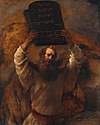
“O that we may all be living in such a state of preparedness, that, when summoned to depart, we may ascend the summit whence faith looks forth on all that Jesus hath suffered and done, and exclaiming, " We have waited for Thy salvation, O Lord," lie down with Moses on Pisgah, to awake with Moses in paradise.”
“Ye will not pray; ye will not shun temptation; ye will not renounce known sin; ye will not fight against evil habits! Are ye stronger than God? Can ye contend with the Eternal One? Have ye the nerve which shall not tremble, and the flesh which shall not quiver, and the soul which shall not quail, when the sheet of fire is round the globe, and thousand times ten thousand angels line the sky, and call to judgment?”

“We know, and we feel, that the vast business of our redemption, arranged in the councils of the far-back eternity, and acted out amid the wonderings and throbbings of the universe, could not have been that stupendous transaction which gave God glory by giving sinners safety, if the inspired account brought its dimensions within the compass of a human arithmetic, or denned its issues by the lines of a human demarcation.”

“There is not one of you whose actions do not operate on the actions of others — operate, we mean, in the way of example. He would be insignificant who could only destroy his own soul; but you are all, alas! of importance enough to help also to destroy the souls of others. ...'''Ye cannot live for yourselves; a thousand fibres connect you with your fellow-men, and along those fibres, as along sympathetic threads, run your actions as causes, and return to you as effects.”
“Glorious transformation! glorious translation! I seem already to behold the wondrous scene. The sea and the land have given up their dead! the quickened myriads have been judged according to their works. And now, an innumerable company, out of all nations and tribes and tongues, ascend with the Mediator towards the kingdom of His Father. Can it be that these, who were born children of earth, who were long enemies to God by wicked works, are to enter the bright scenes of paradise? Yes, He who leads them has washed them in His blood; He who leads them has sanctified them by His Spirit.”
Henry Melvill Quotes by Topic
Find exactly what you are looking for by browsing this categorized list of Henry Melvill quotes by topic.
Henry Melvill on Mystery 3 quotes
“The Bible tells me explicitly that Christ was God; and it tells me, as explicitly that Christ was man. It does not go on to state the modus or manner of the union. I stop, therefore, where the Bible stops. I bow before a God-man as my Mediator, but I own as inscrutable the mysteries of His person.”
Henry Melvill on Impenitence 2 quotes
“God is summoning you. Angels are summoning you. The myriads who have gone before are summoning you. We are surrounded by a "great cloud of witnesses." The battlements of the sky seem thronged with those who have fought the good fight of faith. They bend down from the eminence, and bid us ascend, through the one Mediator, to the same lofty dwelling.”

Henry Melvill on Apathy
“Indifference, if let alone, will produce obduracy; and obduracy, if let alone, will produce torment.”

Henry Melvill on Hope
“Hope proves man deathless. It is the struggle of the soul, breaking loose from what is perishable, and attesting her eternity.”

Henry Melvill on Education
“An uneducated population may be degraded; a population educated, but not in righteousness, will be ungovernable. The one may be slaves, the other must be tyrants.”

Henry Melvill on Sin
“I learn the depth to which I have sunk from the length of the chain let down to up-draw me. I ascertain the mightiness of the ruin by examining the machinery for restoration.”

Henry Melvill on Knowledge
“As revelation is the great strengthener of reason, the march of mind which leaves the Bible in the rear, is an advance, like that of our first parents in Paradise, towards knowledge, but, at the same time, towards death.”

Henry Melvill on Repentance
“The Scriptural doctrine in regard to repentance is not, that a man must repent in order to his being qualified to go to Christ; it is rather, that he must go to Christ in order to his being able to repent. From Him comes the grace of contrition as well as the cleansing of expiation.”

Henry Melvill on Heaven
“Then re-united to the friends with whom vve took sweet counsel upon earth, we shall recount our toil, only to heighten our ecstasy; and call to mind the toil and the din of war, oniy that, with a more bounding throb and a richer song, we may fee! and celebrate the wonders of redemption.”

Henry Melvill on Sacrament
“And is not this a great salvation, great in its simplicity, great in its comprehensiveness, which thus meets the every necessity of the guilty and helpless; and which, arranged for creatures whom it finds in the lowest degradation, leaves them not till elevated to the very summit of dignity?”

Henry Melvill on Death
“O that we may all be living in such a state of preparedness, that, when summoned to depart, we may ascend the summit whence faith looks forth on all that Jesus hath suffered and done, and exclaiming, " We have waited for Thy salvation, O Lord," lie down with Moses on Pisgah, to awake with Moses in paradise.”

Henry Melvill on Deism
“Let reason count the stars, weigh the mountains, fathom the depths — the employment becomes her, and the success is glorious. But when the question is, "How shall man be just with God?" reason must be silent, revelation must speak; and he who will not hear it assimilates himself to the first deist, Cain; he may not kill a brother, he certainly destroys himself.”

Henry Melvill on Reason
“Let reason count the stars, weigh the mountains, fathom the depths — the employment becomes her, and the success is glorious. But when the question is, " How shall man be just with God?" reason must be silent, revelation must speak; and he who will not hear it assimilates himself to the first deist, Cain; he may not kill a brother, he certainly destroys himself.”
Henry Melvill on Connection
“There is not one of you whose actions do not operate on the actions of others — operate, we mean, in the way of example. He would be insignificant who could only destroy his own soul; but you are all, alas! of importance enough to help also to destroy the souls of others. ...'''Ye cannot live for yourselves; a thousand fibres connect you with your fellow-men, and along those fibres, as along sympathetic threads, run your actions as causes, and return to you as effects.”

Henry Melvill on Last Judgment
“Glorious transformation! glorious translation! I seem already to behold the wondrous scene. The sea and the land have given up their dead! the quickened myriads have been judged according to their works. And now, an innumerable company, out of all nations and tribes and tongues, ascend with the Mediator towards the kingdom of His Father. Can it be that these, who were born children of earth, who were long enemies to God by wicked works, are to enter the bright scenes of paradise? Yes, He who leads them has washed them in His blood; He who leads them has sanctified them by His Spirit.”

What Henry Melvill Said About Others
Discover personal opinions Henry Melvill shared regarding contemporaries.
Henry Melvill on Jesus 2 quotes
“There is truth in Jesus which is terrible, as well as truth that is soothing'''; terrible, for He shall be Judge as well as Saviour; and ye cannot face Him, ye cannot stand before Him, unless ye now give ear to His invitation.”
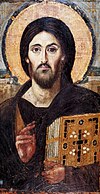
About Henry Melvill
Henry Melvill (1798–1871) was a priest in the Church of England and principal of the East India Company College from 1844-1858. Afterwards, he served as Canon of St Paul's Cathedral.