Link Copied!
Henry Liddon Quotes (1829-1890)
Theologian


About Henry Liddon
Henry Parry Liddon (20 August 1829 – 9 September 1890) was an English theologian and clergyman. In 1867, he visited Russia with Lewis Carroll.
Best Henry Liddon Quotes
Shortest
Earliest
Explore our curated collection of the most famous and impactful Henry Liddon quotes.
“The question of Christ's Divinity is the question of the truth or falsehood of Christianity.”


“Liberalism itself is, on all matters connected with Church and Education, only a kind of corporate and 'respectable' ungodliness.”

“Prayer is the act by which man, detaching himself from the embarrassments of sense and nature, ascends to the true level of his destiny.”
“The real difficulty with thousands in the present day is not that Christianity has been found wanting, but that it has never been seriously tried.”

“The life of man is made up of action and endurance; and life is fruitful in the ratio in which it is laid out in noble action or in patient perseverance.”

“A deliberate rejection of duty prescribed by already recognized truth cannot but destroy, or at least impair most seriously, the clearness of our mental vision.”
“Depend upon it, my younger brethren, the bright, self-sacrificing enthusiasms of early manhood are among the most precious things in the whole course of human life.”
“Look to the end; and resolve to make the service of Christ the first object in what remains of life, without indifference to the opinion of your fellow-men, but also without fear of it.”
“The truth is I suppose that a tour lays in a great stock of thought and spirits for the future; the fatigue and drawbacks of actual travelling are forgotten and a bright residuum remains.”
“What we do upon a great occasion will probably depend upon what we already are; what we are will be the result of previous years of self-discipline, under the grace of Christ, or of the absence of it.”
“It is only Jesus Christ who has thrown light on life and immortality through the Gospel; and because He has done so, and has enabled us by His Atoning Death and Intercession to make the most of this discovery, His Gospel is, for all who will, a power of God unto salvation.”

“Augustine of Hippo used to say that, but for God's grace, he should have been capable of committing any crime; and it is when we feel this sincerely, that we are most likely to be really improving, and best able to give assistance to others without moral loss to ourselves.”
“Resignation,—not to a whirlwind of inexorable forces, not to a brutal fate or destiny, not to powers who cannot see or hear or feel, but to One Who lives forever, and Who loves us well, and Who has given us all that we have, ay, life itself, that we may at His bidding freely give it back to Him.”
“Dodgson was overcome by the beauty of Cologne Cathedral. I found him leaning against the rails of the Choir and sobbing like a child. When the verger came to show us over the chapels behind the Choir, he got out of the way, he said that he could not bear the harsh voice of the man in the presence of so much beauty.”
“If Christianity has really come from heaven, it must renew the whole life of man; it must govern the life of nations no less than that of individuals; it must control a Christian when acting in his public and political capacity as completely as when he is engaged in the duties which belong to him as a member of a family circle.”

“The Divine Christ has died on the Cross a Victim for the sins of the world: what is He doing now? Did His redemptive love exhaust itself in the days of His flesh? The past has been forgiven; but has any provision been made for the future? Have we been reconciled to God by the death of His Son, but is there no salvation through His risen life?”
“Worship is the earthly act by which we most distinctly recognize our personal immortality: men who think that they will be extinct a few years hence do not pray. In worship we spread out our insignificant life, which yet is the work of the Creator's hands, and the purchase of the Redeemer's Blood, before the Eternal and All-Merciful, that we may learn the manners of a higher sphere, and fit ourselves for companionship with saints and angels, and for the everlasting sight of the face of God.”

“Thus the word reveals the Divine Essence; His Incarnation makes that Life, that Love, that Light, which is eternally resident in God, obvious to souls that steadily contemplate Himself. These terms, Life, Love, Light—so abstract, so simple, so suggestive—meet in God; but they meet also in Jesus Christ. They do not only make Him the centre of a philosophy; they belong to the mystic language of faith more truly than to the abstract terminology of speculative thought. They draw hearts to Jesus; they invest Him with a higher than any intellectual beauty.”
“A traveller in Cornwall, when gazing at the masses of mighty rock which defy, and look as if they might defy for ever, the continuous onslaught of the Atlantic, has expressed a thought which comes to most men at some time in their lives. The magnificence and the awe of nature fills him with an oppressive sense of the relative insignificance of man. A few years hence and he will be beneath the sod; but those cliffs will stand, as now, facing the ocean, incessantly lashed by its waves, yet unshaken, immovable; and other eyes will gaze on them for their brief day of life, and then they, too, will close.”
“The Divine Logos is God reflected in His own eternal Thought; in the Logos God is His own Object. This infinite Thought, the reflection and counterpart of God, subsisting in God as a Being or Hypostasis, and having a tendency to self-communication,—such is the Logos. The Logos is the Thought of God, not intermittent and precarious like human thought, but subsisting with the intensity of a personal form. The very expression seems to court the argument of Athenagoras, that since God could never have been ἀλογος, the Logos must have been not created but eternal.”
Henry Liddon Quotes by Topic
Find exactly what you are looking for by browsing this categorized list of Henry Liddon quotes by topic.
Henry Liddon on Action 2 quotes
“The history of the Church of Christ from the days of the Apostles has been a history of spiritual movements.”
Henry Liddon on Prayer 2 quotes
“Prayer is the act by which man, detaching himself from the embarrassments of sense and nature, ascends to the true level of his destiny.”
Henry Liddon on Liberalism
“Liberalism itself is, on all matters connected with Church and Education, only a kind of corporate and 'respectable' ungodliness.”
Henry Liddon on Duty
“A deliberate rejection of duty prescribed by already recognized truth cannot but destroy, or at least impair most seriously the clearness of our mental vision.”
Henry Liddon on Enthusiasm
“Depend upon it, my younger brethren, the bright, self-sacrificing enthusiasms of early manhood are among the most precious things in the whole course of human life.”
Henry Liddon on Ability
“What we do upon a great occasion will probably depend upon what we already are; what we are will be the result of previous years of self-discipline, under the grace of Christ or the absence of it.”
Henry Liddon on Knowledge
Henry Liddon on Life
“A few years hence and he will be beneath the sod; but those cliffs will stand, as now, facing the ocean, incessantly lashed by its waves, yet unshaken, immovable; and other eyes will gaze on them for their brief day of life, and then they, too, will close.”
Henry Liddon on Sin
“St. Augustine used to say that, but for God's grace, he should have been capable of committing any crime; and it is when we feel this sincerely, that we are most likely to be really improving, and best able to give assistance to others without moral loss to ourselves.”
What Henry Liddon Said About Others
Discover personal opinions Henry Liddon shared regarding contemporaries.
Henry Liddon on Lewis Carroll
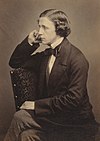
“Dodgson was overcome by the beauty of Cologne Cathedral. I found him leaning against the rails of the Choir and sobbing like a child. When the verger came to show us over the chapels behind the Choir, he got out of the way, he said that he could not bear the harsh voice of the man in the presence of so much beauty.”
Henry Liddon on John Keble
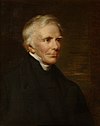
“Much against his will, but for a great many persons of very various characters who but for him might have fallen under very different influences, he became a sort of religious "court of final appeal." When all else had been said and done, people would wait and see what came from Hursley, before they made up their minds as to the path of duty.”
About Henry Liddon
Henry Parry Liddon (20 August 1829 – 9 September 1890) was an English theologian and clergyman. In 1867, he visited Russia with Lewis Carroll.