Link Copied!
Henry L. Stimson Quotes (1867-1950)
President, Politician
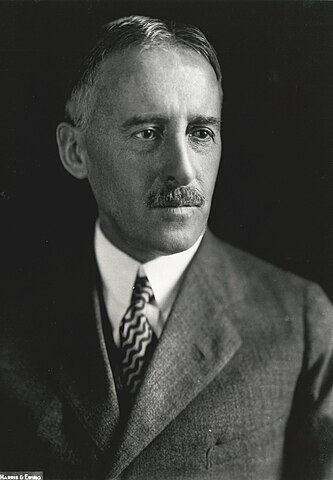

About Henry L. Stimson
Henry Lewis Stimson (September 21, 1867 – October 20, 1950) was an American statesman, lawyer and Republican Party politician and spokesman on foreign policy. He served as Secretary of War (1911–1913) under Republican William Howard Taft, and as Governor-General of the Philippines (1927–1929). As Secretary of State (1929–1933) under Republican President Herbert Hoover, he articulated the Stimson Doctrine which announced American opposition to Japanese expansion in Asia. He again served as Secretary of War (1940–1945) under Democrats Franklin D. Roosevelt and Harry S. Truman, and was a leading hawk calling for war against Nazi Germany. During World War II he took charge of raising and training 13 million soldiers and airmen, supervised the spending of a third of the nation's GDP on the Army and the Air Forces, helped formulate military strategy, and oversaw the building and use of the atomic bomb.
Best Henry L. Stimson Quotes
Shortest
Earliest
Explore our curated collection of the most famous and impactful Henry L. Stimson quotes.

“we needed the Japanese to commit the first overt act”

“The second generation Japanese can only be evacuated either as part of a total evacuation, giving access to the areas only by permits, or by frankly trying to put them out on the ground that their racial characteristics are such that we cannot understand or trust even the citizen Japanese. The latter is the fact but I am afraid it will make a tremendous hole in our constitutional system.”
“When the news first came that Japan had attacked us, my first feeling was of relief that the indecision was over and that a crisis had come in a way which would unite all our people. This continued to be my dominant feeling in spite of the news of catastrophes which quickly developed. For I feel that this country united has practically nothing to fear, while the apathy and divisions stirred up by unpatriotic men have been hitherto very discouraging.”

“The decision to weigh Lieut. Gen. Patton's great services to his country, in World War I and World War II, from these shores to Casablanca and through Tunisia to triumph in Sicily, on the one hand, against an indefensible act on the other, was Gen. Eisenhower's.
As his report shows, General Eisenhower in making his decision also considered the value to our country of General Patton's aggressive, winning leadership in the bitter battles which are to come before final victory. I am confident that you will agree with me that Gen. Eisenhower's decision, under these difficult circumstances, was right and proper.”
As his report shows, General Eisenhower in making his decision also considered the value to our country of General Patton's aggressive, winning leadership in the bitter battles which are to come before final victory. I am confident that you will agree with me that Gen. Eisenhower's decision, under these difficult circumstances, was right and proper.”
Henry L. Stimson Quotes by Topic
Find exactly what you are looking for by browsing this categorized list of Henry L. Stimson quotes by topic.
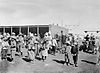
Henry L. Stimson on Concentration camp
“The second generation Japanese can only be evacuated either as part of a total evacuation, giving access to the areas only by permits, or by frankly trying to put them out on the ground that their racial characteristics are such that we cannot understand or trust even the citizen Japanese. The latter is the fact but I am afraid it will make a tremendous hole in our constitutional system.”
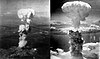
Henry L. Stimson on Atomic bombings of Hiroshima and Nagasaki
“My chief purpose was to end the war in victory with the least possible cost in the lives of the men in the armies which I had helped to raise. In the light of the alternatives which, on a fair estimate, were open to us I believe that no man, in our position and subject to our responsibilities, holding in his hands a weapon of such possibilities for accomplishing this purpose and saving those lives, could have failed to use it and afterwards looked his countrymen in the face.”
What Henry L. Stimson Said About Others
Discover personal opinions Henry L. Stimson shared regarding contemporaries.
Henry L. Stimson on Pierre Laval 2 quotes
“Laval stands in a class by himself for frankness and directness and simplicity and he is different from all other Frenchmen with whom I have negotiated in these respects.”

Henry L. Stimson on Dwight D. Eisenhower
“The decision to weigh Lieut. Gen. Patton's great services to his country, in World War I and World War II, from these shores to Casablanca and through Tunisia to triumph in Sicily, on the one hand, against an indefensible act on the other, was Gen. Eisenhower's. As his report shows, General Eisenhower in making his decision also considered the value to our country of General Patton's aggressive, winning leadership in the bitter battles which are to come before final victory. I am confident that you will agree with me that Gen. Eisenhower's decision, under these difficult circumstances, was right and proper.”

Henry L. Stimson on George S. Patton
“The decision to weigh Lieut. Gen. Patton's great services to his country, in World War I and World War II, from these shores to Casablanca and through Tunisia to triumph in Sicily, on the one hand, against an indefensible act on the other, was Gen. Eisenhower's. As his report shows, General Eisenhower in making his decision also considered the value to our country of General Patton's aggressive, winning leadership in the bitter battles which are to come before final victory. I am confident that you will agree with me that Gen. Eisenhower's decision, under these difficult circumstances, was right and proper.”
Quotes About Henry L. Stimson
Gain deeper perspective through quotes about Henry L. Stimson from others.
J. Robert Oppenheimer quoted by Kai Bird on Henry L. Stimson
“I remember Mr. Stimson saying to me that he thought it appalling that there should be no protests over the air raids which we were conducting over Japan, which in the case of Tokyo led to such extraordinarily heavy loss of life. He didn't say that the air strikes shouldn't be carried on, but he did think that there was something wrong with a country where no one questioned that ...”
About Henry L. Stimson
Henry Lewis Stimson (September 21, 1867 – October 20, 1950) was an American statesman, lawyer and Republican Party politician and spokesman on foreign policy. He served as Secretary of War (1911–1913) under Republican William Howard Taft, and as Governor-General of the Philippines (1927–1929). As Secretary of State (1929–1933) under Republican President Herbert Hoover, he articulated the Stimson Doctrine which announced American opposition to Japanese expansion in Asia. He again served as Secretary of War (1940–1945) under Democrats Franklin D. Roosevelt and Harry S. Truman, and was a leading hawk calling for war against Nazi Germany. During World War II he took charge of raising and training 13 million soldiers and airmen, supervised the spending of a third of the nation's GDP on the Army and the Air Forces, helped formulate military strategy, and oversaw the building and use of the atomic bomb.