Henry Adams Quotes (1838-1918)










About Henry Adams
Best Henry Adams Quotes
Explore our curated collection of the most famous and impactful Henry Adams quotes.























"But George, I don't love you, I love him."”













"Of course I do!" replied Hazard stiffly.
"To me it seems a shocking idea. I despise and loathe myself, and yet you thrust self at me from every corner of the church as though I loved and admired it. All religion does nothing but pursue me with self even into the next world."”

Society swarmed with exaggerated characters; it contained little else.
Often this eccentricity bore all the marks of strength; perhaps it was actual exuberance of force, a birthmark of genius. Boston thought so. The Bostonian called it national character — native vigor — robustness — honesty — courage. He respected and feared it.
”




...the huge church [...] was thundering its gospel under her eyes.
To have Niagara for a rival is no joke. Hazard spoke with no such authority; and Esther's next idea was one of wonder how, after listening here, any preacher could have the confidence to preach again. "What do they know about it?" she asked herself. "Which of them can tell a story like this, or a millionth part of it?"
”


"Does your idea mean that the next world is a sort of great reservoir of truth, and that what is true in us just pours into it like raindrops?"
"Well!" said he, alarmed and puzzled: "the figure is not perfectly correct, but the idea is a little of that kind."
"After all I wonder whether that may not be what Niagara has been telling me!" said Esther, and she spoke with an outburst of energy that made Strong's blood run cold.”






Whatever prize he wanted lay ready for him — scientific social, literary, political — and he knew how to take them in turn. With ordinary luck he would die at eighty the richest and most many-sided genius of his day.
So little egoistic he was that none of his friends felt envy of his extraordinary superiority, but rather grovelled before it, so that women were jealous of the power he had over men; but women were many and Kings were one. The men worshipped not so much their friend, as the ideal American they all wanted to be.
”

Thomas [...] could offer no proof of it, but he could assume as probable a plan of good which became the more perfect for the very reason that it allowed great liberty in detail.
One hardly feels Saint Thomas here in all his force. He offers suggestion rather than proof;— apology, the weaker because of obvious effort to apologise, rather than defence, for infinite Goodness, Justice and Power; [...] but at all events society has never done better by way of proving its right to enforce morals, or unity of opinion. Unless it asserts law, it can only assert force.
”



This education startled even a man who had dabbled in fifty educations all over the world; for, if he were obliged to insist on a Universe, he seemed driven to the Church. Modern science guaranteed no unity. The student seemed to feel himself, like all his predecessors, caught, trapped, meshed in this eternal drag-net of religion.
In practice the student escapes this dilemma in two ways: the first is that of ignoring it, as one escapes most dilemmas; the second is that the Church rejects pantheism as worse than atheism, and will have nothing to do with the pantheist at any price.
”

...he took his lesson of political morality as learned, his notice to quit as duly served, and supposed his education to be finished.
Everyone thought so, and the whole City was in a turmoil. Any intelligent education ought to end when it is complete. One would then feel fewer hesitations and would handle a surer world. The old-fashioned logical drama required unity and sense; the actual drama is a pointless puzzle, without even an intrigue. When the curtain fell on Gladstone's speech, any student had the right to suppose the drama ended; none could have affirmed that it was about to begin; that one's painful lesson was thrown away.
”


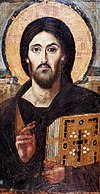
At Chartres Christ is identified with his Mother, the spirit of love and grace, and his Church is the Church Triumphant.
Not only is Fear absent; there is not even a suggestion of pain; there is not a martyr with the symbol of his martyrdom; and what is still more striking, in the sculptured life of Christ, from the Nativity to the Ascension, which adorns the capitals of the columns, the single scene that has been omitted is the Crucifixion. There, as everywhere in this Portal, the artists seem actually to have gone out of their way to avoid a suggestion of suffering.
”


His superiority was, indeed, real and incontestable; he was the classical ornament of the anti-slavery party; their pride in him was unbounded, and their admiration outspoken.
The boy Henry worshipped him, and if he ever regarded any older man as a personal friend, it was Mr. Sumner. The relation of Mr. Sumner in the household was far closer than any relation of blood. None of the uncles approached such intimacy. Sumner was the boy's ideal of greatness; the highest product of nature and art. The only fault of such a model was its superiority which defied imitation. To the twelve-year-old boy, his father, Dr. Palfrey, Mr. Dana, were men, more or less like what he himself might become; but Mr. Sumner was a different order — heroic.
”The English themselves hardly conceived that their mind was either economical, sharp, or direct; but the defect that most struck an American was its enormous waste in eccentricity. Americans needed and used their whole energy, and applied it with close economy; but English society was eccentric by law and for sake of the eccentricity itself.
The commonest phrase overheard at an English club or dinner-table was that So-and-So "is quite mad." It was no offence to So-and-So; it hardly distinguished him from his fellows; and when applied to a public man, like Gladstone, it was qualified by epithets much more forcible. Eccentricity was so general as to become hereditary distinction. It made the chief charm of English society as well as its chief terror.
”

We are concerned with the artistic and social side of life, and have only to notice the coincidence that while the Virgin was miraculously using the power of spiritual love to elevate and purify the people, Eleanor and her daughters were using the power of earthly love to discipline and refine the Courts. Side by side with the crude realities about them, they insisted on teaching and enforcing an ideal that contradicted the realities, and had no value for them or for us except in the contradiction.
The ideals of Eleanor and her daughter Mary of Champagne were a form of religion, and if you care to see its evangels, you had best go directly to Dante and Petrarch.
”The result might have been stated in a mathematical formula as early as the time of Archimedes, six hundred years before Rome fell. The economic needs of a violently centralizing society forced the empire to enlarge its slave-system until the slave-system consumed itself and the empire too, leaving society no resource but further enlargement of its religious system in order to compensate for the losses and horrors of the failure. For a vicious circle, its mathematical completeness approached perfection. The dynamic law of attraction and reaction needed only a Newton to fix it in algebraic form.
At last, in 410, Alaric sacked Rome, and the slave-ridden, agricultural, uncommercial Western Empire — the poorer and less Christianized half — went to pieces.
”
He was the more surprised to see that Sumner invited a renewal of old relations. He found himself treated almost confidentially. Not only was he asked to make a fourth at Sumner's pleasant little dinners in the house on La Fayette Square, but he found himself admitted to the Senator's study and informed of his views, policy and purposes, which were sometimes even more astounding than his curious gaps or lapses of omniscience.
On the whole, the relation was the queerest that Henry Adams ever kept up. He liked and admired Sumner, but thought his mind a pathological study. At times he inclined to think that Sumner felt his solitude, and, in the political wilderness, craved educated society; but this hardly told the whole story. Sumner's mind had reached the calm of water which receives and reflects images without absorbing them; it contained nothing but itself.
”


With very slight straining of equivalents, Thomas might now be written thus:—
By the term God, is meant a Prime Mover which supplies all energy to the universe, and acts directly on man as well as on all other creatures, moving him as a mechanical motor might do; but man, being specially provided with an organism more complex than the organisms of other creatures, enjoys an exceptional capacity for reflex action,— a power of reflexion,— which enables him within certain limits to choose between paths; and this singular capacity is called free choice or free-will. Of course, the reflexion is not choice, and though a man's mind reflected as perfectly as the facets of a lighthouse lantern, it would never reach a choice without an energy which impels it to act. [...]
The scheme seems to differ little, and unwillingly, from a system of dynamics as modern as the dynamo.
”

As he lay on Wenlock Edge, with the sheep nibbling the grass close about him as they or their betters had nibbled the grass — or whatever there was to nibble — in the Silurian kingdom of Pteraspis, he seemed to have fallen on an evolution far more wonderful than that of fishes. He did not like it; he could not account for it; and he determined to stop it. Never since the days of his Limulus ancestry had any of his ascendants thought thus. Their modes of thought might be many, but their thought was one. Out of his millions of millions of ancestors, back to the Cambrian mollusks, every one had probably lived and died in the illusion of Truths which did not amuse him, and which had never changed. Henry Adams was the first in an infinite series to discover and admit to himself that he really did not care whether truth was, or was not, true. He did not even care that it should be proved true, unless the process were new and amusing. He was a Darwinian for fun.
From the beginning of history, this attitude had been branded as criminal — worse than crime — sacrilege! Society punished it ferociously and justly, in self-defence.
”
Home influences alone never saved the New England boy from ruin, though sometimes they may have helped to ruin him; and the influences outside of home were negative. If school helped, it was only by reaction. The dislike of school was so strong as to be a positive gain. The passionate hatred of school methods was almost a method in itself. Yet the day-school of that time was respectable, and the boy had nothing to complain of. In fact, he never complained. He hated it because he was here with a crowd of other boys and compelled to learn by memory a quantity of things that did not amuse him. His memory was slow, and the effort painful. For him to conceive that his memory could compete for school prizes with machines of two or three times its power, was to prove himself wanting not only in memory, but flagrantly in mind. He thought his mind a good enough machine, if it were given time to act, but it acted wrong if hurried. Schoolmasters never gave time.
In any and all its forms, the boy detested school, and the prejudice became deeper with years. He always reckoned his school-days, from ten to sixteen years old, as time thrown away.
”


Looking carefully, one discovers at last that this gorgeous combination of all the hues of Paradise contains or hides a Last Judgment [....]
To the Virgin and her suppliants, as to us, who though outcasts in other churches can still hope in hers, the Last Judgment was not a symbol of God's justice or man's corruption but of her own infinite mercy. The Trinity judged, through Christ;— Christ loved and pardoned, through her. She wielded the last and highest power on earth and in hell. In the glow and beauty of her nature, the light of her Son's infinite love shone as the sunlight through the glass, turning the Last Judgement itself into the highest proof of her divine and supreme authority. The rudest ruffian of the middle-ages, when he looked at this Last Judgment, laughed, for what was the Last Judgment to her! An ornament, a play-thing, a pleasure! a jewelled decoration which she wore on her breast! Her chief joy was to pardon; her eternal instinct was to love; her deepest passion was pity! On her imperial heart the flames of hell showed only the opaline colors of heaven. Christ the Trinity might judge as much as he pleased, but Christ the Mother would rescue; and her servants could look boldly into the flames.
”
Of all the conditions of his youth which afterwards puzzled the grown-up man, this disappearance of religion puzzled him most. The boy went to church twice every Sunday; he was taught to read his Bible, and he learned religious poetry by heart; he believed in a mild deism; he prayed; he went through all the forms; but neither to him nor to his brothers or sisters was religion real. Even the mild discipline of the Unitarian Church was so irksome that they all threw it off at the first possible moment, and never afterwards entered a church. The religious instinct had vanished, and could not be revived, although one made in later life many efforts to recover it.
That the most powerful emotion of man, next to the sexual, should disappear, might be a personal defect of his own; but that the most intelligent society, led by the most intelligent clergy, in the most moral conditions he ever knew, should have solved all the problems of the universe so thoroughly as to have quite ceased making itself anxious about past or future, and should have persuaded itself that all the problems which had convulsed human thought from earliest recorded time, were not worth discussing, seemed to him the most curious social phenomenon he had to account for in a long life.
”
•
Adams alludes to a well-known passage from the Rubaiyat of Omar Khayyam. In Edward FitzGerald's translation:
The Ball no Question makes of Ayes and Noes,
But Right and Left as strikes the Player goes;
And He that toss'd Thee down into the Field,
He knows about it all — HE knows — HE knows!

Where, then,— in what mysterious cave outside of creation — could Man, and his free-will, and his private world of responsibilities and duties, lie hidden? Unless Man was a free agent in a world of his own beyond constraint, the Church was a fraud, and it helped little to add that the State was another. If God was the sole and immediate cause and support of everything in his creation, God was also the cause of its defects, and could not,— being Justice and Goodness in essence,—hold Man responsible for his own omissions. Still less could the State or Church do it in his name.
Whatever truth lies in the charge that the schools discussed futile questions by faulty methods, one cannot decently deny that in this case the question was practical and the method vital. Theist or atheist, monist or anarchist must all admit that society and science are equally interested with theology in deciding whether the Universe is one or many, a harmony or a discord. The Church and State asserted that it was a harmony, and that they were its representatives. They say so still. Their claim led to singular but unavoidable conclusions, with which society has struggled for seven hundred years, and is still struggling.
”
His aunt drily remarked that, at this rate, he would soon get through all the sights; but she could not guess — having lived always in Washington — how little the sights of Washington had to do with its interest.
The boy could not have told her; he was nowhere near an understanding of himself. The more he was educated, the less he understood. Slavery struck him in the face; it was a nightmare; a horror; a crime; the sum of all wickedness! Contact made it only more repulsive. He wanted to escape, like the negroes, to free soil. Slave States were dirty, unkempt, poverty-stricken, ignorant, vicious! He had not a thought but repulsion for it; and yet the picture had another side. The May sunshine and shadow had something to do with it; the thickness of foliage and the heavy smells had more; the sense of atmosphere, almost new, had perhaps as much again; and the brooding indolence of a warm climate and a negro population hung in the atmosphere heavier than the catalpas. The impression was not simple, but the boy liked it: distinctly it remained on his mind as an attraction, almost obscuring Quincy itself. The want of barriers, of pavements, of forms; the looseness, the laziness; the indolent Southern drawl; the pigs in the streets; the negro babies and their mothers with bandanas; the freedom, openness, swagger, of nature and man, soothed his Johnson blood.
”
Granted a Church, Saint Thomas's Church was the most expressive that man has made, and the great gothic Cathedrals were its most complete expression.
Perhaps the best proof of it is their apparent instability. Of all the elaborate symbolism which has been suggested for the gothic Cathedral, the most vital and most perfect may be that the slender nervure, the springing motion of the broken arch, the leap downwards of the flying buttress,— the visible effort to throw off a visible strain,— never let us forget that Faith alone supports it, and that, if Faith fails, Heaven is lost. The equilibrium is visibly delicate beyond the line of safety; danger lurks in every stone. The peril of the heavy tower, of the restless vault, of the vagrant buttress; the uncertainty of logic, the inequalities of the syllogism, the irregularities of the mental mirror,— all these haunting nightmares of the Church are expressed as strongly by the gothic Cathedral as though it had been the cry of human suffering, and as no emotion had ever been expressed before or is likely to find expression again. The delight of its aspirations is flung up to the sky. The pathos of its self-distrust and anguish of doubt, is buried in the earth as its last secret. You can read out of it whatever else pleases your youth and confidence; to me, this is all.
”

The twelfth and thirteenth centuries, studied in the pure light of political economy, are insane. The scientific mind is atrophied, and suffers under inherited cerebral weakness, when it comes in contact with the eternal woman,— Astarte, Isis, Demeter, Aphrodite, and the last and greatest deity of all, the Virgin. Very rarely one lingers, with a mild sympathy, such as suits the patient student of human error, willing to be interested in what he cannot understand. Still more rarely, owing to some revival of archaic instincts, he rediscovers the woman. This is perhaps the mark of the artist alone, and his solitary privilege. The rest of us cannot feel; we can only study. The proper study of mankind is woman, and, by common agreement since the time of Adam, it is the most complex and arduous. The study of Our Lady, as shown by the art of Chartres, leads directly back to Eve, and lays bare the whole subject of sex.
If it were worthwhile to argue a paradox, one might maintain that nature regards the female as the essential, the male as the superfluity of her world.
”Creation was not successive; it was one instantaneous thought and act, identical with the will, and was complete and unchangeabble from end to end, including time as one of its functions. Thomas was as clear as possible on that point:— "Supposing God wills anything in effect, he cannot will not to will it, because his will cannot change." He wills that some things shall be contingent and others necessary, but he wills in the same act that the contingency shall be necessary. "They are contingent because God has willed them to be so, and with this object has subjected them to causes which are so." In the same way he wills that his creation shall develop itself in time and space and sequence, but he creates these conditions as well as the events. He creates the whole, in one act, complete, unchangeable, and it is then unfolded like a rolling panorama with its predetermined contingencies.
Man's free choice — liberum arbitrium — falls easily into place as a predetermined contingency. God is the First Cause, and acts in all Secondary Causes directly; but while he acts mechanically on the rest of creation,— as far as is known,— he acts freely at one point, and this free action remains free as far as it extends on that line. Man's freedom derives from this source, but it is simply apparent, as far as he is a cause; it is a [...] Reflex Action of the complicated mirror [...] called Mind, and [...] an illusion arising from the extreme delicacy of the machine.
”
To religious mystics, whose scepticism concerned chiefly themselves and their own existence, Saint Thomas's Man seemed hardly worth herding, at so much expense and trouble, into a Church where he was not eager to go. True religion felt the nearness of God without caring to see the mechanism. Mystics like Saint Bernard, Saint Francis, Saint Bonaventure or Pascal had a right to make this objection, since they got into the Church, so to speak, by breaking through the windows; but society at large accepted and retains Saint Thomas's Man much as Saint Thomas delivered him to the government; a two-sided being, free or unfree, responsible or irresponsible, an energy or a victim of energy, moved by choice or moved by compulsion, as the interests of society seemed for the moment to need. Certainly Saint Thomas lavished no excess of liberty on the Man he created, but still he was more generous than the State has ever been. Saint Thomas asked little from Man, and gave much; even as much freedom of will as the State gave or now gives; he added immortality hereafter and eternal happiness under reasonable restraints; his God watched over man's temporal welfare far more anxiously than th State has ever done, and assigned him space in the Church which he can never have in the galleries of Parliament or Congress. [...] No statute law ever did as much for Man, and no social reform ever will try to do it; yet Man bitterly complained that he had not his rights, and even in the Church is still complaining, because Saint Thomas set a limit, more or less vague, to what man was obstinate in calling his freedom of will.
Thus Saint Thomas completed his work, keeping his converging lines clear and pure throughout, and bringing them together, unbroken, in the curves that gave unity to his plan. His sense of scale and proportion was that of the great architects of his age. One might go on studying it for a life-time.
”
Henry Adams Quotes by Topic
Find exactly what you are looking for by browsing this categorized list of Henry Adams quotes by topic.
Henry Adams on Arch 3 quotes

Henry Adams on Friendship 2 quotes
Henry Adams on Science 2 quotes
Henry Adams on Faith 2 quotes
Henry Adams on Progressivism 2 quotes

What Henry Adams Said About Others
Discover personal opinions Henry Adams shared regarding contemporaries.
Henry Adams on Women
Henry Adams on Augustine of Hippo
Henry Adams on Ulysses S. Grant

Henry Adams on Thomas Jefferson

Henry Adams on Peter Abelard

Quotes About Henry Adams
Gain deeper perspective through quotes about Henry Adams from others.
Mary Ritter Beard on Henry Adams

Adams about himself writing under the name of his friend Henry Cabot Lodge on Henry Adams
Forrest McDonald on Henry Adams
Misattributed Quotes
Quotes mistakenly credited to Henry Adams