Link Copied!
Heinrich Heine Quotes (1797-1856)
Poet




















About Heinrich Heine
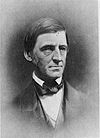
Christian Johann Heinrich Heine (December 13, 1797 – February 17, 1856) was a journalist, an essayist, and one of the most significant German romantic poets. Jewish by birth, he converted to Lutheran Christianity as an adult.
Best Heinrich Heine Quotes
Shortest
Earliest
Explore our curated collection of the most famous and impactful Heinrich Heine quotes.


“Out of my own great woe
I make my little songs.”
I make my little songs.”
“Music is a strange thing. I would almost say it is a miracle.”
“Experience is a good school. But the fees are high.”




“Christianity is an idea, and as such is indestructible and immortal, like every idea.”

“Ordinarily he is insane, but he has lucid moments when he is only stupid.”
“If the Romans had been obliged to learn Latin, they would never have found time to conquer the world.”
“The fundamental evil of the world arose from the fact that the good Lord has not created money enough.”
“So we keep asking, over and over,
Until a handful of earth
Stops our mouths —
But is that an answer?”
Until a handful of earth
Stops our mouths —
But is that an answer?”

“My songs, they say, are poisoned.
How else, love, could it be?
Thou hast, with deadly magic,
Poured poison into me.”
How else, love, could it be?
Thou hast, with deadly magic,
Poured poison into me.”
“Du bist wie eine Blume,
So hold und schön und rein;
Ich schau dich an, und Wehmut
Schleicht mir ins Herz hinein.”
So hold und schön und rein;
Ich schau dich an, und Wehmut
Schleicht mir ins Herz hinein.”
“Ich weiss nicht, was soll es bedeuten,
Dass ich so traurig bin;
Ein Märchen aus alten Zeiten,
Das kommt mir nicht aus dem Sinn.”
Dass ich so traurig bin;
Ein Märchen aus alten Zeiten,
Das kommt mir nicht aus dem Sinn.”
“Auf Flügeln des Gesanges,
Herzliebchen, trag' ich dich fort,
Fort nach den Fluren des Ganges,
Dort weiß ich den schönsten Ort.”
Herzliebchen, trag' ich dich fort,
Fort nach den Fluren des Ganges,
Dort weiß ich den schönsten Ort.”
“Oh what lies there are in kisses!
And their guile so well prepared!
Sweet the snaring is; but this is
Sweeter still, to be ensnared.”
And their guile so well prepared!
Sweet the snaring is; but this is
Sweeter still, to be ensnared.”
Heinrich Heine Quotes by Topic
Find exactly what you are looking for by browsing this categorized list of Heinrich Heine quotes by topic.
Heinrich Heine on Swans 3 quotes
View all 3 quotes on Swans →Heinrich Heine on Love 3 quotes
“And once again we plighted our troth, And titter'd, caress'd, kiss'd so dearly.”

Heinrich Heine on Poetry about love 3 quotes
“And once again we plighted our troth, And titter'd, caress'd, kiss'd so dearly.”
Heinrich Heine on Trees 3 quotes
“A lonely fir-tree is standing On a northern barren height; It sleeps, and the ice and snow-drift Cast round it a garment of white.”

Heinrich Heine on Nightingales 2 quotes
“Like a wedding-song all-melting Sings the nightingale, the dear one.”

Heinrich Heine on Spring (season) 2 quotes
“The beauteous eyes of the spring's fair night With comfort are downward gazing.”

Heinrich Heine on Dance 2 quotes
“And the dancing has begun now, And the dancers whirl round gaily In the waltz's giddy mazes, And the ground beneath them trembles.”
Heinrich Heine on Sea
“The sea appears all golden Beneath the sun-lit sky.”

Heinrich Heine on War
“Napoleon healed through sword and fire the sick nation.”

Heinrich Heine on Gazelles
Heinrich Heine on Grave (burial)
“Graves they say are warm'd by glory; Foolish words and empty story.”

What Heinrich Heine Said About Others
Discover personal opinions Heinrich Heine shared regarding contemporaries.
Heinrich Heine on Baruch Spinoza 6 quotes
“When we read Spinoza, we are seized with a feeling like that of seeing nature at its grandest in most vigorous repose: a forest of thoughts, tall as the sky, whose blooming tree-tops sway back and forth, while imperturbable trunks stand rooted in the eternal soil. There is a certain soft breeze in the writings of Spinoza which is inexplicable. It stirs the reader with the winds of the future. The spirit of the Hebrew prophets still rested perhaps on their late descendant. At the same time, there is a seriousness to him, a self-confident pride, a grandeur of thought which also seems to be an inheritance, since Spinoza belonged to one of those families of martyrs which had been expelled from Spain by those most Catholic kings.”

Heinrich Heine on French people
“Honour to the French!—They have taken good care of the two greatest needs of human society — of good eating and citizenly equality; they have made the greatest advances in cookery and in freedom..."”

Heinrich Heine on Voltaire
“Voltaire's keen laughter must be heard before Samson could strike with the headsman's axe. Yet Voltaire's laugh proved nothing ; it produced only a brutal effect, just as did Samson's base axe. Voltaire could only wound the body of Christianity. All his sarcasms derived from ecclesiastical history ; all his witticisms on dogma and worship, on the Bible, that most sacred book of humanity, on the Virgin Mary, that fairest flower of poetry; the whole dictionary of philosophical arrows which he discharged against the clergy and the priesthood, could only wound the mortal body of Christianity, but were powerless against its interior essence, its deeper spirit, its immortal soul.”

Heinrich Heine on Martin Luther
“From the day on which Luther denied the authority of the Pope, and publicly declared in the Diet "that his teachings must be controverted through the words of the Bible itself, or with sensible reasons," there begins a new era in Germany. The fetters with which Saint Boniface had chained the German Church to Rome are broken. This Church, which has hitherto formed an integral part of the great hierarchy, now splits into religious democracies. The character of the religion itself is essentially changed: the Hindoo-Gnostic element disappears from it, and the Judaic-theistic element again becomes prominent. We behold the rise of evangelical Christianity. By recognising and legitimising the most importunate claims of the senses, religion becomes once more a reality. The priest becomes man, takes to himself a wife, and begets children, as God desires.”

Heinrich Heine on Gottfried Leibniz
“Of all the works of Leibnitz, the "Theodicee" is the one most spoken of in Germany. Yet it is his feeblest production. This book, like several other writings in which Leibnitz expresses his religious sentiments, has obtained for its author an evil reputation, and has caused him to be cruelly misunderstood. His enemies have accused him of maudlin sentimentality and weakness of intellect; his friends, in defending, have proved him an accomplished hypocrite. The character of Leibnitz was for long a subject of controversy amongst us : the most partial critics could not absolve him from the accusation of duplicity; his most eager detractors were the freethinkers and the men of enlightenment. How could they pardon in a philosopher defence of the Trinity, eternal punishment, and the divinity of Christ! Their tolerance did not extend so far as that. But Leibnitz was neither fool nor knave, and by the lofty harmony of his intellect he was well able to defend Christianity in its integrity. I say, in its integrity, for he defended it against semi-Christianity. He established the consistency of the orthodox as opposed to the inconsistency of their adversaries. More than this he never attempted. He thus stood at that point of indifference where diverse systems appear as merely different sides of the same truth.”

Quotes About Heinrich Heine
Gain deeper perspective through quotes about Heinrich Heine from others.
Carole B. Balin on Heinrich Heine
“Heine's life mirrors that of [Rashel Mironovna] Khin's "misfit," being himself a self-hating Jew who mocked his coreligionists and in the end favorably re-assessed his old faith. Despite Heine's traditional Jewish upbringing, his father Samson permitted his wife Betty to remove her son from a private Jewish school and send him to a Catholic lycée. Consequently, Heine's knowledge of Judaism, like Berg's, was fragmentary and confused. Heine's adult apostasy, which he spoke of as an "admission ticket to European culture," brought him no such advantages, and he came to writhe under the stigma of being a convert. Though at times severely critical of Jews and Judaism, he shed much of his hostility as he learned more of Jewish history and culture. The Damascus Affair (1840), which involved a ritual murder libel against the Jews, marked the starting point of Heine's change of heart...”
Alain Brossat on Heinrich Heine
“no one would claim that the revolt of a few hundred insurgents in the Warsaw ghetto in April 1943 influenced the course of the war in any way. The immense importance of this event was in another dimension: a symbol, as is often said, the manifestation par excellence of the will to attest by struggle 'despite everything' - the famous trotz alledem of Heinrich Heine, found also from the pens of Rosa Luxemburg and Karl Liebknecht, and again in the famous song of Wolf Biermann. It embodied the will and capacity of human resistance in the face of adversity, despite the extreme disproportion of forces.”
Fyodor Dostoevsky on Heinrich Heine
“Heine says that a true autobiography is almost an impossibility, and that man is bound to lie about himself.”
Emma Goldman on Heinrich Heine
“Emotional sorrow has inspired many sublime lyrics, much profound insight and poetic exultation of a Byron, Shelley, Heine, and their kind.”

Anna Margolin "From a Diary" short story on Heinrich Heine
“I sometimes dwell on the fact that there's one thing that time and humankind will not be able to take away from me, leaving me rich, richer than Croesus: the bliss that I derive from a Heine poem, from a Beethoven sonata or a DaVinci painting.”
Friedrich Nietzsche on Heinrich Heine
“It was Heinrich Heine who gave me the most perfect idea of what a lyrical poet could be. In vain do I search through all the kingdoms of antiquity or of modern times for anything to resemble his sweet and passionate music. He possessed that divine wickedness, without which perfection itself becomes unthinkable to me,—I estimate the value of men, of races, according to the extent to which they are unable to conceive of a god who has not a dash of the satyr in him. And with what mastery he wields his native tongue! One day it will be said of Heine and me that we were by far the greatest artists of the German language that have ever existed, and that we left all the efforts that mere Germans made in this language an incalculable distance behind us.”

Cynthia Ozick on Heinrich Heine
“In the middle of the war there was Heine, there was Goethe, there was Schiller. I did posters for the German club, in the middle of the war. When I think back to how happy I was, studying German and flunking algebra, and I think what was going on for other Jewish teenagers on the other side of the world, I'm so puzzled by those dates.”
Disputed Quotes
Quotes attributed to Heinrich Heine that are questionable.
“Money bequeathed to my wife "on the express condition that she remarry. I want at least one person to be truly bereaved by my death."”
Misattributed Quotes
Quotes mistakenly credited to Heinrich Heine
“You cannot feed the hungry on statistics.”
“Every man, either to his terror or consolation, has some sense of religion.”
About Heinrich Heine
Christian Johann Heinrich Heine (December 13, 1797 – February 17, 1856) was a journalist, an essayist, and one of the most significant German romantic poets. Jewish by birth, he converted to Lutheran Christianity as an adult.