Link Copied!
Harriet Martineau Quotes (1802-1876)
Philosopher, Writer



About Harriet Martineau
Harriet Martineau (June 12, 1802 – June 27, 1876) was an English writer and philosopher, known in her day as a journalist, political economist, abolitionist and life-long feminist.
Best Harriet Martineau Quotes
Shortest
Earliest
Explore our curated collection of the most famous and impactful Harriet Martineau quotes.
“If a test of civilization be sought, none can be so sure as the condition of that half of society over which the other half has power.”

“Fidelity to conscience is inconsistent with retiring modesty. If it be so, let the modesty succumb. It can be only a false modesty which can be thus endangered.”

“What office is there which involves more responsibility, which requires more qualifications, and which ought, therefore, to be more honourable, than that of teaching?”

“For my own part, I had rather suffer any inconvenience from having to work occasionally in chambers and kitchen … than witness the subservience in which the menial class is held in Europe.”
Harriet Martineau Quotes by Topic
Find exactly what you are looking for by browsing this categorized list of Harriet Martineau quotes by topic.
Harriet Martineau on Sorrow
“Day-thoughts feed nightly dreams; And sorrow tracketh wrong, As echo follows song.”

Harriet Martineau on Philosophy of science
“Comte's work is the strongest embodied rebuke ever given to that form of theological intolerance which censures Positive Philosophy for pride of reason and lowness of morals. The imputation will not be dropped, and the enmity of the religious world to the book will not slacken... The theological world can not but hate a book which treats of theological belief as a transient state of the human mind. And again, the preachers and teachers, of all sects and schools, who keep to the ancient practice, once inevitable, of contemplating and judging of the universe from the point of view of their own minds, instead of having learned to take their stand out of themselves, investigating from the universe inward, and not from within outward, must necessarily think ill of a work which exposes the futility of their method, and the worthlessness of the results to which it leads. As M. Comte treats of theology and metaphysics as destined to pass away, theologians and metaphysicians must necessarily abhor, dread, and despise his work. ...We find ourselves suddenly living and moving in the midst of the universe,—as a part of it, and not as its aim and object. We find ourselves living, not under capricious and arbitrary conditions, unconnected with the constitution and movements of the whole, but under great, general, invariable laws, which operate on us as a part of the whole. ...We find here indications in passing of the evils we suffer from our low aims, our selfish passions, and our proud ignorance; and in contrast with them, animating displays of the beauty and glory of the everlasting laws, and of the sweet serenity, lofty courage, and noble resignation, that are the natural consequence of pursuits so pure, and aims so true, as those of Positive Philosophy. ...The law of progress is conspicuously at work throughout human history. The only field of progress is now that of Positive Philosophy, under whatever name it may be known to the real students of every sect; and therefore must that philosophy be favorable to those virtues whose repression would be incompatible with progress.”
What Harriet Martineau Said About Others
Discover personal opinions Harriet Martineau shared regarding contemporaries.
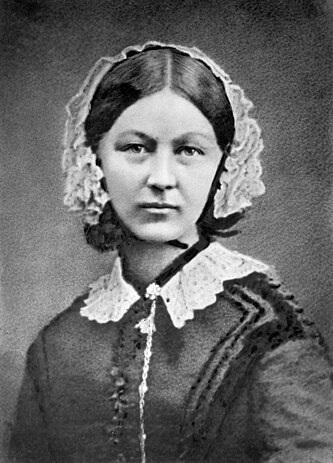
Harriet Martineau on Florence Nightingale 3 quotes
“While history abides, the image of Florence Nightingale, lamp in hand, going through miles of beds, night by night, noting every patient as she went, and ministering wherever most wanted, will always glow in men's hearts; and the sayings of the men about her will be traditions for future generations to enjoy.”

Harriet Martineau on William Wordsworth
“I, deaf, can hardly conceive how he, with eyes & ears, & a heart wh[ich] leads him to converse with the poor in his incessant walks, can be so unaware of their moral state. I dare say you need not be told how sensual vice abounds in rural districts. Here it is flagrant beyond any thing I ever c[oul]d have looked for: & here, while every justice of the peace is filled with disgust, & every clergy[man] with (almost) despair at the drunkenness, quarrelling, & extreme licentiousness with women,—here is dear good old Wordsworth for ever talking of rural innocence, & deprecating any intercourse with towns, lest the purity of his neighbours should be corrupted. He little knows what elevation, self denial & refinement occur in towns from the superior cultivation of the people.”

Harriet Martineau on Jane Austen
“When I was young, it was not thought proper for young ladies to study very conspicuously; and especially with pen in hand. Young ladies (at least in provincial towns) were expected to sit down in the parlour to sew,—during which reading aloud was permitted,—or to practice their music; but so as to be fit to receive callers, without any signs of blue‐stockingism which could be reported abroad. Jane Austen herself, the Queen of novelists, the immortal creator of Anne Elliott, Mr. Knightly, and a score or two more of unrivalled intimate friends of the whole public, was compelled by the feelings of her family to cover up her manuscripts with a large piece of muslin work, kept on the table for the purpose, whenever any genteel people came in. So it was with other young ladies, for some time after Jane Austen was in her grave; and thus my first studies in philosophy were carried on with great care and reserve.”
Quotes About Harriet Martineau
Gain deeper perspective through quotes about Harriet Martineau from others.
Robert Browning on Harriet Martineau
“What a visitation! Miss Martineau is the more formidable friend, however—Mrs. Jameson will be contented with a little confidence, you see, and ask no questions—but I doubt if you arrange matters so easily with the newcomer. Because no great delicacy can be kept alive with all that conceit—and such conceit! A lady told me a few weeks ago that she had seen a letter in which Miss M. gave as her reason for not undertaking then, during the London season, this very journey which empty London is to benefit from now, "that at such a time she should be mobbed to death": whereupon the lady went on to comment, "Miss M. little knows what London is, and how many nearly as notable objects may be found to divert its truculence from herself"—Tom Thumb, and Ibrahim Pacha, to wit.”
Jane Welsh Carlyle on Harriet Martineau
“Of all these ornamented human creatures the one I take most delight in is Harriet Martineau. The horrid picture in Fraser with the cat looking over its shoulder was not a bit like; and the Artist deserved to have been hanged and quartered for so vile a calumny. Neither does the idea generally formed of the woman merely from her reputation as a Political Economist do her more justice than that picture! They may call her what they please, but it is plain to me and to everybody of common sense (as my Uncle Robert said) that she is distinctly good-looking, warm-hearted even to a pitch of romance, witty as well as wise, very entertaining and entertainable in spite of the deadening and killing appendage of an ear-trumpet, and finally, as "our Mother" used to finish off a good character, "very fond of ME."”

Thomas Carlyle on Harriet Martineau
“Miss Martineau had been extremely kind to me... Well, she is the sort of woman that would have made a good matron in an hospital.”

George Eliot on Harriet Martineau 2 quotes
“After all, she is a trump—the only Englishwoman that possesses thoroughly the art of writing.”

Rumer Godden on Harriet Martineau
“He [Hans Christian Andersen] met a deaf lady with a long ear-trumpet at a garden party; she wrote "political things," and after talking to her he had to lie down the whole afternoon; it was the redoubtable Miss Martineau.”





About Harriet Martineau
Harriet Martineau (June 12, 1802 – June 27, 1876) was an English writer and philosopher, known in her day as a journalist, political economist, abolitionist and life-long feminist.