Link Copied!
Harriet Beecher Stowe Quotes (1811-1896)
Author, Writer
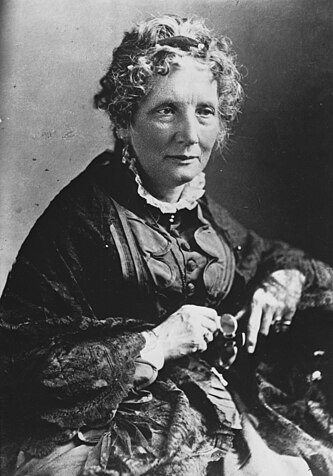





About Harriet Beecher Stowe
Harriet Elizabeth Beecher Stowe (14 June 1811 – 1 July 1896) was an American abolitionist and writer, most famous as the author of the anti-slavery novel Uncle Tom's Cabin.
Best Harriet Beecher Stowe Quotes
Shortest
Earliest
Explore our curated collection of the most famous and impactful Harriet Beecher Stowe quotes.

“Women are the real architects of society.”

“Most mothers are instinctive philosophers.”


“No one is so thoroughly superstitious as the godless man.”

“Care and labor are as much correlated to human existence as shadow is to light...”


“Perhaps it is impossible for a person who does no good not to do harm.”
“The obstinancy of cleverness and reason is nothing to the obstinancy of folly and inanity.”
“To do common things perfectly is far better worth our endeavor than to do uncommon things respectably.”
“All places where women are excluded tend downward to barbarism; but the moment she is introduced, there come in with her courtesy, cleanliness, sobriety, and order.”

“By what strange law of mind is it that an idea long overlooked, and trodden under foot as a useless stone, suddenly sparkles out in new light, as a discovered diamond?”
“Sublime is the dominion of the mind over the body, that, for a time, can make flesh and nerve impregnable, and string the sinews like steel, so that the weak become so mighty.”
“Whatever offices of life are performed by women of culture and refinement are thenceforth elevated; they cease to be mere servile toils, and become expressions of the ideas of superior beings.”
“That ignorant confidence in one's self and one's future, which comes in life's first dawn, has a sort of mournful charm in experienced eyes, who know how much it all amounts to.”

“The burning of rebellious thoughts in the little breast, of internal hatred and opposition, could not long go on without slight whiffs of external smoke, such as mark the course of subterranean fire.”
“What makes saintliness in my view, as distinguished from ordinary goodness, is a certain quality of magnanimity and greatness of soul that brings life within the circle of the heroic.”

“A little reflection will enable any person to detect in himself that setness in trifles which is the result of the unwatched instinct of self-will and to establish over himself a jealous guardianship.”


“To fill up Liberia with an ignorant, inexperienced, half-barbarized race, just escaped from the chains of slavery, would be only to prolong, for ages, the period of struggle and conflict which attends the inception of new enterprises.”
“The longest day must have its close — the gloomiest night will wear on to a morning. An eternal, inexorable lapse of moments is ever hurrying the day of the evil to an eternal night, and the night of the just to an eternal day.”

“One would like to be grand and heroic, if one could; but if not, why try at all? One wants to be very something, very great, very heroic; or if not that, then at least very stylish and very fashionable. It is this everlasting mediocrity that bores me.”
“I am speaking now of the highest duty we owe our friends, the noblest, the most sacred — that of keeping their own nobleness, goodness, pure and incorrupt.... If we let our friend become cold and selfish and exacting without a remonstrance, we are no true lover, no true friend.”
“Home is a place not only of strong affections, but of entire unreserve; it is life's undress rehearsal, its backroom, its dressing room, from which we go forth to more careful and guarded intercourse, leaving behind us much debris of cast-off and everyday clothing.”
“Everyone confesses in the abstract that exertion which brings out all the powers of body and mind is the best thing for us all; but practically most people do all they can to get rid of it, and as a general rule nobody does much more than circumstances drive them to do.”
“The greater the interest involved in a truth the more careful, self-distrustful, and patient should be the inquiry.
I would not attack the faith of a heathen without being sure I had a better one to put in its place, because, such as it is, it is better than nothing.”
I would not attack the faith of a heathen without being sure I had a better one to put in its place, because, such as it is, it is better than nothing.”

“Between the mysteries of death and life
Thou standest, loving, guiding,— not explaining;
We ask, and Thou art silent,— yet we gaze,
And our charmed hearts forget their drear complaining;
No crushing fate, no stony destiny!
Thou Lamb that hast been slain, we rest in Thee.”
Thou standest, loving, guiding,— not explaining;
We ask, and Thou art silent,— yet we gaze,
And our charmed hearts forget their drear complaining;
No crushing fate, no stony destiny!
Thou Lamb that hast been slain, we rest in Thee.”
“Legree had had the slumbering moral elements in him roused by his encounters with Tom, — roused, only to be resisted by the determinate force of evil; but still there was a thrill and commotion of the dark, inner world, produced by every word, or prayer, or hymn, that reacted in superstitious dread.”
“Harriet lived in Connecticut and influenced antislavery in her book "Uncle Tom's Cabin." Harriet was a optimist who expressed her feelings by writing. Harriet was listed as one of the people who started the civil war. She started it from one of her books (It was the most influencial book in all of American History) However, Harriet was a very successful person and never stood down.”
“O, with what freshness, what solemnity and beauty, is each new day born; as if to say to insensate man, "Behold! thou hast one more chance! Strive for immortal glory!" There is no speech nor language where this voice is not heard; but the bold, bad man heard it not. He woke with an oath and a curse. What to him was the gold and purple, the daily miracle of morning!”

“The horrid cruelties and outrages that once and a while find their way into the papers — such cases as Prue's, for example — what do they come from? In many cases, it is a gradual hardening process on both sides — the owner growing more and more cruel, as the servant more and more callous. Whipping and abuse are like laudanum; you have to double the dose as the sensibilities decline.”
“When winds are raging o'er the upper ocean
And billows wild contend with angry roar,
'T is said, far down beneath the wild commotion
That peaceful stillness reigneth evermore.
Far, far beneath, the noise of tempests dieth
And silver waves chime ever peacefully,
And no rude storm, how fierce soe'er it flyeth
Disturbs the Sabbath of that deeper sea.”
And billows wild contend with angry roar,
'T is said, far down beneath the wild commotion
That peaceful stillness reigneth evermore.
Far, far beneath, the noise of tempests dieth
And silver waves chime ever peacefully,
And no rude storm, how fierce soe'er it flyeth
Disturbs the Sabbath of that deeper sea.”
“People have wondered where the seat of original sin is; I think it 's in the stomach. A man eats too much and neglects exercise, and the Devil has him all his own way, and the little imps, with their long black fingers, play on his nerves like a piano. Never overwork either body or mind, boys. All the work that a man can do that can be rested by one night's sleep is good for him, but fatigue that goes into the next day is always bad.”
“I wrote what I did because as a woman, as a mother I was oppressed and broken-hearted, with the sorrows and injustice I saw, because as a Christian I felt the dishonor to Christianity — because as a lover of my country I trembled at the coming day of wrath.
It is no merit in the sorrowful that they weep, or to the oppressed and smothering that they gasp and struggle, not to me, that I must speak for the oppressed — who cannot speak for themselves.”
It is no merit in the sorrowful that they weep, or to the oppressed and smothering that they gasp and struggle, not to me, that I must speak for the oppressed — who cannot speak for themselves.”
“"It don't look well, now, for a feller to be praisin' himself; but I say it jest because it's the truth. I believe I'm reckoned to bring in about the finest droves of niggers that is brought in, — at least, I've been told so; if I have once, I reckon I have a hundred times, — all in good case, — fat and likely, and I lose as few as any man in the business. And I lays it all to my management, sir; and humanity, sir, I may say, is the great pillar of my management."”

“Now, if the principle of toleration were once admitted into classical education — if it were admitted that the great object is to read and enjoy a language, and the stress of the teaching were placed on the few things absolutely essential to this result, if the tortoise were allowed time to creep, and the bird permitted to fly, and the fish to swim, towards the enchanted and divine sources of Helicon — all might in their own way arrive there, and rejoice in its flowers, its beauty, and its coolness.”
“In lecturing on cookery, as on housebuilding, I divide the subject into, not four, but five grand elements: first, Bread; second, Butter; third, Meat; fourth, Vegetables; and fifth, Tea — by which I mean, generically, all sorts of warm, comfortable drinks served out in teacups, whether they be called tea, coffee, chocolate, broma, or what not. I affirm that, if these five departments are all perfect, the great ends of domestic cookery are answered, so far as the comfort and well-being of life are concerned.”

“A day of grace is yet held out to us. Both North and South have been guilty before God; and the Christian church has a heavy account to answer. Not by combining together, to protect injustice and cruelty, and making a common capital of sin, is this Union to be saved, — but by repentance, justice and mercy; for, not surer is the eternal law by which the millstone sinks in the ocean, than that stronger law, by which injustice and cruelty shall bring on nations the wrath of Almighty God!”

“When you get into a tight place, and everything goes against you till it seems as if you could n't hold on a minute longer, never give up then, for that 's just the place and time that the tide 'll turn. Never trust to prayer without using every means in your power, and never use the means without trusting in prayer. Get your evidences of grace by pressing forward to the mark, and not by groping with a lantern after the boundary-lines, — and so, boys, go, and God bless you!"”

“A man builds a house in England with the expectation of living in it and leaving it to his children; while we shed our houses in America as easily as a snail does his shell. We live a while in Boston, and then a while in New York, and then, perhaps, turn up at Cincinnati. Scarcely any body with us is living where they expect to live and die. The man that dies in the house he was born in is a wonder. There is something pleasant in the permanence and repose of the English family estate, which we, in America, know very little of.”

“What can any individual do? Of that, every individual can judge. There is one thing that every individual can do, — they can see to it that they feel right. An atmosphere of sympathetic influence encircles every human being; and the man or woman who feels strongly, healthily and justly, on the great interests of humanity, is a constant benefactor to the human race. See, then, to your sympathies in this matter! Are they in harmony with the sympathies of Christ? or are they swayed and perverted by the sophistries of worldly policy?”
“"Now, I've been laughed at for my notions, sir, and I've been talked to. They an't pop'lar, and they an't common; but I stuck to 'em, sir; I've stuck to 'em, and realized well on 'em; yes, sir, they have paid their passage, I may say," and the trader laughed at his joke.
There was something so piquant and original in these elucidations of humanity, that Mr. Shelby could not help laughing in company. Perhaps you laugh too, dear reader; but you know humanity comes out in a variety of strange forms now-a-days, and there is no end to the odd things that humane people will say and do.”
There was something so piquant and original in these elucidations of humanity, that Mr. Shelby could not help laughing in company. Perhaps you laugh too, dear reader; but you know humanity comes out in a variety of strange forms now-a-days, and there is no end to the odd things that humane people will say and do.”

“Life passes, with us all, a day at a time; so it passed with our friend Tom, till two years were gone. Though parted from all his soul held dear, and though often yearning for what lay beyond, still was he never positively and consciously miserable; for, so well is the harp of human feeling strung, that nothing but a crash that breaks every string can wholly mar its harmony; and, on looking back to seasons which in review appear to us as those of deprivation and trial, we can remember that each hour, as it glided, brought its diversions and alleviations, so that, though not happy wholly, we were not, either, wholly miserable.”
“Is man ever a creature to be trusted with wholly irresponsible power? And does not the slave system, by denying the slave all legal right of testimony, make every individual owner an irresponsible despot? Can anybody fall to make the inference what the practical result will be? If there is, as we admit, a public sentiment among you, men of honor, justice and humanity, is there not also another kind of public sentiment among the ruffian, the brutal and debased? And cannot the ruffian, the brutal, the debased, by slave law, own just as many slaves as the best and purest? Are the honorable, the just, the high-minded and compassionate, the majority anywhere in this world?”
“Have not many of us, in the weary way of life, felt, in some hours, how far easier it were to die than to live?
The martyr, when faced even by a death of bodily anguish and horror, finds in the very terror of his doom a strong stimulant and tonic. There is a vivid excitement, a thrill and fervor, which may carry through any crisis of suffering that is the birth-hour of eternal glory and rest.
But to live, — to wear on, day after day, of mean, bitter, low, harassing servitude, every nerve dampened and depressed, every power of feeling gradually smothered, — this long and wasting heart-martyrdom, this slow, daily bleeding away of the inward life, drop by drop, hour after hour, — this is the true searching test of what there may be in man or woman.”
The martyr, when faced even by a death of bodily anguish and horror, finds in the very terror of his doom a strong stimulant and tonic. There is a vivid excitement, a thrill and fervor, which may carry through any crisis of suffering that is the birth-hour of eternal glory and rest.
But to live, — to wear on, day after day, of mean, bitter, low, harassing servitude, every nerve dampened and depressed, every power of feeling gradually smothered, — this long and wasting heart-martyrdom, this slow, daily bleeding away of the inward life, drop by drop, hour after hour, — this is the true searching test of what there may be in man or woman.”

“Whoever visits some estates there, and witnesses the good-humored indulgence of some masters and mistresses, and the affectionate loyalty of some slaves, might be tempted to dream the oft-fabled poetic legend of a patriarchal institution, and all that; but over and above the scene there broods a portentous shadow — the shadow of law. So long as the law considers all these human beings, with beating hearts and living affections, only as so many things belonging to a master — so long as the failure, or misfortune, or imprudence, or death of the kindest owner, may cause them any day to exchange a life of kind protection and indulgence for one of hopeless misery and toil — so long it is impossible to make anything beautiful or desirable in the best regulated administration of slavery.”

“"Well, mother, people have different names for different things. I hear a great deal about Ellery Davenport's tact and knowledge of the world, and all that; but he does a great deal of what I call lying, — so there! Now there are some folks who lie blunderingly, and unskilfully, but I 'll say for Ellery Davenport that he can lie as innocently and sweetly and prettily as a French woman, and I can't say any more. And if a woman does n't want to believe him, she just must n't listen to him, that 's all. I always believe him when he is around, but when he 's away and I think him over, I know just what he is, and see just what an old fool he has made of me."
These words dropped into my childish mind as if you should accidentally drop a ring into a deep well. I did not think of them much at the time, but there came a day in my life when the ring was fished up out of the well, good as new.”
These words dropped into my childish mind as if you should accidentally drop a ring into a deep well. I did not think of them much at the time, but there came a day in my life when the ring was fished up out of the well, good as new.”

“Not only was he ignorant, but he had not even those conditions within himself which made knowledge possible. All that there was developed of him, at present, was a fund of energy, self-esteem, hope, courage, and daring, the love of action, life, and adventure; his life was in the outward and present, not in the inward and reflective; he was a true ten-year old boy, in its healthiest and most animal perfection. What she was, the small pearl with the golden hair, with her frail and high-strung organization, her sensitive nerves, her half-spiritual fibres, her ponderings, and marvels, and dreams, her power of love, and yearning for self-devotion, our readers may, perhaps, have seen. But if ever two children, or two grown people, thus organized, are thrown into intimate relations, it follows, from the very laws of their being, that one must hurt the other, simply by being itself; one must always hunger for what the other has not to give.”

“How, then, shall a Christian bear fruit? By efforts and struggles to obtain that which is freely given; by meditations on watchfulness, on prayer, on action, on temptation, and on dangers? No, there must be a full concentration of the thoughts and affections on Christ; a complete surrender of the whole being to him; a constant looking to him for grace. Christians in whom these dispositions are once firmly fixed, go on calmly as the sleeping infant borne in the arms of its mother. Christ reminds them of every duty in its time and place—reproves them for every error—counsels them in every difficulty, excites them to every needful activity. In spiritual, as in temporal matters, they take no thought for the morrow—for they know that Christ will be as accessible tomorrow as to-day, and that time imposes no barrier on his love. Their hope and trust rest solely on what he is willing and able to do for them; on nothing that they suppose themselves able and willing to do for him.”

“Do you say that the people of the free state have nothing to do with it, and can do nothing? Would to God this were true! But it is not true. The people of the free states have defended, encouraged, and participated; and are more guilty for it, before God, than the South, in that they have not the apology of education or custom.
If the mothers of the free states had all felt as they should, in times past, the sons of the free states would not have been the holders, and, proverbially, the hardest masters of slaves; the sons of the free states would not have connived at the extension of slavery, in our national body; the sons of the free states would not, as they do, trade the souls and bodies of men as an equivalent to money, in their mercantile dealings. There are multitudes of slaves temporarily owned, and sold again, by merchants in northern cities; and shall the whole guilt or obloquy of slavery fall only on the South?
Northern men, northern mothers, northern Christians, have something more to do than denounce their brethren at the South; they have to look to the evil among themselves.”
If the mothers of the free states had all felt as they should, in times past, the sons of the free states would not have been the holders, and, proverbially, the hardest masters of slaves; the sons of the free states would not have connived at the extension of slavery, in our national body; the sons of the free states would not, as they do, trade the souls and bodies of men as an equivalent to money, in their mercantile dealings. There are multitudes of slaves temporarily owned, and sold again, by merchants in northern cities; and shall the whole guilt or obloquy of slavery fall only on the South?
Northern men, northern mothers, northern Christians, have something more to do than denounce their brethren at the South; they have to look to the evil among themselves.”
“We hear often of the distress of the negro servants, on the loss of a kind master; and with good reason, for no creature on God's earth is left more utterly unprotected and desolate than the slave in these circumstances.
The child who has lost a father has still the protection of friends, and of the law; he is something, and can do something, — has acknowledged rights and position; the slave has none. The law regards him, in every respect, as devoid of rights as a bale of merchandise. The only possible acknowledgment of any of the longings and wants of a human and immortal creature, which are given to him, comes to him through the sovereign and irresponsible will of his master; and when that master is stricken down, nothing remains.
The number of those men who know how to use wholly irresponsible power humanely and generously is small. Everybody knows this, and the slave knows it best of all; so that he feels that there are ten chances of his finding an abusive and tyrannical master, to one of his finding a considerate and kind one. Therefore is it that the wail over a kind master is loud and long, as well it may be.”
The child who has lost a father has still the protection of friends, and of the law; he is something, and can do something, — has acknowledged rights and position; the slave has none. The law regards him, in every respect, as devoid of rights as a bale of merchandise. The only possible acknowledgment of any of the longings and wants of a human and immortal creature, which are given to him, comes to him through the sovereign and irresponsible will of his master; and when that master is stricken down, nothing remains.
The number of those men who know how to use wholly irresponsible power humanely and generously is small. Everybody knows this, and the slave knows it best of all; so that he feels that there are ten chances of his finding an abusive and tyrannical master, to one of his finding a considerate and kind one. Therefore is it that the wail over a kind master is loud and long, as well it may be.”
“That the tragical fate of Tom, also, has too many times had its parallel, there are living witnesses, all over our land, to testify. Let it be remembered that in all southern states it is a principle of jurisprudence that no person of colored lineage can testify in a suit against a white, and it will be easy to see that such a case may occur, wherever there is a man whose passions outweigh his interests, and a slave who has manhood or principle enough to resist his will. There is, actually, nothing to protect the slave's life, but the character of the master. Facts too shocking to be contemplated occasionally force their way to the public ear, and the comment that one often hears made on them is more shocking than the thing itself. It is said, "Very likely such cases may now and then occur, but they are no sample of general practice." If the laws of New England were so arranged that a master could now and then torture an apprentice to death, would it be received with equal composure? Would it be said, "These cases are rare, and no samples of general practice"? This injustice is an inherent one in the slave system, — it cannot exist without it.”
“"Lor bless ye, yes! These critters ain't like white folks, you know; they gets over things, only manage right. Now, they say," said Haley, assuming a candid and confidential air, "that this kind o' trade is hardening to the feelings; but I never found it so. Fact is, I never could do things up the way some fellers manage the business. I've seen 'em as would pull a woman's child out of her arms, and set him up to sell, and she screechin' like mad all the time; — very bad policy — damages the article — makes 'em quite unfit for service sometimes. I knew a real handsome gal once, in Orleans, as was entirely ruined by this sort o' handling. The fellow that was trading for her didn't want her baby; and she was one of your real high sort, when her blood was up. I tell you, she squeezed up her child in her arms, and talked, and went on real awful. It kinder makes my blood run cold to think of 't; and when they carried off the child, and locked her up, she jest went ravin' mad, and died in a week. Clear waste, sir, of a thousand dollars, just for want of management, — there's where 't is. It's always best to do the humane thing, sir; that's been my experience." And the trader leaned back in his chair, and folded his arm, with an air of virtuous decision, apparently considering himself a second Wilberforce.”
“The author hopes she has done justice to that nobility, generosity, and humanity, which in many cases characterize individuals at the South. Such instances save us from utter despair of our kind. But, she asks any person, who knows the world, are such characters common, anywhere?
For many years of her life, the author avoided all reading upon or allusion to the subject of slavery, considering it as too painful to be inquired into, and one which advancing light and civilization would certainly live down. But, since the legislative act of 1850, when she heard, with perfect surprise and consternation, Christian and humane people actually recommending the remanding escaped fugitives into slavery, as a duty binding on good citizens, — when she heard, on all hands, from kind, compassionate and estimable people, in the free states of the North, deliberations and discussions as to what Christian duty could be on this head, — she could only think, These men and Christians cannot know what slavery is; if they did, such a question could never be open for discussion. And from this arose a desire to exhibit it in a living dramatic reality. She has endeavored to show it fairly, in its best and its worst phases. In its best aspect, she has, perhaps, been successful; but, oh! who shall say what yet remains untold in that valley and shadow of death, that lies the other side?”
For many years of her life, the author avoided all reading upon or allusion to the subject of slavery, considering it as too painful to be inquired into, and one which advancing light and civilization would certainly live down. But, since the legislative act of 1850, when she heard, with perfect surprise and consternation, Christian and humane people actually recommending the remanding escaped fugitives into slavery, as a duty binding on good citizens, — when she heard, on all hands, from kind, compassionate and estimable people, in the free states of the North, deliberations and discussions as to what Christian duty could be on this head, — she could only think, These men and Christians cannot know what slavery is; if they did, such a question could never be open for discussion. And from this arose a desire to exhibit it in a living dramatic reality. She has endeavored to show it fairly, in its best and its worst phases. In its best aspect, she has, perhaps, been successful; but, oh! who shall say what yet remains untold in that valley and shadow of death, that lies the other side?”

“He was called a good fellow, — only a little lumpish, — and as he was brave and faithful, he rose in time to be a shipmaster. But when came the business of making money, the aptitude for accumulating, George found himself distanced by many a one with not half his general powers. What shall a man do with a sublime tier of moral faculties, when the most profitable business out of his port is the slave-trade? So it was in Newport in those days. George's first voyage was on a slaver, and he wished himself dead many a time before it was over, — and ever after would talk like a man beside himself, if the subject was named. He declared that the gold made in it was distilled from human blood, from mothers' tears, from the agonies and dying groans of gasping, suffocating men and women, and that it would sear and blister the soul of him that touched it; in short, he talked as whole-souled, unpractical fellows are apt to talk about what respectable people sometimes do. Nobody had ever instructed him that a slaveship, with a procession of expectant sharks in its wake, is a missionary institution, by which closely. packed heathens are brought over to enjoy the light of the Gospel. So, though George was acknowledged to be a good fellow, and honest as the noon-mark on the kitchen floor, he let slip so many chances of making money as seriously to compromise his reputation among thriving folks. He was wastefully generous — insisted on treating every poor dog that came in his way, in any foreign port, as a brother — absolutely refused to be party in cheating or deceiving the heathen on any shore, or in skin of any color — and also took pains, as far as in him lay, to spoil any bargains which any of his subordinates founded on the ignorance or weakness of his fellow-men. So he made voyage after voyage, and gained only his wages and the reputation among his employers of an incorruptibly honest fellow.”
Harriet Beecher Stowe Quotes by Topic
Find exactly what you are looking for by browsing this categorized list of Harriet Beecher Stowe quotes by topic.
Harriet Beecher Stowe on Indulgence 2 quotes
“Whoever visits some estates there, and witnesses the goodhumored indulgence of some masters and mistresses, and the affectionate loyalty of some slaves, might be tempted to dream the oft-fabled poetic legend of a patriarchal institution.”
Harriet Beecher Stowe on Wickedness
Harriet Beecher Stowe on Night
Harriet Beecher Stowe on Regret
Quotes About Harriet Beecher Stowe
Gain deeper perspective through quotes about Harriet Beecher Stowe from others.
Failure Is Impossible: Susan B. Anthony in Her Own Words on Harriet Beecher Stowe
“I feel that woman should in the very Capitol of the nation, lift her voice against that abominable measure. It is not enough that H. B. Stowe should write.”
Bettina Aptheker on Harriet Beecher Stowe 2 quotes
“The publication of Harriet Beecher Stowe's Uncle Tom's Cabin in 1851 was a crucial event in the history of antislavery. In a long essay on the life and work of Stowe, the Black civil-rights leader of post-Reconstruction times, Mary Church Terrell, wrote: "In estimating the value of Uncle Tom's Cabin it is not too much to say that the work of no writer of modern times has excited more general and more profound interest than did this masterpiece of Harriet Beecher Stowe. In recounting the incidents and in stating the reasons which led to the emancipation of the slave, it would be difficult to exaggerate the role played by this remarkable book."”

James Baldwin Notes of a Native Son on Harriet Beecher Stowe
“Uncle Tom's Cabin is a very bad novel, having, in its self-righteous, virtuous sentimentality, much in common with Little Women. Sentimentality, the ostentatious parading of excessive and spurious emotion, is the mark of dishonesty, the inability to feel; the wet eyes of the sentimentalist betray his aversion to experience, his fear of life, his arid heart and it is always, therefore, the signal of secret and violent inhumanity, the mask of cruelty. Uncle Tom's Cabin-like its multitudinous, hard-boiled descendants-is a catalogue of violence. This is explained by the nature of Mrs. Stowe's subject matter, her laudable determination to flinch from nothing in presenting the complete picture; an explanation which falters only if we pause to ask whether or not her picture is indeed complete; and what constriction or failure of perception forced her to so depend on the description of brutality-unmotivated, senseless-and to leave unanswered and unnoticed the only important question: what it was, after all, that moved her people to such deeds. But this, let us say, was beyond Mrs. Stowe's powers; she was not so much a novelist as an impassioned pamphleteer; her book was not intended to do anything more than prove that slavery was wrong; was, in fact, perfectly horrible. This makes material for a pamphlet but it is hardly enough for a novel; and the only question left to ask is why we are bound still within the same constriction. How is it that we are so loath to make a further journey than that made by Mrs. Stowe, to discover and reveal something a little closer to the truth?...Bigger (from Native Son by Richard Wright) is Uncle Tom's descendant, flesh of his flesh, so exactly opposite a portrait that, when the books are placed together, it seems that the contemporary Negro novelist and the dead New England woman are locked together in a deadly, timeless battle; the one uttering merciless exhortations, the other shouting curses.”
Frances Harper on Harriet Beecher Stowe
“Harriet Beecher, whose glowing pen/Corroded the chains of fettered men.”

Gerda Lerner on Harriet Beecher Stowe
“Biographies of eminent women designed to appeal to literate women readers became a popular genre in the 19th century in England and in other European countries.In the United States this genre is represented by a two-volume History of Women by Lydia Maria Child...Another example of the genre is a selection of biographies by Harriet Beecher Stowe, Woman in Sacred History: A Series of Sketches Drawn from Scriptural, Historical and Legendary Sources which uses the Old and the New Testament as its source.”



About Harriet Beecher Stowe
Harriet Elizabeth Beecher Stowe (14 June 1811 – 1 July 1896) was an American abolitionist and writer, most famous as the author of the anti-slavery novel Uncle Tom's Cabin.