Link Copied!
Gerda Lerner Quotes (1920-2013)
Author, Activist, Leader












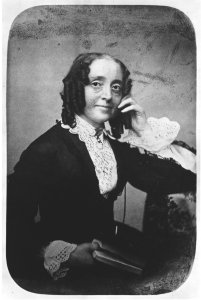

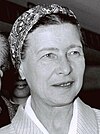


About Gerda Lerner
Gerda Lerner (30 April 1920 – 2 January 2013) was an Austrian-born American feminist, historian, author, and advocate of Women's History.
Best Gerda Lerner Quotes
Shortest
Earliest
Explore our curated collection of the most famous and impactful Gerda Lerner quotes.
“Among equals there is no category of "Otherness." The act of categorizing another implies oppression.”

“What is left to a Jew who refuses the religious community? Antisemitism and history. In short order I experienced plenty of both.”


“I have sometimes been asked, "How has your being Jewish influenced your work in Women's History?" The simplest way I can answer this question is, I am a historian because of my Jewish experience.”


“In order to survive in this interconnected global village we must learn and learn very quickly to respect others who are different from us and, ultimately, to grant to others the autonomy we demand for ourselves. In short, celebrate difference and banish hatred.”
“In the final analysis, after a lifetime spent as a writer and as a historian, I must take a stand in my own right. History matters to me, for the many and complex reasons that are documented in this volume, and I feel the need to find a proper form for expressing why it does.”
“After the Holocaust, history for me was no longer something outside myself, which I needed to comprehend and use to illuminate my own life and times. Those of us who survived carried a charge to keep memory alive in order to resist the total destruction of our people. History had become an obligation.”

“Women's History is a stance which demands that women be included in whatever topic is under discussion. It is an angle of vision which permits us to see that women live and have lived in a world defined by men and most frequently dominated by men and yet have shaped and influenced that world and all human events.”

“The essay ("The Lady and the Mill Girl") was in part an outgrowth of my research in ante-bellum reform movements, in part a response to the a-historical analysis of women's place in society in a book like Betty Friedan's The Feminine Mystique and in some of the early pamphlet literature of the women's liberation movement.”
“What I learned from that comfortable, sheltered life I led in a country in which Catholicism was the state religion and antisemitism was an honored political tradition, was that being Jewish set one apart. Jews were not "normal," we were not right, we were different. And that difference had something to do with our inescapable, compelling history.”
“I came into the study of history through my work on a biography of Sarah and Angelina Grimké... I was fascinated with the lives and characters of these two women, who had not had a biography written about them since 1885... They spoke to me in a very personal way and I wanted to transmit what I received from these women of another century to readers of my day.”
“To be a Jew means to live in history. The history of the Jews is a history of one holocaust after another with short intervals of peaceful assimilation or acculturation. Most of us never study this long and bitter history and yet we live with it and it shapes our lives. We live from pogrom to pogrom, one of my friends recently said. What it means to be a Jew-having to look over your shoulder and have your bags packed.”
“Revisionist theories usually begin with an argument with one's predecessors. In my case, these predecessors were 19th- and 20th-century feminist writers, who saw women's history as a manifestation of women's oppression and focused excessively on the struggle for women's rights. The most recent, and certainly indispensable book was Eleanor Flexner's Century of Struggle, which cut a wide swath, although it was essentially written in the woman's rights framework.”
“Patriarchy has not only invented itself and usurped a central place, but it has usurped intellectually, a kind of legitimacy, that described anything that is not like it, as deviant. And men and women have gone into that for 4000 years. Not all women. There were always some women who resisted. And our great tragedy is, that because we were deprived of a history of women, generation after generation of women who wanted to resist patriarchy, had to do it on their own.”
“What women must do, what feminists are now doing is to point to that stage, its sets, its props, its director, and its scriptwriter, as did the child in the fairy tale who discovered that the emperor was naked, and say, the basic inequality between us lies within this framework. And then they must tear it down.”
“During the interview at Columbia, prior to my admission to the Ph.D. program, I was asked a standard question: Why did I take the study of history? Without hesitating I replied that I wanted to put women into history. No, I corrected myself, not put them up into history, because they are already in it, what I want to do is to make the study of women's history legitimate. I want, I said plainly, to complete the work begun by Mary Beard...In a very real sense I consider Mary Beard, whom I never met, my principal mentor as a historian.”
“We are living at a very wonderful moment. A moment that I believe is more important than a renaissance, a moment that is more important than the reformation. It is the moment when half of the human race is reclaiming its ID as full human beings. We have regained our history. And by regaining our history and by transmitting it to the next generation, we will create a basis where women will no longer have to reinvent the wheel. We will be able to stand on the shoulders of the women before us, and I think this is a very wonderful and exciting endeavor.”

“I believe myself that appointing women with their history is the single most important thing we can do to raise feminist consciousness. And feminist consciousness means for women to understand that they have a grievance in this world. That the grievance is not individual, that to change their grievance, they need to ally with other women. They need to define for themselves what their goals are. They need then, to form alliances with men and women to attain their goals, and that when their goal is attained, we will have a better society for all of us. Men and women.”
“Men have been writing the history of the world from their point of view, and according to their sets of values, for over 2000 years. In fact, 4000 years, if you want to be strict about it. Because when writing was invented, it was 4000 years ago and ever since then we have history.” I say, “Well, women have begun to reclaim their history about 150 years ago, and the modern women’s history movement is about 35 years old.” I say, “You give us 4000 years, and we’ll mainstream. I think we need to get a perspective that is larger than our time, larger than our memory, larger than our lifetime.”
“Feminist consciousness begins with self-consciousness, an awareness of our separate needs as women; then comes the awareness of female collectivity-the reaching out toward other women, first for mutual support and then to improve our condition. Out of the recognition of communality, there emerges feminist group consciousness a set of ideas by which women autonomously define ourselves in a male-dominated world and seek to substitute our vision and values for those of the patriarchy. The two aspects of my own consciousness, that of the citizen and that of the woman scholar, had finally fused: I am a feminist scholar.”

“The way the system of competing outgroups works, there is an incentive for members of one minority group to display their assimilation, their Americanism as it were, by participating in institutionalized racism. Thus some European Jewish immigrants, who in all their lives had never seen a person of color, learned racism in short order once they assimilated to American society. I wanted to be an American but I did not want to assimilate to the evil of racism, here any more than there. It was logical for me as a scholar to focus on the issue of race in American history and because of my interest in women, on the history of black women.”
Gerda Lerner Quotes by Topic
Find exactly what you are looking for by browsing this categorized list of Gerda Lerner quotes by topic.
Gerda Lerner on Judaism 2 quotes
“What is left to a Jew who refuses the religious community? Antisemitism and history.”

Gerda Lerner on Feminism 2 quotes
“I believe myself that appointing women with their history is the single most important thing we can do to raise feminist consciousness. And feminist consciousness means for women to understand that they have a grievance in this world. That the grievance is not individual, that to change their grievance, they need to ally with other women. They need to define for themselves what their goals are. They need then, to form alliances with men and women to attain their goals, and that when their goal is attained, we will have a better society for all of us. Men and women.”

What Gerda Lerner Said About Others
Discover personal opinions Gerda Lerner shared regarding contemporaries.
Gerda Lerner on Ida B. Wells 4 quotes
“Ida B Wells' constant theme was to expose lynching as an integral part of the system of racial oppression, the motives for which were usually economic or political. She hit hard at the commonly used alibi for lynchings, the charge of "rape," and dared bring out into the open the most taboo subject of all in Victorian America-the habitual sexual abuse of black women by white men. Thus, she expressed what was to become the ideological direction of the organized movement of black women-a defense of black womanhood as part of a defense of the race from terror and abuse.”

Gerda Lerner on Mary Ritter Beard 4 quotes
“Mary Beard undertook in several of her books to trace the positive achievements of women, their social role, and their contributions to community life. Her concepts are most successfully reflected in The Rise of American Civilization, which she co-authored with her husband Charles Beard. In it the position of women is treated throughout in an integrated way with great attention to the economic contributions made by women. But the Beards' approach to the subject of women had little influence on the historical profession. Perhaps this was due to the fact that in the 1930s and 1940s both the general public and historians became somewhat disenchanted with the woman's rights movement.”

Gerda Lerner on Susan B. Anthony 3 quotes
“most of the early feminists came to their convictions because of their interest in abolition. Elizabeth Cady Stanton, Susan B. Anthony, Lucy Stone, Abby Kelley, and scores of others found that if they wished to work for reforms in general, they would first have to fight for their right as women to engage in public political activity.”

Gerda Lerner on Frances Wright 3 quotes
“Frances Wright appeared on the scene too soon to influence the first generation of feminists directly, although some of them had certainly heard of her activities. It is noteworthy that the first volume of History of Woman Suffrage features a tribute to Frances Wright, though only in her role as a public speaker. Latter-day feminists ignored her advanced ideas for sexual, moral, and educational reform.”

Gerda Lerner on Emma Goldman 3 quotes
“Recent scholarship has brought to light the important role played by Emma Goldman and other feminist women in the socialist and anarchist movement. Goldman lectured widely on birth control from 1910 on and served sixty days in jail for distributing pamphlets which offered advice on birth control methods and devices. She was one of the earliest influences on Margaret Sanger, who later sought to deny the socialist roots of her inspiration.”

Gerda Lerner on Leo Tolstoy 3 quotes
“Tolstoy's pacifism, which had profoundly influenced William Jennings Bryan, led Bryan to pursue a sincere search for a peaceful foreign policy in his position as Secretary of State in Woodrow Wilson's first administration…Another progressive reformer who was greatly influenced by Tolstoy's principles was the lawyer Clarence Darrow, whose book, Resist Not Evil spread the doctrine of anarchist nonviolent resistance. But Darrow's pacifism, like that of many of his contemporaries, collapsed with the outbreak of World War I.”

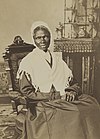
Gerda Lerner on Sojourner Truth 2 quotes
“In the person of Sojourner Truth, the fusion of the abolition and woman's rights movements seemed personified.”
Gerda Lerner on Bertolt Brecht 2 quotes
“I began to write poetry in English before I could properly speak or write. Since I wrote free verse in ordinary speech, patterning my style after Bertolt Brecht, and getting effects by sharply contrasting images and striking sound patterns, I could achieve some sort of effect with the most primitive means.”

Gerda Lerner on Mary McLeod Bethune 2 quotes
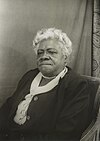
“As a result of the democratic hopes raised by World War I and the shocking polarization at the end of the war, which found expression in race riots and lynchings, women of both races felt impelled to make stronger efforts than ever before to bridge the gap between the races. Eva Bowles, Mrs. Lugenia Hope, Charlotte Hawkins Brown, and Mary McLeod Bethune led black women in this effort. White church women were the first to respond.”
Gerda Lerner on Catharine Beecher 2 quotes
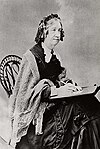
“Emma Willard, Catharine Esther Beecher and Mary Lyon accomplished similar feats of institution-building and ideological indoctrination to create new careers for women and imbue them with a missionary zeal for promoting the education of their sex. Both women, like their earlier predecessor, firmly proclaimed themselves opposed to woman's rights advocacy, yet they, like Emma Willard, educated a significant cohort of community leaders, many of whom became feminists.”
Quotes About Gerda Lerner
Gain deeper perspective through quotes about Gerda Lerner from others.
Muriel Fox on Gerda Lerner
“She is one of the most prominent historians in our country...I first remember Gerda when we founded the first NOW chapter in the country, which was New York NOW – we’re all proud of that – in March 1967. I passed out a yellow line pad for people to write down their biographies, and Gerda Learner was in the room. She wrote down that she was teaching at Sarah Laurence, she was interested in women’s history. Gerda used to come to those early NOW meetings. I remember one day she said to me, “Would you please mention to the people in this chapter that I am writing this history on the Grimke Sisters and it’s going to come out soon?” And that was our first feminist history that really came out of NOW. Not the last, but the first, and we were all very proud of her.”
Nell Irvin Painter on Gerda Lerner
“A pioneering historian of women”

Adrienne Rich. forward on Gerda Lerner
“The new historians of "family and childhood," like the majority of theorists on childrearing, pediatricians, psychiatrists, are male. In their work, the question of motherhood as an institution or as an idea in the heads of grown-up male children is raised only where "styles" of mothering are discussed and criticized. Female sources are rarely cited (yet these sources exist, as the feminist historians are showing); there are virtually no primary sources from women-as-mothers; and all this is presented as objective scholarship. It is only recently that feminist scholars such as Gerda Lerner, Joan Kelly, and Carroll Smith-Rosenberg have begun to suggest that, in Lerner's words: "the key to understanding women's history is in accepting-painful though it may be-that it is the history of the majority of mankind.... History, as written and perceived up to now, is the history of a minority, who may well turn out to be the 'subgroup.'"”
About Gerda Lerner
Gerda Lerner (30 April 1920 – 2 January 2013) was an Austrian-born American feminist, historian, author, and advocate of Women's History.