Link Copied!
Georgy Zhukov Quotes (1896-1974)
About Georgy Zhukov
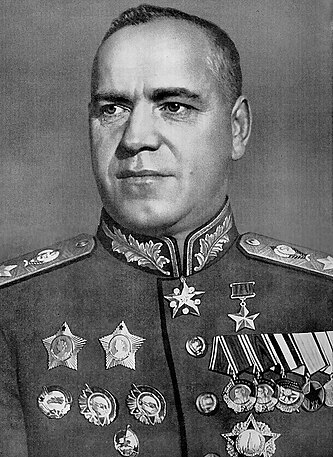
Georgy Konstantinovich Zhukov (December 1 O.S. November 19 1896 – June 18, 1974) was a Soviet general and Marshal of the Soviet Union. He also served as Chief of the General Staff, Minister of Defence, and was a member of the Presidium of the Communist Party (later Politburo). During the Second World War, Zhukov oversaw some of the Red Army's most decisive victories.
Best Georgy Zhukov Quotes
Shortest
Earliest
Explore our curated collection of the most famous and impactful Georgy Zhukov quotes.
“To the Soviet soldier”
Unsourced — Primary work/page citation not yet verified in the QuotesCosmos archive. Per our Unnamed Sources & Verification Policy, quotes without confirmed primary editions are explicitly marked Unsourced while under editorial review.
“There's no smoke without fire.”
Unsourced — Primary work/page citation not yet verified in the QuotesCosmos archive. Per our Unnamed Sources & Verification Policy, quotes without confirmed primary editions are explicitly marked Unsourced while under editorial review.
“The longer the battle lasts the more force we'll have to use!”
Unsourced — Primary work/page citation not yet verified in the QuotesCosmos archive. Per our Unnamed Sources & Verification Policy, quotes without confirmed primary editions are explicitly marked Unsourced while under editorial review.
“And now German generals find it hard to explain away their retreat.”
Unsourced — Primary work/page citation not yet verified in the QuotesCosmos archive. Per our Unnamed Sources & Verification Policy, quotes without confirmed primary editions are explicitly marked Unsourced while under editorial review.
“There are things in Russia which are not as they seem.”

Unsourced — Primary work/page citation not yet verified in the QuotesCosmos archive. Per our Unnamed Sources & Verification Policy, quotes without confirmed primary editions are explicitly marked Unsourced while under editorial review.
“The mere existence of atomic weapons implies the possibility of their use.”
Unsourced — Primary work/page citation not yet verified in the QuotesCosmos archive. Per our Unnamed Sources & Verification Policy, quotes without confirmed primary editions are explicitly marked Unsourced while under editorial review.
“If we come to a minefield, our infantry attacks exactly as it were not there.”
Unsourced — Primary work/page citation not yet verified in the QuotesCosmos archive. Per our Unnamed Sources & Verification Policy, quotes without confirmed primary editions are explicitly marked Unsourced while under editorial review.
“We proceeded from the knowledge that we would have to fight a battle-wise, strong and stubborn enemy.”

Unsourced — Primary work/page citation not yet verified in the QuotesCosmos archive. Per our Unnamed Sources & Verification Policy, quotes without confirmed primary editions are explicitly marked Unsourced while under editorial review.
“If the nation only knew their hands dripped with innocent blood, it would have met them not with applause but with stones.”

Unsourced — Primary work/page citation not yet verified in the QuotesCosmos archive. Per our Unnamed Sources & Verification Policy, quotes without confirmed primary editions are explicitly marked Unsourced while under editorial review.
“Generalissimo Stalin directed every move... made every decision... He is the greatest and wisest military genius who ever lived...”
Unsourced — Primary work/page citation not yet verified in the QuotesCosmos archive. Per our Unnamed Sources & Verification Policy, quotes without confirmed primary editions are explicitly marked Unsourced while under editorial review.
“If they [the Germans] attack, we will defend. If they do not attack until winter comes, then we will and will tear them to shreds!”

Unsourced — Primary work/page citation not yet verified in the QuotesCosmos archive. Per our Unnamed Sources & Verification Policy, quotes without confirmed primary editions are explicitly marked Unsourced while under editorial review.
“The nature of encounter operations required of the commanders limitless initiative and constant readiness to take the responsibility for military actions.”

Unsourced — Primary work/page citation not yet verified in the QuotesCosmos archive. Per our Unnamed Sources & Verification Policy, quotes without confirmed primary editions are explicitly marked Unsourced while under editorial review.
“We will do all we can to insure peace... but if war is imposed upon us we will be together shoulder to shoulder as in the last war to strive for the happiness of mankind.”

Unsourced — Primary work/page citation not yet verified in the QuotesCosmos archive. Per our Unnamed Sources & Verification Policy, quotes without confirmed primary editions are explicitly marked Unsourced while under editorial review.
“If you feel that the Chief of the General Staff talks only rubbish, my place is not here. Better to give me a command at the front where I can be of better use!”
Unsourced — Primary work/page citation not yet verified in the QuotesCosmos archive. Per our Unnamed Sources & Verification Policy, quotes without confirmed primary editions are explicitly marked Unsourced while under editorial review.
“I find it rather difficult in the evening of my life to recollect everything that happened as time has erased from memory many things, especially relating to childhood and youth.”
Unsourced — Primary work/page citation not yet verified in the QuotesCosmos archive. Per our Unnamed Sources & Verification Policy, quotes without confirmed primary editions are explicitly marked Unsourced while under editorial review.
“Winning depended to a large extent on the determination of the troops and the officers. The certainty that we were going to win kept up everyone's spirits, from privates to generals.”

Unsourced — Primary work/page citation not yet verified in the QuotesCosmos archive. Per our Unnamed Sources & Verification Policy, quotes without confirmed primary editions are explicitly marked Unsourced while under editorial review.
“It is a fact that under equal conditions, large-scale battles and whole wars are won by troops which have a strong will for victory, clear goals before them, high moral standards, and devotion to the banner under which they go into battle.”
Unsourced — Primary work/page citation not yet verified in the QuotesCosmos archive. Per our Unnamed Sources & Verification Policy, quotes without confirmed primary editions are explicitly marked Unsourced while under editorial review.
“The risks of war present no danger to those who are well prepared for it in advance and who are mindful of their place in the nation's defences. Confusion and panic usually appear wherever there is no adequate organizaton or appropriate leadership at a time of grim trials.”

Unsourced — Primary work/page citation not yet verified in the QuotesCosmos archive. Per our Unnamed Sources & Verification Policy, quotes without confirmed primary editions are explicitly marked Unsourced while under editorial review.
“Here they found real war, but they were not ready for it. They were used to easy victories. This deprived them of flexibility on the one hand, of tenacity on the other. For them, war was merely maneuvers. They have neither cavalry nor skiers, their tanks cannot pass over the snow.”
Unsourced — Primary work/page citation not yet verified in the QuotesCosmos archive. Per our Unnamed Sources & Verification Policy, quotes without confirmed primary editions are explicitly marked Unsourced while under editorial review.
“The Soviet Union is a peaceful country. The people's every goal serves the construction of Communism. They do not need war to attain their goal. But to protect the Soviet people's peaceful labour we must study our military experience in defending the socialist motherland, and make use of what will help us ensure the country's defences in the most effective way and train and rear our Armed Forces in the right spirit.”
Unsourced — Primary work/page citation not yet verified in the QuotesCosmos archive. Per our Unnamed Sources & Verification Policy, quotes without confirmed primary editions are explicitly marked Unsourced while under editorial review.
“Nazis did not expect Soviet resistance to be so strong. The deeper they moved into this country's territory, the more fierce it became. When Hitler's armies approached Moscow, every man and woman here thought it imperative to resist the enemy. And that resistance grew by the day. The enemy was sustaining heavy losses, one after another. In fact, Hitler's best troops perished here. Nazis believed the Red Army was not capable of defending Moscow, but their schemes failed.”

Unsourced — Primary work/page citation not yet verified in the QuotesCosmos archive. Per our Unnamed Sources & Verification Policy, quotes without confirmed primary editions are explicitly marked Unsourced while under editorial review.
“The greatness of heroic victory over Fascist Germany is in the fact that the Soviet Union did not defend the socialist state alone, but that it selflessly fought to defend the internationalist proletarian goal- defeat the bulk of the Nazi armed forces and deliver the peoples of Europe from occupation. The Soviet people have not forgotten other peoples' contribution to the victory over the common enemy. Our army and people remember and value the courage of the Resistance fighters.”

Unsourced — Primary work/page citation not yet verified in the QuotesCosmos archive. Per our Unnamed Sources & Verification Policy, quotes without confirmed primary editions are explicitly marked Unsourced while under editorial review.
“The second woman had to hurry; her home had also been destroyed and she could not find her shoes and clothes in the rubble. Tears rolled down her cheeks. When asked whether any of our troops had passed through the town, she said that during the night several trucks had driven through toward Maloyaroslavets, followed by horse-drawn carts bearing the wounded. There had been nothing since then. I said good-bye and drove on toward Yukhnov, deeply regretting that there was nothing I could say to console this woman or any of the other Soviet people to whom the war had brought such terrible grief.”
Unsourced — Primary work/page citation not yet verified in the QuotesCosmos archive. Per our Unnamed Sources & Verification Policy, quotes without confirmed primary editions are explicitly marked Unsourced while under editorial review.
“With my new instructions I returned to Berlin. The very day after my arrival I was visited by General of the Army Eisenhower with his numerous retinue, amongst whom was General Spaatz, Chief of the US Strategic Air Command. We received General Eisenhower at the Headquarters of the front in Wedenschlosse. Present at the meeting was A. Ya. Vyshinsky. We greeted each other like soldiers, and, I may say, in a friendly way. Taking both my hands in his, Eisenhower looked me over for a long time, then said, "So that's what you're like."”
Unsourced — Primary work/page citation not yet verified in the QuotesCosmos archive. Per our Unnamed Sources & Verification Policy, quotes without confirmed primary editions are explicitly marked Unsourced while under editorial review.
“Everyone worked day and night. People literally collapsed from fatigue and lack of sleep. But everyone did all he could at his post- sometimes even the impossible. Driven by a feeling of personal responsibility for the fate of Moscow, the fate of the homeland, generals and staff officers, commanders and political commissars of all ranks demonstrated unprecedented energy and dedication in seeking to organize ground and aerial reconnaissance, the firm control of all forces and a steady flow of supplies, and in promoting political and party work, to raise the morale of troops and to inculcate into every soldier a confidence in his own strength and in the inevitable defeat of the enemy on the approaches to Moscow.”
Unsourced — Primary work/page citation not yet verified in the QuotesCosmos archive. Per our Unnamed Sources & Verification Policy, quotes without confirmed primary editions are explicitly marked Unsourced while under editorial review.
“With the technological revolution in the military field and the enormous organizational reconstruction of the army and navy, and now that their prime shock force is made up of rocketry, voices may quite frequently be heard asserting that this is an era of "push-button warfare" where man plays nothing but an auxiliary role. This view is wrong. Without arguing the great importance of rocketry and nuclear weapons, it is a fact that regardless of the scale, nature or method of warfare, man always played, and will go on playing, a major role in it. War will still require the participation of large masses of manpower- in one case directly in the armed struggle, in another, in war production and the comprehensive material backing of armed struggle.”
Unsourced — Primary work/page citation not yet verified in the QuotesCosmos archive. Per our Unnamed Sources & Verification Policy, quotes without confirmed primary editions are explicitly marked Unsourced while under editorial review.
“Outwardly Eisenhower impressed me favourably. On June 5 Eisenhower, Montgomery and de Lattre de Tassigny arrived in Berlin to sign the declaration on the defeat of Germany and the assumption of supreme authority in Germany by Governments of the USSR, the US, Britain and France. Before the formal meeting, Eisenhower came to my headquarters to confer upon me a high American military award: I was made Chief Commander of the Legion of Merit. On receiving the award, I immediately called Stalin and told him about it. Stalin said: "We should decorate Eisenhower and Montgomery with Orders of Victory and de Lattre de Tassigny with the Order of Suvorov, First Class." "May I tell them about it?" I asked. Stalin said I could.”
Unsourced — Primary work/page citation not yet verified in the QuotesCosmos archive. Per our Unnamed Sources & Verification Policy, quotes without confirmed primary editions are explicitly marked Unsourced while under editorial review.
“When I am asked what I remember most of all of the past war, I always answer: the Battle for Moscow. A quarter of a century has passed, but these historic events and battles still remain in memory. Under hectic, almost catastrophically complicated and difficult conditions our troops were tempered, matured, accumulated experience and, once the absolutely essential minimum of arms were in their hands, moved from retreat and defensive maneuver to a powerful offensive. Our grateful descendants will never forget the difficult and heroic sacrifices of the Soviet people and the military achievements of the Soviet armed forces during that period. The Battle for Moscow laid the firm foundations for the ensuing defeat of Nazi Germany.”
Unsourced — Primary work/page citation not yet verified in the QuotesCosmos archive. Per our Unnamed Sources & Verification Policy, quotes without confirmed primary editions are explicitly marked Unsourced while under editorial review.
“I have dedicated this book to the Soviet soldier. It is with his blood and sweat that the victory over the powerful enemy was gained. He knew how to face mortal danger, he displayed a supreme valour and heroism. There is no limit to the greatness of his exploit in the name of his Motherland. The Soviet soldier deserves that grateful humanity should erect him a monument to stand in the ages to come. Brilliant examples were set by officers of all ranks- from junior lieutenants to marshals- ardent patriots of their country, experienced and fearless organizers of the multi-million strong armed forces in military actions. Those who make a difference between the Soviet soldier and officer make a bad mistake, for equal in origin, way of thinking and acting, they are equally loyal to, and are true sons of, their Motherland.”
Unsourced — Primary work/page citation not yet verified in the QuotesCosmos archive. Per our Unnamed Sources & Verification Policy, quotes without confirmed primary editions are explicitly marked Unsourced while under editorial review.
“No matter how hard the enemy tried to take Tula and thus open the road to Mosocw from the south, he was unable to do so in the course of November. The city held out like an invulnerable fortress. Tula tied down the entire right flank of the German forces. When the enemy ultimately decided to by-pass Tula, Guderian's army was forced to split its forces, losing the operational effectiveness provided by tactical concentration. That is why Tula and its citizens played such an outstanding role in the defense of Moscow.
Tula, ancient city of Russian gunmakers, thus became an unconquerable outpost of the capital thanks to the solidarity and self-sacrifice of its citizens, who fought with or helped our soldiers in every possible way. I don't think I would be far wrong if I said that the glory given to Moscow as a hero city belongs also to Tula and its people.”
Tula, ancient city of Russian gunmakers, thus became an unconquerable outpost of the capital thanks to the solidarity and self-sacrifice of its citizens, who fought with or helped our soldiers in every possible way. I don't think I would be far wrong if I said that the glory given to Moscow as a hero city belongs also to Tula and its people.”
Unsourced — Primary work/page citation not yet verified in the QuotesCosmos archive. Per our Unnamed Sources & Verification Policy, quotes without confirmed primary editions are explicitly marked Unsourced while under editorial review.
“Many indeed were the thoughts that whirled through my head in those minutes of rejoicing! The fearsome battle at Moscow where our troops had made a stand to the death without letting the enemy through to the capital, and Stalingrad lying in ruins but unvanquished, and the glorious Leningrad which had repelled the furious onslaught of the enemy and which had withstood a terrible blockade, and Sevastapol which had fought so heroically against hand-picked Nazi troops, and the triumph of victory at the Kursk Salient, and the thousands of devastated villages and towns, the many millions of human lives sacrificed by the Soviet people who had heroically stuck it out during those grim years.
And here at last was the most cherished goal, for the sake of which our people had borne such immense suffering- the complete rout of Fascist Germany, the rout of the monstrous Fascism, and the triumph of our just cause.”
And here at last was the most cherished goal, for the sake of which our people had borne such immense suffering- the complete rout of Fascist Germany, the rout of the monstrous Fascism, and the triumph of our just cause.”
Unsourced — Primary work/page citation not yet verified in the QuotesCosmos archive. Per our Unnamed Sources & Verification Policy, quotes without confirmed primary editions are explicitly marked Unsourced while under editorial review.
“When we speak here of heroic feats, we obviously have in mind not only our soldiers, commanders and political commissars. What was achieved at the front in October and subsequent battles was made possible by the common and united efforts of Soviet troops and the people of Moscow and the Moscow area, unanimously supported by the entire nation.
The wide-ranging activities of the Party organization of the city of Moscow and the Moscow area in rallying the working people in defense of the capital against the enemy took on the character of a heroic epic. The fiery appeals of the Party's Central Committee and of the city and regional Party organizations awakened a deep response in the heart of every Muscovite, every soldier and the entire Soviet people. The working people of Moscow vowed to fight to the last with the soldiers rather than let the enemy through to the capital. And they kept that vow with honor.”
The wide-ranging activities of the Party organization of the city of Moscow and the Moscow area in rallying the working people in defense of the capital against the enemy took on the character of a heroic epic. The fiery appeals of the Party's Central Committee and of the city and regional Party organizations awakened a deep response in the heart of every Muscovite, every soldier and the entire Soviet people. The working people of Moscow vowed to fight to the last with the soldiers rather than let the enemy through to the capital. And they kept that vow with honor.”
Unsourced — Primary work/page citation not yet verified in the QuotesCosmos archive. Per our Unnamed Sources & Verification Policy, quotes without confirmed primary editions are explicitly marked Unsourced while under editorial review.
“Brilliant episodes in the chronicle of those hard days were recorded by the heroic defenders of the city of Tula. Unfortunately, this aspect of the defense has not yet been adequately covered in the Soviet histories of the war. And yet it would be difficult to exaggerate the role that the defense of Tula played in the Battle for Moscow. The city was defended by armed workers detachments and units of the Fiftieth Army that had pulled back to Tula. Particular steadfastness and courage were demonstrated by the Tula workers regiment under A. P. Gorshkov, commander, and G. A. Ageyev, political commissar. That regiment suffered heavy losses, but did not allow the enemy to enter the city. Nor did the workers of Tula lose their nerve when the enemy virtually closed the ring around the city. Together with the troops of the Fiftieth Army they continued to fight until the end, showing a high degree of organization, steadiness and courage. And they did hold out.”
Unsourced — Primary work/page citation not yet verified in the QuotesCosmos archive. Per our Unnamed Sources & Verification Policy, quotes without confirmed primary editions are explicitly marked Unsourced while under editorial review.
“The Berlin Operation holds a place of special prominence as the final operation of the Second World War in Europe. The capture of Berlin meant the final solution of paramount military-political issues on which largely depended the post-war settlement in Germany and her place in the political life of Europe.
In making ready for the last bout with Fascism, the Soviet armed forces meticulously proceeded from the agreed Allied policy of the unconditional surrender of Germany both in the military and economic, and in the political fields. Our major objective in this phase of the war was the complete eradication of Fascism in the social and state system of Germany and to bring all of the major Nazi criminals to book for their atrocities, mass murders, wholesale destruction and outrages upon the peoples of the occupied countries, particularly in our own long-suffering land.”
In making ready for the last bout with Fascism, the Soviet armed forces meticulously proceeded from the agreed Allied policy of the unconditional surrender of Germany both in the military and economic, and in the political fields. Our major objective in this phase of the war was the complete eradication of Fascism in the social and state system of Germany and to bring all of the major Nazi criminals to book for their atrocities, mass murders, wholesale destruction and outrages upon the peoples of the occupied countries, particularly in our own long-suffering land.”

Unsourced — Primary work/page citation not yet verified in the QuotesCosmos archive. Per our Unnamed Sources & Verification Policy, quotes without confirmed primary editions are explicitly marked Unsourced while under editorial review.
“After the Military Council of the front had looked over the ravaged city, they reported to the Supreme Commander:
"The Fascist barbarians have destroyed Warsaw, capital of Poland. With sadistic cruelty they demolished one block of houses after another. The largest of industrial enterprises have been razed to the ground. Dwelling houses have been either blown up or burnt down. Municipal economy is disrupted. Thousands upon thousands of civilians have been annihilated, the rest driven out. It is a dead city."
Listening to people from Warsaw tell about Nazi atrocities during the occupation and especially before the retreat, it was hard to understand the psychology and moral make-up of the enemy.
Polish men and officers took these stories especially hard. I saw battle-scarred Polish soldiers shed tears and pledge then and there to take revenge upon the fiendish foe. As for Soviet soldiers, we were all embittered and filled with determination to punish the enemy well for the atrocities committed. Boldly breaking down all enemy resistance, the troops were rapidly gaining ground.”
Unsourced — Primary work/page citation not yet verified in the QuotesCosmos archive. Per our Unnamed Sources & Verification Policy, quotes without confirmed primary editions are explicitly marked Unsourced while under editorial review.
“The beginning of October, 1941, I was in Leningrad, commanding the troops of the Leningrad Front. Those days were difficult for all of us who had been through the September fighting for Leningrad. But our forces were succeeding in thwarting the enemy's plans. Because of the unparalleled steadfastness and mass heroism of the Soviet soldiers, sailors and noncommissioned officers and the endurance of commanders and political officers, the enemy was encountering an unsurmountable defense on the approaches to the city.
By the end of September pressure was noticeably relaxed on all sectors and the front line had become stabilized. But this is not the place to tell the story of the Leningrad fighting nor of the attempted seizure of the city named for the great Lenin. I mention it only to emphasize that all of us, from the Military Council of the front down to the city's ordinary defenders, in those days lived with but a single thought: to stop the enemy no matter what. Everyone did all he could in his assigned post.”
By the end of September pressure was noticeably relaxed on all sectors and the front line had become stabilized. But this is not the place to tell the story of the Leningrad fighting nor of the attempted seizure of the city named for the great Lenin. I mention it only to emphasize that all of us, from the Military Council of the front down to the city's ordinary defenders, in those days lived with but a single thought: to stop the enemy no matter what. Everyone did all he could in his assigned post.”

Unsourced — Primary work/page citation not yet verified in the QuotesCosmos archive. Per our Unnamed Sources & Verification Policy, quotes without confirmed primary editions are explicitly marked Unsourced while under editorial review.
“The Battle for Berlin was a life or death struggle. From the very depths of Mother Russia, from Moscow and from the Hero Cities of Stalingrad and Leningrad, from the Ukraine, from Byelorussia, from the Baltic, Caucasian and other republics our men had come here to finish the just war against those who had encroached upon the freedom of their country. Many of them still bore the fresh wounds of previous battles. In Berlin the wounded did not leave the battle-field. They all pressed forward yielding to no one the right of way. It was as if there had been no four years of grim fighting, as if everything had risen afresh in order to accomplish this great deed and to hoist the banner of victory over Berlin. In all actions our soldiers displayed great inspiration and daring. The maturity of our army and its growth during the war years were fully reflected in the Battle of Berlin.”

Unsourced — Primary work/page citation not yet verified in the QuotesCosmos archive. Per our Unnamed Sources & Verification Policy, quotes without confirmed primary editions are explicitly marked Unsourced while under editorial review.
“At the ceremony of signing the decoration I met Field-Marshal Montgomery for the first time. During the war I had closely followed the actions of British troops under his command. In 1940 the British Expeditionary Corps had sustained a disastrous setback at Dunkirk. Later, British troops under Montgomery's command had smashed the German corps under General Rommel at El Alamein. During the Normandy landing Montgomery had ably commanded the Allied forces and their advance to the banks of the Seine. Montgomery was above medium height, very agile, soldierly, trim and created an impression of a lively and intelligent man. He began to talk about the operations at El Alamein and at Stalingrad. In his view the two operations were of equal significance. I did not want to belittle the merits of the British troops, but still I had to explain to him that the El Alamein operation was carried out on an army scale, while at Stalingrad the operation engaged a group of fronts and it had a vast strategic importance- it resulted in the rout of a major enemy force in the area of the Volga and Don rivers and later, in the North Caucasus. It was an operation that actually marked a radical turning-point in the war and ensured the retreat of the German forces from our country.”
Unsourced — Primary work/page citation not yet verified in the QuotesCosmos archive. Per our Unnamed Sources & Verification Policy, quotes without confirmed primary editions are explicitly marked Unsourced while under editorial review.
“West of Maloyaroslavets I met the commander of the local fortified area, Colonel Smirnov, who reported on the progress of fortification work, the availability of worker battalions and the equipment of the military units capable of defending the approaches to Maloyaroslavets. After I had instructed him to organize reconnaissance and to get his fortified area into fighting shape, I drove on to Medyn. I found no one there except an old woman who was rummaging around a house that had been hit by a bomb.
"Granny, what are you doing here?" I asked. She stood there with wide-open, wandering eyes and disheveled gray hair and said nothing. "What's the matter, Granny?" Without replying, the woman went back to digging. Another woman, half-dressed and carrying a half-filled sack, appeared from the ruins. "Don't bother asking her," she said, "she won't say anything. She has lost her mind with grief."
She told me that two days before German plans had bombed and strafed the town. Many people had been killed. The residents were getting ready to leave for Maloyaroslavets. The old woman had lived in this house with a little grandson and granddaughter. She was at the well getting water when the raid began. She saw a bomb hit her house. Somewhere under the ruins were the bodies of her grandchildren.”

Unsourced — Primary work/page citation not yet verified in the QuotesCosmos archive. Per our Unnamed Sources & Verification Policy, quotes without confirmed primary editions are explicitly marked Unsourced while under editorial review.
Georgy Zhukov Quotes by Topic
Find exactly what you are looking for by browsing this categorized list of Georgy Zhukov quotes by topic.
Georgy Zhukov on Soviet Union 2 quotes
“The Soviet Union is a peaceful country. The people's every goal serves the construction of Communism. They do not need war to attain their goal. But to protect the Soviet people's peaceful labour we must study our military experience in defending the socialist motherland, and make use of what will help us ensure the country's defences in the most effective way and train and rear our Armed Forces in the right spirit.”

Unsourced — Primary work/page citation not yet verified in the QuotesCosmos archive. Per our Unnamed Sources & Verification Policy, quotes without confirmed primary editions are explicitly marked Unsourced while under editorial review.
Georgy Zhukov on Russia
“There are things in Russia which are not as they seem.”
Unsourced — Primary work/page citation not yet verified in the QuotesCosmos archive. Per our Unnamed Sources & Verification Policy, quotes without confirmed primary editions are explicitly marked Unsourced while under editorial review.
Georgy Zhukov on Moscow
“Nazis did not expect Soviet resistance to be so strong. The deeper they moved into this country's territory, the more fierce it became. When Hitler's armies approached Moscow, every man and woman here thought it imperative to resist the enemy. And that resistance grew by the day. The enemy was sustaining heavy losses, one after another. In fact, Hitler's best troops perished here. Nazis believed the Red Army was not capable of defending Moscow, but their schemes failed.”
Unsourced — Primary work/page citation not yet verified in the QuotesCosmos archive. Per our Unnamed Sources & Verification Policy, quotes without confirmed primary editions are explicitly marked Unsourced while under editorial review.
Georgy Zhukov on Hitler Youth
“To reinforce the artillery defence of the approaches to Berlin and of the city itself all available anti-aircraft artillery was mobilized. Over 600 anti-aircraft guns of big and medium calibre were placed in position for anti-tank and anti-personnel defence. In addition, tanks- even those undergoing repairs but with operative artillery equipment- were used as weapons emplacements. They were dug into the ground at road crossings or railroad bridges. Special tank destruction squads were manned out of members of the Nazi youth organization, the "Hitlerjugend." They were armed with Panzer Faustpatronen.”

Unsourced — Primary work/page citation not yet verified in the QuotesCosmos archive. Per our Unnamed Sources & Verification Policy, quotes without confirmed primary editions are explicitly marked Unsourced while under editorial review.
Georgy Zhukov on Waffen-SS
“Over 400,000 persons were mobilized to carry out fortification work in Berlin. Select police and SS units were concentrated in the city. Many SS regiments and detached battalions which had been deployed in adjacent areas were pulled up to defend the special sector of Berlin. These SS troops were commanded by the chief of Hitler's personal bodyguard, Monke. The German Fascist command was counting on forcing us to inch our way through one line after another, which meant the battle would be dragged out as long as possible to the point where our forces would be bled white and finally stopped on the close approaches. It was hoped to do to our forces what the Soviet troops had done to the Germans on the approaches to Moscow. But these calculations were not destined to come true.”

Unsourced — Primary work/page citation not yet verified in the QuotesCosmos archive. Per our Unnamed Sources & Verification Policy, quotes without confirmed primary editions are explicitly marked Unsourced while under editorial review.
What Georgy Zhukov Said About Others
Discover personal opinions Georgy Zhukov shared regarding contemporaries.
Georgy Zhukov on Dwight D. Eisenhower 3 quotes
“As old soldiers, I think you and I will find a common language and work as a team.”

Unsourced — Primary work/page citation not yet verified in the QuotesCosmos archive. Per our Unnamed Sources & Verification Policy, quotes without confirmed primary editions are explicitly marked Unsourced while under editorial review.
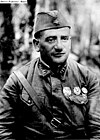
Georgy Zhukov on Grigoriy Plaskov
“I don't know a braver soldier than General Plaskov.”
Unsourced — Primary work/page citation not yet verified in the QuotesCosmos archive. Per our Unnamed Sources & Verification Policy, quotes without confirmed primary editions are explicitly marked Unsourced while under editorial review.
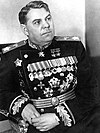
Georgy Zhukov on Aleksandr Vasilevsky
“A man who knew his job as he spent a long time commanding a regiment and who earned great respect from everybody.”
Unsourced — Primary work/page citation not yet verified in the QuotesCosmos archive. Per our Unnamed Sources & Verification Policy, quotes without confirmed primary editions are explicitly marked Unsourced while under editorial review.
Georgy Zhukov on Joseph Stalin
“Generalissimo Stalin directed every move... made every decision... He is the greatest and wisest military genius who ever lived...”

Unsourced — Primary work/page citation not yet verified in the QuotesCosmos archive. Per our Unnamed Sources & Verification Policy, quotes without confirmed primary editions are explicitly marked Unsourced while under editorial review.
Georgy Zhukov on Bernard Montgomery, 1st Viscount Montgomery of Alamein
“At the ceremony of signing the decoration I met Field-Marshal Montgomery for the first time. During the war I had closely followed the actions of British troops under his command. In 1940 the British Expeditionary Corps had sustained a disastrous setback at Dunkirk. Later, British troops under Montgomery's command had smashed the German corps under General Rommel at El Alamein. During the Normandy landing Montgomery had ably commanded the Allied forces and their advance to the banks of the Seine. Montgomery was above medium height, very agile, soldierly, trim and created an impression of a lively and intelligent man. He began to talk about the operations at El Alamein and at Stalingrad. In his view the two operations were of equal significance. I did not want to belittle the merits of the British troops, but still I had to explain to him that the El Alamein operation was carried out on an army scale, while at Stalingrad the operation engaged a group of fronts and it had a vast strategic importance- it resulted in the rout of a major enemy force in the area of the Volga and Don rivers and later, in the North Caucasus. It was an operation that actually marked a radical turning-point in the war and ensured the retreat of the German forces from our country.”
Unsourced — Primary work/page citation not yet verified in the QuotesCosmos archive. Per our Unnamed Sources & Verification Policy, quotes without confirmed primary editions are explicitly marked Unsourced while under editorial review.
Quotes About Georgy Zhukov
Gain deeper perspective through quotes about Georgy Zhukov from others.
Albert Axell on Georgy Zhukov
“Perhaps the best epitaph for Zhukov was written by an Indian diplomat, K.P. Menon, in a different context, years before the marshal died, when Zhukov was being hounded by sycophants and ideologists under Nikita Krushchev, so officially that he had become a so-called non-person. Menon wrote: "No star shone in the Russian firmament after Stalin's death with greater lustre than Zhukov's."”
Unsourced — Primary work/page citation not yet verified in the QuotesCosmos archive. Per our Unnamed Sources & Verification Policy, quotes without confirmed primary editions are explicitly marked Unsourced while under editorial review.
Otto Preston Chaney on Georgy Zhukov
“Zhukov has thus emerged in his twilight years to take his proper place in Soviet history. The resurrection of this great soldier, first a patriot and only then a Party member, can be viewed as an attempt by Brezhnev and his fellow leaders to give credit where credit is due and to make Soviet history a more factual record of events. Zhukov still commands the loyalty of many Russians in all walks of life, especially the veterans of World War II. Zhukov is an enduring symbol of victory on the battlefield.”
Unsourced — Primary work/page citation not yet verified in the QuotesCosmos archive. Per our Unnamed Sources & Verification Policy, quotes without confirmed primary editions are explicitly marked Unsourced while under editorial review.
Dwight D. Eisenhower on Georgy Zhukov
“So that's what you're like.”
Unsourced — Primary work/page citation not yet verified in the QuotesCosmos archive. Per our Unnamed Sources & Verification Policy, quotes without confirmed primary editions are explicitly marked Unsourced while under editorial review.
Gerd von Rundstedt on Soviet generals of the Second World War. As quoted on Georgy Zhukov
“None were any good in 1941. Of Budyenny (Semyon Budyonny), who commanded the armies facing me, a captured Russian officer aptly remarked — ‘He is a man with a very large moustache, but a very small brain.’ But in later years there is no doubt of the improvement in their generalship. Zhukov was very good. It is interesting to recall that he first studied strategy in Germany under General von Seeckt - this was about 1921-23.”
Unsourced — Primary work/page citation not yet verified in the QuotesCosmos archive. Per our Unnamed Sources & Verification Policy, quotes without confirmed primary editions are explicitly marked Unsourced while under editorial review.
Malcom Mackintosh on Georgy Zhukov 2 quotes
“The name of Marshal Georgi Zhukov, the distinguished Soviet military leader of World War II and a controversial postwar minister of defense, conjures up a picture of a severe and ruthless Soviet commander, one of the few who appeared never to have lost a battle, and who was allowed by Stalin out of the shadows which normally surround Soviet personalities briefly, at least, to share some of the glory of Soviet victories during the war. No one would deny that a good and accurate biography of a soldier of Zhukov's status and achievements has been lacking for some time. After all, lives of most of the outstanding Allied and German commanders have been available for many years. Scholars, historians, and the general public have long awaited a biography of their most successful Soviet counterpart- a man who, in the closing stages of the war, had under his direct operational command fourteen field armies and many thousands of tanks and aircraft.”
Unsourced — Primary work/page citation not yet verified in the QuotesCosmos archive. Per our Unnamed Sources & Verification Policy, quotes without confirmed primary editions are explicitly marked Unsourced while under editorial review.
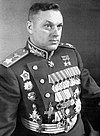
About Georgy Zhukov
Georgy Konstantinovich Zhukov (December 1 O.S. November 19 1896 – June 18, 1974) was a Soviet general and Marshal of the Soviet Union. He also served as Chief of the General Staff, Minister of Defence, and was a member of the Presidium of the Communist Party (later Politburo). During the Second World War, Zhukov oversaw some of the Red Army's most decisive victories.