Link Copied!
George Santayana Quotes (1863-1952)
Philosopher, Poet, Novelist
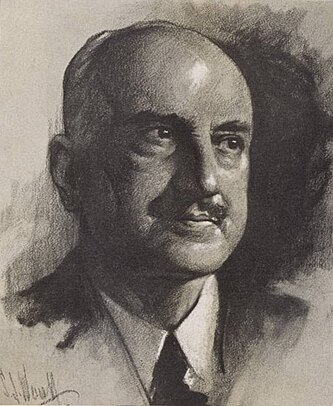


























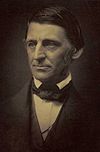

About George Santayana
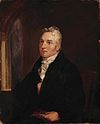
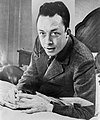
Jorge Agustín Nicolás Ruiz de Santayana y Borrás, known in English as George Santayana (16 December 1863 in Madrid, Spain – 26 September 1952 in Rome, Italy) was a Spanish-American philosopher, essayist, poet and novelist.
Best George Santayana Quotes
Shortest
Earliest
Explore our curated collection of the most famous and impactful George Santayana quotes.

“To covet truth is a very distinguished passion.”
“The idea of Christ is much older than Christianity.”

“The Bible is literature, not dogma.”

“A child educated only at school is an uneducated child.”
“Art like life should be free, since both are experimental.”

“Our dignity is not in what we do, but in what we understand.”
“Every moment celebrates obsequies over the virtues of its predecessor.”
“To know how just a cause we have for grieving is already a consolation.”

“[Everything] ideal has a natural basis and everything natural an ideal development.”
“Skepticism, like chastity, should not be relinquished too readily.”

“To call war the soil of courage and virtue is like calling debauchery the soil of love.”


“To understand oneself is the classic form of consolation; to elude oneself is the romantic.”
“Our dignity is not in what we do, but in what we understand. The whole world is doing things.”
“England is the paradise of individuality, eccentricity, heresy, anomalies, hobbies, and humors.”
“Fanaticism consists in redoubling your efforts when you have forgotten your aim.”

“[The empiricist] thinks he believes only what he sees, but he is much better at believing than at seeing.”
“It is not politics that can bring true liberty to the soul; that must be achieved, if at all, by philosophy;”
“When men and women agree, it is only in their conclusions; their reasons are always different.”

“Beauty as we feel it is something indescribable: what it is or what it means can never be said.”
“Injustice in this world is not something comparative; the wrong is deep, clear, and absolute in each private fate.”

“Friendship is almost always the union of a part of one mind with the part of another; people are friends in spots.”

“Whenever a nation is converted to Christianity, its Christianity, in practice, must be largely converted to paganism.”
“Fashion is something barbarous, for it produces innovation without reason and imitation without benefit.”
“That life is worth living is the most necessary of assumptions and, were it not assumed, the most impossible of conclusions.”
“Miracles are propitious accidents, the natural causes of which are too complicated to be readily understood.”
“Profound skepticism is favorable to conventions, because it doubts that the criticism of conventions is any truer than they are.”
“There is nothing impossible in the existence of the supernatural: its existence seems to me decidedly probable.”

“Happiness is the only sanction of life; where happiness fails, existence remains a mad and lamentable experiment.”


“The world is a perpetual caricature of itself; at every moment it is the mockery and the contradiction of what it is pretending to be.”
“Beauty is a pledge of the possible conformity between the soul and nature, and consequently a ground of faith in the supremacy of the good.”

“... I once shook hands with Longfellow at a garden party in 1881; and I often saw Dr. Holmes, who was our neighbor in Beacon Street: but Emerson I never saw.”


“Matters of religion should never be matters of controversy. We neither argue with a lover about his taste, nor condemn him, if we are just, for knowing so human a passion.”
“The mind celebrates a little triumph whenever it can formulate a truth, however unwelcome to the flesh, or discover an actual force, however unfavourable to given interests.”
“To the mind of the ancients, who knew something of such matters, liberty and prosperity seemed hardly compatible, yet modern liberalism wants them together.”

“I leave you but the sound of many a word
In mocking echoes haply overheard,
I sang to heaven. My exile made me free,
from world to world, from all worlds carried me.”
In mocking echoes haply overheard,
I sang to heaven. My exile made me free,
from world to world, from all worlds carried me.”

“Most men's conscience, habits, and opinions are borrowed from convention and gather continual comforting assurances from the same social consensus that originally suggested them.”
“What renders man an imaginative and moral being is that in society he gives new aims to his life which could not have existed in solitude: the aims of friendship, religion, science, and art.”
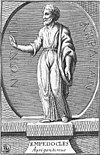
“Persons who feel themselves to be exiles in this world—and what noble mind, from Empedocles down, has not had that feeling?—are mightily inclined to believe themselves citizens of another.”
“In proportion as a man's interests become humane and his efforts rational, he appropriates and expands a common life, which reappears in all individuals who reach the same impersonal level of ideas.”
“I like to walk about amidst the beautiful things that adorn the world; but private wealth I should decline, or any sort of personal possessions, because they would take away my liberty.”
“When Socrates and his two great disciples composed a system of rational ethics they were hardly proposing practical legislation for mankind...They were merely writing an eloquent epitaph for their country.”
“Professional philosophers are usually only apologists: that is, they are absorbed in defending some vested illusion or some eloquent idea. Like lawyers or detectives, they study the case for which they are retained.”


“They [the wise spirits of antiquity in the first circle of Dante's Inferno] are condemned, Dante tells us, to no other penalty than to live in desire without hope, a fate appropriate to noble souls with a clear vision of life.”
“No system would have ever been framed if people had been simply interested in knowing what is true, whatever it may be. What produces systems is the interest in maintaining against all comers that some favourite or inherited idea of ours is sufficient and right. ** p. 49”
“Prosperity, both for individuals and for states, means possessions; and possessions mean burdens and harness and slavery; and slavery for the mind, too, because it is not only the rich man's time that is pre-empted, but his affections, his judgement, and the range of his thoughts.”

“Skepticism is the chastity of the intellect, and it is shameful to surrender it too soon or to the first comer: there is nobility in preserving it coolly and proudly through long youth, until at last, in the ripeness of instinct and discretion, it can be safely exchanged for fidelity and happiness.”
“Liberalism has merely cleared a field in which every soul and every corporate interest may fight with every other for domination. Whoever is victorious in this struggle will make an end of liberalism; and the new order, which will deem itself saved, will have to defend itself in the following age against a new crop of rebels.”

“Progress, far from consisting in change, depends on retentiveness. When change is absolute there remains no being to improve and no direction is set for possible improvement: and when experience is not retained, as among savages, infancy is perpetual. Those who cannot remember the past are condemned to repeat it.”

“Even the most inspired verse, which boasts not without a relative justification to be immortal, becomes in the course of ages a scarcely legible hieroglyphic; the language it was written in dies, a learned education and an imaginative effort are requisite to catch even a vestige of its original force. Nothing is so irrevocable as mind.”
“O world, thou choosest not the better part!
It is not wisdom to be only wise,
And on the inward vision close the eyes,
But it is wisdom to believe the heart.
Columbus found a world, and had no chart,
Save one that faith deciphered in the skies;
To trust the soul's invincible surmise
Was all his science and his only art.”
It is not wisdom to be only wise,
And on the inward vision close the eyes,
But it is wisdom to believe the heart.
Columbus found a world, and had no chart,
Save one that faith deciphered in the skies;
To trust the soul's invincible surmise
Was all his science and his only art.”

“The human race, in its intellectual life, is organized like the bees: the masculine soul is a worker, sexually atrophied, and essentially dedicated to impersonal and universal arts; the feminine is a queen, infinitely fertile, omnipresent in its brooding industry, but passive and abounding in intuitions without method and passions without justice.”

“American life is a powerful solvent. As it stamps the immigrant, almost before he can speak English, with an unmistakable muscular tension, cheery self-confidence and habitual challenge in the voice and eyes, so it seems to neutralize every intellectual element, however tough and alien it may be, and to fuse it in the native good-will, complacency, thoughtlessness, and optimism.”
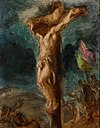
“Experience has repeatedly confirmed that well-known maxim of Bacon's that "a little philosophy inclineth a man's mind to atheism, but depth in philosophy bringeth men's minds about to religion." At the same time, when Bacon penned that sage epigram... he forgot to add that the God to whom depth in philosophy brings back men's minds is far from being the same from whom a little philosophy estranges them.”
“In Walt Whitman democracy is carried into psychology and morals. The various sights, moods, and emotions are given each one vote; they are declared to be all free and equal, and the innumerable commonplace moments of life are suffered to speak like the others. Those moments formerly reputed great are not excluded, but they are made to march in the ranks with their companions—plain foot-soldiers and servants of the hour.”
“In the Gospels, for instance, we sometimes find the kingdom of heaven illustrated by principles drawn from observation of this world rather than from an ideal conception of justice; ... They remind us that the God we are seeking is present and active, that he is the living God; they are doubtless necessary if we are to keep religion from passing into a mere idealism and God into the vanishing point of our thought and endeavour.”
“At midday the daily food of all Spaniards was the puchero or cocido, as the dish is really called which the foreigners call pot-pourri or olla podrida. This contains principally yellow chick-peas, with a little bacon, some potatoes or other vegetables and normally also small pieces of beef or sausage, all boiled in one pot at a very slow fire; the liquid of the same makes the substantial broth that is served first.”
“Although a poem be not made by counting of syllables upon the fingers, yet "numbers" is the most poetical synonym we have for verse, and "measure" the most significant equivalent for beauty, for goodness, and perhaps even for truth. Those early and profound philosophers, the followers of Pythagoras, saw the essence of all things in number, and it was by weight, measure, and number, as we read in the Bible, that the Creator first brought Nature out of the void.”

“On fact, the whole machinery of our intelligence, our general ideas and laws, fixed and external objects, principles, persons, and gods, are so many symbolic, algebraic expressions. They stand for experience; experience which we are incapable of retaining and surveying in its multitudinous immediacy. We should flounder hopelessly, like the animals, did we not keep ourselves afloat and direct our course by these intellectual devices. Theory helps us to bear our ignorance of fact.”

“Liberal philosophy, at this point, ceases to be empirical and British in order to become German and transcendental. Moral life, it now believes, is not the pursuit of liberty and happiness of all sorts by all sorts of different creatures; it is the development of a single spirit in all life through a series of necessary phases, each higher than the preceding one. No man, accordingly, can really or ultimately desire anything but what the best people desire. This is the principle of the higher snobbery; and in fact, all earnest liberals are higher snobs.”
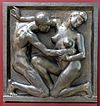
“Because the peculiarity of man is that his machinery for reaction on external things has involved an imaginative transcript of these things, which is preserved and suspended in his fancy; and the interest and beauty of this inward landscape, rather than any fortunes that may await his body in the outer world, constitute his proper happiness. By their mind, its scope, quality, and temper, we estimate men, for by the mind only do we exist as men, and are more than so many storage-batteries for material energy. Let us therefore be frankly human. Let us be content to live in the mind.”

“Oblivious of Democritus, the unwilling materialists of our day have generally been awkwardly intellectual and quite incapable of laughter. If they have felt anything, they have felt melancholy. Their allegiance and affection were still fixed on those mythical sentimental worlds which they saw to be illusory. The mechanical world they believed in could not please them, in spite of its extent and fertility. Giving rhetorical vent to their spleen and prejudice, they exaggerated nature's meagreness and mathematical dryness. When their imagination was chilled they spoke of nature, most unwarrantably, as dead, and when their judgment was heated they took the next step and called it unreal.”
“History is nothing but assisted and recorded memory. It might almost be said to be no science at all, if memory and faith in memory were not what science necessarily rest on. In order to sift evidence we must rely on some witness, and we must trust experience before we proceed to expand it. The line between what is known scientifically and what has to be assumed in order to support knowledge is impossible to draw. Memory itself is an internal rumour; and when to this hearsay within the mind we add the falsified echoes that reach us from others, we have but a shifting and unseizable basis to build upon. The picture we frame of the past changes continually and grows every day less similar to the original experience which it purports to describe.”
“I was still “at the church door”. Yet in belief, in the clarification of my philosophy, I had taken an important step. I no longer wavered between alternative views of the world, to be put on or taken off like alternative plays at the theatre. I now saw that there was only one possible play, the actual history of nature and of mankind, although there might well be ghosts among the characters and soliloquies among the speeches. Religions, all religions, and idealistic philosophies, all idealistic philosophies, were the soliloquies and the ghosts. They might be eloquent and profound. Like Hamlet's soliloquy they might be excellent reflective criticisms of the play as a whole. Nevertheless they were only parts of it, and their value as criticisms lay entirely in their fidelity to the facts, and to the sentiments which those facts aroused in the critic.”
George Santayana Quotes by Topic
Find exactly what you are looking for by browsing this categorized list of George Santayana quotes by topic.
George Santayana on Skepticism 3 quotes
“Skepticism, like chastity, should not be relinquished too readily.”
George Santayana on Imagination 2 quotes
“I have imagination, and nothing that is real is alien to me.”
George Santayana on History 2 quotes
View all 2 quotes on History →George Santayana on Patriotism 2 quotes
“To me, it seems a dreadful indignity to have a soul controlled by geography.”

What George Santayana Said About Others
Discover personal opinions George Santayana shared regarding contemporaries.
George Santayana on Baruch Spinoza 19 quotes
“...Descartes who misled the whole chorus of modern philosophers, except Spinoza, by making them fall in love with themselves.”

George Santayana on Ralph Waldo Emerson 2 quotes
“A cheery, child-like soul, impervious to the evidence of evil.”

George Santayana on William James
“Philosophy to him was rather like a maze in which he happened to find himself wandering, and what he was looking for was the way out.”
George Santayana on Epicurus
“The system of Democritus was adopted by Epicurus, but not because Epicurus had any keenness of scientific vision. On the contrary, Epicurus, the Herbert Spencer of antiquity, was in his natural philosophy an encyclopedia of second-hand knowledge.”
George Santayana on Saints
“By the way, I have been reading the last volume of the Bible (the Epistles & Apocalypse) in your modern edition. I long for notes; but even half understood the stuff is extraordinary. What could be more remote from polite religion than this palpitating, ... eschatological, revolutionary delusion? And what fisticuffs—controversial and perhaps physical—among these new-born saints!”
Disputed Quotes
Quotes attributed to George Santayana that are questionable.
Misattributed Quotes
Quotes mistakenly credited to George Santayana
“The working of great administrations is mainly the result of a vast mass of routine, petty malice, self-interest, carelessness and sheer mistake. Only a residual fraction is thought.”
“Books are “imaginative rehearsals for living,” stated novelist George Santayana. They are also a great equalizer in a diverse society. Book reading helps prepare a child for mental liberation from ignorance, fear, and falsehood.”
“The writer-philosopher George Santayana is credited with the phrase: “Those who cannot remember the past are condemned to repeat it.” Yet here we are, repeating that of just 52 years ago. Let us pray that come 2072, Americans then have at last heeded Santayana's warning and Dr. King’s dream is no longer words in a speech but reality being lived.”
“But what a perfection of rottenness in a philosophy!”
“"In America literary reputations come and go so swiftly," I complained, fatuously. [Santayana's] answer was swift. "It would be insufferable if they did not."”
“"There is no God, and Mary is his mother." Often, almost certainly incorrectly, attributed to Santayana himself. More plausibly attributed to Robert Lowell, as a sardonic description of Santayana's philosophy.”
“Santayana, indeed, is the Moses of the new naturalism, who discerned the promised land from afar but still wanders himself in the desert realms of being.”
About George Santayana
Jorge Agustín Nicolás Ruiz de Santayana y Borrás, known in English as George Santayana (16 December 1863 in Madrid, Spain – 26 September 1952 in Rome, Italy) was a Spanish-American philosopher, essayist, poet and novelist.