Link Copied!
George Henry Lewes Quotes (1817-1878)
Philosopher, Novelist






About George Henry Lewes
George Henry Lewes (April 18, 1817 – November 30, 1878) was an English philosopher, biographer, novelist, and literary and dramatic critic. He was also controversially long engaged in an open marriage with his legal wife and openly lived with George Eliot (a.k.a. Mary Anne Evans) in a romantic relationship.
Best George Henry Lewes Quotes
Shortest
Earliest
Explore our curated collection of the most famous and impactful George Henry Lewes quotes.

“Murder, like talent, seems occasionally to run in families.”

“Science is the systematic classification of experience.”



“Shakespeare is a good raft whereon to float securely down the stream of time; fasten yourself to that and your immortality is safe.”

“Whatever lies beyond the limits of experience, and claims another origin than that of induction and deduction from established data, is illegitimate.”
“To some men popularity is always suspicious. Enjoying none themselves, they are prone to suspect the validity of those attainments which command it.”

“Among the many strange servilities mistaken for pieties, one of the least lovely is that which hopes to flatter God by despising the world, and vilifying human nature.”
“It is always understood as an expression of condemnation when anything in Literature or Art is said to be done for effect; and yet to produce an effect is the aim and end of both.”


“The art of a great writer is seen in the perfect fitness of his expressions. He knows how to blend vividness with vagueness, knows where images are needed, and where by their vivacity they would be obstacles to the rapid appreciation of his thought.”
“Simplicity of structure means organic unity, whether the organism be simple or complex; and hence in all times the emphasis which critics have laid upon Simplicity, though they have not unfrequently confounded it with narrowness of range.”

“The first obligation of Simplicity is that of using the simplest means to secure the fullest effect. But although the mind instinctlvely rejects all needless complexity, we shall greatly err if we fail to recognise the fact, that what the mind recoils from is not the complexity, but the needlessness.”
“A man may be buoyed up by the efflation of his wild desires to brave any imaginable peril; but he cannot calmly see one he loves braving the same peril; simply because he cannot feel within turn that which prompts another. He sees the danger, and feels not the power that is to overcome it.”
“Foolish critics often betray their ignorance by saying that a painter or a writer "only copies what he has seen, or puts down what he has known." They forget that no man imagines what he has not seen or known, and that it is in the selection of the characteristic details that the artistic power is manifested.”
“I wish to call special attention to the psychological fact, that fairies and demons, remote as they are from experience, are not created by a more vigorous effort of imagination than milk maids and poachers. The intensity of vision in the artist and of vividness in his creations are the sole tests of his imaginative power.”

“The greatest artist is he who is greatest in the highest reaches of his art, even although he may lack the qualities necessary for the adequate execution of some minor details. It is not by his faults, but by his excellences, that we measure a great man. The strength of a beam is measured by its weakest part, of a man by his strongest..”

George Henry Lewes Quotes by Topic
Find exactly what you are looking for by browsing this categorized list of George Henry Lewes quotes by topic.
George Henry Lewes on History of science 4 quotes
“The separation of Science from Knowledge was effected step by step as the Subjective Method was replaced by the Objective Method: i.e., when in each inquiry the phenomena of external nature ceased to be interpreted on premisses suggested by the analogies of human nature.”

George Henry Lewes on Homicide 2 quotes
“Murder, like talent, seems occasionally to run in families.”
George Henry Lewes on Teleology 2 quotes
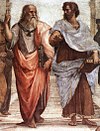
“To his [ Plato's ] great disappointment, he found Anaxagoras adducing simple physical reasons, instead of the teleological reasons, which he had expected. Such a teacher could no longer allure him.”
George Henry Lewes on Mechanics 2 quotes
“Aristotle's failure in Biology is not less conspicuous than his failure in Mechanics; yet the ideas of Final Cause, Likeness, and Vitality, which are said to be the ideas appropriate to this science, were assuredly possessed by him with a distinctness unsurpassed in modern times.”
George Henry Lewes on Science in classical antiquity 2 quotes
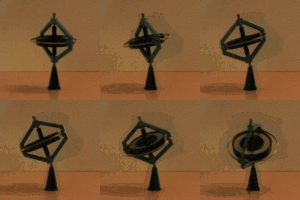
“He who is ignorant of Motion, says Aristotle, is necessarily ignorant of all natural things. ...Not only was he entirely in the dark respecting the Laws, he was completely wrong in his conception of the nature of Motion. ...He thought that every body in motion naturally tends to rest.”

George Henry Lewes on Genius
George Henry Lewes on Growth
George Henry Lewes on Authors
“To write much, and to write rapidly, are empty boasts. The world desires to know what you have done, and not how you did it.”

George Henry Lewes on Popularity
“And to some men popularity is always suspicious. Enjoying none themselves, they are prone to suspect the validity of those attainments which command it.”
George Henry Lewes on Deference
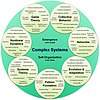
George Henry Lewes on Emergence
“Thus, although each effect is the resultant of its components, the product of its factors, we cannot always trace the steps of the process, so as to see in the product the mode of operation of each factor. In this latter case, I propose to call the effect an emergent. It arises out of the combined agencies, but in a form which does not display the agents in action.”
George Henry Lewes on Intelligibility
“Principles of Vision insists on the artist assuring himself that he distinctly sees what he attempts to represent. What he sees, and how he represents it, depend on other principles. To make even this principle of Vision thoroughly intelligible in its application to all forms of Literature and Art, it must be considered in connection with the two other principles sincerity and beauty, which are involved in all successful works.”

What George Henry Lewes Said About Others
Discover personal opinions George Henry Lewes shared regarding contemporaries.
George Henry Lewes on Baruch Spinoza 3 quotes
“...The doctrine of Spinoza was of great importance, if for nothing more than having brought about the first crisis in modern Philosophy.”

George Henry Lewes on Aristotle 3 quotes
“Most expositions of Aristotle's doctrines, when they have not been dictated by a spirit of virulent detraction, or unsympathetic indifference, have carefully suppressed all, or nearly all, the absurdities, and only retained what seemed plausible and consistent. But in this procedure their historical significance disappears.”

George Henry Lewes on John Herschel 2 quotes
“We must limit even the conception of necessary sequence, which is held to express all that is known of causation. There is no following of effects from causes; but as Sir John Herschel more truly says, the causes and effects are simultaneous.”

George Henry Lewes on Roger Bacon 2 quotes
“Roger Bacon, a disciple of the Arabs, also insisted on the primary necessity of Mathematics, without which no other science can be known; yet by Mathematics it is clear that he meant something very different from what we mean, including under that head even dancing, singing, gesticulation, and performance on musical instruments.”

George Henry Lewes on Plato 2 quotes
“It is not in Science only that Plato is misled by his Method. The same confidence in deduction from unverified premisses vitiates his teaching in every other department of inquiry, moral and political; but in Science his errors are more patent, because his statements admit of a readier, and less equivocal, confrontation with fact.”

George Henry Lewes on Pliny the Elder
“Pliny... makes the statement, and for untrustworthiness of statement he cannot easily be surpassed.”
George Henry Lewes on William Whewell
“Many glaring errors of the Greeks will have to be noticed ... few of them can be referred to the cause assigned by Dr. Whewell.”
George Henry Lewes on Georg Wilhelm Friedrich Hegel
“Hegel... scornfully characterizes Empiricism as seeking truth in Experience instead of in Thought. It is on such principles that the modern German Philosophy has reproduced the ambitious but inane attempts of Scholasticism.”

George Henry Lewes on Immanuel Kant
“Kant truly says "it is the fate of human reason in speculation to build as rapidly as possible, and only when the edifice is completed to examine the solidity of its foundations." And the source of such carelessness he finds in this, that knowledge often consisting in the analysis of our conceptions, we are led to pay exclusive attention to them, rather than to their origin.”

George Henry Lewes on Francis Bacon
“Since... it appears that Aristotle very distinctly recognized the cardinal principles of the Baconian philosophy, why... has the world credited Bacon with a great reform in the very attacks he made on Aristotle? The answer is simple. Bacon did not attack the Method which Aristotle taught; indeed, he was very imperfectly acquainted with it. He attacked the Method which the followers of Aristotle practised.”

George Henry Lewes on René Descartes
“"There is one basis of science," says Descartes, "one test and rule of truth, namely, that whatever is clearly and distinctly conceived is true." A profound psychological mistake. It is true only of formal logic, wherein the mind never quits the sphere of its first assumptions to pass out into the sphere of real existences; no sooner does the mind pass from the internal order to the external order, than the necessity of verifying the strict correspondence between the two becomes absolute. The Ideal Test must be supplemented by the Real Test, to suit the new conditions of the problem.”

George Henry Lewes on Jane Austen
“The delight derived from her pictures arises from our sympathy with ordinary characters, our relish of humor, and our intellectual pleasure in art for art's sake. But when it is admitted that she never stirs the deeper emotions, that she never fills the soul with a noble aspiration, or brightens it with a fine idea, but, at the utmost, only teaches us charity for the ordinary failings of ordinary people, and sympathy with their goodness, we have admitted an objection which lowers her claims to rank among the great benefactors of the race; and this sufficiently explains why, with all her excellence, her name has not become a household word. Her fame, we think, must endure. Such art as hers can never grow old, never be superseded. But, after all, miniatures are not frescoes, and her works are miniatures. Her place is among the Immortals; but the pedestal is erected in a quiet niche of the great temple.”
Misattributed Quotes
Quotes mistakenly credited to George Henry Lewes
“Remember that every drop that falls, bears into the bosom of the earth a quality of beautiful fertility.”
About George Henry Lewes
George Henry Lewes (April 18, 1817 – November 30, 1878) was an English philosopher, biographer, novelist, and literary and dramatic critic. He was also controversially long engaged in an open marriage with his legal wife and openly lived with George Eliot (a.k.a. Mary Anne Evans) in a romantic relationship.