Link Copied!
George F. Kennan Quotes (1904-2005)
King

About George F. Kennan
George Frost Kennan (16 February 1904 – 17 March 2005) was an American diplomat and historian, who served as ambassador to the Soviet Union and Yugoslavia. He was known best as an advocate of a policy of containment of Soviet expansion during the Cold War on which he later reversed himself. He lectured widely and wrote scholarly histories of the relations between the USSR and the United States. He was also one of the group of foreign policy elders known as "The Wise Men".
Best George F. Kennan Quotes
Shortest
Earliest
Explore our curated collection of the most famous and impactful George F. Kennan quotes.
“A guest of one's time and not a member of its household.”
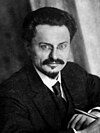
“Trotsky, and all that Trotsky represented, was Stalin's real fear.”
“Fig leaves of democratic procedure to hide the nakedness of Stalinist dictatorship.”
“Although the Georgian nationalists do not like Stalin, they have every reason to be thankful to him.”

“The best thing we can do if we want the Russians to let us be Americans is to let the Russians be Russian.”


“I am like a person who has placed poison in one of two glasses before a person he loves—and looks back upon his act with horror and incredulity—but still does not know from which glass the person will drink.”
“The best an American can look forward to is the lonely pleasure of one who stands at long last on a chilly and inhospitable mountaintop where few have been before, where few can follow and where few will consent to believe he has been.”

“The very concept of history implies the scholar and the reader. Without a generation of civilized people to study history, to preserve its records, to absorb its lessons and relate them to its own problems, history, too, would lose its meaning.”

“Were the Soviet Union to sink tomorrow under the waters of the ocean, the American military-industrial establishment would have to go on, substantially unchanged, until some other adversary could be invented. Anything else would be an unacceptable shock to the American economy.”
“Not only the studying and writing of history but also the honoring of it both represent affirmations of a certain defiant faith — a desperate, unreasoning faith, if you will — but faith nevertheless in the endurance of this threatened world — faith in the total essentiality of historical continuity.”

“A doctrine is something that pins you down to a given mode of conduct and dozens of situations which you cannot foresee, which is a great mistake in principle. When the word ‘containment’ was used in my ‘X’ article, it was used with relation to a certain situation then prevailing, and as a response to it.”
“There will be no room, here, for the smug myopia which views American civilization as the final solution to all world problems; which recommends our institutions for universal adoption and turns away with contempt from the serious study of the institutions of peoples whose civilizations may seem to us to be materially less advanced.”

“For the love of God, for the love of your children and of the civilization to which you belong, cease this madness. You are mortal men. You are capable of error. You have no right to hold in your hands — there is no one wise enough and strong enough to hold in his hands — destructive power sufficient to put an end to civilized life on a great portion of our planet.”

“We are, if territory and population be looked at together, one of the great countries of the world — a monster country, one might say, along with others such as China, India, the recent Soviet Union, and Brazil. And there is a real question as to whether "bigness" in a body politic is not an evil in itself, quite aside from the policies pursued in its name.”
“I write to say that in the idea of the three American states' ultimate independence, whether separately or in union, I see nothing fanciful. [Such] are at present the dominating trends in the U.S. that I see no other means of ultimate preservation of cultural and societal values that will not only be endangered but eventually destroyed by an endlessly prolonged association … with the remainder of what is now the U.S.A.”

“I think it is the beginning of a new cold war. I think the Russians will gradually react quite adversely and it will affect their policies. I think it is a tragic mistake. There was no reason for this whatsoever. No one was threatening anybody else. Of course there is going to be a bad reaction from Russia, and then [the NATO expanders] will say that we always told you that is how the Russians are — but this is just wrong.”
“There is another difficulty that confronts me when I try to describe my early self. In my youthful consciousness, more, perhaps, than in the case of many others, the borderline between external and internal realities was unfirm. I lived, particularly in childhood but with lessening intensity right on to middle age, in a world that was peculiarly and intimately my own, scarcely to be shared with others or even made plausible to them.”

“Talked at lunch with a gentleman just returned from Japan, who told me some disturbing things about the influences behind our policies of extreme democratization and de-concentration of economic life in Japan.
Of all the failures of United States policy in the wake of World War II, history will rate as the most grievous our failure to approach realistically the responsibilities of power over the defeated nations which we ourselves courted by the policy of unconditional surrender.”
Of all the failures of United States policy in the wake of World War II, history will rate as the most grievous our failure to approach realistically the responsibilities of power over the defeated nations which we ourselves courted by the policy of unconditional surrender.”

“Reading, in contrast to sitting before the screen, is not a purely passive exercise. The child, particularly one who reads a book dealing with real life, has nothing before it but the hieroglyphics of the printed page. Imagination must do the rest; and imagination is called upon to do it. Not so the television screen. Here everything is spelled out for the viewer, visually, in motion, and in all three dimensions. No effort of imagination is called upon for its enjoyment.”

“I lived, particularly in childhood but with lessening intensity right on to middle age, in a world that was peculiarly and intimately my own, scarcely to be shared with others or even made plausible to them. I habitually read special meanings into things, scenes and places — qualities of wonder, beauty, promise, or horror — for which there was no external evidence visible or plausible to others. My world was peopled with mysteries, seductive hints, vague menaces, "intimations of immortality."”

George F. Kennan Quotes by Topic
Find exactly what you are looking for by browsing this categorized list of George F. Kennan quotes by topic.
George F. Kennan on War 3 quotes
“Whenever you have a possibility of going in two ways, either for peace or for war, for peaceful methods of for military methods, in the present age there is a strong prejudice for the peaceful ones. War seldom ever leads to good results.”

George F. Kennan on Foreign policy 2 quotes
“By this I mean that a political society does not live to conduct foreign policy; it would be more correct to say that it conducts foreign policy in order to live.”

George F. Kennan on Foreign policy of the United States 2 quotes
“By this I mean that a political society does not live to conduct foreign policy; it would be more correct to say that it conducts foreign policy in order to live.”

George F. Kennan on Institute for Advanced Study
“There has been no other place in the world from which, scholar for scholar and square foot for square foot, more and finer scholarship has emerged over these past forty years than from these surrounding walls.”

George F. Kennan on Nuclear war
“For the love of God, for the love of your children and of the civilization to which you belong, cease this madness. You are mortal men. You are capable of error. You have no right to hold in your hands—there is no one wise enough and strong enough to hold in his hands—destructive power sufficient to put an end to civilized life on a great portion of our planet.”
George F. Kennan on Books
“Reading, in contrast to sitting before the screen, is not a purely passive exercise. The child, particularly one who reads a book dealing with real life, has nothing before it but the hieroglyphics of the printed page. Imagination must do the rest; and imagination is called upon to do it. Not so the television screen. Here everything is spelled out for the viewer, visually, in motion, and in all three dimensions. No effort of imagination is called upon for its enjoyment.”
George F. Kennan on Democratization
“Talked at lunch with a gentleman just returned from Japan, who told me some disturbing things about the influences behind our policies of extreme democratization and de-concentration of economic life in Japan. Of all the failures of United States policy in the wake of World War II, history will rate as the most grievous our failure to approach realistically the responsibilities of power over the defeated nations which we ourselves courted by the policy of unconditional surrender.”
George F. Kennan on Cold War
“I said that wherever these people, meaning the Soviet leadership, confronted us with dangerous hostility anywhere in the world, we should do everything possible to contain it and not let them expand any further. I should have explained that I didn't suspect them of any desire to launch an attack on us. This was right after the war, and it was absurd to suppose that they were going to turn around and attack the United States. I didn't think I needed to explain that, but I obviously should have done it.”

George F. Kennan on Iraq War
“Anyone who has ever studied the history of American diplomacy, especially military diplomacy, knows that you might start in a war with certain things on your mind as a purpose of what you are doing, but in the end, you found yourself fighting for entirely different things that you had never thought of before … In other words, war has a momentum of its own and it carries you away from all thoughtful intentions when you get into it. Today, if we went into Iraq, like the president would like us to do, you know where you begin. You never know where you are going to end.”

George F. Kennan on Democracy
“A democracy is peace-loving. It does not like to go to war. It is slow to rise to provocation. When it has once been provoked to the point where it must grasp the sword, it does not easily forgive its adversary for having produced this situation. The fact of the provocation then becomes itself the issue. Democracy fights in anger — it fights for the very reason that it was forced to go to war. It fights to punish the power that was rash enough and hostile enough to provoke it — to teach that power a lesson it will not forget, to prevent the thing from happening again. Such a war must be carried to the bitter end.”

George F. Kennan on Public opinion
“Public opinion, or what passes for public opinion, is not invariably a moderating force in the jungle of politics. It may be true, and I suspect it is, that the mass of people everywhere are normally peace-loving and would accept many restraints and sacrifices in preference to the monstrous calamities of war. But I also suspect that what purports to be public opinion in most countries that consider themselves to have popular government is often not really the consensus of the feelings of the mass of the people at all, but rather the expression of the interests of special highly vocal minorities — politicians, commentators, and publicity-seekers of all sorts: people who live by their ability to draw attention to themselves and die, like fish out of water, if they are compelled to remain silent.”

George F. Kennan on Urbanization
“Now this problem of the adjustment of man to his natural resources, and the problem of how such things as industrialization and urbanization can be accepted without destroying the traditional values of a civilization and corrupting the inner vitality of its life — these things are not only the problems of America; they are the problems of men everywhere. To the extent that we Americans become able to show that we are aware of these problems, and that we are approaching them with coherent and effective ideas of our own which we have the courage to put into effect in our own lives, to that extent a new dimension will come into our relations with the peoples beyond our borders, to that extent, in fact, the dreams of these earlier generations of Americans who saw us as leaders and helpers to the peoples of the world at large will begin to take on flesh and reality.”

George F. Kennan on Industrialization
“Now this problem of the adjustment of man to his natural resources, and the problem of how such things as industrialization and urbanization can be accepted without destroying the traditional values of a civilization and corrupting the inner vitality of its life — these things are not only the problems of America; they are the problems of men everywhere. To the extent that we Americans become able to show that we are aware of these problems, and that we are approaching them with coherent and effective ideas of our own which we have the courage to put into effect in our own lives, to that extent a new dimension will come into our relations with the peoples beyond our borders, to that extent, in fact, the dreams of these earlier generations of Americans who saw us as leaders and helpers to the peoples of the world at large will begin to take on flesh and reality.”
George F. Kennan on National security
“A foreign policy aimed at the achievement of total security is the one thing I can think of that is entirely capable of bringing this country to a point where it will have no security at all. And a ruthless, reckless insistence on attempting to stamp out everything that could conceivably constitute a reflection of improper foreign influence in our national life, regardless of the actual damage it is doing to the cost of eliminating it, in terms of other American values, is the one thing I can think of that should reduce us all to a point where the very independence we are seeking to defend would be meaningless, for we would be doing things to ourselves as vicious and tyrannical as any that might be brought to us from outside. This sort of extremism seems to me to hold particular danger for a democracy, because it creates a curious area between what is held to be possible and what is really possible — an area within which government can always be plausibly shown to have been most dangerously delinquent in the performance of its tasks. And this area, where government is always deficient, provides the ideal field of opportunity for every sort of demagoguery and mischief-making. It constitutes a terrible breach in the dike of our national morale, through which forces of doubt and suspicion never cease to find entry. The heart of our problem, here, lies in our assessment of the relative importance of the various dangers among which we move; and until many of our people can be brought to understand that what we have to do is not to secure a total absence of danger but to balance peril against peril and to find the tolerable degree of each, we shall not wholly emerge from these confusions.”
What George F. Kennan Said About Others
Discover personal opinions George F. Kennan shared regarding contemporaries.
George F. Kennan on Joseph Stalin
“Trotsky, and all that Trotsky represented, was Stalin's real fear.”

George F. Kennan on Leon Trotsky
“Trotsky, and all that Trotsky represented, was Stalin's real fear.”
George F. Kennan on Mikhail Gorbachev
“He clearly did not foresee (nor did any of us) how quickly and dangerously things would fall apart in Russia once the strong disciplinary hand of the Party was relaxed. What he did in destroying the old system was a great historic service to Russia and the world. And nobody else could have done it. But he is not a good politician in the democratic sense. He has no adequate inter-action with the people at large. Yeltsin, not an intellectual but quite intelligent, is far ahead of him in these respects.”

George F. Kennan on Isaiah Berlin
“Bohlen and Isaiah Berlin came to dinner, and we talked until one or two in the morning. Berlin, who is undoubtedly the best informed and most intelligent foreigner in Moscow, said that the only thins he had learned on the occasion of this visit were: (a) the continued existence of the conflict in outlook between age and youth, (b) of the tremendous importance to young people of the feeling of economic security which they have under the Soviet system, and (c) the continued vital importance of Marxist dogma in Soviet thought and action. He agreed with me strongly that American policy must find its expression from now on in action and not in words if it is to do any good. He was firmly convinced that the Russians view a conflict with the Western world as quite inevitable and that their whole policy is predicated on this prospect. I asked him whether they didn't realize that if the conflict came it would be the result of their own tactics and their own insistence that it was inevitable. he said no, that they would view it as inevitable through the logic of the development of social forces. They would say that possibly some of us foreign diplomats and statesmen might consider ourselves friendly to Russia at the moment but that eventually we would find out that we were hostile to them even though we did not know it at the moment.”

Quotes About George F. Kennan
Gain deeper perspective through quotes about George F. Kennan from others.
His oldest daughter on George F. Kennan
Jeremy Black on George F. Kennan
“Concerned about Communism on the global level, and about the stability of Europe and the future of Germany, the Americans, both government and public, did not intend to repeat their interwar isolationism when they had not responded to the expansion of Nazi Germany and, without getting the blame, had, in practice, been prominent among the appeasers. Containment as a concept that was to be applied in American political and military strategy received its intellectual rationale in 1947 from George Kennan, the acting head of the American diplomatic mission in Moscow. The emphasis on inherent Soviet antagonism under Stalin in Kennan’s ‘long telegram’ of 22 February 1946 had an impact in Washington and elsewhere. Kennan’s thesis was understood as advocating containment, a view also taken by the Canadian Escott Reid. Kennan followed up with a ‘Mr X’ article, drawing on the ‘long telegram’, in Foreign Affairs in April 1947, an article that made much use of the word containment. In 1947, Kennan, who argued that the division of Europe was reversible, became Director of Policy Planning in the State Department. The concept of containment was developed with the Truman government advancing the idea of America’s perimeter of vital interests. The perimeter was to be consolidated by the establishment of regional security pacts, notably the North Atlantic Treaty Organisation (NATO), created in 1949.”
Catherine Breshkovsky on George F. Kennan
“The Great Siberian Road has been feelingly described by Mr. Kennan.”

Zbigniew Brzezinski on George F. Kennan
“[His ideas] were misinterpreted both by those who shared them as well as by those who rejected them.”

Daniel Drezner on George F. Kennan
“The hagiography of George Kennan’s foreign policy acumen omits some blemishes on his record. For all of his conceptual clarity, Kennan erred in many of his predictions. He opposed the creation of NATO, the most successful alliance in world history. By the early 1990s, when he wrote Around the Cragged Hill, he clearly believed the United States was doomed to decline. Asserting that the United States was devoid of “any sort of discriminating administration,” he proposed several democracy-restricting measures. And the less said about Kennan’s view of non-WASPs, the better. While Kennan was a brilliant analyst of the Soviet Union, he evinced little understanding of his own country.”
John Lewis Gaddis on George F. Kennan
“This new firmness in Washington coincided with a search for explanations of Soviet behavior: why had the Grand Alliance broken apart? What else did Stalin want? The best answer came from George F. Kennan, a respected but still junior Foreign Service officer serving in the American embassy in Moscow. In what he subsequently acknowledged was an "outrageous encumberment of the telegraphic process," Kennan responded to the latest in a long series of State Department queries with a hastily composed 8,000-word cable, dispatched on February 22, 1946. To say that it made an impact in Washington would be to put it mildly: Kennan's "long telegram" became the basis for United States strategy toward the Soviet Union throughout the rest of the Cold War. Moscow's intransigence, Kennan insisted, resulted from nothing the West had done: instead it reflected the internal necessities of the Stalinist regime, and nothing the West could do within the foreseeable future would alter that fact. Soviet leaders had to treat the outside world as hostile because this provided the only excuse "for the dictatorship without which they did not know how to rule, for cruelties they did not dare not to inflict, for sacrifices they felt bound to demand." To expect concessions to be reciprocated was to be naive: there would be no change in the Soviet Unions strategy until it encountered a sufficiently long string of failures to convince some future Kremlin leader—Kennan held out little hope that Stalin would ever see this—that his nations behavior was not advancing its interests. War would not be necessary to produce this result. What would be needed, as Kennan put it in a published version of his argument the following year, was a "long-term, patient but firm and vigilant containment of Russian expansive tendencies."”

Emma Goldman on George F. Kennan
“In the winter of that year (1890) the radical ranks were aroused over the report brought from Siberia by George Kennan, an American journalist. His account of the harrowing conditions of the Russian political prisoners and exiles moved even the American press to lengthy comments.”

Aleksandr Solzhenitsyn on George F. Kennan
“Very well known representatives of your society, such as George Kennan, say: We cannot apply moral criteria to politics. Thus, we mix good and evil, right and wrong, and make space for the absolute triumph of absolute Evil in the world. On the contrary, only moral criteria can help the West against communism's well planned world strategy. There are no other criteria. Practical or occasional considerations of any kind will inevitably be swept away by strategy. After a certain level of the problem has been reached, legalistic thinking induces paralysis; it prevents one from seeing the size and meaning of events. In spite of the abundance of information, or maybe because of it, the West has difficulties in understanding reality such as it is. There have been naive predictions by some American experts who believed that Angola would become the Soviet Union's Vietnam or that Cuban expeditions in Africa would best be stopped by special U.S. courtesy to Cuba. Kennan's advice to his own country -- to begin unilateral disarmament -- belongs to the same category. If you only knew how the youngest of the Kremlin officials laugh at your political wizards. As to Fidel Castro, he frankly scorns the United States, sending his troops to distant adventures from his country right next to yours.”

Odd Arne Westad on George F. Kennan 2 quotes
“Churchill’s warning was echoed by a young and talented US diplomat, George F. Kennan, who had served in Moscow during the war. Kennan’s Long Telegram, as it became known, sent from Moscow on 22 February 1946 to the State Department, became an influential, widely distributed document in the Administration. In it Kennan described Moscow’s policy as inherently aggressive and expansionist because of its Marxist-Leninist ideology. While the Russian people preferred peace, they were held hostage by a party that exploited traditional Russian insecurities against the more advanced parts of Europe. The past had told Russians that only through destroying an enemy could security be achieved. And the current Soviet aim was to weaken foreign powers, through splits and subversion, until Moscow’s predominance was complete.”
C. Ben Wright on George F. Kennan
“The original purpose of this essay was to clear up confusion about George Kennan's containment policy, to determine what Mr. "X" really meant. However, after thoroughly analyzing the record for 1944-47, one is left with the unsatisfying conclusion that Kennan did not fully recognize the implications of his own policy. His mastery of the English language is undeniable, but one should not confuse the gift of expression with clarity of thought. In fact, this gift may have been one of his problems, for according to colleagues, once Kennan committed ideas to paper the could become "intellectually locked in." Being a stylist, he was reluctant to alter his analysis or the flow of his language.”
Misattributed Quotes
Quotes mistakenly credited to George F. Kennan
About George F. Kennan
George Frost Kennan (16 February 1904 – 17 March 2005) was an American diplomat and historian, who served as ambassador to the Soviet Union and Yugoslavia. He was known best as an advocate of a policy of containment of Soviet expansion during the Cold War on which he later reversed himself. He lectured widely and wrote scholarly histories of the relations between the USSR and the United States. He was also one of the group of foreign policy elders known as "The Wise Men".