Link Copied!
G. M. Trevelyan Quotes (1876-1962)






About G. M. Trevelyan
George Macaulay Trevelyan (16 February 1876 – 21 July 1962) was an English historian and academic.
Best G. M. Trevelyan Quotes
Shortest
Earliest
Explore our curated collection of the most famous and impactful G. M. Trevelyan quotes.
“[Education] has produced a vast population able to read but unable to distinguish what is worth reading.”

“The sum total of progress associated with the Industrial Revolution has not been wholly for the good of man.”

“If the French noblesse had been capable of playing cricket with their peasants, their chateaux would never have been burnt.”
“Kindly old England has always in the long run revolted against "fascist" experiments at the permanent suppression of "the other side".”
“Socrates gave no diplomas or degrees, and would have subjected any disciple who demanded one to a disconcerting catechism on the nature of true knowledge.”
“Their demands were limited and practical, and for that reason they successfully initiated a movement that led in the end to yet undreamt-of liberties for all.”
“Security and liberty were obtained under the Hanoverian Constitution, because, under Walpole, the Whigs became, what they had not always been, the "moderate men."”

“The erection of British naval and commercial supremacy on a footing that proved permanent for more than two hundred years, might not unreasonably be regarded as the most important outcome of the reign of Anne.”
“The discredit to the good name of England if she drifts, however unintentionally, into a partition of the Persian State with the Russian Government, and the consequent setback to the moral element in our foreign policy, cannot lightly be faced.”

“I am sure I am as little of a Jacobite as anybody but I sincerely hope that the statue of James II will not be moved, because it is a fine work of art. If once we begin moving statues for political or historical reasons there will be no end to controversy.”

“The era when London awoke to find herself the maritime centre of the suddenly expanded globe, was also the era of the Renaissance and the Reformation - movements of intellectual growth and individual self-assertion which proved more congenial to the British than to many other races, and seemed to emancipate the island genius.”

“Dictatorship and democracy must live side by side in peace, or civilization is doomed. For this end I believe Englishmen would do well to remember that the Nazi form of government is in large measure the outcome of Allied and British injustice at Versailles in 1919.”

“[T]he merits of the great settlement associated with the names of Wellington and Castlereagh gave Britain security which she used for a hundred years of progress in liberty and high civilisation; while the defects of the same settlement, for which also they were in part though in smaller degree responsible, set a date to that happiness in the end.”
“Our formidable factions, for all their nonsense and violence, served to protect the liberty of the subject. It is only in States based on the less civilized principle that no party may exist save the party of government, that liberty of press and person can be totally destroyed, whether in the Eighteenth or the Twentieth Century. That is not the English tradition.”

“In the Stuart era, the English developed for themselves, without foreign participation or example, a system of Parliamentary government, local administration and freedom of speech and person, clean contrary to the prevailing tendencies on the continent, which was moving fast toward regal absolution, centralized bureaucracy, and the subjection of the individual to the State.”
“Against Machiavelli's princely interpretation of the new nationalism, Britain alone of the great national States successfully held out, turned back the tide of despotism, and elaborated a system by which a debating club of elected persons could successfully govern an Empire in peace and in war.”
“The dead were and are not. Their place knows them no more and is ours today...The poetry of history lies in the quasi-miraculous fact that once, on this earth, once, on this familiar spot of ground, walked other men and women, as actual as we are today, thinking their own thoughts, swayed by their own passions, but now all gone, one generation vanishing into another, gone as utterly as we ourselves shall shortly be gone, like ghosts at cockcrow.”
“The greatest gains with which Britain emerged from the war did not appear in the treaties. There were the unrivalled supremacy of our navy and of our mercantile marine; the reputation of having been the only Power that consistently withstood Napoleon; the possession of a Parliamentary system now more than ever the envy of "less happier lands" since the relative failure of "French principles" of liberty. With these advantages we faced the coming era.”
“A subject of Frederick the Great of Prussia, who had strayed into the middle of a Westminster election in 1782, thus describes what he saw and felt there... It is true that if the good man had witnessed an election at an average English borough, or had ascertained that Manchester and Birmingham were unrepresented, he might have felt less enraptured. Nevertheless, he had seen something great, which had then no parallel in France, Spain, Italy or in his own country, something which, for all its absurdities, was of the heart of England.”
“The occupation of Tripoli appears to rest on the same basis as the occupation of other parts of North Africa by other European Powers—viz., on the law of force. Some of us wish, for the sake of our friends the Italians, that the Italian State had continued to rest on the stronger, nobler, and more economical basis of a free national union of a single race. But the Italians may know their own affairs best, and in any case we are in no position to scold them for imitating ourselves.”

“The Charter was regarded as important because it assigned definite and practical remedies to temporary evils. There was very little that was abstract in its terms, less even than later generations supposed.... A King had been brought to order, not by a posse of reactionary feudalists, but the community of the land under baronial leadership; a tyrant had been subjected to the laws which hitherto it had been his private privilege to administer and to modify at will. A process had begun which was to end in putting the power of the Crown into the hands of the community at large.”

“I read with regret that the authorities intend to remove the statue of Gordon from Trafalgar Square and send it down to Sandhurst. I hope the decision is not irrevocable. His memory is not specially suited to inspire young officers with zeal for discipline and obedience to orders.
On the other hand, he is a true national hero; his strange and tragic story is deeply written across our political and imperial annals; his personality and genius were unique, and will always remain a source of pride to Englishmen.”
On the other hand, he is a true national hero; his strange and tragic story is deeply written across our political and imperial annals; his personality and genius were unique, and will always remain a source of pride to Englishmen.”

G. M. Trevelyan Quotes by Topic
Find exactly what you are looking for by browsing this categorized list of G. M. Trevelyan quotes by topic.
G. M. Trevelyan on Georgian era 7 quotes
“The eighteenth-century English, on the average, were an earnest, virile, original, unconventional, and energetic race.”

G. M. Trevelyan on Magna Carta 4 quotes
“America revolted in its name and seeks spiritual fellowship with us in its memory.”

G. M. Trevelyan on Whigs (British political party) 3 quotes
“The Napoleonic war (1803–15) that followed the brief interval of the Peace of Amiens, was for us a war waged in self-defence, to prevent the systematic subordination of Europe to a vigorous military despotism sworn to our destruction. A few months at the Foreign Office in 1806 and an attempt to treat with our adversary for peace, made this clear even to Fox, who had been till then singularly blind to the real character of Bonaparte. But the Whigs were only enthusiastic for the war by fits and starts. The honour of beating Napoleon fell as clearly to the Tories, as the honour of beating Louis XIV had fallen to the Whigs.”

G. M. Trevelyan on Conservative Party (UK) 3 quotes
“The Napoleonic war (1803–15) that followed the brief interval of the Peace of Amiens, was for us a war waged in self-defence, to prevent the systematic subordination of Europe to a vigorous military despotism sworn to our destruction. A few months at the Foreign Office in 1806 and an attempt to treat with our adversary for peace, made this clear even to Fox, who had been till then singularly blind to the real character of Bonaparte. But the Whigs were only enthusiastic for the war by fits and starts. The honour of beating Napoleon fell as clearly to the Tories, as the honour of beating Louis XIV had fallen to the Whigs.”

G. M. Trevelyan on Victorian era 2 quotes
“The bettering of conditions of life for the majority of people was the material achievement of the Victorian age, parallel to its glories in literature, intellect and science.”
G. M. Trevelyan on Glorious Revolution 2 quotes
“The ultimate view that we take of the Revolution of 1688 must be determined by our preference either for royal absolutism or for parliamentary government. James II forced England to choose once for all between these two.”

G. M. Trevelyan on Peasant
“If the French noblesse had been capable of playing cricket with their peasants, their chateaux would never have been burnt.”

G. M. Trevelyan on Cricket
“Village cricket spread fast through the land. In those days, before it became scientific, cricket was the best game in the world to watch, with its rapid sequence of amusing incidents, each ball a potential crisis! Squire, farmer, blacksmith and labourer, with their women and children come to see the fun, were at ease together and happy all the summer afternoon. If the French noblesse had been capable of playing cricket with their peasants, their chateaux would never have been burnt.”

G. M. Trevelyan on Elections in the United Kingdom
“A subject of Frederick the Great of Prussia, who had strayed into the middle of a Westminster election in 1782, thus describes what he saw and felt there... It is true that if the good man had witnessed an election at an average English borough, or had ascertained that Manchester and Birmingham were unrepresented, he might have felt less enraptured. Nevertheless, he had seen something great, which had then no parallel in France, Spain, Italy or in his own country, something which, for all its absurdities, was of the heart of England.”

G. M. Trevelyan on Scotland
“Political self-government, central and local, was an English invention, imported into Scotland by the Grey Ministry, but intensely popular in spite of its foreign origin. Although in temper, creed and outlook on life the Scottish people were less submissive than the English, the civil institutions of their country contained in 1830 no elements of popular election such as always existed here and there in the south of the island. There was no safety-valve for all that pent energy. The Reform Bill, in England an evolution, in Scotland was a revolution, veiled in form of law, and the passions aroused over it had been proportionately more fierce.”

G. M. Trevelyan on Unification of Italy
“In our own day classics have been dethroned without being replaced. But throughout the seventeenth, eighteenth and nineteenth centuries our statesmen were so brought up that they thought of Rome as the hearth of their political civilization, where their predecessor Cicero had denounced Catiline; where the models of their own eloquence and statecraft, as taught them at Eton, Harrow and Winchester, had been practised and brought to perfection. And, therefore, the ruins of the Forum were as familiar, as sacred, and as moving to Russell and to Gladstone as to Mazzini and Garibaldi themselves. This was a prime fact in the history of the Risorgimento.”
G. M. Trevelyan on British Army
“A British officer in Flanders in 1918, transplanted to a British messroom in the same country in 1793, would be more at home than in a foreign messroom of to-day. Though he would find the drinking too heavy for him, he would be surrounded by presumptions indefinably familiar. He would be critical of much, but he would understand from inside what he was criticising. Most of us would be at home taking tea at Dr. Johnson's, hearing the contact of civilised man with society discussed with British commonsense and good nature, with British idiosyncrasy and prejudice. Only we should be aware that we had stepped back out of a scientific, romantic and mobile era into an era literary, classical and static.”

G. M. Trevelyan on Monarchy of the United Kingdom
“Instead of a little power, occasionally exercised at the expense of great unpopularity, the Monarch, by retiring from politics, acquired an immense popularity outside, and retained important influence behind the scenes. The new popularity of the Monarch was proved at the Jubilees of Victoria and of George V. The new English Democracy is in love with the Crown. Radicalism, founded by Tom Paine in the days of George III, had had strong Republican tendencies, but they had withered away as the Crown retired from politics. The modern Labour Party has no quarrel with the English Monarchy. The symbolic importance of the Monarch has greatly increased even in our own day. The Crown is the one symbol that all classes and parties can without reservation accept.”

What G. M. Trevelyan Said About Others
Discover personal opinions G. M. Trevelyan shared regarding contemporaries.
G. M. Trevelyan on Robert Owen 3 quotes
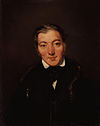
“He became in a certain sense a democrat, but not, like Place and Cobbett, a Radical. He put himself at the head of the economic as distinct from the political action of the working-class. He devoted himself in the latter half of his life to starting the co-operative and extending the Trade Union movement.”
G. M. Trevelyan on Thomas Babington Macaulay 3 quotes
“Macaulay's permanent reputation rests chiefly on his History of England in the reigns of James II and William III, the causes and the course of the English Revolution and the Revolution Settlement as worked out under William. Lord Acton once told me that he considered Macaulay, with all his faults, as the greatest historian.”

G. M. Trevelyan on Camillo Benso, Count of Cavour 3 quotes
“[John Bright] enjoyed an interview with Cavour, the only ‘statesman’ whom he really admired between the death of Peel and the Presidency of Lincoln. He noted Cavour's “eye expressing mildness and firmness, and a mouth very pleasing but showing strength. He has the appearance of an intelligent English gentleman farmer, rather than of a fine and subtle Italian.””
G. M. Trevelyan on Henry VIII of England 3 quotes
“The Royal Navy was Henry's creation, and it saved both himself and his daughter after him when they adopted an island policy and defied the Catholic powers of Europe. Wolsey had no notion of the importance of sea power to England. He was a great medieval churchman, a civil servant of the old school, and a diplomatist of the Renaissance type. But of the future development of England at home and on the sea Wolsey had no vision at all. His master, with that curious instinct of oneness with the English people which was the secret of Tudor greatness, saw deeper. He could use Wolsey's consummate administrative powers during the years of his own apprenticeship in statecraft, and then pass over him along a path of his own which no Cardinal could be expected to tread.”

G. M. Trevelyan on Arthur Bryant 2 quotes
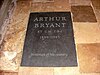
“I have read it with delight. Every page of it is alive with the sense of the reality of those times. To read it will hearten us all for the struggle in which we are now engaged. It will warm your heart and teach a lesson too.”
G. M. Trevelyan on Victoria of the United Kingdom 2 quotes
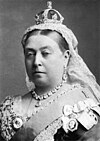
“Queen Victoria had put an end to the Republican movement in Great Britain and in the Dominions, not by what she had done, but by what she had been, and by what she had refrained from doing. She had won back public respect for the monarchy in her person. And she had disarmed political hostility to the throne by effacing its occupant as a governing power. It was her habit to express to her advisers, often with unnecessary emphasis, her views on all public questions, but she had not insisted on having her way. She had been content with a purely consultative function in relation to Ministers who were in effect chosen for her by Parliament, sometimes much against her own ideas of their fitness.”
G. M. Trevelyan on Elizabeth I of England 2 quotes
“To her own people she boasted on her accession that she was ‘mere English.’ Her mother had been no foreign princess but an English flirt, and her father, the founder of England's Navy and of England's religious independence, had possessed a sixth sense whereby he understood the English people, even in the highest rages of his tyranny. She inherited from both, but most from her father in whose steps it was her ambition to walk. If she was heir to her mother's vanity and coquetry, she heeded the warning of her fate; and her own bitter experiences as a girl,—disgrace, imprisonment and danger of death,—had taught her, as Frederic the Great was taught by similar experiences in boyhood, that private affections and passions are not for Princes. She had learnt every lesson that adversity had to teach, and she would leave it to her rival to lose the world for love.”

G. M. Trevelyan on Jeremy Bentham 2 quotes
“Bentham impressed upon his countrymen the notion that existing institutions were not to be taken for granted, but to be judged by their results, and perpetually readjusted so as to produce "the greatest happiness of the greatest number." He did not invent that useful formula, which he had taken from Priestley, but he drove it into men's minds, and by reiterating it for half a century with a thousand different applications, he undermined the easy acceptance of chartered inefficiency and corruption, characteristic of the eighteenth century. Parliamentary, municipal, scholastic, ecclesiastical, economic reform all sprang from the spirit of Bentham’s perpetual inquiry, "what is the use of it?"—his universal shibboleth, that proved in the end the real English antidote to Jacobinism. The weakness of his system, even in the realm of politics, was the mechanical nature of its psychology, which misrepresented the multiform workings of the human mind.”

G. M. Trevelyan on Joseph Addison
“The prose of Whig and Tory polemics contained a larger proportion of stuff destined to endure: Swift and Addison,as journalists spoke to the their day but have been overheard by the ages.”

G. M. Trevelyan on F. S. Oliver
“[T]hat remarkable man, Fred Oliver...was also engaged in writing his study of Sir Robert Walpole (entitled The Endless Adventure) which I much admired. His conversation and personality were unique; he seemed a cross between a Cheviot shepherd and Matthew Arnold.”
G. M. Trevelyan on Henry St John, 1st Viscount Bolingbroke
“With the signing of the Treaties of Utrecht, Bolingbroke's one great achievement in the world of action was accomplished. The rest of his political career, after a Niagara leap into rebellion, was to be lost in shallows and in miseries. But he stands in history as the man who, by courses however devious and questionable, negotiated a Peace which proved in the working more satisfactory than any other that has ended a general European conflict in modern times.”
G. M. Trevelyan on John Dalberg-Acton, 1st Baron Acton
“Dons of all subjects crowded to his oracular lectures, which were sometimes puzzling but always impressive. He had the brow of Plato, and the bearing of a sage who was also a man of the great world... What he said was always interesting, but sometimes strange. I remember, for instance, his saying to me that States based on the unity of a single race, like modern Italy and Germany, would prove a danger to liberty; I did not see what he meant at the time, but I do now!”
Quotes About G. M. Trevelyan
Gain deeper perspective through quotes about G. M. Trevelyan from others.
David Cannadine on G. M. Trevelyan
“The Garibaldi trilogy established him as the best-selling historian of his generation, and by the outbreak of the Second World War, England Under the Stuarts was in its seventeenth edition. By 1949 British History in the Nineteenth Century had sold 68,000 copies and the History of England 200,000. But even these astonishing figures were eclipsed by the English Social History. Within a year, it had sold 100,000 copies, and by the early 1950s sales had exceeded half a million. There had been nothing like it since Macaulay – a precedent of which Trevelyan was well and happily aware. Nor do these statistics give any accurate impression of the total audience that Trevelyan reached: for many of his books were bought by libraries and used in schools and must have been read many times over. The tributes paid him in later years – that he had done more to promote interest in history than any other man alive – were wholly deserved.”
J. C. D. Clark on G. M. Trevelyan
“Narrative technique was the natural vehicle for such influential historians of the two eras as G. M. Trevelyan and Basil Williams, yet whatever their other professional gifts it is now impossible to examine their narratives without a mounting sense of frustration at the shallowness, the superficiality and glibness of much of their writing, their willingness to skate over ignorance with a commonly received form of words, and to evade important problems with a well-turned generalisation.”
John Morrill on G. M. Trevelyan
“His whole life was a celebration of English civilization. When he wrote about Europe – in just five of his twenty books – it was to write about Italy and how much more difficult and delayed was the coming of liberty to a country riddled with priestcraft and superstition. He was profoundly paternalistic in his social values; liberal in his racial values; progressive in his political values and intolerant in his religious attitudes (though less in later life).”
Jawaharlal Nehru on G. M. Trevelyan
“A prize I got for good work at school was one of G. M. Trevelyan's Garibaldi books. This fascinated me, and soon I obtained the other two volumes of the series and studied the whole Garibaldi story in them carefully. Visions of similar deeds in India came before me, of a gallant fight for freedom, and in my mind India and Italy got strangely mixed together.”

Harold Nicolson on G. M. Trevelyan
“It is a wonderful evening, and the Master and Mrs Trevelyan take me for a walk down the limes and on to the Fellows' Garden beyond. George Trevelyan tells me that Gladstone told his father that they should always be grateful for living in the great age of Liberalism. "Other generations, my dear Trevelyan, will be less fortunate." But who could have conceived that any generation would suffer as we have done?”

Richard Pares on G. M. Trevelyan
“[I]t was he [Bernard Pares] who first interested his friend G. M. Trevelyan in Garibaldi by giving him a copy of the Autobiography as a wedding present: surely one of the most momentous wedding presents in literary history.”
About G. M. Trevelyan
George Macaulay Trevelyan (16 February 1876 – 21 July 1962) was an English historian and academic.