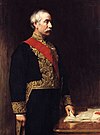
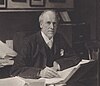
Francis Galton Quotes (1822-1911)

Inventor

About Francis Galton

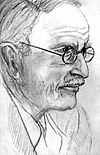
Sir Francis Galton F.R.S. (16 February 1822 – 17 January 1911) was an English Victorian anthropologist, tropical explorer, geographer, inventor, meteorologist, proto-geneticist, psychometrician, and statistician. He was a half-cousin of Charles Darwin's and famously coined the study of desirable human characteristics: "eugenics" (from the Greek eugenes, meaning “good in birth” or "stock").

Best Francis Galton Quotes

Shortest
Earliest

Explore our curated collection of the most famous and impactful Francis Galton quotes.

“All male animals, including men, when they are in love, are apt to behave in ways that seem ludicrous to bystanders.”
“I do not plead guilty to a shallow view of human nature, when I propose to apply, as it were, a foot-rule to its heights and depths.”
“What nature does blindly, slowly, and ruthlessly, man may do providently, quickly, and kindly. As it lies within his power, so it becomes his duty to work in that direction.”
“A collection of living magnates in various branches of intellectual achievement is always a feast to my eyes; being, as they are, such massive, vigorous, capable-looking animals.”
Francis Galton
“One of the effects of civilization is to diminish the rigour of the application of the law of natural selection. It preserves weakly lives that would have perished in barbarous lands.”
Francis Galton
“(1905), (June 29, 1905), "Number of Strokes of the Brush in a Picture (Letter to the Editor)", Nature 72 no: 1861, page: 198, DOI: ”
“The demand for exceptional ability, when combined with energy and good character, is so great that a lad who is gifted with them is hardly more likely to remain over looked than a bird’s nest in the playground of a school.”
“There is a steady check in an old civilisation upon the fertility of the abler classes: the improvident and unambitious are those who chiefly keep up the breed. So the race gradually deteriorates, becoming in each successive generation less fit for a high civilisation.”
“The following question had been much in my mind. How is it possible for a population to remain alike in its features, as a whole, during many successive generations, if the average produce of each couple resemble their parents? Their children are not alike but vary...”
Francis Galton
“I have already spoken in Hereditary Genius of the large effects of religious persecution in comparatively recent years, on the natural character of races, and shall not say more about it here; but it must not be omitted from the list of steady influences continuing through ancient historical times down, in some degree, to the present day, in destroying the self-reliant, and therefore the nobler races of men.”
Francis Galton
“[T]though scientific travellers are comparatively few, yet out of their ranks a large proportion of the leaders in all branches of science has been supplied. It is one of the most grateful results of a journey to the young traveller to find himself admitted, on the ground of his having so much of special interest to relate, into the society of men with whose names he had long been familiar, and whom he had reverenced as his heroes.”
“A really intelligent nation might be held together by far stronger forces than are derived from the purely gregarious instincts. A nation need not be a mob of slaves, clinging to one another through fear, and for the most part incapable of self-government, and begging to be led; but it might consist of vigorous self-reliant men, knit to one another by innumerable ties, into a strong, tense, and elastic organisation.”
“I have no patience with the hypothesis occasionally expressed, and often implied, especially in tales written to teach children to be good, that babies are born pretty much alike, and that the sole agencies in creating differences between boy and boy, and man and man, are steady application and moral effort. It is in the most unqualified manner that I object to pretensions of natural equality. The experiences of the nursery, the school, the University, and of professional careers, are a chain of proofs to the contrary.”
Francis Galton
“As these lines are being written, the circumstances under which I first clearly grasped the important generalisation that the laws of Heredity were solely concerned with deviations expressed in statistical units, are vividly recalled to my memory. It was in the grounds of Naworth Castle, where an invitation had been given to ramble freely. A temporary shower drove me to seek refuge in a reddish recess in the rock by the side of the pathway. There the idea flashed across me, and I forgot everything else for a moment in my great delight.”
“I wish that hospitals could be turned into places for experiment more than they are, in the following perfectly humane direction. Suppose two different and competing treatments of a particular malady ; I have just mentioned a case in point. Let the patients suffering under it be given the option of being placed under Dr. A. or Dr. B., the respective representatives of the two methods, and the results be statistically compared. A co-operation without partisanship between many large hospitals ought to speedily settle doubts that now hang unnecessarily long under dispute.”
“After much consideration and many inquiries, I determined, in 1885, on experimenting with sweet peas, which were suggested to me both by Sir Joseph Hooker and by Mr. Darwin. ...The result clearly proved Regression; the mean Filial deviation was only one-third that of the parental one, and the experiments all concurred. The formula that expresses the descent from one generation of a people to the next, showed that the generations would be identical if this kind of Regression was allowed for.”
Francis Galton
“All the formulæ of Conic Sections having long since gone out of my head, I went on my return to London to the Royal Institution to read them up. Professor, now Sir James Dewar, came in and probably noticing signs of despair in my face, asked me what I was about; then said, "Why do you bother over this? My brother in law, J. Hamilton Dickson of Peterhouse, loves problems and wants new ones. Send it to him." I did so... and he most cordially helped me by working it out... on the basis of the... Gaussian Law of Error.”
Francis Galton
“General impressions are never to be trusted. Unfortunately when they are of long standing they become fixed rules of life and assume a prescriptive right not to be questioned. Consequently those who are not accustomed to original inquiry entertain a hatred and horror of statistics. They cannot endure the idea of submitting sacred impressions to cold-blooded verification. But it is the triumph of scientific men to rise superior to such superstitions, to desire tests by which the value of beliefs may be ascertained, and to feel sufficiently masters of themselves to discard contemptuously whatever may be found untrue.”
Francis Galton
“Man is gifted with pity and other kindly feelings; he has also the power of preventing many kinds of suffering. I conceive it to fall well within his province to replace Natural Selection by other processes that are more merciful and not less effective.

This is precisely the aim of Eugenics. Its first object is to check the birth-rate of the Unfit, instead of allowing them to come into being, though doomed in large numbers to perish prematurely. The second object is the improvement of the race by furthering the productivity of the Fit by early marriages and healthful rearing of their children. Natural Selection rests upon excessive production and wholesale destruction; Eugenics on bringing no more individuals into the world than can be properly cared for, and those only of the best stock.”

Francis Galton
“I have received in a letter from a friend residing in Boraston, Shropshire, the following account of a remarkably interesting meteorological phenomenon, which is well worth putting on record:—
“We had a curious sight from this house yesterday [July 26]. It was a dead calm, but in a field just below the garden, with only one hedge between us and it, the hay was whirled up high into the sky, a column connecting above and below, and in the course of the evening we found great patches of hay raining down all over the surrounding meadows and our garden. It kept falling quite four hours after the affair. There was not a breath of air stirring as far as we could see, except in that one spot.””

“I know of scarcely anything so apt to impress the imagination as the wonderful form of cosmic order expressed by the "Law of Frequency of Error." The law would have been personified by the Greeks and deified, if they had known of it. It reigns with serenity and in complete self-effacement amidst the wildest confusion. The huger the mob, and the greater the apparent anarchy, the more perfect is its sway. It is the supreme law of Unreason. Whenever a large sample of chaotic elements are taken in hand and marshalled in the order of their magnitude, an unsuspected and most beautiful form of regularity proves to have been latent all along. The tops of the marshalled row form a flowing curve of invariable proportions; and each element, as it is sorted into place, finds, as it were, a pre-ordained niche, accurately adapted to fit it.”
Francis Galton
“The best form of civilization in respect to the improvement of the race, would be one in which society was not costly; where incomes were chiefly derived from professional sources, and not much through inheritance; where every lad had a chance of showing his abilities, and, if highly gifted, was enabled to achieve a first-class education and entrance into professional life, by the liberal help of the exhibitions and scholarships which he had gained in his early youth; where marriage was held in as high honour as in ancient Jewish times; where the pride of race was encouraged (of course I do not refer to the nonsensical sentiment of the present day, that goes under that name); where the weak could find a welcome and a refuge in celibate monasteries or sisterhoods, and lastly, where the better sort of emigrants and refugees from other lands were invited and welcomed, and their descendants naturalized.”
Francis Galton
“My friend Sir G. Johnson subsequently became the leader of one of the two opposed methods of dealing with cholera. His was the “ eliminative” view, namely, that there was mischief in the system that Nature strove to eliminate, so he prescribed castor oil to expedite matters; others took the exactly opposite view, consequently there was open war between the two methods. I read somewhere that one of Johnson’s most fiery opponents considered the number of deaths occasioned by his method to amount to eleven thousand. Leaving aside all question of the accuracy of the estimate of this particular treatment, it is easy to see that when a pestilence lies heavily on a nation, the numbers affected are so large that a proper or improper treatment may be capable of saving or of destroying many thousands of lives. By all means, then, let competitive methods be tested at hospitals on a sufficiently large scale to settle their relative merits. Of this I will speak further almost immediately.”
“I said what I have to say about the modern use of the word "genius" in the preface to the second edition of my "Hereditary Genius." It has only latterly lost its old and usual meaning, which is preserved in the term of an "ingenious" artisan, and has come to be applied to something akin to inspiration. This simply means, as I suppose, though some may think differently, that the powers of unconscious work possessed by the brain are abnormally developed in them. The heredity of these powers has not, I believe, been as yet especially studied. It is strange that more attention has not been given until recently to unconscious brain work, because it is by far the most potent factor in mental operations. Few people, when in rapid conversation, have the slightest idea of the particular form which a sentence will assume into which they have hurriedly plunged, yet through the guidance of unconscious cerebration it develops itself grammatically and harmoniously. I write on good authority in asserting that the best speaking and writing is that which seems to flow automatically shaped out of a full mind.”
Francis Galton
“[T]hough anthropometry owes an immense debt to Quetelet, we must be careful not to follow his principles and methods blindfold. We must recollect that Quetelet lived in pre-Darwinian times, at a date when the fixity of races was an established scientific belief. His central principle consequently was that the mean man is the perfect man. The theory of evolution now assures us of what common sense never doubted---that this principle is radically wrong. The most desirable man is not the one who is mediocre in his wits, in his honesty, and in his aspirations; or, again, in the proportions of his figure, in his muscular power, and in his ability to endure fatigue. Anthropologists, as a rule, are behindhand in their studies of men of superior types, who rank above the mediocrity of their race in every respect, and are not to be confounded with those who rank above the majority in only a few conspicuous ways, through the sacrifice of other qualities which are no less essential, but of a less showy kind.”
Francis Galton

Francis Galton Quotes by Topic

Find exactly what you are looking for by browsing this categorized list of Francis Galton quotes by topic.

Francis Galton on Eugenics 5 quotes

“The aim of eugenics is to represent each class or sect by its best specimens; that done, to leave them to work out their common civilization in their own way.”
Francis Galton
View all 5 quotes on Eugenics →

Francis Galton on Civilization 2 quotes

“One of the effects of civilisation is to diminish the rigour of the application of the law of natural selection. It preserves weakly lives that would have perished in barbarous lands.”
Francis Galton
View all 2 quotes on Civilization →

Francis Galton on Celibacy

“The long period of the dark ages... is due... in a very considerable degree, to the celibacy enjoined by religious orders on their votaries. Whenever a man or woman was possessed of a gentle nature that fitted ... deeds of charity, to meditation, to literature, or to art... they had no refuge elsewhere than in the bosom of the Church. But the Church chose to preach and exact celibacy. The consequence was that these gentle natures had no continuance, and thus, by a policy so singularly unwise and suicidal that I am hardly able to speak of it without impatience, the Church brutalized the breed of our forefathers. She acted precisely as if she had aimed at selecting the rudest portion of the community to be alone the parents of future generations. She practised the arts which breeders would use, who aimed at creating ferocious, currish, and stupid natures. ... The Church, having first captured all the gentle natures and condemned them to celibacy, made another sweep of her huge nets ... to catch those who were the most fearless, truth-seeking, and intelligent ...and therefore the most suitable parents of a high civilization, and put a strong check, if not a direct stop, to their progeny. Those she reserved... to breed the generations of the future, were the servile, the indifferent, and again, the stupid. Thus, as she ... brutalized human nature by her system of celibacy applied to the gentle, she demoralised it by her system of persecution of the intelligent, the sincere, and the free.”
Francis Galton

Francis Galton on Middle Ages

“The long period of the dark ages... is due... in a very considerable degree, to the celebacy enjoined by religious orders on their votaries. Whenever a man or woman was possessed of a gentle nature that fitted... deeds of charity, to meditation, to literature, or to art... they had no refuge elsewhere than in the bosom of the Church. ...celibacy. ...thus, by a policy so singularly unwise and suicidal... the Church brutalized the breed of our forefathers. ...as if she had aimed at selecting the rudest portion of the community to be alone the parents of future generations. She practised the arts which breeders would use, who aimed at creating ferocious, currish, and stupid natures. ... The policy of the religious world in Europe... by means of persecutions... brought thousands of the foremost thinkers and men of political aptitudes to the scaffold, or imprisoned them during a large part of their manhood, or drove them as emigrants into other lands. ...Hence the Church, having first captured all the gentle natures and condemned them to celibacy, made another sweep of her huge nets ...to catch those who were the most fearless, truth-seeking, and intelligent ...and therefore the most suitable parents of a high civilization, and put a strong check, if not a direct stop, to their progeny. Those she reserved... to breed the generations of the future, were the servile, the indifferent, and again, the stupid. Thus, as she... brutalized human nature by her system of celibacy applied to the gentle, she demoralised it by her system of persecution of the intelligent, the sincere, and the free.”
Francis Galton

What Francis Galton Said About Others

Discover personal opinions Francis Galton shared regarding contemporaries.

Francis Galton on Florence Nightingale

“Her statistics were more than a study, they were indeed her religion... Florence Nightingale believed — and in all the actions of her life acted upon that belief — that the administrator could only be successful if he were guided by statistical knowledge. The legislator — to say nothing of the politician — too often failed for want of this knowledge. Nay, she went further; she held that the universe — including human communities — was evolving in accordance with a divine plan; that it was man's business to endeavor to understand this plan and guide his actions in sympathy with it. But to understand God's thoughts, she held we must study statistics, for these are the measure of His purpose. Thus the study of statistics was for her a religious duty.”
Francis Galton

Francis Galton on Henry Bartle Frere

“In the earlier part of his memoir, Sir Bartle Frere had compared our mode of treating uncivilized races to that of the Romans. He heartily wished that the resemblance held in certain essential points. Our military hold was as firm, our tolerance of local customs was as great, our dealings were as just, and more just than theirs. But we did not amalgamate with them as the Romans did, we did not intermarry; by means of our missionaries we pressed upon them a form of religion which was not the most congenial. Our civilization was stiff. This, and much more, was pointed out in a very able and most pathetic memoir by Mr. Blyden, the present Minister of Liberia to England, who is a full-blooded negro. The article appeared in ``Frazer’s Magazine'' some years ago, and it showed the repressive effect of White civilization upon the Negroes, as contrasted with that of the Mohammedans. It was a shame to us as an Imperial nation, that representatives of the many people whom we governed, did not find themselves more at home among us. They seldom appeared in such meetings as the present one; they did not come to England. We did not see them in the streets. It was very different in ancient Rome, where the presence of foreigners from all parts of the then known world was a characteristic feature of every crowd. He did not now suggest any action, but merely wished to lay stress on this serious drawback to our national character as rulers of a great Empire. He thought they were greatly indebted to Sir Bartle Frere for introducing to public notice so important a subject as the best form of conduct of civilized races towards their less civilized neighbours, and he trusted that it would meet with that full and many-sided discussion which so important a question deserved.”
Francis Galton

Quotes About Francis Galton

Gain deeper perspective through quotes about Francis Galton from others.

Henry Bartle Frere. “On the Laws Affecting the Relations Between Civilized on Francis Galton

“Mr. F. Galton would refer first to the purely ethnological part of the memoir, which dwelt upon the difficulty of defining the Bantu race. He thought that ethnologists were apt to look upon race as something more definite than it really was. He presumed it meant no more than the average of the characteristics of all the persons who were supposed to belong to the race, and this average was continually varying. The popular notion seemed based upon some idea like that of a common descent of the different races, from a parent Noachian stock, whence the aborigines of each county were derived, and where they lived in unchanged conditions till the white man came. Nothing can be further from the truth. We know how in South Africa the Bantu population has been in constant seethe and change; how, in much less than a single century, Chaka and his tribe, Mosilekatse and his tribe, and others, have in turn become prominent nations, and the average of the whole Bantu population must thereby have differed at different times. This same fluctuation of the average qualities of the population must, for anything we can see to the contrary, have gone on for many thousands of years. He therefore thought the phrase of Bantu race, as signifying some invariable and definite type, to be a mere chimera.”

John Beddoe on Francis Galton

“I am disposed then, like a great many anthropologists, to believe more in nature than in nurture, more in heredity than in education. Once, at a soiree of the Royal Society, I spied, near together, two of my friends—Francis Galton, apostle of heredity, and Sir Joshua Fitch, prominent educationist. A wicked idea entered my head. I introduced the two, and stood by to watch the inevitable conflict. It was most instructive and diverting. '''The last thing I heard was Fitch saying in a plaintive tone, ``But if all you say is correct, what’s the use of me?'''''”

Source on Francis Galton 2 quotes

“Speaking of rhetoric, there should be an editorial rule that sentences associated with sociobiology, with efforts to ``justify slavery, imperialism, racism, genocide, and to oppose equal rights or ERA'' [a quote from S.L. Washburn] should always appear next to sentences associating environmentalist/learning theory, with efforts to justify propaganda, psychological terror, false advertisement, public indoctrination of hatred of foreigners, class enemies, minority groups, and so on and so on. Juxtaposing sociobiology and learning theory in this manner ought to show how unproductive it is to claim through innuendo or otherwise that science will lead to pseudoscience, will lead to man's inhumanity to man: ergo no science. Actually, one could argue that since man is such a cultural/learning animal we should have greater fear of learning theory since learning has far more power over man's behavior than genes. More specifically, if humans were not such learning animals, they would not learn all that Galton trash: ergo stop learning research so that bad guys will not use the data to teach the trash more effectively.”
View all 2 quotes on Source →

Karl Pearson on Francis Galton

“I have often heard, or read, though I cannot now give good references, that when the practice of selling or buying slaves was practised by men of our race, with few qualms of conscience, the slaves were priced after a minute inspection. An experience of my own, of some forty-five years ago, while travelling in the Soudan, is to the point. An Egyptian, who possessed little besides a sword, had attached himself to the caravan with which I was travelling. He was on his way to join a slave-raiding expedition on the borders of Abyssinia, and he had, I found out, considerable experience in slave markets. I asked him many questions, from time to time, about the valuing of slaves, and, at last, begged him, as a favour, to price myself, just as if I was a light-coloured African; for I was curious to know my worth as an animal. He took evident pains, and I think was fairly honest, though with a bias towards flattery. Having regard to the then high state of the market, he estimated my worth on the spot, at a number of piastres that was about equal to 20 pounds.”
Francis Galton

Samuel Arbesman on Francis Galton

“Galton [...] combined analysis and mathematical techniques to great effect, and in so doing, brought many new facts to light. [...] it is part of a grand tradition that, especially in the fields of sociology and psychology, has unleashed a great many intriguing and clever experiments.”

Derek J. de Solla Price on Francis Galton

“Galton's passion shows itself best, I feel, in two essays that may seem more frivolous to us than they did to him. In the first, he computed the additional years of life enjoyed by the Royal Family and the clergy because of the prayers offered up for them by the greater part of the population; the result was a negative number. In the second, to relieve the tedium of sitting for a portrait painter, on two different occasions he computed the number of brush strokes and found about 20,000 to the portrait; just the same number, he calculated, as the hand movements that went into the knitting of a pair of socks.”

About Francis Galton

Sir Francis Galton F.R.S. (16 February 1822 – 17 January 1911) was an English Victorian anthropologist, tropical explorer, geographer, inventor, meteorologist, proto-geneticist, psychometrician, and statistician. He was a half-cousin of Charles Darwin's and famously coined the study of desirable human characteristics: "eugenics" (from the Greek eugenes, meaning “good in birth” or "stock").