Link Copied!
Francis Crick Quotes (1916-2004)
Physicist, Scientist
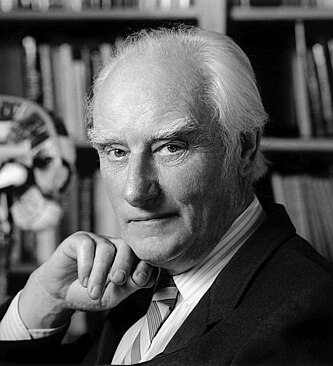

About Francis Crick
Francis Harry Compton Crick (8 June 1916 – 28 July 2004) was a British physicist, molecular biologist and neuroscientist, most noted for being one of the co-discoverers of the structure of the DNA molecule in 1953.
Best Francis Crick Quotes
Shortest
Earliest
Explore our curated collection of the most famous and impactful Francis Crick quotes.
“Big questions get big answers.”
“Rather than believe that Watson and Crick made the DNA structure, I would rather stress that the structure made Watson and Crick.”
“Both of us had decided, quite independently of each other, that the central problem in molecular biology was the chemical structure of the gene.”

“Before I describe in more detail exactly what is involved in seeing, let me make three general remarks.
1. You are easily deceived by your visual system.
2. The visual information provided by our eyes can be ambiguous.
3. Seeing is a constructive process.”
1. You are easily deceived by your visual system.
2. The visual information provided by our eyes can be ambiguous.
3. Seeing is a constructive process.”
“I argued that it was important not to place too much reliance on any single piece of experimental evidence. It might turn out to be misleading, as the 5.1 Å reflection undoubtedly was. Jim was a little more brash, stating that no good model ever accounted for all the facts, since some data was bound to be misleading if not plain wrong. A theory that did fit all the data would have been "carpentered" to do so and would thus be open to suspicion. (pp. 59-60)”
“Philosophers have been especially concerned with the problem of consciousness—for example, how to explain the redness of red or the painfulness of pain. This is a very thorny issue. The problem springs from the fact that the redness of red that I perceive so vividly cannot be precisely communicated to another human being, at least in the ordinary course of events. If you cannot describe the properties of a thing unambiguously, you are likely to have some difficulty trying to explain these properties in reductionist terms.”

“Our brains have evolved mainly to deal with our body and its interactions with the world it senses to be around us. Is this world real? This is a venerable philosophical issue and I do not wish to be embroiled in the finely honed squabbles to which it has led. I merely state my own working hypothesis: that there is indeed an outside world, and that it is largely independent of our observing it. We can never fully know this outside world, but we can obtain approximate information about some aspects of its properties by using our senses and our brain.”

“My own prejudices are exactly the opposite of the functionalists’: “If you want to understand function, study structure,” I was supposed to have said in my molecular biology days. (I believe I was sailing at the time.) I think that one should approach these problems at all levels, as was done in molecular biology. Classical genetics is, after all, a black-box subject. The important thing was to combine it with biochemistry. In nature hybrid species are usually sterile, but in science the reverse is often true. Hybrid subjects are often astonishingly fertile, whereas if a scientific discipline remains too pure it usually wilts.”

“If for example I had some idea, which as it turned out would be quite wrong, was going off of the tangent, Watson would tell me in no uncertain terms this was nonsense, and vice-versa. If he would have some idea I didn't like, and I would say so, this would shake his thinking about, and draw him back again. And in fact it is one of the requirements for collaborations of this sort, is you must be perfectly candid, one might almost say rude, to the person you're working with. It's useless working with somebody who is either much too junior than yourself or much too senior because then politeness creeps in. And this is the end of all real collaboration in science (giggles).”
“An honest man, armed with all the knowledge available to us now, could only state that in some sense, the origin of life appears at the moment to be almost a miracle, so many are the conditions which would have had to have been satisfied to get it going. But this should not be taken to imply that there are good reasons to believe that it could not have started on the earth by a perfectly reasonable sequence of fairly ordinary chemical reactions. The plain fact is that the time available was too long, the many microenvironments on the earth's surface too diverse, the various chemical possibilities too numerous and our own knowledge and imagination too feeble to allow us to be able to unravel exactly how it might or might not have happened such a long time ago, especially as we have no experimental evidence from that era to check our ideas against.”

“I wasn't aware of Chargaff's rules when he said them, but the effect on me was quite electric because I realized immediately that if you had this sort of scheme that John Griffith was proposing, of adenine being paired with thymine, and guanine being paired with cytosine, then you should get Chargaff's rules. I was very excited, but I didn't actually tell Chargaff because it was something I was doing with John Griffith. ... This was very exciting, and we thought "ah ha!" and we realized - I mean what anyone who is familiar with the history of science ought to realize - that when you have one-to-one ratios, it means things go to together. And how on Earth no one pointed out this simple fact in those years, I don't know.The DNA Story, 1973, VSM Productions, scars.library.oregonstate.edu”
“What is found in biology is mechanisms, mechanisms built with chemical components and that are often modified by other, later, mechanisms added to the earlier ones. While Occam's razor is a useful tool in the physical sciences, it can be a very dangerous implement in biology. It is thus very rash to use simplicity and elegance as a guide in biological research. While DNA could be claimed to be both simple and elegant, it must be remembered that DNA almost certainly originated fairly close to the origin of life when things were necessarily simple or they would not have got going.
Biologists must constantly keep in mind that what they see was not designed, but rather evolved. It might be thought, therefore, that evolutionary arguments would play a large part in guiding biological research, but this is far from the case. It is difficult enough to study what is happening now. To figure out exactly what happened in evolution is even more difficult. Thus evolutionary achievements can be used as hints to suggest possible lines of research, but it is highly dangerous to trust them too much. It is all too easy to make mistaken inferences unless the process involved is already very well understood.”
Biologists must constantly keep in mind that what they see was not designed, but rather evolved. It might be thought, therefore, that evolutionary arguments would play a large part in guiding biological research, but this is far from the case. It is difficult enough to study what is happening now. To figure out exactly what happened in evolution is even more difficult. Thus evolutionary achievements can be used as hints to suggest possible lines of research, but it is highly dangerous to trust them too much. It is all too easy to make mistaken inferences unless the process involved is already very well understood.”

Francis Crick Quotes by Topic
Find exactly what you are looking for by browsing this categorized list of Francis Crick quotes by topic.
Francis Crick on Consciousness 2 quotes
“There may be several forms of visual awareness and, by extension, even more forms of consciousness in general.”

Francis Crick on Biology 2 quotes
“The ultimate aim of the modern movement in biology is in fact to explain all biology in terms of physics and chemistry.”
Francis Crick on Map
“This seems highly likely, especially as it has been shown that in several systems mutations affecting the same amino acid are extremely near together on the genetic map.”

Francis Crick on Soul
“"You," your joys and your sorrows, your memories and your ambitions, your sense of personal identity and free will, are in fact no more than the behavior of a vast assembly of nerve cells and their associated molecules.”

Francis Crick on Occam's razor
Francis Crick on Hallucination
“If the reverse learning mechanism we have postulated exists, one might wonder what effects its failure might have. A complete failure might lead to such grave disturbances—a state of almost perpetual obsession or spurious, hallucinatory associations—that it would probably be severely selected against. A partial failure should produce unwanted responses to random noise, perhaps as hallucinations, delusions, and obsessions, and produce a state not unlike some schizophrenias.”

Francis Crick on Dualism
“People often prefer to believe that there is a disembodied soul that, in some utterly mysterious way, does the actual seeing, helped by the elaborate apparatus of the brain. Some people are called "dualists"—they believe that matter is one thing and mind is something completely different. Our Astonishing Hypothesis says, on the contrary, that this is not the case, that it's all done by nerve cells. What we are considering is how to decide between these two views experimentally.”
Francis Crick on Mind–body problem
“People often prefer to believe that there is a disembodied soul that, in some utterly mysterious way, does the actual seeing, helped by the elaborate apparatus of the brain. Some people are called "dualists"—they believe that matter is one thing and mind is something completely different. Our Astonishing Hypothesis says, on the contrary, that this is not the case, that it's all done by nerve cells. What we are considering is how to decide between these two views experimentally.”
Francis Crick on Paradigm
“The most effective way to approach the problem of consciousness would be to use the descriptions of psychologists and cognitive scientists and attempt to map different aspects of their models onto what is known about the neuroanatomy and neurophysiology of the brain. Naturally we have attempted to do this but have not found it as useful as one might hope, although such models do point to the importance of attention and short-term memory and suggest that consciousness should have easy access to the higher, planning levels of the motor system. A major handicap is the pernicious influence of the paradigm of the von Neumann digital computer.”
Francis Crick on Reality
“... Is this world real? This is a venerable philosophical issue and I do not wish to be embroiled in the finely honed squabbles to which it has led. I merely state my own working hypothesis: that there is indeed an outside world, and that it is largely independent of our observing it. We can never fully know this outside world, but we can obtain approximate information about some aspects of its properties by using our senses and the operations of our brains. Nor, as we shall see, are we aware of everything that goes on in our brains, but only of some aspects of that activity. Moreover, both these processes—our interpretations of the nature of the outside world and of our own introspections—are open to error. We may think we know our motives for a particular action, but it is easy to show that, in some cases at least, we are in fact deceiving ourselves.”

Francis Crick on Reductionism
“There have been a number of attempts to show that reductionism cannot work. They usually take the form of a rather formal definition, followed by an argument that reductionism of this type cannot be true. What is ignored is that reductionism is not the rigid process of explaining one fixed set of ideas in terms of another fixed set of ideas at a lower level, but a dynamic interactive process that modifies the concept at both levels as knowledge developments. After all, "reductionism" is the main theoretical method that has driven the development of physics, chemistry, and molecular biology. It is largely responsible for the spectacular developments of modern science. It is the only sensible way to proceed until and unless we are confronted with strong experimental evidence that demands we modify our attitude. General philosophical arguments against reductionism will not do.”

What Francis Crick Said About Others
Discover personal opinions Francis Crick shared regarding contemporaries.
Francis Crick on William Shakespeare
“The true description of us is the complex, ever-changing pattern of interactions of billions of them [neurons]... The abbreviated and approximate shorthand that we employ every day to describe human behavior is a smudged caricature of our true selves. "What a piece of work is a man!" said Shakespeare. Had he been living today he might have given us the poetry we so sorely need to celebrate all these remarkable discoveries.”

Francis Crick on Sigmund Freud
“In the early twentieth century the concepts of the preconscious and unconscious were made widely popular, especially in literary circles, by Freud, Jung, and their associates, mainly because of the sexual flavor they gave to them. By modern standards, Freud can hardly be regarded as a scientist but rather as a physician who had many novel ideas and who wrote persuasively and unusually well. He became the main founder of the new cult of psychoanalysis.”

Francis Crick on Linus Pauling
“Linus Pauling was not always right in his ideas. But my belief is that, in most cases, if somebody is always right in his ideas you find that he does not have much to say. It is an expression of somebody's fertility that he does produce quite a number of ideas, and I think Linus Pauling's score is pretty high... I do not think, as I said earlier, that it is right to discuss the impact of Linus Pauling on molecular biology. Rather, he was one of the founders of molecular biology. It was not that it existed in some way, and he simply made a contribution. He was one of the founders who got the whole discipline going.”
Francis Crick on Marvin Minsky
“Frank Rosenblatt... invented a very simple single-layer device called a Perceptron. ...Unfortunately, its influence was damped by Marvin Minsky and Seymour Papert, who proved [in Perceptrons: An Introduction to Computational Geometry (1969)] that the Perceptron architecture and learning rule could not execute the "exclusive OR" and therefore could not learn. This killed interest in Perceptrons for a number of years... It is possible to construct multilayer networks of simple units that could easily execute the exclusive OR... Minsky and Papert would have contributed more if they had produced a solution to this problem rather than beating the Perceptron to death.”

Francis Crick on Seymour Papert
“Frank Rosenblatt... invented a very simple single-layer device called a Perceptron. ...Unfortunately, its influence was damped by Marvin Minsky and Seymour Papert, who proved [in Perceptrons: An Introduction to Computational Geometry (1969)] that the Perceptron architecture and learning rule could not execute the "exclusive OR" and therefore could not learn. This killed interest in Perceptrons for a number of years... It is possible to construct multilayer networks of simple units that could easily execute the exclusive OR... Minsky and Papert would have contributed more if they had produced a solution to this problem rather than beating the Perceptron to death.”
Francis Crick on William James
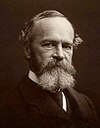
“The American psychologist William James discussed consciousness at some length. In his monumental work The Principles of Psychology... he described five properties of what he called "thought." Every thought, he wrote, tends to be part of personal consciousness. Thought is always changing, is sensibly continuous, and appears to deal with objects independent of itself. In addition, thought focuses on some objects to the exclusion of others. In other words, it involves attention. Of attention he wrote, in an oft-quoted passage: "Everyone knows what attention is. It is the taking possession by the mind, in clear and vivid form, of one out of what seem several possible objects or trains of thought. ...It implies withdrawal from some things in order to deal effectively with others.”
Quotes About Francis Crick
Gain deeper perspective through quotes about Francis Crick from others.
Nick Lane on Francis Crick
“When he discovered the structure of DNA, Francis Crick immediately understood how genetic inheritance works, announcing in the Pub that evening that he understood the secret of life.”

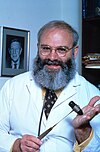
Oliver Sacks on Francis Crick
“It was not until May of 1986 that I met Francis Crick, at a conference in San Diego. There was a big crowd, full of neuroscientists, but when it was time to sit down for dinner, Crick singled me out, seized me by the shoulders, sat me down next to him, and said, “Tell me stories!” I have no memory of what we ate, or anything else about the dinner, only that I told him stories about many of my patients, and that each one set off bursts of hypotheses, theories, suggestions for investigation in his mind. Writing to Crick a few days later, I said that the experience was “a little like sitting next to an intellectual nuclear reactor…. I never had a feeling of such incandescence.””
James D. Watson on Francis Crick

About Francis Crick
Francis Harry Compton Crick (8 June 1916 – 28 July 2004) was a British physicist, molecular biologist and neuroscientist, most noted for being one of the co-discoverers of the structure of the DNA molecule in 1953.