Link Copied!
Elie Wiesel Quotes (1928-2016)
Author, Writer, Activist







About Elie Wiesel
Eliezer "Elie" Wiesel (30 September 1928 – 2 July 2016) was a Romanian-born American Jewish writer, professor, political activist, Nobel Laureate, and Holocaust survivor. He authored 57 books (mostly written in French and English), including Night, a work based on his experience incarcerated in the Auschwitz and Buchenwald concentration camps.
Best Elie Wiesel Quotes
Shortest
Earliest
Explore our curated collection of the most famous and impactful Elie Wiesel quotes.
“Indifference, to me, is the epitome of evil.”

“In Jewish history there are no coincidences.”



Upon receiving the Congressional Gold Medal, a Holocaust survivor urged President Reagan to reconsider visiting Bitburg cemetery, arguing it honored SS soldiers, not their victims.
“That place, Mr. President, is not your place. Your place is with the victims of the SS.”

“"The yellow star? So what? It's not lethal..."
(Poor Father! Of what then did you die?)”
(Poor Father! Of what then did you die?)”
- Elie Wiesel, Night

“"The world? The world is not interested in us. Today, everything is possible, even the crematoria..."”
- Elie Wiesel, Night


“I don't believe in accidents. There are only encounters in history. There are no accidents.”
“When a Jew visits Jerusalem for the first time, it is not the first time; it is a homecoming.”

Born from Holocaust rescuer interviews and highlighted by Yad Vashem and *The New York Times*, this statement indicts passive inaction as a significant source of suffering for victims.
“What hurts the victim most is not the cruelty of the oppressor but the silence of the bystander.”
“MARIA: The people can say anything they please—
MENDEL: Right. Under one condition: that they do not say it.”
MENDEL: Right. Under one condition: that they do not say it.”
- Elie Wiesel, The Trial of God
“Whenever an angel says "Be not afraid!" you'd better start worrying. A big assignment is on the way.”
“No human race is superior; no religious faith is inferior. All collective judgments are wrong. Only racists make them.”
“Friendship marks a life even more deeply than love. Love risks degenerating into obsession, friendship is never anything but sharing.”

“BERISH: Prosecutor. That’s what I am going to be. Prosecutor.
MARIA: What’s that?
AVREMEL: That’s someone nice who has the right to be nasty.”
MARIA: What’s that?
AVREMEL: That’s someone nice who has the right to be nasty.”
- Elie Wiesel, The Trial of God
“Wherever men and women are persecuted because of their race, religion, or political views, that place must at that moment become the center of the universe.”
- Elie Wiesel, Nobel acceptance speech
“A destruction only man can provoke, only man can prevent. Mankind must remember that peace is not God's gift to his creatures, it is our gift to each other.”
- Elie Wiesel, Hope, Despair, and Memory

“None of us is in a position to eliminate war, but it is our obligation to denounce it and expose it in all its hideousness. War leaves no victors, only victims.”
- Elie Wiesel, Hope, Despair, and Memory

“SAM: Isn’t this a circus...of sorts?
MENDEL: No. It’s theater. There is a difference.
SAM: Really? What is it?
MENDEL: A circus employs only clowns.
SAM: So does the theater.”
MENDEL: No. It’s theater. There is a difference.
SAM: Really? What is it?
MENDEL: A circus employs only clowns.
SAM: So does the theater.”
- Elie Wiesel, The Trial of God
Reflecting on Holocaust survival in Oprah Magazine, Charlotte Delbo ironically deemed her ability to reclaim normalcy – love, expression, simple joys – the true abnormality after such trauma.
“What is abnormal is that I am normal. That I survived the Holocaust and went on to love beautiful girls, to talk, to write, to have toast and tea and live my life — that is what is abnormal.”
“"For God's sake, where is God?"
And from within me, I heard a voice answer:
"Where He is? This is where hanging here from this gallows..."
That night, the soup tasted of corpses.”
And from within me, I heard a voice answer:
"Where He is? This is where hanging here from this gallows..."
That night, the soup tasted of corpses.”
- Elie Wiesel, Night
“Waking among the dead, one wondered if one was still alive. And yet real despair only seized us later. Afterwards. As we emerged from the nightmare and began to search for meaning.”
- Elie Wiesel, Hope, Despair, and Memory


“The duty of the survivor is to bear testimony to what happened . . . You have to warn people that these things can happen, that evil can be unleashed. Race hatred, violence, idolatries—they still flourish.”
“People thought this was a good thing. We would no longer have to look at all those hostile faces, endure those hate-filled stares. No more fear. No more anguish. We would live entirely among Jews, among brothers...”
- Elie Wiesel, Night
“Terrorism must be outlawed by all civilized nations — not explained or rationalized, but fought and eradicated. Nothing can, nothing will justify the murder of innocent people and helpless children.”
- Elie Wiesel, Hope, Despair, and Memory
“The bell. It was already time to part, to go to bed. The bell regulated everything. It gave me orders and I executed them blindly. I hated that bell. Whenever I happened to dream of a better world, I imagined a universe without a bell.”
- Elie Wiesel, Night
“I swore never to be silent whenever and wherever human beings endure suffering and humiliation. We must always take sides. Neutrality helps the oppressor, never the victim. Silence encourages the tormentor, never the tormented.”
- Elie Wiesel, Nobel acceptance speech

“"Faster! Faster! Move, you lazy good-for-nothings!" the Hungarian police were screaming.
That was when I began to hate them, and my hatred remains our only link today. They were our first oppressors. They were the first faces of hell and death.”
That was when I began to hate them, and my hatred remains our only link today. They were our first oppressors. They were the first faces of hell and death.”
- Elie Wiesel, Night
“No one was praying for the night to pass quickly. The stars were but sparks of the immense conflagration that was consuming us. Were this conflagration to be extinguished one day, nothing would be left in the sky but extinct stars and unseeing eyes.”
- Elie Wiesel, Night

“One day when I was able to get up, I decided to look at myself in the mirror on the opposite wall. I had not seen myself since the ghetto.
From the depths of the mirror, a corpse was contemplating me.
The look in his eyes as he gazed at me has never left me.”
From the depths of the mirror, a corpse was contemplating me.
The look in his eyes as he gazed at me has never left me.”
- Elie Wiesel, Night


“AVREMEL: You came to us from Zhironov?
YANKEL: Were you there when—
MENDEL: Yes, I was there.
AVREMEL: How did you manage to escape?
SAM: There is always one singled out to escape.
YANKEL: A miracle!
SAM: There is always someone to call it a miracle.”
YANKEL: Were you there when—
MENDEL: Yes, I was there.
AVREMEL: How did you manage to escape?
SAM: There is always one singled out to escape.
YANKEL: A miracle!
SAM: There is always someone to call it a miracle.”
- Elie Wiesel, The Trial of God
“You, who are so-called illegal aliens, must know that no human being is "illegal." That is a contradiction in terms. Human beings can be beautiful or more beautiful, they can be fat or skinny, they can be right or wrong, but illegal? How can a human being be illegal?”
- Elie Wiesel, The Refugee

“The night had passed completely. The morning star shone in the sky. I too had become a different person. The student of Talmud, the child I was, had been consumed by the flames. All that was left was a shape that resembled me. My soul had been invaded - and devoured - by a black flame.”
- Elie Wiesel, Night

“His last word had been my name. He had called out to me and I had not answered.
I did not weep, and it pained me that I could not weep. But I was out of tears. And deep inside me, if I could have searched the recesses of my feeble conscience, I might have found something like: Free at last!”
I did not weep, and it pained me that I could not weep. But I was out of tears. And deep inside me, if I could have searched the recesses of my feeble conscience, I might have found something like: Free at last!”
- Elie Wiesel, Night
“If someone had told us in 1945 that in our lifetime religious wars would rage on virtually every continent, that thousands of children would once again be dying of starvation, we would not have believed it. Or that racism and fanaticism would flourish once again, we would not have believed it.”
- Elie Wiesel, Hope, Despair, and Memory
“BERISH: I resigned from membership in God—I resigned from God. Let Him look for another innkeeper, let Him find another people, let Him push around another Jew—I’m through with Him!
MARIA: Don’t you worry, Master. You say things, but God isn’t angry How could He be? He isn’t even listening.”
MARIA: Don’t you worry, Master. You say things, but God isn’t angry How could He be? He isn’t even listening.”
- Elie Wiesel, The Trial of God
“"Yisgadal, veyiskadash, shmey raba...May His name be celebrated and sanctified..." whispered my father.
For the first time, I felt anger rising within me. Why should I sanctify His name? The Almighty, the eternal and terrible Master of the Universe, chose to be silent. What was there to thank Him for?”
For the first time, I felt anger rising within me. Why should I sanctify His name? The Almighty, the eternal and terrible Master of the Universe, chose to be silent. What was there to thank Him for?”
- Elie Wiesel, Night
“MENDEL: What shall we play?
BERISH: Can I choose?
MENDEL: Of course; it’s your theater.
MARIA: Long live theater...What’s theater?
BERISH: When you do something without doing it, when you say something without saying it, while thinking that you did say, and you did do something—anything—that’s theater.”
BERISH: Can I choose?
MENDEL: Of course; it’s your theater.
MARIA: Long live theater...What’s theater?
BERISH: When you do something without doing it, when you say something without saying it, while thinking that you did say, and you did do something—anything—that’s theater.”
- Elie Wiesel, The Trial of God
“An SS came toward us wielding a club. He commanded:
"Men to the left! Women to the right!"
Eight words spoken quietly, indifferently, without emotion. Eight simple, short words. Yet that was the moment when I left my mother. There was no time to think, and I already felt my father's hand press against mine: we were alone.”
"Men to the left! Women to the right!"
Eight words spoken quietly, indifferently, without emotion. Eight simple, short words. Yet that was the moment when I left my mother. There was no time to think, and I already felt my father's hand press against mine: we were alone.”
- Elie Wiesel, Night

“We thought it would be enough to tell of the tidal wave of hatred which broke over the Jewish people for men everywhere to decide once and for all to put an end to hatred of anyone who is "different" — whether black or white, Jew or Arab, Christian or Moslem — anyone whose orientation differs politically, philosophically, sexually.”
- Elie Wiesel, Hope, Despair, and Memory
“I believe mysticism is a very serious endeavor. One must be equipped for it. One doesn't study calculus before studying arithmetic. In my tradition, one must wait until one has learned a lot of Bible and Talmud and the Prophets to handle mysticism. This isn't instant coffee. There is no instant mysticism.”

“For us, forgetting was never an option. Remembering is a noble and necessary act. The call of memory, the call to memory, reaches us from the very dawn of history. No commandment figures so frequently, so insistently, in the Bible. It is incumbent upon us to remember the good we have received, and the evil we have suffered.”
- Elie Wiesel, Hope, Despair, and Memory
“How are we to reconcile our supreme duty towards memory with the need to forget that is essential to life? No generation has had to confront this paradox with such urgency. The survivors wanted to communicate everything to the living: the victim's solitude and sorrow, the tears of mothers driven to madness, the prayers of the doomed beneath a fiery sky.”
- Elie Wiesel, Hope, Despair, and Memory
“After the war we reassured ourselves that it would be enough to relate a single night in Treblinka, to tell of the cruelty, the senselessness of murder, and the outrage born of indifference: it would be enough to find the right word and the propitious moment to say it, to shake humanity out of its indifference and keep the torturer from torturing ever again.”
- Elie Wiesel, Hope, Despair, and Memory
“Of course some wars may have been necessary or inevitable, but none was ever regarded as holy. For us, a holy war is a contradiction in terms. War dehumanizes, war diminishes, war debases all those who wage it. The Talmud says, "Talmidei hukhamim marbin shalom baolam" (It is the wise men who will bring about peace). Perhaps, because wise men remember best.”
- Elie Wiesel, Hope, Despair, and Memory
“"Don't be deluded. Hitler has made it clear that he will annihilate all Jews before the clock strikes twelve."
I exploded:
"What do you care what he said? Would you want us to consider him a prophet?"
His cold eyes stared at me. At last, he said wearily:
"I have more faith in Hitler than in anyone else. He alone has kept his promises, all his promises, to the Jewish people."”
I exploded:
"What do you care what he said? Would you want us to consider him a prophet?"
His cold eyes stared at me. At last, he said wearily:
"I have more faith in Hitler than in anyone else. He alone has kept his promises, all his promises, to the Jewish people."”
- Elie Wiesel, Night

“Close your eyes and listen. Listen to the silent screams of terrified mothers, the prayers of anguished old men and women. Listen to the tears of children. Jewish children, a beautiful little girl among them, with golden hair, whose vulnerable tenderness has never left me. Look and listen as they walk towards dark flames so gigantic that the planet itself seemed in danger.”

“Once you label a people "illegal", that is exactly what the Nazis did to Jews. You do not label a people "illegal." They have committed an illegal act. They are immigrants who crossed illegally. They are immigrants who crossed without papers. They are immigrants who crossed without permission. They are living in this country without permission. But they are not an illegal people.”
“As long as one dissident is in prison, our freedom will not be true. As long as one child is hungry, our lives will be filled with anguish and shame. What all these victims need above all is to know that they are not alone; that we are not forgetting them, that when their voices are stifled we shall lend them ours, that while their freedom depends on ours, the quality of our freedom depends on theirs."”
- Elie Wiesel, Nobel acceptance speech

“We tried. It was not easy. At first, because of the language; language failed us. We would have to invent a new vocabulary, for our own words were inadequate, anemic. And then too, the people around us refused to listen; and even those who listened refused to believe; and even those who believed could not comprehend. Of course they could not. Nobody could. The experience of the camps defies comprehension.”
- Elie Wiesel, Hope, Despair, and Memory

“Yes, man is stronger, greater than God. When Adam and Eve deceived You, You chased them from paradise. When You were displeased by Noah's generation, You brought down the Flood. When Sodom lost Your favor, You caused the heavens to rain down fire and damnation. But look at these men whom You have betrayed, allowing them to be tortured, slaughtered, gassed, and burned, what do they do? They pray before You! They praise Your name!”
- Elie Wiesel, Night
“The opposite of love is not hate, it's indifference. The opposite of art is not ugliness, it's indifference. The opposite of faith is not heresy, it's indifference. And the opposite of life is not death, it's indifference. Because of indifference, one dies before one actually dies. To be in the window and watch people being sent to concentration camps or being attacked in the street and do nothing, that's being dead.”
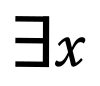
“We were outside. The icy wind whipped my face. I was constantly biting my lips so that they wouldn't freeze. All around me, what appeared to be a dance of death. My head was reeling. I was walking through a cemetery. Among the stiffened corpses, there were logs of wood. Not a sound of distress, not a plaintive cry, nothing but mass agony and silence. Nobody asked anyone for help. One died because one had to. No point in making trouble.”
- Elie Wiesel, Night
“The street resembled fairgrounds deserted in haste. There was a little of everything: suitcases, briefcases, bags, knives, dishes, banknotes, papers, faded portraits. All the things one planned to take along and finally left behind. They had ceased to matter.
Open rooms everywhere. Gaping doors and windows looked out into the void. It all belonged to everyone since it no longer belonged to anyone. It was there for the taking. An open tomb.”
Open rooms everywhere. Gaping doors and windows looked out into the void. It all belonged to everyone since it no longer belonged to anyone. It was there for the taking. An open tomb.”
- Elie Wiesel, Night
“But now, I no longer pleaded for anything. I was no longer able to lament. On the contrary, I felt very strong. I was the accuser, God the accused. My eyes had opened and I was alone, terribly alone in a world without God, without man. Without love or mercy. I was nothing but ashes no, but I felt myself to be stronger than this Almighty to whom my life had been bound for so long. In the midst of these men assembled for prayer, I felt like an observer, a stranger.”
- Elie Wiesel, Night
“The Hungarian lieutenant went around with a basket and retrieved the last possessions from those who chose not to go on tasting the bitterness of fear.
"There are eighty of you in the car," the German officer added. "If anyone goes missing, you will all be shot, like dogs."
The two disappeared. The doors clanked shut. We had fallen into the trap, up to our necks. The doors were nailed, the way back irrevocably cut off. The world had become a hermetically sealed cattle car.”
- Elie Wiesel, Night

“A recollection. The time: After the war. The place: Paris. A young man struggles to readjust to life. His mother, his father, his small sister are gone. He is alone. On the verge of despair. And yet he does not give up. On the contrary, he strives to find a place among the living. He acquires a new language. He makes a few friends who, like himself, believe that the memory of evil will serve as a shield against evil; that the memory of death will serve as a shield against death.”
- Elie Wiesel, Hope, Despair, and Memory
“An immoral society betrays humanity because it betrays the basis for humanity, which is memory. An immoral society deals with memory as some politicians deal with politics. A moral society is committed to memory: I believe in memory. The Greek word alethia means Truth, Things that cannot be forgotten. I believe in those things that cannot be forgotten and because of that so much in my work deals with memory... What do all my books have in common? A commitment to memory.”
“When I woke up, it was daylight. That is when I remembered that I had a father. During the alert, I had followed the mob, not taking care of him. I knew he was running out of strength, close to death, and yet had abandoned him.
I went to look for him.
Yet at the same time a thought crept into my mind: If only I didn't find him! If only I were relieved of this responsibility, I could use all my strength to fight for my own survival, to take care of myself...Instantly, I felt ashamed, ashamed of myself forever.”
I went to look for him.
Yet at the same time a thought crept into my mind: If only I didn't find him! If only I were relieved of this responsibility, I could use all my strength to fight for my own survival, to take care of myself...Instantly, I felt ashamed, ashamed of myself forever.”
- Elie Wiesel, Night
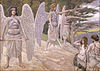
“BERISH: Men and women are being beaten, tortured and killed—how can one not be afraid of Him? True, they are victims of men. But the killers kill in His name. Not all? True, but numbers are unimportant. Let one killer kill for His glory, and He is guilty. Every man who suffers or causes suffering, every woman who is raped, every child who is tormented implicates Him. What, you need more? A hundred or a thousand? Listen: either He is responsible or He is not. If He is let’s judge Him; if He is not, let Him stop judging us.”
- Elie Wiesel, The Trial of God
“The greatest commandment to me in the Bible is not the Ten Commandments. (First of all, it’s too difficult to observe; second, we all pretend to observe.) My commandment is ‘Thou shall not stand idly by.’ Which means, when you witness an injustice: Don’t stand idly by. When you hear of a person or a group being persecuted: Do not stand idly by. When there is something wrong with the community around you or far away: Do not stand idly by. You must intervene. You must interfere. And that is actually the motto of human rights.”
“Miracles in mysticism don't occupy such an important place. It's metaphor, for the peasants, for the crowds, to impress people. What does mysticism really mean? It means the way to attain knowledge. It's close to philosophy, except in philosophy you go horizontally while in mysticism you go vertically. You plunge into it. Philosophy is a slow process of logic and logical discourse: A bringing B bringing C and so forth. In mysticism you can jump from A to Z. But the ultimate objective is the same. It's knowledge. It's truth.”
“The absent no longer entered our thoughts. One spoke of them who knows what happened to them? but their fate was not on our minds. We were incapable of thinking. Our senses were numbed, everything was fading into a fog. We no longer clung to anything. The instincts of self-preservation, of self-defense, of pride, had all deserted us. In one terrifying moment of lucidity, I thought of us as damned souls wandering through the void, souls condemned to wander through space until the end of time, seeking redemption, seeking oblivion, without any hope of finding either.”
- Elie Wiesel, Night
“It seemed as impossible to conceive of Auschwitz with God as to conceive of Auschwitz without God. Therefore, everything had to be reassessed because everything had changed. With one stroke, mankind's achievements seemed to have been erased. Was Auschwitz a consequence or an aberration of "civilization"? All we know is that Auschwitz called that civilization into question as it called into question everything that had preceded Auschwitz. Scientific abstraction, social and economic contention, nationalism, xenophobia, religious fanaticism, racism, mass hysteria. All found their ultimate expression in Auschwitz.”
- Elie Wiesel, Hope, Despair, and Memory

“When a state declares war on individuals, that means that something is wrong with that state. Then we have to find another concept of sanctuary.
What is it ? Here again I come to my Jewish tradition, and with delight I discover that when we speak of sanctuary in the Jewish tradition, it refers to human beings. Sanctuary, then, is not a place. Sanctuary is a human being. Any human being is a sanctuary. Every human being is a dwelling of God — man or woman or child, Christian or Jewish or Buddhist. Any person, by virtue of being a son or daughter of humanity, is a living sanctuary whom nobody has the right to invade.”
What is it ? Here again I come to my Jewish tradition, and with delight I discover that when we speak of sanctuary in the Jewish tradition, it refers to human beings. Sanctuary, then, is not a place. Sanctuary is a human being. Any human being is a sanctuary. Every human being is a dwelling of God — man or woman or child, Christian or Jewish or Buddhist. Any person, by virtue of being a son or daughter of humanity, is a living sanctuary whom nobody has the right to invade.”
- Elie Wiesel, The Refugee
“Never shall I forget that night, the first night in camp, that turned my life into one long night seven times sealed.
Never shall I forget that smoke.
Never shall I forget the small faces of the children whose bodies I saw transformed into smoke under a silent sky.
Never shall I forget those flames that consumed my faith forever.
Never shall I forget the nocturnal silence that deprived me for all eternity of the desire to live.
Never shall I forget those moments that murdered my God and my soul and turned my dreams to ashes.
Never shall I forget those things, even were I condemned to live as long as God Himself.
Never.”
- Elie Wiesel, Night
“Thousands of lips repeated the benediction, bent over like trees in a storm.
Blessed be God's name?
Why, but why would I bless Him? Every fiber in me rebelled. Because He caused thousands of children to burn in His mass graves? Because He kept six crematoria working day and night, including Sabbath and the Holy Days? Because in His great might, He had created Auschwitz, Birkenau, Buna, and so many other factories of death? How could I say to Him: Blessed be Thou, Almighty, Master of the Universe, who chose us among all nations to be tortured day and night, to watch as our fathers, our mothers, our brothers end up in the furnaces? Praised be Thy Holy Name, for having chosen us to be slaughtered on Thine altar?”
- Elie Wiesel, Night
“I remember when I became a refugee. Of all things it was on a Saturday, on the Sabbath. The gathering took place in the synagogue because the enemies, in their perverted imagination, tried so to hurt us that they sought to commit the worst crimes in our holiest place. Therefore they gathered the Jews in my town, Sighet, into the synagogue. And it is there that the first humiliation occurred.
We stood in line; there was a table with many gendarmes, feathers in their hats. We would come and give our papers. We were so naïve. We thought that we were protected by our papers. Therefore proudly we took out our citizenship papers certifying us as citizens of Hungary. May I tell you, my good friends, what we had to do in order to obtain those papers? I cannot begin to even tell you. I remember the pain and the anguish that some of us had to go through to prove that our great-great-grandfather was born in a particular village, or town. Finally, we got the papers, and we felt good about them. We felt safe. But then, when I approached the table, in the synagogue courtyard, the officer didn't even look at the papers. He took them, tore them up and threw them into the wastebasket. I thus became a refugee. That feeling of being a refugee lasted and lasted for many, many years — in fact, until I came to this country.”
We stood in line; there was a table with many gendarmes, feathers in their hats. We would come and give our papers. We were so naïve. We thought that we were protected by our papers. Therefore proudly we took out our citizenship papers certifying us as citizens of Hungary. May I tell you, my good friends, what we had to do in order to obtain those papers? I cannot begin to even tell you. I remember the pain and the anguish that some of us had to go through to prove that our great-great-grandfather was born in a particular village, or town. Finally, we got the papers, and we felt good about them. We felt safe. But then, when I approached the table, in the synagogue courtyard, the officer didn't even look at the papers. He took them, tore them up and threw them into the wastebasket. I thus became a refugee. That feeling of being a refugee lasted and lasted for many, many years — in fact, until I came to this country.”
- Elie Wiesel, The Refugee
Elie Wiesel Quotes by Topic
Find exactly what you are looking for by browsing this categorized list of Elie Wiesel quotes by topic.
Elie Wiesel on Yugoslav Wars 3 quotes
“We are on the threshold of a new century, a new millennium. What will the legacy of this vanishing century be? How will it be remembered in the new millennium? Surely it will be judged, and judged severely, in both moral and metaphysical terms. These failures have cast a dark shadow over humanity: two World Wars, countless civil wars, the senseless chain of assassinations (Gandhi, the Kennedys, Martin Luther King, Sadat, Rabin), bloodbaths in Cambodia and Algeria, India and Pakistan, Ireland and Rwanda, Eritrea and Ethiopia, Sarajevo and Kosovo; the inhumanity in the gulag and the tragedy of Hiroshima. And, on a different level, of course, Auschwitz and Treblinka. So much violence; so much indifference.”
- Elie Wiesel, W)

Elie Wiesel on Despair 2 quotes
“Waking among the dead, one wondered if one was still alive. And yet real despair only seized us later. Afterwards. As we emerged from the nightmare and began to search for meaning.”
Elie Wiesel on The Holocaust 2 quotes
Haunted by survival, Elie Wiesel grapples with the dissonance of normalcy in a post-Holocaust world, finding the continuation of ordinary life to be the truly extraordinary anomaly.
“What is abnormal is that I am normal. That I survived the Holocaust and went on to love beautiful girls, to talk, to write, to have toast and tea and live my life — that is what is abnormal.”
Elie Wiesel on Prayer
What Elie Wiesel Said About Others
Discover personal opinions Elie Wiesel shared regarding contemporaries.
Elie Wiesel on Adolf Hitler
“Was there no resistance to his disastrous projects? There was. But it was too feeble, too weak and too late to succeed... The fact is that Hitler was beloved by his people—not the military, at least not in the beginning, but by the average Germans who pledged to him an affection, a tenderness and a fidelity that bordered on the irrational... Winston Churchill was the only man of state who unmasked Hitler immediately and refused to let himself be duped by Hitler's repeated promises that this time he was making his "last territorial demand." ... In his own "logic," Hitler was persuaded for a fairly long time that the German and British people had every reason to get along and divide up spheres of influence throughout the world. He did not understand British obstinacy in its resistance to his racial philosophy and to the practical ends it engendered... After Rommel's defeat in North Africa, after the debacle at Stalingrad and even when the landings in Normandy were imminent, Hitler and his entourage still had the mind to come up with the Final Solution. In his testament, drafted in a underground bunker just hours before his suicide in Berlin, Hitler returns again to this hatred of the Jewish people that had never left him. But in the same testament, he settles his score with the German people. He wants them to be sacked, destroyed, reduced to misery and shame for having failed him by denying him his glory. The former corporal become commander in chief of all his armies and convinced of his strategic and political genius was not prepared to recognize his own responsibility for the defeat of his Reich.”

Quotes About Elie Wiesel
Gain deeper perspective through quotes about Elie Wiesel from others.
Alain Brossat on Elie Wiesel
“Elie Wiesel, in his novel The Testament, wrote, "Between a Jewish businessman from Morocco and a Jewish chemist from Chicago, a Jewish rag picker from Lodz and a Jewish industrialist from Lyon, a Jewish mystic from Safed and a Jewish intellectual from Minsk, there is a deeper and more substantive kinship, because it is far older, than between two gentile citizens of the same country, the same city and the same profession. A Jew may be alone but never solitary..." To which Hélène Elek, a revolutionary Hungarian Jew, replied, "I do not feel Jewish when I meet an orthodox Jew from Poland, for example. I tell myself that I have nothing in common with him. In Hungary, the Jews were assimilated, which I was very happy with. But I was never ashamed of being Jewish... You are a Communist first, and being a Jew comes second. You can be a very good Jew without Judaism."”
Bessel van der Kolk on Elie Wiesel
“Most great instigators of social change have intimate personal knowledge of trauma. Oprah Winfrey comes to mind, as do Maya Angelou, Nelson Mandela, and Elie Wiesel. Read the life history of any visionary, and you will find insights and passions that came from having dealt with devastation.”

Isaac Jack Levy '''And the World Stood Silent on Elie Wiesel
“Elie Wiesel, a survivor of Auschwitz and preeminent spokesman of the tragedy, has touched us all. The written word has been his way of speaking on behalf of the Jews who have suffered throughout history, as well as on behalf of all humankind. "Not to transmit an experience is to betray it," he comments. A character, obviously Wiesel himself, states in the Legends of Our Time: "The act of writing is for me often nothing more than the secret or conscious desire to carve words on a tombstone: to the memory of a town forever vanished, to the memory of a childhood in exile, to the memory of all those I loved and who, before I could tell them I loved them, went away."”
Official Press Release of The Norwegian Nobel Committee on Elie Wiesel
“It is the Committee's opinion that Elie Wiesel has emerged as one of the most important spiritual leaders and guides in an age when violence, repression and racism continue to characterise the world. Wiesel is a messenger to mankind; his message is one of peace, atonement and human dignity. His belief that the forces fighting evil in the world can be victorious is a hard-won belief. His message is based on his own personal experience of total humiliation and of the utter contempt for humanity shown in Hitler's death camps. The message is in the form of a testimony, repeated and deepened through the works of a great author.”

Misattributed Quotes
Quotes mistakenly credited to Elie Wiesel
“They are committing the greatest indignity human beings can inflict on one another: telling people who have suffered excruciating pain and loss that their pain and loss were illusions.”
About Elie Wiesel
Eliezer "Elie" Wiesel (30 September 1928 – 2 July 2016) was a Romanian-born American Jewish writer, professor, political activist, Nobel Laureate, and Holocaust survivor. He authored 57 books (mostly written in French and English), including Night, a work based on his experience incarcerated in the Auschwitz and Buchenwald concentration camps.