Link Copied!
Diogenes of Sinope Quotes (-412--323)
Philosopher








About Diogenes of Sinope
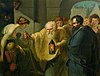
Diogenes of Sinope (or Diogenes the Cynic; c. 412 BC – 323 BC) was the most famous of the Cynic philosophers of ancient Greece. No writings of his survive, but his sayings are recorded by Diogenes Laërtius and others.
Best Diogenes of Sinope Quotes
Shortest
Earliest
Explore our curated collection of the most famous and impactful Diogenes of Sinope quotes.

“When the slave auctioneer asked in what he was proficient, he replied, "In ruling people."”

“Thieves and fighters do not come from eaters of barley-bread; but informers and tyrants come from meat-eaters.”
“When some one boasted that at the Pythian games he had vanquished men, Diogenes replied, "Nay, I defeat men, you defeat slaves."”


“Self-taught poverty is a help toward philosophy, for the things which philosophy attempts to teach by reasoning, poverty forces us to practice.”

“When asked why people give to beggars but not to philosophers, he replied, 'Because they expect they may become lame and blind, but never that they will become philosophers.'”
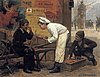
“Once he saw the officials of a temple leading away some one who had stolen a bowl belonging to the treasurers, and said, "The great thieves are leading away the little thief."”
“Plato had defined Man as an animal, biped and featherless, and was applauded. Diogenes plucked a fowl and brought it into the lecture-room with the words, "Behold Plato's man!"”

“He used to reason as follows: 'Everything belongs to the gods; the wise are friends of the gods; friends hold all things in common; ergo, everything belongs to the wise.'”
Diogenes of Sinope Quotes by Topic
Find exactly what you are looking for by browsing this categorized list of Diogenes of Sinope quotes by topic.
Diogenes of Sinope on Poverty 3 quotes
View all 3 quotes on Poverty →Diogenes of Sinope on Hunger 2 quotes
“When scolded for masturbating in public, he said "I wish it were as easy to banish hunger by rubbing my belly."”

Diogenes of Sinope on Agnosticism
Diogenes of Sinope on Education
“The foundation of every state is the education of its youth.”

Diogenes of Sinope on Virtue
Diogenes of Sinope on Wealth
Diogenes of Sinope on World
Diogenes of Sinope on Marriage
Diogenes of Sinope on Human nature
Diogenes of Sinope on Friendship
Diogenes of Sinope on Theft
“Diogenes ... saw the officials of a temple leading away someone who had stolen a bowl belonging to the treasurers, and said, "The great thieves are leading away the little thief."”
What Diogenes of Sinope Said About Others
Discover personal opinions Diogenes of Sinope shared regarding contemporaries.
Diogenes of Sinope on Albert Pike
Diogenes of Sinope on Plato
“Plato had defined Man as an animal, biped and featherless, and was applauded. Diogenes plucked a fowl and brought it into the lecture-room with the words, "Behold Plato's man!"”

Quotes About Diogenes of Sinope
Gain deeper perspective through quotes about Diogenes of Sinope from others.
Alexander the Great on Diogenes of Sinope

Antiphilus of Byzantium on Diogenes of Sinope
“Even bronze is aged by time, but not all the ages, Diogenes, shall destroy thy fame, since you alone did show to mortals the rule of self-sufficiency and the easiest path of life.”
Basil of Caesarea on Diogenes of Sinope
“As for Diogenes, Basil never ceased admiring him, the philosopher who was so set upon being content with nothing but the gifts of nature that he even threw away his drinking-cup, after he had learned from a boy how to bend over and drink from the hollow of his hands.”

Dio Chrysostom on Diogenes of Sinope 4 quotes
“When some people urged that it is impossible for man to live like the animals owing to the tenderness of his flesh and because he is naked and unprotected, [Diogenes] would say in reply that men are so very tender because of their mode of life. ... Man’s ingenuity and his discovering and contriving so many helps to life had not been altogether advantageous to later generations, since men do not employ their cleverness to promote courage or justice, but to procure pleasure.”

Diogenes Laërtius on Diogenes of Sinope
“When [Diogenes of Sinope] was sold as a slave, he endured it most nobly. For on a voyage to Aegina he was captured by pirates under the command of Scirpalus, conveyed to Crete and exposed for sale. When the auctioneer asked in what he was proficient, he replied, "In ruling men." Thereupon he pointed to a certain Corinthian with a fine purple border to his robe, the man named Xeniades above-mentioned, and said, “Sell me to this man; he needs a master.””

Epictetus on Diogenes of Sinope
Galen on Diogenes of Sinope 3 quotes
“Diogenes compared them to fig-trees growing over precipices; for their fruit was devoured by daws and crows, not by men.”
Leon R. Kass on Diogenes of Sinope
“Diogenes ... refuses to be taken in by complacent popular belief that we already know human goodness from our daily experience, or by confident professorial claims that we can capture the mystery of our humanity in definitions. But mocking or not, and perhaps speaking better than he knew, Diogenes gave elegantly simple expression to the humanist quest for self-knowledge: I seek the human being—my human being, your human being, our humanity. In fact, the embellished version of Diogenes' question comes to the same thing: To seek an honest man is, at once, to seek a human being worthy of the name, an honest-to-goodness exemplar of the idea of humanity, a truthful and truth-speaking embodiment of the animal having the power of articulate speech.”
José Ortega y Gasset on Diogenes of Sinope
“Diogenes, in his mud-covered sandals, tramps over the carpets of Aristippus. The cynic pullulated at every corner, and in the highest places. This cynic did nothing but saboter the civilisation of the time. He was the nihilist of Hellenism. He created nothing, he made nothing. His role was to undo — or rather to attempt to undo, for he did not succeed in his purpose. The cynic, a parasite of civilisation, lives by denying it, for the very reason that he is convinced that it will not fail. What would become of the cynic among a savage people where everyone, naturally and quite seriously, fulfils what the cynic farcically considers to be his personal role?”

Rumi on Diogenes of Sinope
“Yesterday the wisest man holding a lit lantern in daylight was searching around town saying I am tired of all these beasts and brutes. I seek a true humanWe have all looked for one but no one could be found they saidYes he replied but my search is for the one who cannot be found.”

Tatian on Diogenes of Sinope
“O man competing with the dog, you know not God, and so have turned to the imitation of an irrational animal.”

About Diogenes of Sinope
Diogenes of Sinope (or Diogenes the Cynic; c. 412 BC – 323 BC) was the most famous of the Cynic philosophers of ancient Greece. No writings of his survive, but his sayings are recorded by Diogenes Laërtius and others.