Link Copied!
Curtis LeMay Quotes (1906-1990)
President


About Curtis LeMay
Curtis LeMay (November 15, 1906 – October 3, 1990) was a general in the United States Air Force and the vice presidential running mate of American Independent Party candidate George Wallace in the 1968 presidential election. During World War II, he was known for planning and executing a massive bombing campaign against cities in Japan and a crippling minelaying campaign in Japan's internal waterways. After the war, he initiated the Berlin airlift, then reorganized the Strategic Air Command (SAC) into an effective instrument of nuclear war. He served as Chief of Staff of the U.S. Air Force from 1961 until his retirement in 1965.
Best Curtis LeMay Quotes
Shortest
Earliest
Explore our curated collection of the most famous and impactful Curtis LeMay quotes.


“Dear Rosy, In June Strategic Air Command had fourteen accidents. Eleven of the fourteen were in the Fifteenth Air Force. Do something. Sincerely, Curtis E. LeMay, Lieutenant General, USAF, Commanding.”

“She [

“I'd like to see a more aggressive attitude on the part of the United States. That doesn't mean launching an immediate preventive war...”
“There are no innocent civilians. It is their government and you are fighting a people, you are not trying to fight an armed force anymore. So it doesn't bother me so much to be killing the so-called innocent bystanders.”

“Actually, I think it's more immoral to use less force than necessary, than it is to use more. if you use less force, you kill off more of humanity in the long run, because you are merely protracting the struggle.”

“Killing Japanese didn't bother me very much at that time... I suppose if I had lost the war, I would have been tried as a war criminal.... Every soldier thinks something of the moral aspects of what he is doing. But all war is immoral and if you let that bother you, you're not a good soldier.”

“We went over there and fought the war and eventually burned down every town in North Korea anyway, someway or another, and some in South Korea too.… Over a period of three years or so, we killed off — what — twenty percent of the population of Korea as direct casualties of war, or from starvation and exposure?”

“China has The Bomb. [...] Sometime in the future--25, 50, 75 years hence--what will the situation be like then? By that time the Chinese will have the capability of delivery too. That's the reason some schools of thinking don't rule out a destruction of the Chinese military potential before the situation grows worse than it is today. It's bad enough now.”
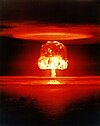
“My solution to the problem would be to tell [the North Vietnamese Communists] frankly that they've got to draw in their horns and stop their aggression or we're going to bomb them into the Stone Age. And we would shove them back into the Stone Age with Air power or Naval power—not with ground forces.”

“Again they thought of those pictures of the embers of Japan, the black stuff hanging around on bulletin boards. I guess intermingled with that was the thought, "How soon can we go home?" Volunteers always think that in a war, and mainly ours was a volunteer or a drafted force, as we all know. You can't blame them for thinking that. You can thank them for working like demons, which is what they did.”

“...Native annalists may look sadly back from the future on that period when we had the atomic bomb and the Russians didn't. Or when the Russians had acquired (through connivance and treachery of Westerns with warped minds) the atomic bomb - and yet still didn't have any stockpile of the weapons. That was the era when we might have destroyed Russia completely and not even skinned our elbows doing it.”

“Point is, the person in public life is bound to receive a lot of half-witted criticism. He's a natural-born target for it. It is unnecessary to go to any extraordinary lengths to maintain a picture of lily-white purity and innocence. If you let things like that worry you, very soon you run out of worrying time. There are too many real problems up there on the board. Whatever you do, somebody's going to criticize you. Forget criticism.”

“General Curtis LeMay, commander in chief of the Strategic Air Command many years ago, used to insist that all his subordinates think positively. One day a colonel ran into General LeMay's office and shouted, "General, we have an insurmountable problem!"
LeMay banged his fist on the desk. "Colonel, in this command we don't have problems! We have opportunities!"
The Colonel saluted. "Yes, sir. General, we have an insurmountable opportunity."”
LeMay banged his fist on the desk. "Colonel, in this command we don't have problems! We have opportunities!"
The Colonel saluted. "Yes, sir. General, we have an insurmountable opportunity."”
“Today we hear much discussion about "overkill." The people who are talking "overkill" knowingly or unknowingly support the adoption of a minimum-deterrence strategy. In advocating that strategy, they are addressing the wrong problem. Instead of belaboring our ability to destroy the population of an aggressor nation, they should consider what we require to save American lives and property by preventing war, or by gaining a decision as quickly as possible if war occurs. That is the proper and traditional task of the United States armed forces. The counterforce strategy which we are pursuing and analyzing today provides our best prospect for success in that task.”

“As far as casualties were concerned I think there were more casualties in the first attack on Tokyo with incendiaries than there were with the first use of the atomic bomb on Hiroshima. The fact that it's done instantaneously, maybe that's more humane than incendiary attacks, if you can call any war act humane. I don't, particularly, so to me there wasn't much difference. A weapon is a weapon and it really doesn't make much difference how you kill a man. If you have to kill him, well, that's the evil to start with and how you do it becomes pretty secondary. I think your choice should be which weapon is the most efficient and most likely to get the whole mess over with as early as possible.”
“The German people themselves were historically responsible for the Nazi hierarchy and the Nazi war machine. No little band of hand-picked zealots alone could have wrought such a fantastic massacre. It had to be done with people. It was done with and by the German people. We can look back and salute a comparative handful of clear-minded and courageous Teutonic humans who were tortured out of existence by the Schutzstaffel or who decayed in concentration camps. But they were a distinct minority. The bulk of the German population was behind Hitler, or pretended to be. The bulk of the population applauded him, sustained him, or (in the less evil instances) stood idly by, or turned their backs on the whole thing.”
“Any Ivy League academy asshole can issue orders and take the credit. What matters is when you place your own ass on the line, and your men know that you are not some armchair commander asking them to risk death while you enjoy the good life. Morale is everything, and you do not build it by typing goddamned reports and having cocktail parties. Strange, LBJ, and that ilk were like that. Those motherfuckers were whores paid to screw the public. And you know what? They never lost one night's sleep over it. They never had their ass in danger, and they never waited for the knock on the door telling them that their son was killed, all because some asshole with an Ivy League degree and a champagne glass in his hand decided that their boy did not need the money or weapons or even the fucking political support to stay alive.”

“I hope that the United States of America has not yet passed the peak of honor and beauty, and that our people can still sustain certain simple philosophies at which some miserable souls feel it incumbent to sneer. I refer to some of the Psalms, and to the Gettysburg Address, and the Scout Oath. I refer to the Lord's Prayer, and to that other oath which a man must take when he stands with hand uplifted, and swears that he will defend his Country.
None of those words described, or the beliefs behind them, can be sung to modern dance music. But they are there, like rocks and oaks, structurally sound and proven. They are more than rocks and oaks; they are the wing and the prayer of the future.
Whether we venture into realms of Space in our latest vehicles, or whether we are concerned principally with overhauling our engines and loading our ordinance here on the ground, we will still be part of a vast proud mechanism which must function cleanly if it is to function at all.
Crank her up. Let's go.”

“You know the difference between a politician and a statesman? Here is the LeMay definition: a politician is a high-profile hooker looking for money to fund a campaign so that he can be in position to be owned by a political party, doing their bidding like a slave. Johnson fit that category. A statesman is a politician whose allegiance is only to their nation, and who, despite the feelings of others, does what he believes in his gut is in the best interest of his country, politics be damned. That even means doing something that may cost him his career, but he takes the moral high ground as he sees it, to do what must be done. That was Churchill. That's the difference. Ronald Reagan is a statesman, and make a note of it- we may not have any more in the future. They are a damned dying breed. That also applies to military commanders. You can have a charismatic, friendly, and amiable type of leader, but that is a difficult position to hold when you have to maintain discipline. It can be done, but it is hard. Then there is the hard-ass, no-holds-barred, get-it-fucking-done leader who pushes his men and expects ever-better results afterward. The easygoing leader may be liked more by his men, but the hard-ass will sure as shit have their attention, and if she shares the dangers with them, he will have their respect. Respect is everything.”
Curtis LeMay Quotes by Topic
Find exactly what you are looking for by browsing this categorized list of Curtis LeMay quotes by topic.
Curtis LeMay on Korean War 2 quotes
“We went over there and fought the war and eventually burned down every town in North Korea anyway, someway or another, and some in South Korea too.”
Curtis LeMay on Russia
Curtis LeMay on War
“We went over there and fought the war and eventually burned down every town in North Korea anyway, someway or another, and some in South Korea too.”
Curtis LeMay on North Korea
“We went over there and fought the war and eventually burned down every town in North Korea anyway, someway or another, and some in South Korea too.”

Curtis LeMay on United States Armed Forces
“We went over there and fought the war and eventually burned down every town...Over a period of three years or so, we killed off — what — twenty percent of the population?”

Curtis LeMay on South Korea
“We went over there and fought the war and eventually burned down every town in North Korea anyway, someway or another, and some in South Korea too... Over a period of three years or so, we killed off — what — twenty percent of the population of Korea as direct casualties of war, or from starvation and exposure?”

Curtis LeMay on Leadership
“Any Ivy League academy asshole can issue orders and take the credit. What matters is when you place your own ass on the line, and your men know that you are not some armchair commander asking them to risk death while you enjoy the good life. Morale is everything, and you do not build it by typing goddamned reports and having cocktail parties.”

What Curtis LeMay Said About Others
Discover personal opinions Curtis LeMay shared regarding contemporaries.
Curtis LeMay on Douglas MacArthur 2 quotes
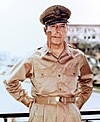
“MacArthur was imperialistic, almost self-godlike, and he always remained aloof from his soldiers. You were never going to see old Mac sitting in the damned mud, swatting flies and mosquitoes, eating rancid chow in a pouring tropical rain. Oh no. His ass was in a nice house or office with water buffalo steaks and red wine. I have to say that he was just about the only senior flag officer I can say that about, personal experience. All the others I have mentioned shared the misery, even Patton. He lived well per his rank, but he gave up his jeep to send wounded men back to an aid station in Sicily and walked on foot as the Germans shot at his men.”
Curtis LeMay on Winston Churchill
“You know the difference between a politician and a statesman? Here is the LeMay definition: a politician is a high-profile hooker looking for money to fund a campaign so that he can be in position to be owned by a political party, doing their bidding like a slave. Johnson fit that category. A statesman is a politician whose allegiance is only to their nation, and who, despite the feelings of others, does what he believes in his gut is in the best interest of his country, politics be damned. That even means doing something that may cost him his career, but he takes the moral high ground as he sees it, to do what must be done. That was Churchill. That's the difference. Ronald Reagan is a statesman, and make a note of it- we may not have any more in the future. They are a damned dying breed. That also applies to military commanders. You can have a charismatic, friendly, and amiable type of leader, but that is a difficult position to hold when you have to maintain discipline. It can be done, but it is hard. Then there is the hard-ass, no-holds-barred, get-it-fucking-done leader who pushes his men and expects ever-better results afterward. The easygoing leader may be liked more by his men, but the hard-ass will sure as shit have their attention, and if she shares the dangers with them, he will have their respect. Respect is everything.”

Quotes About Curtis LeMay
Gain deeper perspective through quotes about Curtis LeMay from others.
Walter J. Boyne on Curtis LeMay 5 quotes
“No other U.S. military force commander so imprinted his personality and ideals upon his organization as did LeMay. SAC became LeMay personified- but only after tremendous effort on his part. There were no criticisms of his intellect or industry, nor any suggestion of patronage, but the hard, and often seemingly cold, manner in which he drove SAC gave rise to many stories about him, most of them apocryphal. In 1951, at the age of forty-six, he was confirmed as a full four-star general, the youngest since Ulysses S. Grant. LeMay was "the Iron Eagle" to his admirers, and simply "Iron Ass" to detractors who feared him. Some of his seemingly tough demeanor probably stemmed from a deadened nerve that left his face immobile and unsmiling. In practice, LeMay took better care of his troops than anyone else in the Air Force, and his tenure at SAC was filled with achievements such as improved housing, pay, recreation, promotion, medical care, and other vital personnel requirements. The most important assessment of LeMay was defined by the loyalty and the high morale of the people he commanded.”
Tucker Carlson on Curtis LeMay
“The practical effects of the policies are less interesting to policy makers in Washington than the spirit in which they’re intended. When you’re pulling the trigger, the spirit is always pure. Liberals believed that Curtis LeMay dropped bombs because he was a crazed warmonger who took pleasure in hurting people. Liberals believe they bomb countries for the same reason they once opposed bombing countries, because they want to make the world a better place.”

Barry Goldwater on Curtis LeMay
“'''I used to receive a hundred calls a year from people who wanted me to get into the Green Room at Wright-Patterson Air Force Base, because that's where the Air Force stored all the material gathered on UFOs. I once asked Curtis LeMay if I could get in that room, and he just gave me holy hell. He said, 'Not only can't you get into it but don't you ever mention it to me again.''''”

James F. Dunnigan on Curtis LeMay
“An excellent pilot and officer equally capable in both combat and staff, LeMay was typical of the bomber-minded generals who emerged from World War II to dominate the Air Force during the Cold War.”
Daniel Ellsberg on Curtis LeMay 2 quotes
“Precisely to compensate for an impression of inexperience after the events of the last few months, Kennedy just then named as chief of staff of the Air Force General Curtis LeMay, the man with the toughest militarist image in the armed services. This despite the fact that a number of observers, including Robert Kennedy, would report incidents when certain military men—LeMay above all—would give Kennedy the impression that they were essentially insane, madly reckless, or out of touch with reality. (These included, the next year, LeMay’s strongly worded advice on the Sunday morning in 1962 when Khrushchev announced he was dismantling his missiles in Cuba that the president should go ahead and attack Cuba anyway.) Yet it was Kennedy who had named LeMay as chief of staff of the Air Force on June 30, 1961, and kept him there.”

Margaret MacMillan on Curtis LeMay
“In 1943, 40,000 died in the German city of Hamburg, many in the firestorm that swept the city as a result of Allied bombing, and in 1945 perhaps a further 35,000 in Dresden. (The figure for the latter, like the choice of the target itself, remains highly controversial.) The American bombing of Tokyo that same year with incendiary bombs (a weapon chosen deliberately because so many structures in the city were made of wood) destroyed sixteen square miles and left 80,000 to 100,000 dead and 1 million homeless. Major-General Curtis LeMay, whose responsibility the raid was, said the Japanese were ‘scorched and boiled and baked to death’. It was no oversight that mass bombings were not included in the Allied indictment of Nazi leaders at the Nuremberg trials.”

Robert McNamara on Curtis LeMay 3 quotes
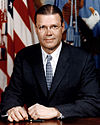
“Kennedy was trying to keep us out of war. I was trying to help him keep us out of war. And General Curtis LeMay, whom I served under as a matter of fact in World War II, was saying "Let's go in, let's totally destroy Cuba."”
Robin Olds on Curtis LeMay 2 quotes
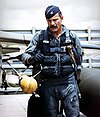
“SAC had been established by belligerent old General Curt LeMay and General Tommy Power, both pronuclear nutcases. Under their rules, if a wing commander messed up even a little bit he was canned and gone forever, so SAC fostered attitudes about how tough they were. What they really did was made a bunch of liars out of many wing commanders, DMs, and DOs. Guys at wing level were scared people. They would lie, cheat, steal, and deny- anything to make themselves look good.”
Bruce Palmer on Curtis LeMay
“Eventually the decision was reached to accept the armed chopper as an essential part of the air mobility concept but not to allow the Army to use the Mohawk as an attack aircraft, confining it to a reconnaissance role. Both were wise decisions. But prior to these decisions there were some hot and emotional sessions of the JCS. One concerned the armed Huey, which as then being used successfully in Vietnam to support ARVN operations, but which was considered by the Air Force as illegal poaching on their roles and missions. This was in the midsummer of 1964. General LeMay suddenly took his cigar out of his mouth and, gesticulating wildly, challenged General Johnson to an aerial duel. He screamed, "Johnson, you fly one of those damned Huey's and I'll fly an F-105, and we'll see who survives. I'll shoot you down and scatter your peashooter all over the goddamn ground." I was eager to defend my chief, both verbally and physically (LeMay would have made two Johnsons in body weight, if not in mental poundage) but Johnson motioned to me to keep quiet and responded quietly: "I'm not a flier, but I will be happy to get qualified and take you on- we can agree on a time and place later. But let's not waste the valuable time of our colleagues on such a trivial matter."”
About Curtis LeMay
Curtis LeMay (November 15, 1906 – October 3, 1990) was a general in the United States Air Force and the vice presidential running mate of American Independent Party candidate George Wallace in the 1968 presidential election. During World War II, he was known for planning and executing a massive bombing campaign against cities in Japan and a crippling minelaying campaign in Japan's internal waterways. After the war, he initiated the Berlin airlift, then reorganized the Strategic Air Command (SAC) into an effective instrument of nuclear war. He served as Chief of Staff of the U.S. Air Force from 1961 until his retirement in 1965.