Link Copied!
Chava Rosenfarb Quotes (1923-2011)
Author, Poet

About Chava Rosenfarb
Chava Rosenfarb (9 February 1923 – 30 January 2011) (Yiddish: חוה ראָזענפֿאַרב) was a Jewish Holocaust survivor and author of Yiddish poetry and novels, a major contributor to post-World War II Yiddish literature. She lived in Lodz, Poland in her childhood, and moved to Canada in 1950.
Best Chava Rosenfarb Quotes
Shortest
Earliest
Explore our curated collection of the most famous and impactful Chava Rosenfarb quotes.
“There are times in life when muteness is the only appropriate language.”

“Writing is a lonely profession, and after the Holocaust, Yiddish writers were doubly lonely.”
“a pair of eyes whose gaze spoke the language of stubbornness and determination. (chapter 1)”
“one’s style, one’s method of writing—these, I believe, truly reveal the face of one’s soul.”
“I will say no more about the horrors of the concentration camps. They are indescribable and untranslatable.”
“how can one speak of settling when your foundation has been ripped from under you? Nevertheless, one goes on.”
“I was entranced by the kind of magic that went into the act of transposing words from one language into another.”
“Even when I’m not writing—and now is not a very productive time for me—I live with my writing and feel it is my anchor, my support.”
“I am not a card-carrying feminist, but the intellectual baggage that I bring to the act of writing is certainly coloured by my femininity.”

“The girl possesses a carefree lightheartedness that makes Barukh feel more acutely the weight of the despair that he carries within himself.”
“I respect all definitions of art, but I cherish most the definition which states that art is an expression of the desire to communicate on the most meaningful level.”

“Poems were created in the ghettos, and even at the threshold of the crematoria. As long as there is life, the human heart will never cease singing of its joys and sorrows.”
“Friday the first of September, at six o'clock in the morning, the Germans
crossed the Polish border. Between Friday and Wednesday, life turned upside down. (p179, David's notebook)”
“Even in the concentration camps, even by the glare of the crematorium flames, there were those who wrote. We were like those humming birds who sing most beautifully when in captivity”
“basically, language is an inadequate and limited instrument. No matter what language a writer speaks, she always hopes that it will be universal, that it will transcend the particular ethnic barriers that language creates.”
“The first day of the year 1939 was an unfortunate one for Samuel as well. Someone had broken the big front pane of his office window, and on the wall by the entrance to his factory, was printed in thick black paint: JEW - TO PALESTINE! (p32)”

“Barukh is beside himself: "You are not the boss of my life, do you hear? I am a human being, just like you. Just like you!" he shouts, his voice growing increasingly louder the smaller he feels inside. "You will not curse me! No! I've heard enough curses in my life."”

“I don't analyze or rationalize about art, about form and style. Everything is clear as day and comes to me as easily as if I were a medium and some other voice were dictating the lines. Within me there is both calm and agitation. I don't want to only memorialize. I want to salvage my inner melody, so as to be able to continue with my life.”
“Each writer nurtured the hope that his or her voice would be heard. It was a drive to raise oneself above fear through the magical power of the written word, and so to demonstrate one's enduring capacity for love, for singing praise to life. Even in the concentration camps, even by the glare of the crematorium flames, there were those who wrote.”
Chava Rosenfarb Quotes by Topic
Find exactly what you are looking for by browsing this categorized list of Chava Rosenfarb quotes by topic.
Chava Rosenfarb on Authors 2 quotes
“I hold to my old romantic belief that writers of all times and places belong to a noble fellowship; that although they are the voices of their own cultures and languages, they transcend these boundaries.”

Chava Rosenfarb on Writing 2 quotes
“what is writing if not a form of confession in disguise? No matter what the subject, all literary roads lead back to the self. The writer descends like a miner into the deepest shafts of her soul in order to unearth the blackest coals of her torment, or to retrieve the most glittering diamonds of her memories, and bring them back to the surface in the form of fictions that she wishes to share with the world.”
Chava Rosenfarb on Yiddish literature 2 quotes
“There is a saying in Yiddish, vi es kristlt zikh azoy yidisht zikh meaning that there is little difference between Yiddish literature and any other literature. But this is not so. If a people's literature is a mirror in which it finds it own reflection, then modern Yiddish literature holds up just such a mirror to Jewish life. Just as our history has for the last two thousand years meandered through a path very different from that of any other people, so has our literature followed a distinctive route.”

Chava Rosenfarb on Creativity
“Creativity is a life-affirming activity. Lack of response to creativity and being condemned to write for the desk drawer is a stifling, destructive experience.”

Chava Rosenfarb on Art
“I respect all definitions of art, but I cherish most the definition which states that art is an expression of the desire to communicate on the most meaningful level.”
Chava Rosenfarb on Language
“…basically, language is an inadequate and limited instrument. No matter what language a writer speaks, she always hopes that it will be universal, that it will transcend the particular ethnic barriers that language creates.”
Chava Rosenfarb on Canada
“For twenty-one years I have lived in Canada, the country of promise. There is a magnificent air of freedom about this country, a freedom which the winds of all seasons, sweeping through the breadth of the continent seem to carry on their wings-an ideal place of escape for those who have been oppressed and enslaved elsewhere, for those who wish to turn over a new leaf, who hope for change, for betterment, who want to live their lives as they please.”

Chava Rosenfarb on Quebec
“Montreal in the 1950s was a marvel as far as Yiddish culture was concerned. It bustled with a lively intellectual and social life, was home to several important Yiddish writers, and boasted a Yiddish library and a system of private Yiddish-language day schools, to which I sent my children. But while I found in Canada a Jewish community that still spoke Yiddish, the focus of this community had turned away from the universalism of my European past to more specifically Jewish concerns, such as supporting the state of Israel. It was in Montreal that I wrote my novels, and I wrote them in Yiddish...yet, I hardly knew how it happened, but I gradually became aware that Yiddish was in trouble in Montreal and in the world at large, that the number of its speakers and readers was decreasing.”

Chava Rosenfarb on Translation
“Translation, I believe, is about interaction, interaction between one language and another, between one form of writing and another. It is the most optimistic of literary endeavours, because it suggests that everything may be transposed, and once transposed, comprehensible...The process of translation, of moving from one language to another, closely mirrors my own experience as a writer, driven from one country to another and from one language to another. I am so grateful to translators, to all translators, for making the literature of the world available to me and to all the peoples of the world, no matter what language they speak, because I do still believe that literature is the primary way in which we may come to understand one another. When translators sit down to their work, they are engaged in more than a mere transposing of thoughts and phrases from one language into another. Sometimes, as in the case of Yiddish, there is much more at stake: it is not merely that translation allows literary works to exist in languages in which they never existed before, but also that translators are engaged in snatching from the jaws of oblivion that which is in danger of disappearing. It is a most honourable calling; it is a preservation of the past in the present. I thank all translators for the fact that they exist and have devoted their lives to breaking down the barriers between peoples and alleviating the curse of the Tower of Babel.”

What Chava Rosenfarb Said About Others
Discover personal opinions Chava Rosenfarb shared regarding contemporaries.
Chava Rosenfarb on Sholem Asch 2 quotes
“Sholem Asch and Isaac Bashevis Singer reflected through the prism of their personalities and unique talents the soul of the jew as a human being, and in this way they became universal writers.”

Chava Rosenfarb on Isaac Leib Peretz 2 quotes
“Modern Yiddish literature attained its maturity with the work of three classical masters: Mendele Moykher Sforim, Sholem Aleichem, and I. L. Peretz. These three authors were the literary forebears whom subsequent generations of Yiddish writers both emulated and rebelled against.”

Chava Rosenfarb on Isaac Bashevis Singer
“Sholem Asch and Isaac Bashevis Singer reflected through the prism of their personalities and unique talents the soul of the jew as a human being, and in this way they became universal writers.”

Chava Rosenfarb on Nikos Kazantzakis
“In contrast to Hesse, I think about Kazantzakis, who is not as deep as Hesse, but has some human warmth, some Greek sunshine, in his prose. To me he speaks with a Jewish heart. I approve of Hesse; I love Kazantzakis.”

Chava Rosenfarb on Rachel Korn
“the three most outstanding representatives of the Yiddish-Canadian literary group: J.I. Segal, Melekh Ravitch, and Rokhl Korn. Their presence in Canada corresponds to the most fruitful period of Yiddish-Canadian cultural life.”

Chava Rosenfarb on Goldie Morgentaler
“Working together on the translation of my books forged a bond between us that is stronger than the bond I have with any other human being, because it is made up of the intimacy that only translation can confer on a writer and her translator, and because it implies a shared creative effort.”
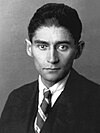
Chava Rosenfarb on Franz Kafka
“it seems that Kafka is even more famous in Prague than President Havel. An entire Kafka industry has blossomed here. He is sold in every store: Kafka shirts, Kafka toys; beer mugs and pots with Kafka's picture. There are Kafka restaurants, cafeterias, theatres. He looks down at us from everywhere. Kafka, the sickly, alienated individualist, the Jew who never completely felt himself to be a citizen of the Jewish, the Czech, or the German worlds, has risen from the dead in the vulgarized form of a sort of Czech rock star.”
Chava Rosenfarb on Sylvia Plath
“With the bravado and despair of a young person, she tore apart the elegant poetic forms of the 1950s, and, using the raw language of everyday speech, she gave voice to the storms that raged inside her, thus freeing herself from the nightmarish visions that had long tormented her. In her novel The Bell Jar, she leads us into the dark corridors of the inner hell that led to her mental breakdown and brought her to the brink of her first attempt at suicide. It is a cruel, stifling world, whose black gates carry the inscription "no exit." Plath took the fact that she was the daughter of parents of German origin as the symbolic definition of her life. It was a fact that could neither be denied nor changed. In her poems, she called the father whom she loved, and who died when she was a child, a Nazi bastard. She, the Aryan child of the postwar generation, reimagined herself as symbolically Jewish, estranged, persecuted, rejected, and condemned.”

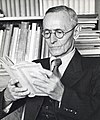
Chava Rosenfarb on Hermann Hesse
“I have the feeling that, basically, Hesse is not a warm writer. He keeps himself at a stoical distance from the hot, painful bloodstream of life. He seems to me to be indifferent, even when he writes about love and justice. His last great work, Magister Ludi, or the Glass Bead Game, is, in essence, a work about love, about the search for an ideal community, about self-sacrifice. But I don't feel any warmth in it, although this is possibly a result of Hesse's literary style, which is Gothic and crystal-clear, icily lucid. Style, they say, is the person...It is interesting what Hesse writes about rebellious natures. He, himself, often ran away from school, ran away from home, and at sixteen completely abandoned his formal education. (He was self-taught, first by reading through his grandfather's library, and later he worked in a bookstore.) Progress, he said, is basically made by those who rebel against the accepted order. But the accepted order protects itself against the push for change - and takes revenge on the rebels.”
Chava Rosenfarb on Sholem Aleichem
“Modern Yiddish literature attained its maturity with the work of three classical masters: Mendele Moykher Sforim, Sholem Aleichem, and I. L. Peretz. These three authors were the literary forebears whom subsequent generations of Yiddish writers both emulated and rebelled against... the depiction of Jewish women is, with some exceptions, not among our literature's finest accomplishments. Throughout all of Yiddish literature, beginning with the classical writers, for instance Mendele and his portrayal of Beyle in Fishke the Cripple, or Sholem Aleichem's depiction of Tevye's daughters in Tevye the Milkman, or Rokhele in Stempenyu, or Bashevis's "Yentl the Yeshiva Boy" and Grade's The Agunah, there is an undercurrent of sympathy for the Jewish woman, as well as guilt about her double enslavement, both as woman and as Jew... Thus, some male Yiddish prose writers did faithfully and realistically describe the situation of women in the late-nineteenth century. They depicted their female characters with great tenderness and understanding. But as a general rule, they avoided looking deeper into the more complicated qualities that make up a woman's individuality. The male writer sympathized with the woman's plight; he idealized her, sang her praises, wondered at her, but he knew nothing about who she really was. He did not illuminate her from within.”

Quotes About Chava Rosenfarb
Gain deeper perspective through quotes about Chava Rosenfarb from others.
Emanuel Goldsmith Introduction on Chava Rosenfarb
“In modern Yiddish writing, the moral, spiritual, and emotional capital of generations of Jewish women was utilized by male and female writers alike...Female prose writers, such as Fradl Shtok, Esther Kreitman, Rokhl Korn, Kadia Molodowsky, and Khava Rosenfarb, also deepened the awareness and understanding of the feminine contribution to Jewish civilization.”
Dara Horn on Chava Rosenfarb
“The idea of uplift is truly obscene when applied to fiction about the Holocaust, yet it is the main type of Holocaust literature English readers encounter: stories about brave fighters, altruistic rescuers, and sweet girls who insist that people are good at heart—or worse, easy bromides about the absence of God instead of accusatory truths about the evils of man...Does that mean imagination ought to have no place in writing about atrocity? Not at all. But a work about the Holocaust should necessarily be painful, not inspiring, and should honor the fullness of the loss, not only of individuals but of entire communities. Fortunately for English readers drowning in uplifting Holocaust stories, there exists a work in translation that accomplishes all this. It is Chava Rosenfarb’s The Tree of Life, a panoramic Yiddish-language trilogy about the Lodz Ghetto. To call it a masterpiece would be an understatement. It is the sort of work—long, immersive, engrossing, exquisite—that feels less like reading a book than living a life...The extreme level of detail that Rosenfarb gives to her portrait of Jewish Lodz, its people, and its passions, is itself an enormous achievement, a monument and a memorial to a destroyed community, written in the great (and alas, very long) tradition of Jewish literary lament. Yet The Tree of Life is not a work of testimony, but a work of art, and its power lies in Rosenfarb’s artistic invention. One character, the aspiring teenage poet Rachel Eibushitz, most closely resembles Rosenfarb herself, but this character is simply one of many and hardly the most important. Instead of memoir, Rosenfarb offers true imagination, bringing us into the minds of many different people and rendering even the most despicable figures with the utmost imaginative empathy...we as readers cannot expect the book to uplift us, the way we obscenely expect of every other book about atrocity. Reading this monumental work requires an active commitment. It provides a real service to mankind: It broadens your life beyond your own imagining, allowing your life to include many other lives within it. It brings you down to the deepest level of existence.”

Quoted on Chava Rosenfarb
“Jeff Sharlet wrote, "For years after the war and after the camps, Chava Rosenfarb woke up every morning at 4 a.m. to write. She'd open her eyes in the darkness and slip out of bed without waking her husband, make herself a cup of coffee and sit down in her study, still wearing her nightgown. Her study was even smaller than her kitchen—barely large enough for the table she had bought for ten dollars from a doctor's office. On it she kept a stack of notebooks. Sipping her coffee, she'd pick up the top one, and by the light of the table lamp, beneath a portrait of the Yiddish writer I. L. Peretz, review yesterday's stories"”
Source on Chava Rosenfarb 4 quotes
“I’ve reread your story, “Last Love,” and I want to say again, “Wonderful!” I see it as a breakthrough in Yiddish subject matter—both for its theme and for its refined style.”
About Chava Rosenfarb
Chava Rosenfarb (9 February 1923 – 30 January 2011) (Yiddish: חוה ראָזענפֿאַרב) was a Jewish Holocaust survivor and author of Yiddish poetry and novels, a major contributor to post-World War II Yiddish literature. She lived in Lodz, Poland in her childhood, and moved to Canada in 1950.