Link Copied!
Bertolt Brecht Quotes (1898-1956)
Poet, Director
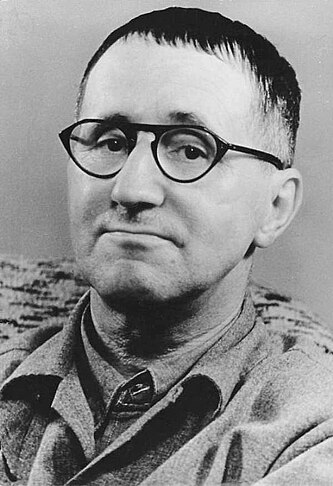



About Bertolt Brecht
Eugen Berthold Friedrich Brecht (10 February 1898 – 14 August 1956), commonly known as Bertolt Brecht, was a German Marxist dramatist, stage director and poet. He is remembered for the Distancing effect practice in performing arts (known in German as Verfremdungseffekt or V-Effekt).
Best Bertolt Brecht Quotes
Shortest
Earliest
Explore our curated collection of the most famous and impactful Bertolt Brecht quotes.


“But something's missing (Aber etwas fehlt).”
“Don't be afraid of death so much as an inadequate life.”


“Wie lange
Dauern die Werke? So lange
Als bis sie fertig sind.”
Dauern die Werke? So lange
Als bis sie fertig sind.”
“To live means to finesse the processes to which one is subjugated.”

“The rain
Never falls upwards.
When the wound
Stops hurting
What hurts is
The scar.”
Never falls upwards.
When the wound
Stops hurting
What hurts is
The scar.”
“You may proclaim, good sirs, your fine philosophy
But till you feed us, right and wrong can wait!”
But till you feed us, right and wrong can wait!”

“The headlong stream is termed violent
But the river bed hemming it in is
Termed violent by no one.”
But the river bed hemming it in is
Termed violent by no one.”
Bertolt Brecht Quotes by Topic
Find exactly what you are looking for by browsing this categorized list of Bertolt Brecht quotes by topic.
Bertolt Brecht on Mirror
Bertolt Brecht on Wind
Bertolt Brecht on Change
Bertolt Brecht on Heroes
Bertolt Brecht on Hollywood
Bertolt Brecht on Law
“The law is simply and solely made for the exploitation of those who do not understand it or of those who, for naked need, cannot obey it.”

Bertolt Brecht on Abuse
“The human race tends to remember the abuses to which it has been subjected rather than the endearments. What's left of kisses? Wounds, however, leave scars.”

Bertolt Brecht on History
“Always the victor writes the history of the vanquished. He who beats distorts the faces of the beaten. The weaker depart from this world and the lies remain.”

Bertolt Brecht on Confusion
“Let nothing be called natural In an age of bloody confusion, Ordered disorder, planned caprice, And dehumanized humanity, lest all things Be held unalterable!”

Bertolt Brecht on Prometheus
“It is not enough to demand insight and informative images of reality from the theater. Our theater must stimulate a desire for understanding, a delight in changing reality. Our audience must experience not only the ways to free Prometheus, but be schooled in the very desire to free him. Theater must teach all the pleasures and joys of discovery, all the feelings of triumph associated with liberation.”

What Bertolt Brecht Said About Others
Discover personal opinions Bertolt Brecht shared regarding contemporaries.
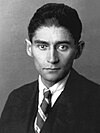
Bertolt Brecht on Franz Kafka
“Kafka described with wonderful imaginative power the future concentration camps, the future instability of the law, the future absolutism of the state Apparat.”
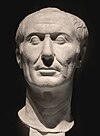
Bertolt Brecht on Julius Caesar
“He had inaugurated a new era. Before him Rome had been a city with a few scattered colonies. He was the one who founded the Empire. He had codified the law, reformed the currency and even modified the calendar on the basis of scientific knowledge. His Gallic campaigns, which had taken the Roman flag as far as distant Britain, had opened up a new continent to trade and civilization. His statue had its place with those of the Gods, he had given his name to cities as well as a month in the calendar, and the monarchs added his illustrious name to their own. The history of Rome had found its Alexander. It was already apparent that he would become the unattainable model for every dictator.”
Bertolt Brecht on Vladimir Lenin
“The day Lenin passed away A soldier of the death watch, so runs the story, told his comrades: I did not want to Believe it. I went inside, and Shouted in his ear: ‘Ilyich The exploiters are on their way!’ He did not move. Now I knew that he has expired. When Lenin passed away and was missed The victory had been won, but the land lay waste The masses had set out, but The way was dark As Lenin passed away Soldiers, sitting on the footpaths, wept And the workers went away from their machines And clenched their fists. As Lenin went, it was As if the tree said to its leaves I am off. Lenin is enshrined In the large heart of the working-class, He was our teacher. He carried on the struggle along with us. He is enshrined In the large heart of the working class.”

Quotes About Bertolt Brecht
Gain deeper perspective through quotes about Bertolt Brecht from others.
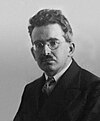
Walter Benjamin on Bertolt Brecht
“Yesterday, a long conversation in Brecht’s sickroom about my essay "The Author as Producer." Brecht thought the theory I develop in the essay — that the attainment of technical progress in literature eventually changes the function of art forms (hence also of the intellectual means of production) and is therefore a criterion for judging the revolutionary function of literary works — applies to artists of only one type, the writers of the upper bourgeoisie, among whom he counts himself. "For such a writer," he said, "there really exists a point of solidarity with the interests of the proletariat: it is the point at which he can develop his own means of production. Because he identifies with the proletariat at this point, he is proletarianized — completely so — at this same point, i.e. as a producer. And his complete proletarianization at this one point establishes his solidarity with the proletariat all along the line."”
Edwidge Danticat on Bertolt Brecht

Sidney Hook on Bertolt Brecht
“I turned to Brecht and asked him why, if he felt the way he did about Jerome and the other American Communists, he kept on collaborating with them, particularly in view of their apparent approval or indifference to what was happening in the Soviet Union. ... Brecht shrugged his shoulders and kept on making invidious remarks about the American Communist Party and asserted that only the Soviet Union and its Communist Party mattered. ... But I argued ... it was the Kremlin and above all Stalin himself who were responsible for the arrest and imprisonment of the opposition and their dependents. It was at this point that he said in words I have never forgotten, 'As for them, the more innocent they are, the more they deserve to be shot.' I was so taken aback that I thought I had misheard him. 'What are you saying?' I asked. He calmly repeated himself, 'The more innocent they are, the more they deserve to be shot.' ... I was stunned by his words. 'Why? Why?' I exclaimed. All he did was smile at me in a nervous sort of way. I waited, but he said nothing after I repeated my question. I got up, went into the next room, and fetched his hat and coat. When I returned, he was still sitting in his chair, holding a drink in his hand. When he saw me with his hat and coat, he looked surprised. He put his glass down, rose, and with a sickly smile took his hat and coat and left. Neither of us said a word. I never saw him again.”

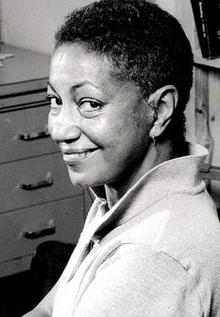
June Jordan on Bertolt Brecht
“I am working for the courage to admit the truth that Bertolt Brecht has written; he says, "It takes courage to say that the good were defeated not because they were good, but because they were weak." I cherish the mercy and the grace of women’s work. But I know there is new work that we must undertake as well: that new work will make defeat detestable to us. That new women’s work will mean we will not die trying to stand up: we will live that way: standing up. I came too late to help my mother to her feet. By way of everlasting thanks to all of the women who have helped me to stay alive I am working never to be late again.”
Melanie Kaye/Kantrowitz "While Patriarchy Explodes on Bertolt Brecht
“I've been thinking about Brecht's comment on creating apolitical art: it's like painting a still life on a sinking ship, he said.”
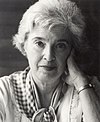
Gerda Lerner on Bertolt Brecht 2 quotes
“I began to write poetry in English before I could properly speak or write. Since I wrote free verse in ordinary speech, patterning my style after Bertolt Brecht, and getting effects by sharply contrasting images and striking sound patterns, I could achieve some sort of effect with the most primitive means.”
Aurora Levins Morales on Bertolt Brecht
“In 1935 German communist poet and playwright Bertolt Brecht wrote an essay, "Writing the Truth: Five Difficulties," about the challenges facing writers during a time of political repression and manipulation. He said, "The writer who wishes to combat lies and ignorance and to write the truth must overcome at least five difficulties." These were "the courage to write the truth when truth is everywhere opposed; the keenness to recognize it, although it is everywhere concealed; the skill to manipulate it as a weapon; the judgment to select those in whose hands it will be effective; and the cunning to spread the truth among such persons." Brecht wrote, "We must tell the truth about evil conditions to those for whom the conditions are worst, and we must also learn the truth from them. We must address not only people who hold certain views, but people who, because of their situation, should hold these views....Even the hangmen can be addressed when the payment for hanging stops, or when the work becomes too dangerous." If people don't hold the views we expect their lives to generate, we need to listen more deeply, listen to the layers of stories underlying the ones they tell, until we find the layer where our truths meet. Finally, Brecht speaks of cunning, the skill to evade repression but also to work around people's resistance to the truth, to make intentional choices about whether and how to encode our messages, based entirely on what will be most effective. Some radicals insist on using the clichéd language of bloody chains and groaning masses, phrases that make them feel militant but limit their audience. Sometimes it's more effective to say "profit-driven society" instead of "capitalism," "making war on people to steal their stuff" instead of "imperialism." Brecht asked writers to act based on the results we want to achieve, not just on what makes us feel good in the moment.”
David Mamet on Bertolt Brecht
“As a youth I enjoyed — indeed, like most of my contemporaries, revered — the agitprop plays of Brecht, and his indictments of Capitalism. It later occurred to me that his plays were copyrighted, and that he, like I, was living through the operations of that same free market. His protestations were not borne out by his actions, neither could they be. Why, then, did he profess Communism? Because it sold. The public’s endorsement of his plays kept him alive; as Marx was kept alive by the fortune Engels’s family had made selling furniture; as universities, established and funded by the Free Enterprise system — which is to say by the accrual of wealth — house, support, and coddle generations of the young in their dissertations on the evils of America.”

Adrienne Rich on Bertolt Brecht
“this sequence has that title coming from a poem by Bertolt Brecht, the great German playwright and poet, a revolutionary playwright and poet, I should add, who wrote a poem in which he said, “What kind of times are these, when it seems almost a crime to talk about trees, because it means keeping silent about so many evil deeds.” And so, I called the whole sequence “What Kind of Times Are These.” And in it, I was just playing with the sense of what it was like—what it is like to be alive in this country in the 1990s—the encroaching power of the capitalist economy, the denial of any kind of counterbalancing past, the wiping out of history, and also the need to find happiness and pleasure in the midst of such dark times, and how that can carry you through to be aware, as open-eyed as you can of what is going on in your time, and at the same time, as Rosa Luxemburg advised, to seize every beautiful cloud and every joyful moment. And so, this little sequence of poems came out of that kind of musing.”

Adania Shibli on Bertolt Brecht
“I love Brecht and Fassbinder, of course.”

Disputed Quotes
Quotes attributed to Bertolt Brecht that are questionable.
“Art is not a mirror to hold up to society, but a hammer with which to shape it.
• Mistakenly attributed to Vladimir Mayakovsky in The Political Psyche (1993) by Andrew Samuels, p. 9; mistakenly attributed to Brecht in Paulo Freire: A Critical Encounter (1993) by Peter McLaren and Peter Leonard, p. 80; variant translation: "Art is not a mirror held up to society, but a hammer with which to shape it."”
• Mistakenly attributed to Vladimir Mayakovsky in The Political Psyche (1993) by Andrew Samuels, p. 9; mistakenly attributed to Brecht in Paulo Freire: A Critical Encounter (1993) by Peter McLaren and Peter Leonard, p. 80; variant translation: "Art is not a mirror held up to society, but a hammer with which to shape it."”
“The worst illiterate is the political illiterate, he doesn’t hear, doesn’t speak, nor participates in the political events. He doesn’t know the cost of life, the price of the bean, of the fish, of the flour, of the rent, of the shoes and of the medicine, all depends on political decisions. The political illiterate is so stupid that he is proud and swells his chest saying that he hates politics. The imbecile doesn’t know that, from his political ignorance is born the prostitute, the abandoned child, and the worst thieves of all, the bad politician, corrupted and flunky of the national and multinational companies.”
Misattributed Quotes
Quotes mistakenly credited to Bertolt Brecht
About Bertolt Brecht
Eugen Berthold Friedrich Brecht (10 February 1898 – 14 August 1956), commonly known as Bertolt Brecht, was a German Marxist dramatist, stage director and poet. He is remembered for the Distancing effect practice in performing arts (known in German as Verfremdungseffekt or V-Effekt).