Believe me, you will find more lessons in the woods than in books. Trees and stones will teach you what you cannot learn from masters.
• Epistola CVI, sect. 2; translation from Edward Churton The Early English Church ([1840] 1841) p. 324
• Epistola CVI, sect. 2; translation from Edward Churton The Early English Church ([1840] 1841) p. 324
“
Experto crede: aliquid amplius invenies in silvis, quam in libris. Ligna et lapides docebunt te, quod a magistris audire non possis.
— Bernard of Clairvaux
What It Means
This is a placeholder explanation generated by the low-overhead model. It interprets "Experto crede: aliquid amplius invenies in silvis, quam in libris. Ligna et lapides docebunt te, quod a magistris audire non possis." in the context of "Believe me, you will find more lessons in the woods than in books. Trees and stones will teach you what you cannot learn from masters.
• Epistola CVI, sect. 2; translation from Edward Churton The Early English Church ([1840] 1841) p. 324" to mean that wisdom is timeless.
Source: Wikiquote: "Bernard of Clairvaux" (Quotes)
The 'What it means' explanation text was generated by Google Gemini Flash (accessed January 18, 2026). https://gemini.google.com/app
Tags
About Bernard of Clairvaux
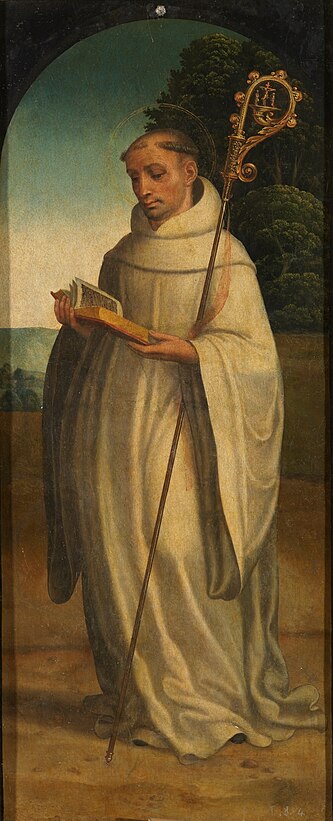
St. Bernard of Clairvaux (1090 – August 21 1153), abbot of Clairvaux, was a highly influential French churchman, theologian and mystic. He was one of the founders of the Cistercian, or Bernardine, monastic order.
About Bernard of Clairvaux
St. Bernard of Clairvaux (1090 – August 21 1153), abbot of Clairvaux, was a highly influential French churchman, theologian and mystic. He was one of the founders of the Cistercian, or Bernardine, monastic order.
View all quotes →