"Salve Mundi Salutare", trans. in Elizabeth Rundle Charles, Te Deum Laudamus (1858); 5th ed. (London: Society for Promoting Christian Knowledge, 1897), pp. 180–181
• Although this poem first appeared in a collection of Bernard's works, it is now usually attributed to Arnulf of Leuven.
• Although this poem first appeared in a collection of Bernard's works, it is now usually attributed to Arnulf of Leuven.
“
Prostrate, see Thy cross I grasp,
And Thy pierced feet I clasp;
Gracious Jesus, spurn me not;
On me, with compassion fraught,
Let Thy glances fall.
From thy cross of agony,
My Beloved, look on me;
Turn me wholly unto Thee;
"Be thou whole," say openly,
"I forgive thee all."
— Bernard of Clairvaux
What It Means
This is a placeholder explanation generated by the low-overhead model. It interprets "Prostrate, see Thy cross I grasp,
And Thy pierced feet I clasp;
Gracious Jesus, spurn me not;
On me, with compassion fraught,
Let Thy glances fall.
From thy cross of agony,
My Beloved, look on me;
Turn me wholly unto Thee;
"Be thou whole," say openly,
"I forgive thee all."" in the context of ""Salve Mundi Salutare", trans. in Elizabeth Rundle Charles, Te Deum Laudamus (1858); 5th ed. (London: Society for Promoting Christian Knowledge, 1897), pp. 180–181
• Although this poem first appeared in a collection of Bernard's works, it is now usually attributed to Arnulf of Leuven." to mean that wisdom is timeless.

Source: Wikiquote: "Bernard of Clairvaux" (Quotes)
The 'What it means' explanation text was generated by Google Gemini Flash (accessed January 18, 2026). https://gemini.google.com/app
Tags
About Bernard of Clairvaux
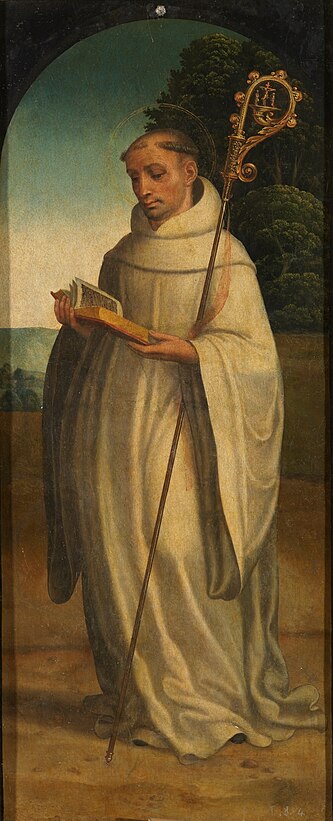
St. Bernard of Clairvaux (1090 – August 21 1153), abbot of Clairvaux, was a highly influential French churchman, theologian and mystic. He was one of the founders of the Cistercian, or Bernardine, monastic order.
About Bernard of Clairvaux
St. Bernard of Clairvaux (1090 – August 21 1153), abbot of Clairvaux, was a highly influential French churchman, theologian and mystic. He was one of the founders of the Cistercian, or Bernardine, monastic order.
View all quotes →