Link Copied!
Basil of Caesarea Quotes (329-379)
Theologian



















About Basil of Caesarea
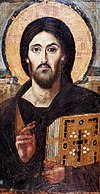
Basil of Caesarea, also called Saint Basil the Great (Greek: Ἅγιος Βασίλειος ὁ Μέγας}}, Ágios Basíleios o Mégas; Coptic: Ⲡⲓⲁⲅⲓⲟⲥ Ⲃⲁⲥⲓⲗⲓⲟⲥ; 329 or 330 – January 1 or 2, 379), was a Byzantine bishop of Caesarea Mazaca in Cappadocia, Asia Minor (modern-day Turkey). He was an influential theologian who supported the Nicene Creed and opposed the heresies of the early Christian church, fighting against both Arianism and the followers of Apollinaris of Laodicea.
Best Basil of Caesarea Quotes
Shortest
Earliest
Explore our curated collection of the most famous and impactful Basil of Caesarea quotes.
“... my dear friend Poverty, nurse of philosophy”

“We thus become temples of God whenever earthly cares cease to interrupt the continuity of our memory of Him.”
“I consider it absurd that we should permit our senses to sate themselves without hindrance with their own material food, but that we should exclude the mind alone from its own particular activity.”
“Let one hour, the same regularly each day, be set aside for food, so that out of the twenty-four hours of day and night, barely shall this one be expended on the body, the ascetic devoting the remainder to the activities of the mind.”
“Ὥστε ὁ ἀγαπῶν τὸν πλησίον ὡς ἑαυτὸν οὐδὲν περισσότερον κέκτηται τοῦ πλησίον·
• Those who love their neighbor as themselves possess nothing more than their neighbor.”
• Those who love their neighbor as themselves possess nothing more than their neighbor.”
“You must give heed unto virtue, O men, which swims forth even with a man who has suffered shipwreck, and, on his coming naked to land, will render him more honoured than the happy Phaeacians.”
“A musician would not willingly consent that his lyre should be out of tune, nor a leader of a chorus that his chorus should not sing in the strictest possible harmony; but shall each individual person be at variance with himself, and shall he exhibit a life not at all in agreement with his words?”
“Purification of the soul ... consists in scorning the pleasures that arise through the senses, in not feasting the eyes on the silly exhibitions of jugglers or on the sight of bodies which gives the spur to sensual pleasure, in not permitting licentious songs to enter through the ears and drench your souls.”
“Οὐδὲν ὑφίσταται τὴν βίαν τοῦ πλούτου· Πάντα ὑποκύπτει τῇ τυραννίδι, πάντα ὑποπτήσσει τὴν δυναστείαν.
• Nothing withstands the influence of wealth. Everything submits to its tyranny, everything cowers at its dominion.”
• Nothing withstands the influence of wealth. Everything submits to its tyranny, everything cowers at its dominion.”
“Oh, God, enlarge within us the sense of fellowship with all living things, our brothers the animals to whom Thou gavest the earth in common with us. We remember with shame that in the past we have exercised the high dominion of man with ruthless cruelty so that the voice of the earth, which should have gone up to thee in song, has been a groan of travail.”

“You should not surrender to these men once for all the rudders of your mind, as if of a ship, and follow them whithersoever they lead; rather, accepting from them only that which is useful, you should know that which ought to be overlooked. What, therefore, these things are, and how we shall distinguish between them, is the lesson which I shall teach you.”
“In general, just as painters in working from models constantly gaze at their exemplar and thus strive to transfer the expression of the original to their own artistry, so too he who is anxious to make himself perfect in all the kinds of virtue must gaze upon the lives of the saints as upon statues, so to speak, that move and act, and must make their excellence his own by imitation.”
“Where is Christ, the King? In heaven, to be sure. Thither it behooves you, soldier of Christ, to direct your course. Forget all earthly delights. A soldier does not build a house; he does not aspire to possession of lands; he does not concern himself with devious, coin-purveying trade. … The soldier enjoys a sustenance provided by the king; he need not furnish his own, nor vex himself in this regard.”
“What, then, shall we do? someone may ask. What else, indeed, than devote ourselves to the care of our souls, keeping all our leisure free from other things. Accordingly, we should not be slaves of the body, except so far as is strictly necessary; but our souls we should supply with all things that are best, through philosophy freeing them, as from a prison, from association with the passions of the body.”
“There is nothing which a prudent man must shun more carefully than living with a view to popularity and giving serious thought to the things esteemed by the multitude, instead of making sound reason his guide of life, so that, even if he must gainsay all men and fall into disrepute and incur danger for the sake of what is honourable, he will in no wise choose to swerve from what has been recognized as right.”

“We must try to keep the mind in tranquility. For just as the eye which constantly shifts its gaze, now turning to the right or to the left, now incessantly peering up and down, cannot see distinctly what lies before it, but the sight must be fixed firmly on the object in view if one would make his vision of it clear, so too man's mind when distracted by his countless worldly cares cannot focus itself distinctly on the truth.”

“βασιλεία τῶν οὐρανῶν ἐντὸς ὑμῶν ἐστί. περὶ δὲ τὸν ἐντὸς ἄνθρωπον οὐδὲν ἕτερον ἢ θεωρία συνίσταται. θεωρία ἂν εἴη λοιπὸν ἡ βασιλεία τῶν οὐρανῶν.
• “The kingdom of heaven is within you.” And concerning the inner man, it consists of nothing but contemplation. Therefore the kingdom of heaven must be contemplation.”
• “The kingdom of heaven is within you.” And concerning the inner man, it consists of nothing but contemplation. Therefore the kingdom of heaven must be contemplation.”
“ἀλλὰ μὴν φαίνῃ ἔχων κτήματα πολλά. Πόθεν ταῦτα; ἢ δῆλον ὅτι τὴν οἰκείαν ἀπόλαυσιν προτι μοτέραν τῆς τῶν πολλῶν παραμυθίας ποιούμενος. Ὅσον οὖν πλεονάζεις τῷ πλούτῳ, τοσοῦτον ἐλλείπεις τῇ ἀγάπῃ.
• You seem to have great possessions! How else can this be, but that you have preferred your own enjoyment to the consolation of the many? For the more you abound in wealth, the more you lack in love.”
• You seem to have great possessions! How else can this be, but that you have preferred your own enjoyment to the consolation of the many? For the more you abound in wealth, the more you lack in love.”

“νοῦς μὲν γὰρ μὴ σκεδαννύμενος ἐπὶ τὰ ἔξω μηδὲ ὑπὸ τῶν αἰσθητηρίων ἐπὶ τὸν κόσμον διαχεόμενος ἐπάνεισι μὲν πρὸς ἑαυτόν, δἰ ἑαυτοῦ δὲ πρὸς τὴν περὶ Θεοῦ ἔννοιαν ἀναβαίνει.
• When the mind is not dissipated upon extraneous things, nor diffused over the world about us through the senses, it withdraws within itself, and of its own accord ascends to the contemplation of God.”
• When the mind is not dissipated upon extraneous things, nor diffused over the world about us through the senses, it withdraws within itself, and of its own accord ascends to the contemplation of God.”
“Who are the greedy? Those who are not satisfied with what suffices for their own needs. Who are the robbers? Those who take for themselves what rightfully belongs to everyone. And you, are you not greedy? Are you not a robber? The things you received in trust as a stewardship, have you not appropriated them for yourself? Is not the person who strips another of clothing called a thief? And those who do not clothe the naked when they have the power to do so, should they not be called the same? The bread you are holding back is for the hungry, the clothes you keep put away are for the naked, the shoes that are rotting away with disuse are for those who have none, the silver you keep buried in the earth is for the needy. You are thus guilty of injustice toward as many as you might have aided, and did not.”
“Ἀλλ' οὐ γὰρ ἱματίων ἕνεκεν οὐδὲ τροφῶν ὁ πλοῦτός ἐστι τοῖς πολλοῖς περισπούδαστος, ἀλλά τις ἐπινενόηται μεθοδεία τῷ διαβόλῳ, μυρίας τοῖς πλουσίοις δαπάνης ἀφορμὰς ὑποβάλλουσα, ὥστε τὰ περιττὰ καὶ ἄχρηστα ὡς ἀναγκαῖα σπου δάζεσθαι, μηδὲν δὲ αὐτοῖς ἐξαρκεῖν πρὸς τὴν τῶν ἀναλωμάτων ἐπίνοιαν.
• Some device has been concocted by the devil, suggesting innumerable spending opportunities to the wealthy, so that they pursue unnecessary and worthless things as if they were indispensable, and no amount is sufficient for the expenditures they contrive.”
• Some device has been concocted by the devil, suggesting innumerable spending opportunities to the wealthy, so that they pursue unnecessary and worthless things as if they were indispensable, and no amount is sufficient for the expenditures they contrive.”
“Φθονεῖς μάλιστα τοὺς ἀνθρώπους γιὰ τὴν ἀπόλαυση τῶν ἀγαθῶν, καὶ δημιουργεῖς μέσα στὴν ψυχή σου πονηροὺς συλλογισμούς, φροντίζοντας ὄχι πῶς νὰ χορηγήσεις στὸν καθένα ὅ, τι τοῦ χρειάζεται, ἀλλὰ πῶς θὰ τὰ ἀποθηκεύσεις ὅλα, καὶ ἔτσι θὰ ἀποστερήσεις ὅλους ἀπὸ τὴν ὠφέλεια ποὺ θὰ εἶχαν ἀπὸ αὐτά.
• You begrudge your fellow human beings what you yourself enjoy; taking wicked counsel in your soul, you consider not how you might distribute to others according to their needs, but rather how, after having received so many good things, you might rob others.”
• You begrudge your fellow human beings what you yourself enjoy; taking wicked counsel in your soul, you consider not how you might distribute to others according to their needs, but rather how, after having received so many good things, you might rob others.”
“To be a dandy and get the name of being one ought, I maintain, to be considered by persons so inclined just as disgraceful as to keep company with harlots or to seduce other men’s wives. For what difference should it make, at least to a man of sense, whether he is clothed in a costly robe or wears a cheap workman’s cloak, so long as what he has on gives adequate protection against the cold of winter and the heat of summer? And in all other matters likewise, one ought not to be furnished out more elaborately than need requires, nor to be more solicitous for the body than is good for the soul. For it is no less a reproach to a man, who is truly worthy of that appellation, to be a dandy and a pamperer of the body than to be ignoble in his attitude towards any other vice. For to take all manner of pains that his body may be as beautiful as possible is not the mark of a man who either knows himself or understands that wise precept: “That which is seen is not the man, but there is need of a certain higher wisdom which will enable each of us, whoever he is, to recognize himself.””

Basil of Caesarea Quotes by Topic
Find exactly what you are looking for by browsing this categorized list of Basil of Caesarea quotes by topic.
Basil of Caesarea on Religious views on capitalism 3 quotes
“You begrudge your fellow human beings what you yourself enjoy; taking wicked counsel in your soul, you consider not how you might distribute to others according to their needs, but rather how, after having received so many good things, you might rob others.”

Basil of Caesarea on Wealth 3 quotes
“Tell me, what is your own? What did you bring into this life? From where did you receive it? It is as if someone were to take the first seat in the theater, then bar everyone else from attending, so that one person alone enjoys what is offered for the benefit of all in common — this is what the rich do. They seize common goods before others have the opportunity, then claim them as their own by right of preemption. For if we all took only what was necessary to satisfy our own needs, giving the rest to those who lack, no one would be rich, no one would be poor, and no one would be in need.”
Basil of Caesarea on God 2 quotes
“We thus become temples of God whenever earthly cares cease to interrupt the continuity of our memory of Him.”

Basil of Caesarea on Consumption (economics) 2 quotes
“If we all took only what was necessary to satisfy our own needs, giving the rest to those who lack, no one would be rich, no one would be poor, and no one would be in need.”

Basil of Caesarea on Senses 2 quotes
“When the mind is not dissipated upon extraneous things, nor diffused over the world about us through the senses, it withdraws within itself, and of its own accord ascends to the contemplation of God.”

Basil of Caesarea on Entertainment 2 quotes
“When the mind is not dissipated upon extraneous things, nor diffused over the world about us through the senses, it withdraws within itself, and of its own accord ascends to the contemplation of God.”

Basil of Caesarea on Injustice 2 quotes
“The bread you are holding back is for the hungry, the clothes you keep put away are for the naked, the shoes that are rotting away with disuse are for those who have none, the silver you keep buried in the earth is for the needy. You are thus guilty of injustice toward as many as you might have aided, and did not.”

Basil of Caesarea on Charity 2 quotes
“"But whom do I treat unjustly," you say, "by keeping what is my own?" Tell me, what is your own? What did you bring into this life? From where did you receive it? It is as if someone were to take the first seat in the theater, then bar everyone else from attending, so that one person alone enjoys what is offered for the benefit of all in common — this is what the rich do. They seize common goods before others have the opportunity, then claim them as their own by right of preemption. For if we all took only what was necessary to satisfy our own needs, giving the rest to those who lack, no one would be rich, no one would be poor, and no one would be in need.”
Basil of Caesarea on Property 2 quotes
“"But whom do I treat unjustly," you say, "by keeping what is my own?" Tell me, what is your own? What did you bring into this life? From where did you receive it? It is as if someone were to take the first seat in the theater, then bar everyone else from attending, so that one person alone enjoys what is offered for the benefit of all in common — this is what the rich do. They seize common goods before others have the opportunity, then claim them as their own by right of preemption. For if we all took only what was necessary to satisfy our own needs, giving the rest to those who lack, no one would be rich, no one would be poor, and no one would be in need.”

Basil of Caesarea on Christian views on poverty and wealth 2 quotes
“"But whom do I treat unjustly," you say, "by keeping what is my own?" Tell me, what is your own? What did you bring into this life? From where did you receive it? It is as if someone were to take the first seat in the theater, then bar everyone else from attending, so that one person alone enjoys what is offered for the benefit of all in common — this is what the rich do. They seize common goods before others have the opportunity, then claim them as their own by right of preemption. For if we all took only what was necessary to satisfy our own needs, giving the rest to those who lack, no one would be rich, no one would be poor, and no one would be in need.”

Basil of Caesarea on Discipline
“The discipline of piety nourishes the soul with divine thoughts.”
What Basil of Caesarea Said About Others
Discover personal opinions Basil of Caesarea shared regarding contemporaries.
Basil of Caesarea on Diogenes of Sinope
“As for Diogenes, Basil never ceased admiring him, the philosopher who was so set upon being content with nothing but the gifts of nature that he even threw away his drinking-cup, after he had learned from a boy how to bend over and drink from the hollow of his hands.”

Basil of Caesarea on Saints
“Just as painters in working from models constantly gaze at their exemplar and thus strive to transfer the expression of the original to their own artistry, so too he who is anxious to make himself perfect in all the kinds of virtue must gaze upon the lives of the saints as upon statues, so to speak, that move and act, and must make their excellence his own by imitation.”
About Basil of Caesarea
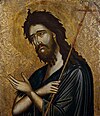
Basil of Caesarea, also called Saint Basil the Great (Greek: Ἅγιος Βασίλειος ὁ Μέγας}}, Ágios Basíleios o Mégas; Coptic: Ⲡⲓⲁⲅⲓⲟⲥ Ⲃⲁⲥⲓⲗⲓⲟⲥ; 329 or 330 – January 1 or 2, 379), was a Byzantine bishop of Caesarea Mazaca in Cappadocia, Asia Minor (modern-day Turkey). He was an influential theologian who supported the Nicene Creed and opposed the heresies of the early Christian church, fighting against both Arianism and the followers of Apollinaris of Laodicea.