p. 91
“
I consider it absurd that we should permit our senses to sate themselves without hindrance with their own material food, but that we should exclude the mind alone from its own particular activity.
— Basil of Caesarea
What It Means
This is a placeholder explanation generated by the low-overhead model. It interprets "I consider it absurd that we should permit our senses to sate themselves without hindrance with their own material food, but that we should exclude the mind alone from its own particular activity." in the context of "p. 91" to mean that wisdom is timeless.

Source: Wikiquote: "Basil of Caesarea" (Quotes, Letters: As translated by R. Deferrari (1926))
The 'What it means' explanation text was generated by Google Gemini Flash (accessed January 18, 2026). https://gemini.google.com/app
Tags
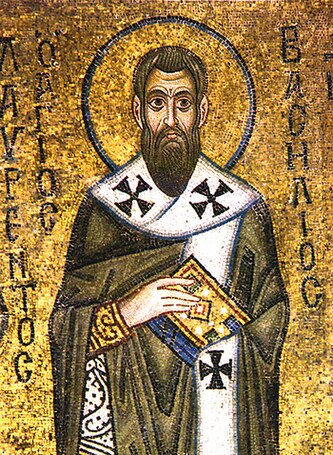
About Basil of Caesarea
Basil of Caesarea, also called Saint Basil the Great (Greek: Ἅγιος Βασίλειος ὁ Μέγας}}, Ágios Basíleios o Mégas; Coptic: Ⲡⲓⲁⲅⲓⲟⲥ Ⲃⲁⲥⲓⲗⲓⲟⲥ; 329 or 330 – January 1 or 2, 379), was a Byzantine bishop of Caesarea Mazaca in Cappadocia, Asia Minor (modern-day Turkey). He was an influential theologian who supported the Nicene Creed and opposed the heresies of the early Christian church, fighting against both Arianism and the followers of Apollinaris of Laodicea.
View all quotes →