Link Copied!
Azar Nafisi Quotes (1955-)
Writer, King


About Azar Nafisi
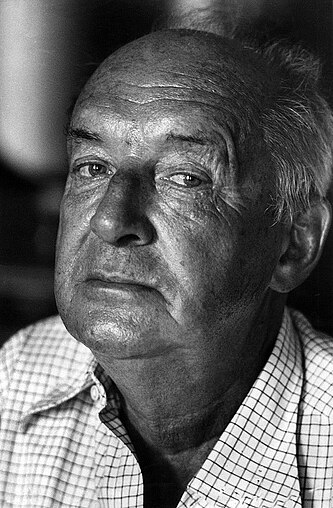
Azar Nafisi, Ph.D. (Persian: آذر نفیسی) (born December 1, 1955) is an Iranian professor and writer who currently resides in the United States.
Best Azar Nafisi Quotes
Shortest
Earliest
Explore our curated collection of the most famous and impactful Azar Nafisi quotes.

“This, I believe, is how the villain in modern fiction is born: a creature without compassion, without empathy.”

“Every great work of art ... is a celebration, an act of insubordination against the betrayals, horrors and infidelities of life.”

“Do not, under any circumstances belittle a works of fiction by trying to turn it into a carbon copy of real life; what we search for in fiction is not so much reality but the epiphany of truth.”
“A great novel heightens your senses and sensitivity to the complexities of life and of individuals, and prevents you from the self-righteousness that sees morality in fixed formulas about good and evil.”
“A good novel is one that shows the complexity of individuals, and creates enough space for all these characters to have a voice; in this way a novel is called democratic — not that it advocates democracy but that by nature it is so.”

“Dreams, Mr. Nyazi, are perfect ideals, complete in themselves. How can you impose them on a constantly changing, imperfect, incomplete reality? You would become a Humbert, destroying the object of your dream; or a Gatsby, destroying yourself.”
“What we in Iran had in common with Fitzgerald was this dream that became our obsession and took over our reality, this terrible, beautiful dream, impossible in its actualization, for which any amount of violence might be justified or forgiven.”
“As I trace the route to his apartment, the twists and turns, and pass once more the old tree opposite his house, I am struck by a sudden thought: memories have ways of becoming independent of the reality they evoke. They can soften us against those we were deeply hurt by or they can make us resent those we once accepted and loved unconditionally.”
“A novel is not an allegory ... It is the sensual experience of another world. If you don't enter that world, hold your breath with the characters and become involved in their destiny, you won't be able to empathize, and empathy is at the heart of the novel. This is how you read a novel: you inhale the experience. So start breathing.”
“It is because these characters depend to such a high degree on their own sense of integrity that for them, victory has nothing to do with happiness. It has more to do with a settling within oneself, a movement inward that makes them whole. Their reward is not happiness — a word that is central in Austen's novels but is seldom used in James's universe. What James's characters gain is self-respect.”

“Azin has bent forward, her long earings playing hide-and-seek in the ringlets of her hair. "We need to be honest with ourselves," she said. I mean, that is the first condition. As women, do we have the same rights as men to enjoy sex? How many of us would say yes, we do have a right, we have an equal right to enjoy sex, and if our husbands don't satisfy us, then we have a right to seek satisfaction elsewhere." p. 52.”
“I think some of the greatest writing has been also about writers like Conrad or Nabokov, who have illuminated and given us fresh views about the new countries they adopted...So it is not just that other country that comes to us. This new country is also nourished because language is also a home. And when you change that home and come to a new thing, you'd love to play with it. And that's what I love about English, I can play with it.”

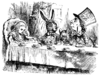
“I explained that most great works of the imagination were meant to make you feel like a stranger in your own home. The best fiction always forced us to question what we took for granted. It questioned traditions and expectations when they seemed too immutable. I told my students I wanted them in their readings to consider in what ways these works unsettled them, made them a little uneasy, made them look around and consider the world, like Alice in Wonderland, through different eyes.”
“Yes, the novel is about concrete living relationships, a man's love for a woman, a woman's betrayal of that love. But it is also about wealth, its great attraction as well as its destructive power, the carelessness that comes with it, and, yes, it is about the American dream, a dream of power and wealth, the beguiling light of Daisy's house and the port of entry to America. It is also about loss, about the perishability of dreams once they are transformed into hard reality. It is the longing, its immateriality, that makes the dream pure.”

“On the one hand, the ruling Islamic regime has succeeded in completely repressing Iranian women. Women are forbidden to go out in public unless they are covered by clothing that conceals everything but their hands and faces. At all government institutions, universities, and airports, there are separate entrances for women, where they are searched for lipstick and other weapons of mass destruction. ... Yet, while these measures are meant to render women invisible and powerless, they are paradoxically making women tremendously visible and powerful.”

Azar Nafisi Quotes by Topic
Find exactly what you are looking for by browsing this categorized list of Azar Nafisi quotes by topic.
Azar Nafisi on Betrayal
“Every great work of art … is a celebration, an act of insubordination against the betrayals, horrors and infidelities of life.”

What Azar Nafisi Said About Others
Discover personal opinions Azar Nafisi shared regarding contemporaries.
Azar Nafisi on Joseph Conrad
“I think some of the greatest writing has been also about writers like Conrad or Nabokov, who have illuminated and given us fresh views about the new countries they adopted.”

Azar Nafisi on Vladimir Nabokov
“I think some of the greatest writing has been also about writers like Conrad or Nabokov, who have illuminated and given us fresh views about the new countries they adopted. Nabokov's best work was about America, and it was written during his period of exile in this country and later in Switzerland. And I think he could see this America through the eyes of his Russia. And even Russian language glimmers through those amazingly light field scenes in Lolita or his other works. So it is not just that other country that comes to us. This new country is also nourished because language is also a home. And when you change that home and come to a new thing, you'd love to play with it.”

About Azar Nafisi
Azar Nafisi, Ph.D. (Persian: آذر نفیسی) (born December 1, 1955) is an Iranian professor and writer who currently resides in the United States.