Link Copied!
Arnold Schoenberg Quotes (1874-1951)
Writer, Poet, Artist
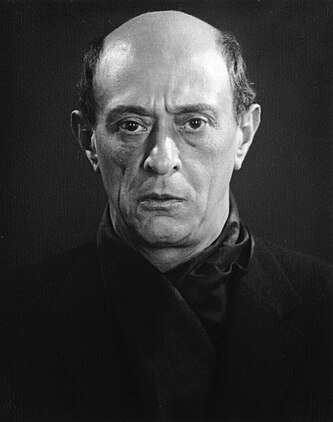
About Arnold Schoenberg
Arnold Franz Walter Schoenberg originally Schönberg (13 September 1874 – 13 July 1951) was an Austrian-born composer, music theorist, teacher, writer, and painter. He is widely considered one of the most influential composers of the 20th century. He was associated with the expressionist movement in German poetry and art, and leader of the Second Viennese School. As a Jewish composer, Schoenberg was targeted by the Nazi Party, which labeled his works as degenerate music and forbade them from being published. He emigrated to the United States in 1933, becoming an American citizen in 1941.
Best Arnold Schoenberg Quotes
Shortest
Earliest
Explore our curated collection of the most famous and impactful Arnold Schoenberg quotes.

“"My works are 12-tone compositions, not 12-tone compositions”
“I am delighted to add another unplayable work to the repertoire.”
“I was never revolutionary. The only revolutionary in our time was Strauss!"”

“Now we will throw these mediocre kitsch-mongers into slavery, and teach them to venerate the German spirit and to worship the German God.”
“I believe that he (Strauss) will remain one of the characteristic and outstanding figures in musical history. Works like Salome, Elektra and Intermezzo, and others will not perish.”
“An artistic impression is substantially the resultant of two components. One what the work of art gives the onlooker — the other, what he is capable of giving to the work of art.”

“I have just read your book [On the Spiritual in Art] from cover to cover, and I will read it once more. I find it pleasing to an extraordinary degree, because we agree on nearly all of the main issues..”
“Market value is irrelevant to intrinsic value. … Unqualified judgment can at most claim to decide the market-value — a value that can be in inverse proportion to the intrinsic value.”
“If music is frozen architecture, then the potpourri is frozen coffee-table gossip... Potpourri is the art of adding apples to pears…”
“There is a great Man living in this country — a composer. He has solved the problem how to preserve one's self and to learn. He responds to negligence by contempt. He is not forced to accept praise or blame. His name is Ives.”
“I see the work as a whole first. Then I compose the details. In working out, I always lose something. This cannot be avoided. There is always some loss when we materialize. But there is compensating gain in vitality.”
“I find above all that the expression, "atonal music," is most unfortunate — it is on a par with calling flying "the art of not falling," or swimming "the art of not drowning."”
“Although our "gentle air" cannot improve the way hate and envy look, it does seem not to encourage firmness and decision. All is compromise; caution and refinement are everywhere. Everything has to "make a good impression" — whether or not it is any good: the impression is the main thing.”

Arnold Schoenberg Quotes by Topic
Find exactly what you are looking for by browsing this categorized list of Arnold Schoenberg quotes by topic.
Arnold Schoenberg on Atonality
“I find above all that the expression, 'atonal music,' is most unfortunate--it is on a par with calling flying 'the art of not falling,' or swimming 'the art of not drowning.'”
Arnold Schoenberg on Tonality
“[Tonality is] the art of combining tones in such successions and such harmonies or successions of harmonies, that the relation of all events to a fundamental tone is made possible.”
Arnold Schoenberg on Neglect
“There is a great Man living in this country — a composer. He has solved the problem how to preserve one's self and to learn. He responds to negligence by contempt. He is not forced to accept praise or blame. His name is Ives.”
Arnold Schoenberg on Caution
“Although our "gentle air" cannot improve the way hate and envy look, it does seem not to encourage firmness and decision. All is compromise; caution and refinement are everywhere. Everything has to "make a good impression" — whether or not it is any good: the impression is the main thing.'''”
What Arnold Schoenberg Said About Others
Discover personal opinions Arnold Schoenberg shared regarding contemporaries.
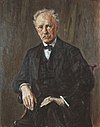
Arnold Schoenberg on Richard Strauss 2 quotes
“I was never revolutionary. The only revolutionary in our time was Strauss!”
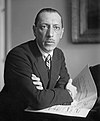
Arnold Schoenberg on Igor Stravinsky
“Now we will throw these mediocre kitschmongers into slavery, and teach them to venerate the German spirit and to worship the German God.”
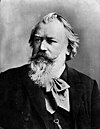
Arnold Schoenberg on Johannes Brahms
“Applying here Brahms' contributions to an unrestricted musical language will enable the opera composer to overcome the metrical handicaps of his libretto's prose; the production of melodies and other structural elements will not depend on the versification, on the meter, or on the absence of possibilities for repetitions. There will be no expansion necessary for mere formal reasons and changes of mood or character will not endanger the organization. The singer will be granted the opportunity to sing and to be heard; he will not be forced to recite on a single note, but will be offered melodic lines of interest; in a word, he will not be merely the one who pronounces the words in order to make the action understandable. He will be a singing instrument of the performance. It seems-if this is not wishful thinking-that some progress has already been made in this direction, some progress in the direction toward an unrestricted musical language which was inaugurated by Brahms the Progressive.”
Quotes About Arnold Schoenberg
Gain deeper perspective through quotes about Arnold Schoenberg from others.
Anonymous reviewer on Arnold Schoenberg
“A regular Friday audience, 90 percent feminine and 100 percent well-bred, sat stoically yesterday through thirty minutes of the most cacophonous world premiere ever heard here - the first performance anywhere of a new Violin Concerto by Arnold Schoenberg. Yesterday's piece combines the best sound effects of a hen yard at feeding time, a brisk morning in Chinatown and practice hour at a busy music conservatory. The effect on the vast majority of hearers is that of a lecture on the fourth dimension delivered in Chinese.”
Wassily Kandinsky on Arnold Schoenberg 3 quotes
“In your works, you have realized what I, albeit in uncertain form, have so greatly longed for in music. The independent progress through their own destinies, the independent life of the individual voices in your compositions, is exactly what I am trying to find in my painting.”

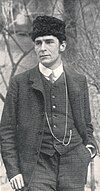
Franz Marc on Arnold Schoenberg
“Can you imagine a music in which tonality (that is, the adherence to any key) is completely suspended? I was constantly reminded of Kandinsky's large composition which also permits no trace of tonality.. ..and also of Igor Kandinsky's 'jumping spots' in hearing this music [of Schoenberg], which allows each tone sounded to stand on its own (a kind of white canvas between the spots of color). Schoenberg proceeds from the principle that the concepts of consonance and dissonance do not exist at all. A so-called dissonance is only a more remote consonance – an idea which now occupies me constantly while painting.. - note 6”
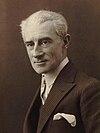
Maurice Ravel on Arnold Schoenberg
“In fact, the influence of Schoenberg may be overwhelming on his followers, but the significance of his art is to be identified with influences of a more subtle kind - not the system, but the aesthetic, of his art. I am quite conscious of the fact that my Chansons madécasses are in no way Schoenbergian, but I do not know whether I ever should have been able to write them had Schoenberg never written.”
Schoenberg on Arnold Schoenberg
“Richard Strauss on Schoenberg, written by Schoenberg himself: "Dear Sir, I regret that I am unable to accept your invitation to write something for Richard Strauss's fiftieth birthday. In a letter to Frau Mahler (in connection with Mahler Memorial Fund) Herr Strauss wrote about me as follows: 'The only person who can help poor Schoenberg now is a psychiatrist ...". "I think he'd do better to shovel snow instead of scribbling on music-paper...'”
About Arnold Schoenberg
Arnold Franz Walter Schoenberg originally Schönberg (13 September 1874 – 13 July 1951) was an Austrian-born composer, music theorist, teacher, writer, and painter. He is widely considered one of the most influential composers of the 20th century. He was associated with the expressionist movement in German poetry and art, and leader of the Second Viennese School. As a Jewish composer, Schoenberg was targeted by the Nazi Party, which labeled his works as degenerate music and forbade them from being published. He emigrated to the United States in 1933, becoming an American citizen in 1941.