Link Copied!
Angela Davis Quotes (1944-)
Philosopher, Author, Activist


















About Angela Davis
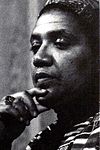
Angela Yvonne Davis (born January 26, 1944) is an American political activist, philosopher, academic, Marxist feminist, author, professor emerita at the University of California, Santa Cruz and a founding member of the Committees of Correspondence for Democracy and Socialism (CCDS).
Best Angela Davis Quotes
Shortest
Earliest
Explore our curated collection of the most famous and impactful Angela Davis quotes.

“past struggles cannot correct current injustices (2003)”
“Islamophobic violence is nurtured by histories of anti-black racist violence.”

“As we approach the millennium, we need to demystify the notion that this country is monolingual.”


“Particularly in the United States, race has always played a central role in constructing presumptions of criminality.”
“Birth control - individual choice, safe contraceptive methods, as well as abortions when necessary - is a fundamental prerequisite for the emancipation of women.”

“The criminalization of black and Latina women includes persisting images of hypersexuality that serve to justify sexual assaults against them both in and outside of prison.”
“It should be remembered that the ancestors of many of today's most ardent liberals could not have imagined life without slavery, life without lynching, life without segregation.”

“Because we are so accustomed to talking about race in terms of black and white, we often fail to recognize and contest expressions of racism that target people of color who are not black.”

“Despite the important gains of antiracist social movements over the last half century, racism hides from view within institutional structures, and its most reliable refuge is the prison system.”
“Although men constitute the vast majority of prisoners in the world, important aspects of the operation of state punishment are missed if it is assumed that women are marginal and thus undeserving of attention.”

“Nat Turner and John Brown were political prisoners in their time. The acts for which they were charged and subsequently hanged, were the practical extensions of their profound commitment to the abolition of slavery.”
“Judged by the evolving nineteenth-century ideology of femininity, which emphasized women’s roles as nurturing mothers and gentle companions and housekeepers for their husbands, Black women were practically anomalies.”
“Where cultural representations do not reach out beyond themselves, there is the danger that they will function as the surrogates for activism, that they will constitute both the beginning and the end of political practice.”

“It is both humiliating and humbling to discover that a single generation after the events that constructed me as a public personality, I am remembered as a hairdo.”

“Repression is the response of an increasingly desperate imperialist ruling clique to contain an otherwise uncontrollable and growing popular disaffection leading ultimately, we think, to the revolutionary transformation of society.”
“The American judicial system is bankrupt. In so far as black people are concerned, it has proven itself to be one more arm of a system carrying out the systematic oppression of our people. We are the victims, not the recipients of justice.”

“The prison has become a black hole inti which the detritus of contemporary capitalism is deposited. Mass imprisonment generates profits as it devours social wealth, and thus it tends to reproduce the very conditions that lead people to prison”

“While jails and prisons have been dominant institutions for the control of men, mental institutions have served a similar purpose for women. That is, deviant men have been constructed as criminal, while deviant women have been constructed as insane.”
“It was assumed within birth control circles that poor women, Black and immigrant alike, had a 'moral obligation to restrict the size of their families.' What was demanded as a 'right' for the privileged came to be interpreted as a 'duty' for the poor.”
“Progressive art can assist people to learn not only about the objective forces at work in the society in which they live, but also about the intensely social character of their interior lives. Ultimately, it can propel people toward social emancipation.”
“The reason I am a communist is because I believe in a total revolution which is going to overthrow the capitalist control of the economy, which will seize the wealth from all of the giant corporations that exploit and control the lives of all working people.”

Angela Davis Quotes by Topic
Find exactly what you are looking for by browsing this categorized list of Angela Davis quotes by topic.
Angela Davis on Black Lives Matter 3 quotes
“When someone like Roger Goodell says “Black lives matter,” even though he did not mention Colin Kaepernick, and even though he may have — he probably did not really mean it, what that means is that the NFL recognizes that it has to begin a new process, that there is a further expansion of popular consciousness.”

Angela Davis on Emancipation Proclamation 2 quotes
“There is something for which Lincoln should be applauded, I believe. And it is that he was shrewd enough to know that the only hope of winning the Civil War resided in creating the opportunity to fight for there own freedom, and that was the significance of the Emancipation Proclamation.”

Angela Davis on Gaza war
Angela Davis on Islamophobia
“Islamophobic violence is nurtured by histories of anti-black racist violence.”

Angela Davis on Art
“Progressive art can assist people to learn not only about the objective forces at work in the society in which they live, but also about the intensely social character of their interior lives. Ultimately, it can propel people toward social emancipation.”

Angela Davis on Brazil
“I've been actually visiting Brazil frequently for the last period, and Brazil is now on the cusp of some major breakthroughs with respect to racism. I think that they have the opportunity to choose whether to follow the example of the US and South Africa”

Angela Davis on Veganism
Angela Davis on Slavery
“Expediency governed the slave-holders' posture toward female slaves: when it was profitable to exploit them as if they were men, they were regarded, in effect, as genderless, but when they could be exploited, punished and repressed in ways suited only for women, they were locked into their exclusively female roles.”

Angela Davis on Defund the police
“The call to defund the police is, I think, an abolitionist demand, but it reflects only one aspect of the process represented by the demand. Defunding the police is not simply about withdrawing funding for law enforcement and doing nothing else......It’s about learning that safety, safeguarded by violence, is not really safety.”

Angela Davis on Mental health
“The call to defund the police is, I think... about shifting public funds to new services and new institutions — mental health counselors, who can respond to people who are in crisis without arms... It’s about building anew... about rethinking the kind of future we want, the social future, the economic future, the political future.”

Angela Davis on North Carolina
“One of the things I did in North Carolina in the seventies was to battle with the Klan because the Ku Klux Klan really controlled this state. I was telling some people during dinner that I can remember when there were big billboards of the Knights of the Ku Klux Klan welcoming visitors to the various cities and towns of North Carolina. And members of the Klan appeared publicly in their garb.”

Angela Davis on Terrorism
“When I think about the violence of my own youth in Birmingham, Alabama, where bombs were planted repeatedly and houses were destroyed and churches were destroyed and lives were destroyed and we have yet to refer to those acts as the acts of terrorists. You know terrorism which is represented as external, as outside, is very much a domestic phenomenon. Terrorism very much shaped the history of the United States of America.”

What Angela Davis Said About Others
Discover personal opinions Angela Davis shared regarding contemporaries.
Angela Davis on Ericka Huggins 2 quotes
“A few years ago, I had the opportunity to hear Ericka Huggins-our friendship has now surpassed the half-century mark-speak at a conference on restorative justice in Toledo, Ohio, organized in part by my sister, Fania, who has worked as a practitioner of restorative justice for many years. When Ericka spoke of her own incarceration as a gift rather than an injury or deprivation, I thought to myself, "Yes, precisely. This is what I have been trying to say all along."”

Angela Davis on This Bridge Called My Back 2 quotes
“My own book Women, Race and Class was one of many that were published during that era, including, to name only a few, This Bridge Called My Back, edited by Gloria Anzaldúa and Cherrie Moraga, the work of bell hooks and Michelle Wallace, and the anthology All the Women Are White, All the Blacks Are Men, but Some of Us Are Brave: Black Women's Studies. So behind this concept of intersectionality is a rich history of struggle. A history of conversations among activists within movement formations, and with and among academics as well.”

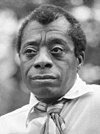
Angela Davis on James Baldwin 2 quotes
“The one thing that did excite me during that freshman year was the news that James Baldwin was scheduled to deliver a series of lectures on literature. Since I had first discovered Go Tell It on the Mountain, I read all of Baldwin's writings I could find. When he came to Brandeis, I made sure I captured a front seat. But he had hardly gotten into his lecturing when the news broke that the world was teetering on the edge of the abyss of World War III. The Cuban Missile Crisis had erupted. James Baldwin announced that he could not continue his lectures without contradicting his moral conscience and abdicating his political responsibilities.”
Angela Davis on Grace Lee Boggs
“Grace has made more contributions to the black struggle than most black people have.”

Angela Davis on Jane Fonda
“Jane Fonda, who had eagerly agreed to participate in the rally, was on hand to make the appeal for funds.”

Angela Davis on Vladimir Lenin
“During that depressing time, I reread Lenin's What Is to Be Done?, and it helped me to clarify my own predicament.”

Angela Davis on J. Edgar Hoover
“Individual memories are not nearly as long as the memories of institutions, and especially repressive institutions. The FBI is still haunted by the ghost of J. Edgar Hoover.”

Angela Davis on Nat Turner
“Nat Turner and John Brown were political prisoners in their time. The acts for which they were charged and subsequently hanged, were the practical extensions of their profound commitment to the abolition of slavery.”

Angela Davis on John Brown (abolitionist)
“Nat Turner and John Brown were political prisoners in their time. The acts for which they were charged and subsequently hanged, were the practical extensions of their profound commitment to the abolition of slavery.”

Angela Davis on Margaret Sanger
“While I would never argue that birth control or abortion rights constitute genocide, I have to take into consideration how sterilization has been imposed on poor people, especially people of color, and that someone like Margaret Sanger argued [birth control] was a privilege of affluent women but a duty for poorer women.”

Angela Davis on F. W. de Klerk
“I think movements can indeed force reluctant politicians to take steps. If one looks at the example of South Africa, who would have ever believed that de Klerk would take the position he ended up taking? That was because of the movements within South Africa, the South African movement outside of South Africa, and also the global solidarity campaign.”

Angela Davis on Chandra Talpade Mohanty
“The most important message, which we have also learned from the work of Chandra Mohanty and Jacqui Alexander, is that we can never assume that the category “women” equally represents all women. [There are] hierarchies of race and class, and now that we have begun to challenge the binary assumptions behind gender, we can say hierarchies of gender as well. Where, for example, does a transgender woman figure into the hierarchy?”

Quotes About Angela Davis
Gain deeper perspective through quotes about Angela Davis from others.
Bettina Aptheker on Angela Davis 2 quotes
“It was my experience in the Angela Davis trial that propelled me into a study of Afro-American women's history and, ultimately, into women's studies.”

Adrienne Maree Brown on Angela Davis
“I got to be in a conversation with Angela Davis, and she was like, Yeah, we dealt with a lot of the same stuff, but now y’all know how to take care of each other and take of yourselves. And there’s just more tools.”

Marilyn Chin on Angela Davis
“I learned a lot from the black arts movement. I loved reading black feminist thinkers on my own (outside of academia)—Audre Lorde, Barbara Smith, Angela Davis, June Jordan, bell hooks, etc.”

Ruth Wilson Gilmore on Angela Davis
“if people know about a world historical figure like Angela Y. Davis, it’s because somehow in spite of the dramatic story of her coming to national prominence, arrest, FBI most wanted. And in spite of the actual things that she’s written and said over time, that somehow all Angela Y. Davis was trying to do was get a spot in the university, or become something that would reproduce rather than interrupt the kinds of social relations that made her and her parents radical in the first place. So there’s that. So if we draw forward from when 1970, ’71, when, again, Angela was suddenly catapulted to the global stage and was, as she said, says herself, “Saved by the people.””

Amy Goodman on Angela Davis
“For more on this historic moment, we are spending the hour with the legendary activist and scholar Angela Davis, professor emerita at the University of California, Santa Cruz. For half a century, Angela Davis has been one of the most influential activists and intellectuals in the United States, an icon of the Black liberation movement. Angela Davis’s work around issues of gender, race, class and prisons has influenced critical thought and social movements across several generations. She’s a leading advocate for prison abolition, a position informed by her own experience as a prisoner and a fugitive on the FBI’s top 10 wanted list more than 40 years ago. Once caught, she faced the death penalty in California. After being acquitted on all charges, she’s spent her life fighting to change the criminal justice system.”

Ollie Harrington on Angela Davis
“People, especially young white people, in America and in Europe are aware of what's happening in the ghetto even if their fathers maintain an obstinate ignorance. All over Europe I've seen young people who've studied the methods of the Black Liberation movement, applying those same methods to the job of forcing a bit of humanity into their profit-crazed and economically teetering countries. Of course it's got its amusing sides too and very often one is forced to rush somewhere for a drink after he's seen a group of the blond German youths with hair frizzled and worn in Afros. The parents of these kids have all picked the portrait of the President of the United States as a symbol of what was good in America...But I've been in no part of Europe where there wasn't the picture of a good American--and it was always Angela Davis!”

Sharon Lynette Jones Introduction on Angela Davis
“Angela Davis has profoundly influenced the discourses on social justice in relationship to race, gender, and class nationally and internationally through her writings and her role in organizations such as the Communist Party and the Student Nonviolent Coordinating Committee (SNCC) in the past, and her more recent activism through the prison abolitionist organization Critical Resistance, along with being an honorary co-chair for the Women's March during 2017.”
Mariame Kaba on Angela Davis 4 quotes
“As Angela Y. Davis points out, "we have to be consistent" in our analysis and not respond to violence in a way that compounds it. We need to use our radical imaginations to come up with new structures of accountability beyond the system we are working to dismantle.”
Robin Kelley on Angela Davis
“Today's mic-hogging, fast-talking, contentious young (and old) lefties continue to hawk little books and pamphlets on revolution, always with choice words or documents from Marx, Mao, even Malcolm. But I've never seen a broadside with "A Black Feminist Statement or even the writings of Angela Davis or June Jordan or Barbara Omolade or Flo Kennedy or Audre Lorde or bell hooks or Michelle Wallace, at least not from the groups who call themselves leftist. These women's collective wisdom has provided the richest insights into American radicalism's most fundamental questions: How can we build a multiracial movement? Who are the working class and what do they desire? How do we resolve the Negro Question and the Woman Question? What is freedom?”

Cherríe Moraga on Angela Davis
“Women experience oppression distinct from men; but, like men, we always experience oppression within the context of our racial and ethnic identities. As Angela Davis queries, when speaking of violence against women of color, "how do we develop analyses and organizing strategies... that acknowledge the race of gender and the gender of race?" This question is especially salient when considering the race-(or ethnic-) based political movements, or cultural nationalisms, initiated in the 1960s and reemergent today.”

Iris Morales on Angela Davis
“We identified as revolutionary nationalists' committed to ending exploitation and colonialism. We were inspired by the herstories of women activists in Puerto Rico. We learned about Lola Rodríguez de Tió and Mariana Bracetti, early fighters for the abolition of slavery and the island's independence from Spain; Luisa Capetillo and Juana Colón, working class organizers and women's rights advocates; and Lolita Lebrón and Blanca Canales, Nationalist Party militants imprisoned for their actions to free Puerto Rico. We studied the lives of African American women such as Sojourner Truth, an abolitionist and women's rights activist, and Harriet Tubman, who freed slaves through the Underground Railroad. Our sisters in the Black Panther Party were diversifying the image of the revolutionary, and we joined the protests to demand the release of Angela Davis from a California prison, and of Afeni Shakur and Joan Bird in New York. The long line of women activists, from contemporary social justice movements, became our role models and mentors.”

Denise Oliver-Velez on Angela Davis
“So many things were changing in our world. We looked, and we searched in revolutionary literature. Maybe we found a few pieces, but there really wasn't much because the world had never really dealt with this. We did take as heroines of our struggle Lolita Lebrón and Blanca Canales because they had been in the Nationalist Party struggle in Puerto Rico. We looked to women like Angela Davis. There were two women in the Panther 21 case at the time, Afeni Shakur and Joan Bird, who had been arrested with the brothers. We were proud that women were going on posters. That was real important because this was new. The face of the civil rights movement had been male.”

About Angela Davis
Angela Yvonne Davis (born January 26, 1944) is an American political activist, philosopher, academic, Marxist feminist, author, professor emerita at the University of California, Santa Cruz and a founding member of the Committees of Correspondence for Democracy and Socialism (CCDS).