Link Copied!
Aleksandr Solzhenitsyn Quotes (1918-2008)
Philosopher, Novelist














About Aleksandr Solzhenitsyn
Aleksandr Isayevich Solzhenitsyn Алекса́ндр Иса́евич Солжени́цын (11 December 1918 – 3 August 2008) was a Russian philosopher, novelist, dramatist and historian. Awarded the Nobel Prize in Literature in 1970, he was exiled from the Soviet Union in 1974, returning to Russia in 1994.
Best Aleksandr Solzhenitsyn Quotes
Shortest
Earliest
Explore our curated collection of the most famous and impactful Aleksandr Solzhenitsyn quotes.

“Can a man who's warm understand one who's freezing?”
“The belly is an ungrateful wretch, it never remembers past favors, it always wants more tomorrow.”

“Socialism of any type leads to a total destruction of the human spirit and to a leveling of mankind into death.”
“Hastiness and superficiality are the psychic diseases of the twentieth century, and more than anywhere else this disease is reflected in the press.”
“I can say without affectation that I belong to the Russian convict world no less … than I do to Russian literature. I got my education there, and it will last forever.”

“Justice is conscience, not a personal conscience but the conscience of the whole of humanity. Those who clearly recognize the voice of their own conscience usually recognize also the voice of justice.”
“It is here that we see the dawn of hope: for no matter how formidably Communism bristles with tanks and rockets, no matter what successes it attains in seizing the planet, it is doomed never to vanquish Christianity.”


“Should someone ask me whether I would indicate the West such as it is today as a model to my country, frankly I would have to answer negatively. No, I could not recommend your society in its present state as an ideal for the transformation of ours.”
“It is almost always impossible to evaluate at the time events which you have already experienced, and to understand their meaning with the guidance of their effects. All the more unpredictable and surprising to us will be the course of future events.”
“From time immemorial man has been made in such a way that his vision of the world, so long as it has not been instilled under hypnosis, his motivations and scale of values, his actions and intentions are determined by his personal and group experience of life.”
“Macbeth’s self-justifications were feeble – and his conscience devoured him. Yes, even Iago was a little lamb too. The imagination and the spiritual strength of Shakespeare’s evildoers stopped short at a dozen corpses. Because they had no ideology.”

“It is not because the truth is too difficult to see that we make mistakes. It may even lie on the surface; but we make mistakes because the easiest and most comfortable course for us is to seek insight where it accords with our emotions — especially selfish ones.”
Aleksandr Solzhenitsyn Quotes by Topic
Find exactly what you are looking for by browsing this categorized list of Aleksandr Solzhenitsyn quotes by topic.
Aleksandr Solzhenitsyn on Russia 3 quotes
“We forget everything. What we remember is not what actually happened, not history, but merely that hackneyed dotted line they have chosen to drive into our memories by incessant hammering.”

Aleksandr Solzhenitsyn on Atheism 3 quotes
“The centralized atheism before whose armed might the whole world trembles still hates and fears this unarmed faith as much today as it did 60 years ago. Yes! All the savage persecutions loosed upon our people by a murderous state atheism, coupled with the corroding effect of its lies, and an avalanche of stultifying propaganda — all of these together have proven weaker than the thousand-year-old faith of our nation. This faith has not been destroyed; it remains the most sublime, the most cherished gift to which our lives and consciousness can attain.”

Aleksandr Solzhenitsyn on Foreign policy of the United States 2 quotes
“Before the Russian revolution, they [U.S. and Russia] were natural allies. You know that during the American Civil War, Russia supported Lincoln and the North [in contrast to Britain and France, which supported the Confederacy]. Then, we were effectively allies in the First World War. But beginning with communism, Russia ceased to exist. ...”

Aleksandr Solzhenitsyn on Ukraine 2 quotes
“In 1919, when he imposed his regime on Ukraine, Lenin gave her several Russian provinces to assuage her feelings. These provinces have never historically belonged to Ukraine. I am talking about the eastern and southern territories of today's Ukraine. Then, in 1954, Khrushchev, with the arbitrary capriciousness of a satrap, made a "gift" of the Crimea to Ukraine. But even he did not manage to make Ukraine a "gift" of Sevastopol, which remained a separate city under the jurisdiction of the U.S.S.R. central government. This was accomplished by the American State Department, first verbally through Ambassador Popadiuk in Kiev and later in a more official manner. Why does the State Department decide who should get Sevastopol? If one recalls the tactless declaration of President Bush about supporting Ukrainian sovereignty even before the referendum on that matter, one must conclude that all this stems from a common aim: to use all means possible, no matter what the consequences, to weaken Russia.”

Aleksandr Solzhenitsyn on East/Central Europe 2 quotes
“In their native countries, Roosevelt and Churchill are regarded as examples of wise statesmen. But we, during our jail conversations, were astonished by their constant shortsightedness and even stupidity. How could they, retreating gradually from 1941 to 1945, leave Eastern Europe without any guarantees of independence? How could they abandon the large territories of Saxony and Thuringia in return for such a ridiculous toy as the four-zoned Berlin that, moreover, was later to become their Achille’s heel? And what kind of military or political purpose did they see in giving away hundreds of thousands of armed Soviet citizens (who were unwilling to surrender, whatever the terms) for Stalin to have them killed? It is said that by doing this, that they secured the imminent participation of Stalin in the war against Japan. Already armed with the Atomic bomb, they did pay for Stalin so that he wouldn’t refuse to occupy Manchuria to help Mao Zedong to gain power in China and Kim Il Sung, to get half of Korea!… Oh, misery of political calculation! When later Mikolajczyk was expelled, when the end of Beneš and Masaryk came, Berlin was blocked, Budapest was in flames and turned silent, when ruins fumed in Korea and when the conservatives fled from Suez – didn’t really some of those who had a better memory, recall for instance the episode of giving away the Cossacks?”
Aleksandr Solzhenitsyn on Freedom of the press
“Woe to that nation whose literature is cut short by the intrusion of force. This is not merely interference with freedom of the press but the sealing up of a nation's heart, the excision of its memory.”

Aleksandr Solzhenitsyn on Mistakes
“It is not because the truth is too difficult to see that we make mistakes. It may even lie on the surface; but we make mistakes because the easiest and most comfortable course for us is to seek insight where it accords with our emotions — especially selfish ones.”
Aleksandr Solzhenitsyn on Soviet Union
“In 1944, investigator, proud of his faultless logic [...] told Babitsh: "Investigation and the process are merely juridical figuration, that can't change your destiny, which has been determined before. If it is necessary to shoot you, you'll be shot, even if you're completely innocent."”

Aleksandr Solzhenitsyn on Coercion
“In different places over the years I have had to prove that socialism, which to many western thinkers is a sort of kingdom of justice, was in fact full of coercion, of bureaucratic greed and corruption and avarice, and consistent within itself that socialism cannot be implemented without the aid of coercion.''' Communist propaganda would sometimes include statements such as "we include almost all the commandments of the Gospel in our ideology". The difference is that the Gospel asks all this to be achieved through love, through self-limitation, but socialism only uses coercion.”

Aleksandr Solzhenitsyn on Archaeology
“Archeologists have not discovered stages of human existence so early that they were without art. Right back in the early morning twilights of mankind we received it from Hands which we were too slow to discern. And we were too slow to ask: FOR WHAT PURPOSE have we been given this gift? What are we to do with it? And they were mistaken, and will always be mistaken, who prophesy that art will disintegrate, that it will outlive its forms and die. It is we who shall die — art will remain. And shall we comprehend, even on the day of our destruction, all its facets and all its possibilities?”

Aleksandr Solzhenitsyn on Private property
“In my brochure "Rebuilding Russia," written in 1990, when the Soviet Union was still standing, I wrote that private ownership of land is essential. It is obvious why. Self-interest. A person takes an interest in his work when he has his own stake. The situation now with private ownership of land is so complex that my answer would take up several pages. You cannot imagine what is going on over there right now! What is being prepared is simply a fire sale. Nothing of Russia will remain. Not even land. Nothing! There will be no farmers--only wage laborers. And crooks, who will own the land.”

Aleksandr Solzhenitsyn on Socialism
“In different places over the years I have had to prove that socialism, which to many western thinkers is a sort of kingdom of justice, was in fact full of coercion, of bureaucratic greed and corruption and avarice, and consistent within itself that socialism cannot be implemented without the aid of coercion. Communist propaganda would sometimes include statements such as "we include almost all the commandments of the Gospel in our ideology". The difference is that the Gospel asks all this to be achieved through love, through self-limitation, but socialism only uses coercion. This is one point.”

What Aleksandr Solzhenitsyn Said About Others
Discover personal opinions Aleksandr Solzhenitsyn shared regarding contemporaries.
Aleksandr Solzhenitsyn on Bertrand Russell
“Oh, Bertrand Russell! Oh, Hewlett Johnson! Where, oh where, was your flaming conscience at that time?”

Aleksandr Solzhenitsyn on William J. Perry
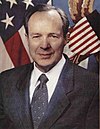
“In February William Perry let slip that if this reform falls through in Russia, then the West should be ready to strengthen its collective security. What's the connection? Since when can the defense secretary of the U.S. determine the type of economic reform Russia needs? And why are we being threatened with external pressure if Russia changes the direction and tempo of reform?”
Aleksandr Solzhenitsyn on Nikolai Berdyaev
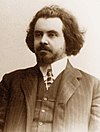
“He was arrested twice; he was taken in 1922 for a midnight interrogation with Dzerjinsky; Kamenev was also there. … But Berdyaev did not humiliate himself, he did not beg, he firmly professed the moral and religious principles by virtue of which he did not adhere to the party in power; and not only did they judge that there was no point in putting him on trial, but he was freed. Now there is a man who had a "point of view"!”
Aleksandr Solzhenitsyn on Fidel Castro
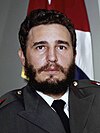
“There have been naive predictions by some American experts who believed that Angola would become the Soviet Union's Vietnam or that Cuban expeditions in Africa would best be stopped by special U.S. courtesy to Cuba. Kennan's advice to his own country -- to begin unilateral disarmament -- belongs to the same category. If you only knew how the youngest of the Kremlin officials laugh at your political wizards. As to Fidel Castro, he frankly scorns the United States, sending his troops to distant adventures from his country right next to yours.”
Aleksandr Solzhenitsyn on Francisco Franco
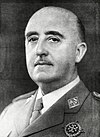
“I saw that Franco had made a heroic and colossal attempt to save his country from disintegration. With this understanding there also came amazement: there had been destruction all around, but with firm tactics Franco had managed to have Spain sidestep the Second World War without involving itself, and for twenty, thirty, thirty-five years, had kept Spain Christian against all history’s laws of decline! But then in the thirty-seventh year of his rule he died, dying to a chorus of nasty jeers from the European socialists, radicals, and liberals.”
Aleksandr Solzhenitsyn on Nursultan Nazarbayev
“All of northern and northeastern Kazakhstan is actually part of southern Siberia. It is settled mostly by Russians, who, just like the other non-Kazakhs--together making up 60% of Kazakhstan's population--are being repressed in their national, cultural, business and daily life. How can a minority govern a majority? Only through duplicity and force. That's exactly what happened in the recent "elections" in Kazakhstan. Kazakh President Narsultan Nazarbayev today is regarded in the West as a great democrat. But he has already become an effective dictator.”

Aleksandr Solzhenitsyn on Vladimir Zhirinovsky
“Zhirinovsky is an evil caricature of a Russian patriot. It's as if someone wanted to use this figure to show Russian patriotism to the world as a repulsive monster. Apart from the financial support he received, the reason Zhirinovsky had so much success in the elections is that by that time all the democratic parties, groups and leaders had completely abandoned Russia's national interests. They remained indifferent to the cruel poverty and hopelessness which has afflicted the majority of the population as a result of Yegor Gaidar's technocratic reform--after so many years of communism, yet another heartless experiment performed on the unfortunate people of Russia.”

Aleksandr Solzhenitsyn on Josip Broz Tito
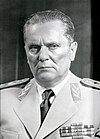
“But the West has now tipped the balance very heavily against Serbia, as if she is to blame for everything. But it's not the Serbs or Croats or Bosnians who are guilty. In Yugoslavia the problems began for the same reason as in the U.S.S.R. The communists--they had Tito, we had Lenin and Stalin--charted out arbitrary, ethnically nonsensical and historically unjustifiable internal administrative boundaries, and for years moved inhabitants from one region to another. And when--also in the period of a few days--Yugoslavia began to fall apart, the leading powers of the West, with inexplicable haste and irresponsibility, rushed to recognize these states within their artificial borders. Therefore, for the exhausting, bloody war which is today convulsing the unfortunate peoples of the former Yugoslavia, the leaders of the Western powers must share the blame with Tito.”
Aleksandr Solzhenitsyn on Angela Davis
“In our country, literally for an entire year, we heard nothing at all except Angela Davis. We had our ears stuffed with Angela Davis. Little children in school were told to sign petitions in defence of Angela Davis. Although she didn't have too difficult a time in this country's jails, she came to recuperate in Soviet resorts. Some Soviet dissidents–but more important, a group of Czech dissidents–addressed an appeal to her: 'Comrade Davis, you were in prison. You know how unpleasant it is to sit in prison, especially when you consider yourself innocent. You have such great authority now. Could you help our Czech prisoners? Could you stand up for those people in Czechoslovakia who are being persecuted by the state?' Angela Davis answered: 'They deserve what they get. Let them remain in prison.' That is the face of Communism. That is the heart of Communism for you.”

Aleksandr Solzhenitsyn on Russians
“Imagine that one not very fine day two or three of your states in the Southwest, in the space of 24 hours, declare themselves independent of the U.S. They declare themselves a fully sovereign nation, decreeing that Spanish will be the only language. All English-speaking residents, even if their ancestors have lived there for 200 years, have to take a test in the Spanish language within one or two years and swear allegiance to the new nation. Otherwise they will not receive citizenship and be deprived of civic, property and employment rights. What would be the reaction of the United States? I have no doubt that it would be immediate military intervention. But today Russia faces precisely this scenario. In 24 hours she lost eight to 10 purely Russian provinces, 25 million ethnic Russians who have ended up in this very way--as "undesirable aliens." In places where their fathers, grandfathers, great-grandfathers have lived since way back--even from the 17th century--they face persecution in their jobs and the suppression of their culture, education and language. Meanwhile, in Central Asia, those wishing to leave are not permitted to take even their personal property. The authorities tell them, "There is no such concept as 'personal property'!"”

Aleksandr Solzhenitsyn on George F. Kennan
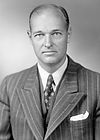
“Very well known representatives of your society, such as George Kennan, say: We cannot apply moral criteria to politics. Thus, we mix good and evil, right and wrong, and make space for the absolute triumph of absolute Evil in the world. On the contrary, only moral criteria can help the West against communism's well planned world strategy. There are no other criteria. Practical or occasional considerations of any kind will inevitably be swept away by strategy. After a certain level of the problem has been reached, legalistic thinking induces paralysis; it prevents one from seeing the size and meaning of events. In spite of the abundance of information, or maybe because of it, the West has difficulties in understanding reality such as it is. There have been naive predictions by some American experts who believed that Angola would become the Soviet Union's Vietnam or that Cuban expeditions in Africa would best be stopped by special U.S. courtesy to Cuba. Kennan's advice to his own country -- to begin unilateral disarmament -- belongs to the same category. If you only knew how the youngest of the Kremlin officials laugh at your political wizards. As to Fidel Castro, he frankly scorns the United States, sending his troops to distant adventures from his country right next to yours.”
Aleksandr Solzhenitsyn on Winston Churchill
“In their native countries, Roosevelt and Churchill are regarded as examples of wise statesmen. But we, during our jail conversations, were astonished by their constant shortsightedness and even stupidity. How could they, retreating gradually from 1941 to 1945, leave Eastern Europe without any guarantees of independence? How could they abandon the large territories of Saxony and Thuringia in return for such a ridiculous toy as the four-zoned Berlin that, moreover, was later to become their Achille’s heel? And what kind of military or political purpose did they see in giving away hundreds of thousands of armed Soviet citizens (who were unwilling to surrender, whatever the terms) for Stalin to have them killed? It is said that by doing this, that they secured the imminent participation of Stalin in the war against Japan. Already armed with the Atomic bomb, they did pay for Stalin so that he wouldn’t refuse to occupy Manchuria to help Mao Zedong to gain power in China and Kim Il Sung, to get half of Korea!… Oh, misery of political calculation! When later Mikolajczyk was expelled, when the end of Beneš and Masaryk came, Berlin was blocked, Budapest was in flames and turned silent, when ruins fumed in Korea and when the conservatives fled from Suez – didn’t really some of those who had a better memory, recall for instance the episode of giving away the Cossacks?”

Aleksandr Solzhenitsyn on Mao Zedong
“In their native countries, Roosevelt and Churchill are regarded as examples of wise statesmen. But we, during our jail conversations, were astonished by their constant shortsightedness and even stupidity. How could they, retreating gradually from 1941 to 1945, leave Eastern Europe without any guarantees of independence? How could they abandon the large territories of Saxony and Thuringia in return for such a ridiculous toy as the four-zoned Berlin that, moreover, was later to become their Achille’s heel? And what kind of military or political purpose did they see in giving away hundreds of thousands of armed Soviet citizens (who were unwilling to surrender, whatever the terms) for Stalin to have them killed? It is said that by doing this, that they secured the imminent participation of Stalin in the war against Japan. Already armed with the Atomic bomb, they did pay for Stalin so that he wouldn’t refuse to occupy Manchuria to help Mao Zedong to gain power in China and Kim Il Sung, to get half of Korea!… Oh, misery of political calculation! When later Mikolajczyk was expelled, when the end of Beneš and Masaryk came, Berlin was blocked, Budapest was in flames and turned silent, when ruins fumed in Korea and when the conservatives fled from Suez – didn’t really some of those who had a better memory, recall for instance the episode of giving away the Cossacks?”

Aleksandr Solzhenitsyn on Franklin D. Roosevelt
“In their native countries, Roosevelt and Churchill are regarded as examples of wise statesmen. But we, during our jail conversations, were astonished by their constant shortsightedness and even stupidity. How could they, retreating gradually from 1941 to 1945, leave Eastern Europe without any guarantees of independence? How could they abandon the large territories of Saxony and Thuringia in return for such a ridiculous toy as the four-zoned Berlin that, moreover, was later to become their Achille’s heel? And what kind of military or political purpose did they see in giving away hundreds of thousands of armed Soviet citizens (who were unwilling to surrender, whatever the terms) for Stalin to have them killed? It is said that by doing this, that they secured the imminent participation of Stalin in the war against Japan. Already armed with the Atomic bomb, they did pay for Stalin so that he wouldn’t refuse to occupy Manchuria to help Mao Zedong to gain power in China and Kim Il Sung, to get half of Korea!… Oh, misery of political calculation! When later Mikolajczyk was expelled, when the end of Beneš and Masaryk came, Berlin was blocked, Budapest was in flames and turned silent, when ruins fumed in Korea and when the conservatives fled from Suez – didn’t really some of those who had a better memory, recall for instance the episode of giving away the Cossacks?”

Aleksandr Solzhenitsyn on Kim Il-sung
“In their native countries, Roosevelt and Churchill are regarded as examples of wise statesmen. But we, during our jail conversations, were astonished by their constant shortsightedness and even stupidity. How could they, retreating gradually from 1941 to 1945, leave Eastern Europe without any guarantees of independence? How could they abandon the large territories of Saxony and Thuringia in return for such a ridiculous toy as the four-zoned Berlin that, moreover, was later to become their Achille’s heel? And what kind of military or political purpose did they see in giving away hundreds of thousands of armed Soviet citizens (who were unwilling to surrender, whatever the terms) for Stalin to have them killed? It is said that by doing this, that they secured the imminent participation of Stalin in the war against Japan. Already armed with the Atomic bomb, they did pay for Stalin so that he wouldn’t refuse to occupy Manchuria to help Mao Zedong to gain power in China and Kim Il Sung, to get half of Korea!… Oh, misery of political calculation! When later Mikolajczyk was expelled, when the end of Beneš and Masaryk came, Berlin was blocked, Budapest was in flames and turned silent, when ruins fumed in Korea and when the conservatives fled from Suez – didn’t really some of those who had a better memory, recall for instance the episode of giving away the Cossacks?”

Quotes About Aleksandr Solzhenitsyn
Gain deeper perspective through quotes about Aleksandr Solzhenitsyn from others.
Jeremy Black on Aleksandr Solzhenitsyn
“Détente found little favour with those who saw themselves as realists. As an aspect of the tension between American policy and Ostpolitik, Kissinger scorned the Helsinki Accords; so also did Yuri Andropov, the powerful head of the KGB and the party chiefs of Belarus and Ukraine. In 1974, Alexander Solzhenitsyn, who had won the Nobel Prize for Literature in 1970, was arrested and exiled for his description of Stalinist terror in The Gulag Archipelago (1973). In Czechoslovakia, the ‘normalisation’ regime of Gustàv Husàk sought to renew the Communist Party in order to thwart the ‘dissidents’, such as Václav Havel, and their human rights organisation, Charter 77, which used the Helsinki Accords as a way to castigate the regime. In the very different context of Yugoslavia, there was also a strengthening of Communist authoritarianism as Tito suppressed the liberal Communists of both Croatia and Serbia. In East Germany, the continuing determination to control culture was demonstrated in 1976. The Palace of the Republic opened that year in East Berlin housed not only the Parliament but also leisure facilities and works of art commissioned under the rubric ‘Are Communists allowed to dream’, notably Hans Vent’s painting People on the Beach. The same year, Wolf Biermann, a prominent satirical balladeer, was expelled from East Germany.”
John Lewis Gaddis on Aleksandr Solzhenitsyn
“A second escape from determinism involved the discrediting of dictatorships. Tyrants had been around for thousands of years; but George Orwell's great fear, while writing 1984 on his lonely island in 1948, was that the progress made in restraining them in the 18th and 19th centuries had been reversed. Despite the defeats of Nazi Germany and Imperial Japan, it would have been hard to explain the first half of the 20th century without concluding that the currents of history had come to favor authoritarian politics and collectivist economics. Like Irish monks at the edge of their medieval world, Orwell at the edge of his was seeking to preserve what little was left of civilization by showing what a victory of the barbarians would mean. Big Brothers controlled the Soviet Union, China, and half of Europe by the time 1984 came out. It would have been Utopian to expect that they would stop there. But they did: the historical currents during the second half of the 20th century turned decisively against communism. Orwell himself had something to do with this: his anguished writings, together with the later and increasingly self-confident ones of Solzhenitsyn, Sakharov, Havel, and the future pope Karol Wojtyla, advanced a moral and spiritual critique of Marxism-Leninism for which it had no answer. It took time for these sails to catch wind and for these rudders to take hold, but by the late 1970s they had begun to do so. John Paul II and the other actor-leaders of the 1980s then set the course. The most inspirational alternatives the Soviet Union could muster were Leonid Brezhnev, Yuri Andropov, and Konstantin Chernenko, a clear sign that dictatorships were not what they once had been.”

Natalia Ginzburg on Aleksandr Solzhenitsyn
“Because I have known so many different writers I have often thought about what generosity means in a writer. Sometimes, as with other people you meet, you can tell about a writer at once...I am not fond of Aleksandr Solzhenitsyn...not as a person and not as the author of the absurd declarations he’s made recently, criticizing Gorbachev and advancing irresponsible proposals. They haven’t convinced me one bit. I really wish that no one would interfere with Gorbachev in any way or try to place obstacles in his way. I feel that Gorbachev is a political genius and should be given more time to work out solutions that will keep his country viable. Solzhenitsyn’s anti-communism is a visceral thing and one can almost understand it. But the things he says about Russia are often absurd. And they don’t help matters. Sometimes one has a first reaction to a person which turns out to have been mistaken. But I have never liked Solzhenitsyn, and recent events don’t persuade me to revise my estimate.”

Mario Vargas Llosa on Aleksandr Solzhenitsyn
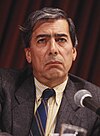
“The extraordinary political and intellectual feat of Solzhenitsyn was to emerge from the hell of concentration camp to tell the story... in books whose moral and documentary force has no parallel in modern history.”
Joseph Pearce on Aleksandr Solzhenitsyn
“Solzhenitsyn has re-written George Orwell's novel, using the facts of his life as his pen. He represents the victory of Winston Smith. Truth, it seems, is not only stranger than fiction; it has a happier ending.”
Marco Respinti on Aleksandr Solzhenitsyn
“Solzhenitsyn came to embody the critical conscience of the Russian people toward Communism. But to define him simply as an anti-communist dissident would mean unfairly downsizing him. He was much more than that: he was the living denunciation of the materialistic reductionism of humanity. He saw Communism as only one of the expressions of the multifaceted ideology that haunts human beings when they lose God. In fact, he was also critical of Western materialism and called for a spiritual revival of the world—an idea that still resonates today.”
Arthur M. Schlesinger on Aleksandr Solzhenitsyn
“Solzhenitsyn is a man of exemplary nobility and extreme bravery. A powerful novelist and an indispensable historian, he is an artist and moralist who has taken unto himself the suffering of his countrymen and has magnificently indicted a monstrous system in the name of the Soviet people and of Russian history.”
Harrison Salisbury on Aleksandr Solzhenitsyn
“Aleksandr Solzhenitsyn is a literary genius whose talent matches that of Dostoevsky, Turgueniev, Tolstoi, Gorki.”
Gore Vidal on Aleksandr Solzhenitsyn
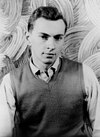
“He is a bad novelist and a fool. The combination usually makes for great popularity in the US.”
Misattributed Quotes
Quotes mistakenly credited to Aleksandr Solzhenitsyn
About Aleksandr Solzhenitsyn
Aleksandr Isayevich Solzhenitsyn Алекса́ндр Иса́евич Солжени́цын (11 December 1918 – 3 August 2008) was a Russian philosopher, novelist, dramatist and historian. Awarded the Nobel Prize in Literature in 1970, he was exiled from the Soviet Union in 1974, returning to Russia in 1994.