Link Copied!
Albert Schweitzer Quotes (1875-1965)
Philosopher, Theologian
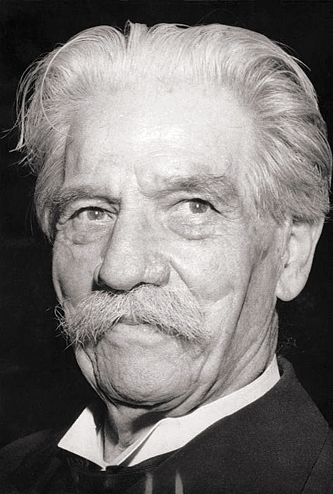
















About Albert Schweitzer
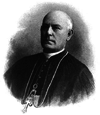
Albert Schweitzer (14 January 1875 – 4 September 1965) was an Alsatian philosopher, philanthropist, physician, theologian, missionary, and musicologist who received the Nobel Peace Prize in 1952.
Best Albert Schweitzer Quotes
Shortest
Earliest
Explore our curated collection of the most famous and impactful Albert Schweitzer quotes.
“The ethic of Reverence for Life is the ethic of Love widened into universality.”

“Any religion or philosophy which is not based on a respect for life is not a true religion or philosophy.”
“Every start upon an untrodden path is a venture which only in unusual circumstances looks sensible and likely to be successful.”
“The good conscience is an invention of the devil.
• Variant translation: The quiet conscience is an invention of the devil.”
• Variant translation: The quiet conscience is an invention of the devil.”
“To the question whether I am a pessimist or an optimist, I answer that my knowledge is pessimistic, but my willing and hoping are optimistic.”
“Only when an ideal of peace is born in the minds of the peoples will the institutions set up to maintain this peace effectively fulfill the function expected of them.”

“The last fact which knowledge can discover is that the world is a manifestation, and in every way a puzzling manifestation, of the universal will to live.”
“Those who thank God much are the truly wealthy. So our inner happiness depends not on what we experience but on the degree of our gratitude to God, whatever the experience.”

“The man who has become a thinking being feels a compulsion to give every will-to-live the same reverence for life that he gives to his own. He experiences that other life in his own.”

“What has been presented as Christianity during these nineteen centuries is only a beginning, full of mistakes, not full blown Christianity springing from the spirit of Jesus.”

“Profound love demands a deep conception and out of this develops reverence for the mystery of life. It brings us close to all beings, to the poorest and smallest as well as all others.”

“From my youth onwards, I have felt sure that all thought which thinks itself out to an issue ends in mysticism. In the stillness of the African jungle I have been able to work out this thought and give it expression.”
“The thinking man must … oppose all cruel customs no matter how deeply rooted in tradition and surrounded by a halo. True manhood is too precious a spiritual good for us to surrender any part of it to thoughtlessness.”
“The deepest thinking is humble. It is only concerned that the flame of truth which it keeps alive should burn with the strongest and purest heat; it does not trouble about the distance to which its brightness penetrates.”
“Faith which refuses to face indisputable facts is but little faith. Truth is always gain, however hard it is to accommodate ourselves to it. To linger in any kind of untruth proves to be a departure from the straight way of faith.”

“Altogether, Jesus never behaves like a man wandering in a system of delusions. He reacts in absolutely normal fashion to what is said to Him, and to the events that concern Him. He is never out of touch with reality.”

“It is the fate of 'little faiths' of truth that they, true followers of Peter, whether they be Roman or the Protestant observance, cry out and sink in the sea of ideas, where the followers of Paul, believing in the Spirit, walk secure and undismayed.”
“Let me give you a definition of ethics: It is good to maintain and further life — it is bad to damage and destroy life. And this ethic, profound and universal, has the significance of a religion. It is religion.”

“Ethics, too, are nothing but reverence for life. That is what gives me the fundamental principle of morality, namely, that good consists in maintaining, promoting, and enhancing life, and that destroying, injuring, and limiting life are evil.”

“What really matters is that we should all of us realize that we are guilty of inhumanity. The horror of this realization should shake us out of our lethargy so that we can direct our hopes and our intentions to the coming of an era in which war will have no place.”

“As long as I can remember, I have suffered because of the great misery I saw in the world. I never really knew the artless, youthful joy of living, and I believe that many children feel this way, even when outwardly they seem to be wholly happy and without a single care.”
“The great secret of success is to go through life as a man who never gets used up. That is possible for him who never argues and strives with men and facts, but in all experience retires upon himself, and looks for the ultimate cause of things in himself.”
“Whoever has looked into the eyes of Jesus as he appears to us in his words knows that true happiness consists of service to this great One and his Spirit — and a life offered to his work. Those who accept this mode of life, who know how to live it, become brothers and sisters.”
“We cannot abdicate our conscience to an organization, nor to a government. 'Am I my brother's keeper?' Most certainly I am! I cannot escape my responsibility by saying the State will do all that is necessary. It is a tragedy that nowadays so many think and feel otherwise. ”

“Example is not the main thing. It is the only thing. That is, if the one giving the example is not saying to himself, 'Behold I am giving an example.' That spoils it. Anyone thinking of the example he will give to others has lost his simplicity. Only as a man has simplicity can his example influence others.”

“I was convinced — and I am so still — that the fundamental principles of Christianity have to be proved true by reasoning, and by no other method. Reason, I said to myself, is given us that we may bring everything within the range of its action, even the most exalted ideas of religion. And this certainty filled me with joy.”
“I have twice gone fishing with rod and line just because other boys asked me to, but this sport was soon made impossible for me by the treatment of the worms that were put on the hook for bait, and the wrenching of the mouths of the fishes that were caught. I gave it up, and even found courage enough to dissuade other boys from going.”
“Anyone who proposes to do good must not expect people to roll stones out of his way, but must accept his lot calmly if they even roll a few more upon it. A strength which becomes clearer and stronger through its experience of such obstacles is the only strength that can conquer them. Resistance is only a waste of strength.”

“If rational thought thinks itself out to a conclusion, it arrives at something non-rational which, nevertheless, is a necessity of thought. This is the paradox which dominates our spiritual life. If we try to get on without this non-rational element, there result views of the world and of life which have neither vitality nor value.”
“Never for a moment do we lay aside our mistrust of the ideals established by society, and of the convictions which are kept by it in circulation. We always know that society is full of folly and will deceive us in the matter of humanity. … humanity meaning consideration for the existence and the happiness of individual human beings.”

“The disastrous feature of our civilization is that it is far more developed materially than spiritually. Its balance is disturbed … Now come the facts to summon us to reflect. They tell us in terribly harsh language that a civilization which develops only on its material side, and not in the sphere of the spirit … heads for disaster.”

“Just as the wave cannot exist for itself, but is ever a part of the heaving surface of the ocean, so must I never live my life for itself, but always in the experience which is going on around me. It is an uncomfortable doctrine which the true ethics whisper into my ear. You are happy, they say; therefore you are called upon to give much.”
“Thus each successive epoch of theology found its own thoughts in Jesus; that was, indeed, the only way in which it could make Him live. But it was not only each epoch that found its reflection in Jesus; each individual created Him in accordance with his own character. There is no historical task which so reveals a man's true self as the writing of a Life of Jesus.”
“Truth has no special time of its own. Its hour is now — always, and indeed then most truly when it seems most unsuitable to actual circumstances. Care for distress at home and care for distress elsewhere do but help each other if, working together, they wake men in sufficient numbers from their thoughtlessness, and call into life a new spirit of humanity.”
“Until he extends the circle of his compassion to all living things, man will not himself find peace.
• Variant translation: Until he extends his circle of compassion to include all living things, man will not himself find peace.
• Variant translation: Until we extend the circle of compassion to all living things, we will not ourselves find peace.”
• Variant translation: Until he extends his circle of compassion to include all living things, man will not himself find peace.
• Variant translation: Until we extend the circle of compassion to all living things, we will not ourselves find peace.”

“Only at quite rare moments have I felt really glad to be alive. I could not but feel with a sympathy full of regret all the pain that I saw around me, not only that of men but that of the whole creation. From this community of suffering I have never tried to withdraw myself. It seemed to me a matter of course that we should all take our share of the burden of pain which lies upon the world.”

“The deeper we look into nature, the more we recognize that it is full of life, and the more profoundly we know that all life is a secret and that we are united with all life that is in nature. Man can no longer live for himself alone. We realize that all life is valuable, and that we are united to all this life. From this knowledge comes our spiritual relationship to the universe.”
“We cannot understand what happens in the universe. What is glorious in it is united with what is full of horror. What is full of meaning is united to what is senseless. The spirit of the universe is at once creative and destructive — it creates while it destroys and destroys while it creates, and therefore it remains to us a riddle. And we must inevitably resign ourselves to this.”

“Very little of the great cruelty shown by men can really be attributed to cruel instinct. Most of it comes from thoughtlessness or inherited habit. The roots of cruelty, therefore, are not so much strong as widespread. But the time must come when inhumanity protected by custom and thoughtlessness will succumb before humanity championed by thought. Let us work that this time may come.”
“The ethic of Reverence for Life prompts us to keep each other alert to what troubles us and to speak and act dauntlessly together in discharging the responsibility that we feel. It keeps us watching together for opportunities to bring some sort of help to animals in recompense for the great misery that men inflict upon them, and thus for a moment we escape from the incomprehensible horror of existence.”
“When in the spring the withered gray of the pastures gives place to green, this is due to the millions of young shoots which sprout up freshly from the old roots. In like manner the revival of thought which is essential for our time can only come through a transformation of the opinions and ideals of the many brought about by individual and universal reflection about the meaning of life and of the world.”

“I do not want to frighten you by telling you about the temptations life will bring. Anyone who is healthy in spirit will overcome them. But there is something I want you to realize. It does not matter so much what you do. What matters is whether your soul is harmed by what you do. If your soul is harmed, something irreparable happens, the extent of which you won't realize until it will be too late.”
“As a rule there are in everyone all sorts of good ideas, ready like tinder. But much of this tinder catches fire, or catches it successfully, only when it meets some flame or spark from outside, i.e. from some other person. Often, too, our own light goes out, and is rekindled by some experience we go through with a fellow-man. Thus we have each of us cause to think with deep gratitude of those who have lighted the flames within us.”
“The ideal "Life of Jesus" [biography] at the close of the nineteenth century is the "Life" which Heinrich Julius Holtzmann did not write — but which can be pieced together from his commentary on the synoptic gospels and his new testament theology. It is ideal because, for one thing, it is unwritten, and arises only in the idea of the reader by the aid of his own imagination, and, for another, because it is traced only in the most general outline.”
“When Christianity becomes conscious of its innermost nature, it realizes that it is godliness rising our of inward constraint. The highest knowledge is to know that we are surrounded by mystery. Neither knowledge nor hope for the future can be the pivot of our life or determine its direction. It is intended to be solely determined by our allowing ourselves to be gripped by the ethical God, who reveals Himself in us, and by our yielding our will to His.”
“The mistake made by all previous systems of ethics has been the failure to recognize that life as such is the mysterious value with which they have to deal. All spiritual life meets us within natural life. Reverence for life, therefore, is applied to natural life and spiritual life alike. In the parable of Jesus, the shepherd saves not merely the soul of the lost sheep but the whole animal. The stronger the reverence for natural life, the stronger grows also that for spiritual life.”
“We await the Indian thinker who will expound to us the mysticism of spiritual union with infinite Being as it is in itself, not as it is set down in the ancient texts or according to the meaning read into them by their interpreters.
It belongs to the nature of mysticism that it is timeless and appeals to no other authority than that of the truth which it carries within it.
The pathway from imperfect to perfect recognised truth leads through the valley of reality.”
It belongs to the nature of mysticism that it is timeless and appeals to no other authority than that of the truth which it carries within it.
The pathway from imperfect to perfect recognised truth leads through the valley of reality.”

“Resignation as to knowledge of the world is for me not an irretrievable plunge into a scepticism which leaves us to drift about in life like a derelict vessel. I see in it that effort of honesty which we must venture to make in order to arrive at the serviceable world-view which hovers within sight. Every world-view which fails to start from resignation in regard to knowledge is artificial and a mere fabrication, for it rests upon an inadmissible interpretation of the universe.”

“May the men who hold the destiny of peoples in their hands, studiously avoid anything that might cause the present situation to deteriorate and become even more dangerous. May they take to heart the words of the Apostle Paul: "If it be possible, as much as lieth in you, live peaceably with all men." These words are valid not only for individuals, but for nations as well. May these nations, in their efforts to maintain peace, do their utmost to give the spirit time to grow and to act.”

“The only originality I claim is that for me this truth goes hand in hand with the intellectual certainty that the human spirit is capable of creating in our time a new mentality, an ethical mentality. Inspired by this certainty, I too proclaim this truth in the hope that my testimony may help to prevent its rejection as an admirable sentiment but a practical impossibility. Many a truth has lain unnoticed for a long time, ignored simply because no one perceived its potential for becoming reality.”

“To the man who is truly ethical all life is sacred, including that which from the human point of view seems lower in the scale. He makes distinctions only as each case comes before him, and under the pressure of necessity, as, for example, when it falls to him to decide which of two lives he must sacrifice in order to preserve the other. But all through this series of decisions he is conscious of acting on subjective grounds and arbitrarily, and knows that he bears the responsibility for the life which is sacrificed.”
“We do not have a complete and satisfying knowledge of the world. We are reduced to the simple conclusion that everywhere in the world there is life like ourselves and that all life is shrouded in mystery. A true acquaintance with the world consists in being filled with a sense of the mystery of existence and life. This mystery becomes only more mysterious with every advance in scientific research. To be filled with the mystery of life is like that which is called in the language of mysticism the "wise ignorance," an ignorance which is nonetheless knowledge of the essential.”
“This dogma had first to be shattered before men could once more go out in quest of the historical Jesus, before they could even grasp the thought of His existence. That the historic Jesus is something different from the Jesus Christ of the doctrine of the Two Natures seems to us now self-evident. We can, at the present day, scarcely imagine the long agony in which the historical view of the life of Jesus came to birth. And even when He was once more recalled to life. He was still, like Lazarus of old, bound hand and foot with grave-clothes — the grave-clothes of the dogma of the Dual Nature.”
“The ethical ideas on which civilization rests have been wandering about the world, poverty-stricken and homeless. No theory of the universe has been advanced which can give them solid foundation; in fact not one has made its appearance which can claim for itself solidity and inner consistency. The age of philosophical dogmatism had come to an end, and after that nothing was recognized as truth except the science which described reality. Complete theories of the universe no longer appeared as fixed stars; they were regarded as resting on hypothesis, and ranked no higher than comets.”
“Indian thought has greatly attracted me since in my youth I first became acquainted with it through reading the works of Arthur Schopenhauer. From the very beginning I was convinced that all thought is really concerned with the great problem of how man can attain to spiritual union with infinite Being. My attention was drawn to Indian thought because it is busied with this problem and because by its nature it is mysticism. What I liked about it also was that Indian ethics are concerned with the behaviour of man to all living beings and not merely with his attitude to his fellow-man and to human society.”
“Defined from outside and quite empirically, complete civilization consists in realizing all possible progress in discovery and invention and in the arrangements of human society, and seeing that they work together for the spiritual perfecting of individuals, which is the real and final object of civilization. Reverence for life is in a position to complete this conception of civilization and to build its foundations on what lies at the core of our being. This it does by defining what is meant by the spiritual perfecting of man and making it consist in reaching the spirituality of an ever-deepening reverence for life.”
“I must interpret the life about me as I interpret the life that is my own. My life is full of meaning to me. The life around me must be full of significance to itself. If I am to expect others to respect my life, then I must respect the other life I see, however strange it may be to mine. And not only other human life, but all kinds of life: life above mine, if there be such life; life below mine, as I know it to exist. Ethics in our Western world has hitherto been largely limited to the relations of man to man. But that is a limited ethics. We need a boundless ethics which will include the animals also.”
“Modern Christianity must always reckon with the possibility of having to abandon the historical figure of Jesus. Hence it must not artificially increase his importance by referring all theological knowledge to him and developing a ‘christo-centric’ religion: the Lord may always be a mere element in ‘religion’, but he should never be considered its foundation. (p. 402)
Schweitzer, Albert (1913). Geschichte der Leben-Jesu-Forschung (in German) (2nd, Revised and Expanded ed.). Mohr. p. 512. "Das moderne Christentum muss von vornherein und immer mit der Möglichkeit einer eventuellen Preisgabe der Geschichtlichkeit Jesu rechnen."”
Schweitzer, Albert (1913). Geschichte der Leben-Jesu-Forschung (in German) (2nd, Revised and Expanded ed.). Mohr. p. 512. "Das moderne Christentum muss von vornherein und immer mit der Möglichkeit einer eventuellen Preisgabe der Geschichtlichkeit Jesu rechnen."”
“The way to true mysticism leads up through rational thought to deep experience of the world and of our will-to-live. We must all venture once more to be "thinkers," so as to reach mysticism, which is the only direct and the only profound world-view. We must all wander in the field of knowledge to the point where knowledge passes over into experience of the world. We must all, through thought, become religious.
This rational thought must become the prevailing force among us, for all the valuable ideas that we need develop out of it. In no other fire than that of the mysticism of reverence for life can the broken sword of idealism be forged anew.”
This rational thought must become the prevailing force among us, for all the valuable ideas that we need develop out of it. In no other fire than that of the mysticism of reverence for life can the broken sword of idealism be forged anew.”
“The awareness that we are all human beings together has become lost in war and through politics. We have reached the point of regarding each other only as members of a people either allied with us or against us and our approach; prejudice, sympathy, or antipathy are all conditioned on that. Now we must rediscover the fact that we — all together — are human beings, and that we must strive to concede to each other what moral capacity we have. Only in this way can we begin to believe that in other peoples as well as in ourselves there will arise the need for a new spirit which can be the beginning of a feeling of mutual trustworthiness toward each other.”
“It is the fate of every truth to be an object of ridicule when it is first acclaimed. It was once considered foolish to suppose that black men were really human beings and ought to be treated as such. What was once foolish has now become a recognized truth. Today it is considered as exaggeration to proclaim constant respect for every form of life as being the serious demand of a rational ethic. But the time is coming when people will be amazed that the human race existed so long before it recognized that thoughtless injury to life is incompatible with real ethics. Ethics is in its unqualified form extended responsibility to everything that has life.”
“One thing that specially saddened me was that the unfortunate animals had to suffer so much pain and misery. The sight of an old limping horse, tugged forward by one man while another kept beating it with a stick to get it to the knacker's yard at Colmar, haunted me for weeks. It was quite incomprehensible to me — this was before I began going to school — why in my evening prayers I should pray for human beings only. So when my mother had prayed with me and had kissed me good-night, I used to add silently a prayer that I had composed myself for all living creatures. It ran thus: "O, heavenly Father, protect and bless all things that have breath; guard them from all evil, and let them sleep in peace."”
“Christianity has had to give up one piece after another of what it still imagined it possessed in the way of explanations of the universe. In this development it grows more and more into an expression of what constitutes its real nature. In a remarkable process of spiritualization it advances further and further from naive naiveté into the region of profound naiveté. The greater the number of explanations that slip from its hands, the more is the first of the Beatitudes, which may indeed be regarded as prophetic word concerning Christianity, fulfilled: "Blessed are the poor in spirit; for theirs is the Kingdom of Heaven."”
“We have learned to tolerate the facts of war: that men are killed en masse — some twenty million in the Second World War — that whole cities and their inhabitants are annihilated by the atomic bomb, that men are turned into living torches by incendiary bombs. We learn of these things from the radio or newspapers and we judge them according to whether they signify success for the group of peoples to which we belong, or for our enemies. When we do admit to ourselves that such acts are the results of inhuman conduct, our admission is accompanied by the thought that the very fact of war itself leaves us no option but to accept them. In resigning ourselves to our fate without a struggle, we are guilty of inhumanity.”
“The great fault of all ethics hitherto has been that they believed themselves to have to deal only with the relations of man to man. In reality, however, the question is what is his attitude to the world and all life that comes within his reach. A man is ethical only when life, as such, is sacred to him, and that of plants and animals as that of his fellow men, and when he devotes himself helpfully to all life that is in need of help. Only the universal ethic of the feeling of responsibility in an ever-widening sphere for all that lives — only that ethic can be founded in thought. … The ethic of Reverence for Life, therefore, comprehends within itself everything that can be described as love, devotion, and sympathy whether in suffering, joy, or effort.”
“There slowly grew up in me an unshakable conviction that we have no right to inflict suffering and death on another living creature unless there is some unavoidable necessity for it, and that we ought all of us to feel what a horrible thing it is to cause suffering and death out of mere thoughtlessness. And this conviction has influenced me only more and more strongly with time. I have grown more and more certain that at the bottom of our heart we all think this, and that we fail to acknowledge it because we are afraid of being laughed at by other people as sentimentalists, though partly also because we allow our best feelings to get blunted. But I vowed that I would never let my feelings get blunted, and that I would never be afraid of the reproach of sentimentalism.”

“The man who dares to live his life with death before his eyes, the man who receives life back bit by bit and lives as though it did not belong to him by right but has been bestowed on him as a gift, the man who has such freedom and peace of mind that he has overcome death in his thoughts — such man believes in eternal life because it is already his, it is a present experience, and he already benefits from its peace and joy. He cannot describe this experience in words. He may not be able to conform his view with the traditional picture of it. But one thing he knows for certain: Something within us does not pass away, something goes on living and working wherever the kingdom of the spirit is present. It is already working and living within us, because in our hearts we have been able to reach life by overcoming death.”
“A word in conclusion about the relations between the whites and blacks. What must be the general character of the intercourse between them? Am I to treat the black man as my equal or my inferior? I must show him that I can respect the dignity of human personality in every one, and this attitude in me he must be able to see for himself; but the essential thing is that there shall be a real feeling of brotherliness. How far this is to find complete expression in the sayings and doings of daily life must be settled by circumstances. The negro is a child, and with children nothing can be done without the use of authority. We must, therefore, so arrange the circumstances of daily life that my natural authority can find expression. With regard to the negroes, then, I have coined the formula: "I am your brother, it is true, but your elder brother."
• Variant:”
• Variant:”

“Reverence for life, veneratio vitæ, is the most direct and at the same time the profoundest achievement of my will-to-live.
In reverence for life my knowledge passes into experience. The simple world- and life-affirmation which is within me just because I am will-to-live has, therefore, no need to enter into controversy with itself, if my will-to-live learns to think and yet does not understand the meaning of the world. In spite of the negative results of knowledge, I have to hold fast to world- and life-affirmation and deepen it. My life carries its own meaning in itself. This meaning lies in my living out the highest idea which shows itself in my will-to-live, the idea of reverence for life. With that for a starting-point I give value to my own life and to all the will-to-live which surrounds me, I persevere in activity, and I produce values.”
In reverence for life my knowledge passes into experience. The simple world- and life-affirmation which is within me just because I am will-to-live has, therefore, no need to enter into controversy with itself, if my will-to-live learns to think and yet does not understand the meaning of the world. In spite of the negative results of knowledge, I have to hold fast to world- and life-affirmation and deepen it. My life carries its own meaning in itself. This meaning lies in my living out the highest idea which shows itself in my will-to-live, the idea of reverence for life. With that for a starting-point I give value to my own life and to all the will-to-live which surrounds me, I persevere in activity, and I produce values.”
“We came to a tree which was still bare, and on which the birds were singing out gaily in the morning, without any fear of us. Then stooping over like an Indian on the hunt, my companion placed a pebble in the leather of his sling and stretched it. Obeying his peremptory glance I did the same, with frightful twinges of conscience, vowing firmly that I would shoot when he did. At that very moment the church bells began to sound, mingling with the song of the birds in the sunshine. It was the warning bell that came a half-hour before the main bell. For me it was a voice from heaven. I threw the sling down, scaring the birds away, so that they were safe from my companion's sling, and fled home. And ever afterwards when the bells of Holy Week ring out amidst the leafless trees in the sunshine I remember with moving gratitude how they rang into my heart at that time the commandment: Thou shalt not kill.”

“The restoration of our world-view can come only as a result of inexorably truth-loving and recklessly courageous thought. Such thinking alone is mature enough to learn by experience how the rational, when it thinks itself out to a conclusion, passes necessarily over into the non-rational. World- and life-affirmation and ethics are non-rational. They are not justified by any corresponding knowledge of the nature of the world, but are the disposition in which, through the inner compulsion of our will-to-live, we determine our relation to the world.
What the activity of this disposition of ours means in the evolution of the world, we do not know. Nor can we regulate this activity from outside; we must leave entirely to each individual its shaping and its extension. From every point of view, then, world- and life-affirmation and ethics are non-rational, and we must have the courage to admit it.”
What the activity of this disposition of ours means in the evolution of the world, we do not know. Nor can we regulate this activity from outside; we must leave entirely to each individual its shaping and its extension. From every point of view, then, world- and life-affirmation and ethics are non-rational, and we must have the courage to admit it.”

“The historical Jesus will be to our time a stranger and an enigma. The study of the Life of Jesus has had a curious history. It set out in quest of the historical Jesus, believing that when it had found Him it could bring Him straight into our time as a Teacher and Savior. It loosed the bands by which He had been riveted for centuries to the stony rocks of ecclesiastical doctrine, and rejoiced to see life and movement coming into the figure once more, and the historical Jesus advancing, as it seemed, to meet it. But He does not stay; He passes by our time and returns to His own. What surprised and dismayed the theology of the last forty years was that, despite all forced and arbitrary interpretations, it could not keep Him in our time, but had to let Him go. He returned to his own time, not owing to the application of any historical ingenuity, but by the same inevitable necessity by which the liberated pendulum returns to its original position.”
“Awakening of Western thought will not be complete until that thought steps outside itself and comes to an understanding with the search for a world-view as this manifests itself in the thought of mankind as a whole. We have too long been occupied with the developing series of our own philosophical systems, and have taken no notice of the fact that there is a world-philosophy of which our Western philosophy is only a part. If, however, one conceives philosophy as being a struggle to reach a view of the world as a whole, and seeks out the elementary convictions which are to deepen it and give it a sure foundation, one cannot avoid setting our own thought face to face with that of the Hindus, and of the Chinese in the Far East. … Our Western philosophy, if judged by its own latest pronouncements, is much naiver than we admit to ourselves, and we fail to perceive this only because we have acquired the art of expressing what is simple in a pedantic way.”
“At sunset of the third day, near the village of Igendja, we moved along an island set in the middle of the wide river. On a sandback to our left, four hippopotamuses and their young plodded along in our same direction. Just then, in my great tiredness and discouragement, the phrase "Reverence for Life" struck me like a flash. As far as I knew, it was a phrase I had never heard nor ever read. I realized at once that it carried within itself the solution to the problem that had been torturing me. Now I knew that a system of values which concerns itself only with our relationship to other people is incomplete and therefore lacking in power for good. Only by means of reverence for life can we establish a spiritual and humane relationship with both people and all living creatures within our reach. Only in this fashion can we avoid harming others, and, within the limits of our capacity, go to their aid whenever they need us.”
“A man is really ethical only when he obeys the constraint laid on him to help all life which he is able to succor, and when he goes out of his way to avoid injuring anything living. He does not ask how far this or that life deserves sympathy as valuable in itself, nor how far it is capable of feeling. To him life as such is sacred. He shatters no ice crystal that sparkles in the sun, tears no leaf from its tree, breaks off no flower, and is careful not to crush any insect as he walks. If he works by lamplight on a summer evening, he prefers to keep the window shut and to breathe stifling air, rather than to see insect after insect fall on his table with singed and sinking wings.
If he goes out in to the street after a rainstorm and sees a worm which has strayed there, he reflects that it will certainly dry up in the sunshine, if it does not quickly regain the damp soil into which it can creep, and so he helps it back from the deadly paving stones into the lush grass. Should he pass by an insect which has fallen into a pool, he spares the time to reach it a leaf or stalk on which it may clamber and save itself.”
If he goes out in to the street after a rainstorm and sees a worm which has strayed there, he reflects that it will certainly dry up in the sunshine, if it does not quickly regain the damp soil into which it can creep, and so he helps it back from the deadly paving stones into the lush grass. Should he pass by an insect which has fallen into a pool, he spares the time to reach it a leaf or stalk on which it may clamber and save itself.”

“Affirmation of the world, which means affirmation of the will-to-live that manifests itself around me, is only possible if I devote myself to other life. From an inner necessity, I exert myself in producing values and practising ethics in the world and on the world even though I do not understand the meaning of the world. For in world- and life-affirmation and in ethics I carry out the will of the universal will-to-live which reveals itself in me. I live my life in God, in the mysterious divine personality which I do not know as such in the world, but only experience as mysterious Will within myself.
Rational thinking which is free from assumptions ends therefore in mysticism. To relate oneself in the spirit of reverence for life to the multiform manifestations of the will-to-live which together constitute the world is ethical mysticism. All profound world-view is mysticism, the essence of which is just this: that out of my unsophisticated and naïve existence in the world there comes, as a result of thought about self and the world, spiritual self-devotion to the mysterious infinite Will which is continuously manifested in the universe.”
Rational thinking which is free from assumptions ends therefore in mysticism. To relate oneself in the spirit of reverence for life to the multiform manifestations of the will-to-live which together constitute the world is ethical mysticism. All profound world-view is mysticism, the essence of which is just this: that out of my unsophisticated and naïve existence in the world there comes, as a result of thought about self and the world, spiritual self-devotion to the mysterious infinite Will which is continuously manifested in the universe.”
“The ethic of reverence for life constrains all, in whatever walk of life they may find themselves, to busy themselves intimately with all the human and vital processes which are being played out around them, and to give themselves as men to the man who needs human help and sympathy. It does not allow the scholar to live for his science alone, even if he is very useful to the community in so doing. It does not permit the artist to exist only for his art, even if he gives inspiration to many by its means. It refuses to let the business man imagine that he fulfills all legitimate demands in the course of his business activities. It demands from all that they should sacrifice a portion of their own lives for others. In what way and in what measure this is his duty, this everyone must decide on the basis of the thoughts which arise in himself, and the circumstances which attend the course of his own life. The self-sacrifice of one may not be particularly in evidence. He carries it out simply by continuing his normal life. Another is called to some striking self-surrender which obliges him to set on one side all regard for his own progress. Let no one measure himself by his conclusions respecting someone else. The destiny of men has to fulfill itself in a thousand ways, so that goodness may be actualized. What every individual has to contribute remains his own secret. But we must all mutually share in the knowledge that our existence only attains its true value when we have experienced in ourselves the truth of the declaration: 'He who loses his life shall find it.' ”
“Most men are scantily nourished on a modicum of happiness and a number of empty thoughts which life lays on their plates. They are kept in the road of life through stern necessity by elemental duties which they cannot avoid.
Again and again their will-to-live becomes, as it were, intoxicated: spring sunshine, opening flowers, moving clouds, waving fields of grain — all affect it. The manifold will-to-live, which is known to us in the splendid phenomena in which it clothes itself, grasps at their personal wills. They would fain join their shouts to the mighty symphony which is proceeding all around them. The world seem beauteous...but the intoxication passes. Dreadful discords only allow them to hear a confused noise, as before, where they had thought to catch the strains of glorious music. The beauty of nature is obscured by the suffering which they discover in every direction. And now they see again that they are driven about like shipwrecked persons on the waste of ocean, only that the boat is at one moment lifted high on the crest of the waves and a moment later sinks deep into the trough; and that now sunshine and now darkening clouds lie on the surface of the water.
And now they would fain persuade themselves that land lies on the horizon toward which they are driven. Their will-to-live befools their intellect so that it makes efforts to see the world as it would like to see it. It forces this intellect to show them a map which lends support to their hope of land. Once again they essay to reach the shore, until finally their arms sink exhausted for the last time and their eyes rove desperately from wave to wave. …
Thus it is with the will-to-live when it is unreflective.
But is there no way out of this dilemma? Must we either drift aimlessly through lack of reflection or sink in pessimism as the result of reflection? No. We must indeed attempt the limitless ocean, but we may set our sails and steer a determined course.”
Again and again their will-to-live becomes, as it were, intoxicated: spring sunshine, opening flowers, moving clouds, waving fields of grain — all affect it. The manifold will-to-live, which is known to us in the splendid phenomena in which it clothes itself, grasps at their personal wills. They would fain join their shouts to the mighty symphony which is proceeding all around them. The world seem beauteous...but the intoxication passes. Dreadful discords only allow them to hear a confused noise, as before, where they had thought to catch the strains of glorious music. The beauty of nature is obscured by the suffering which they discover in every direction. And now they see again that they are driven about like shipwrecked persons on the waste of ocean, only that the boat is at one moment lifted high on the crest of the waves and a moment later sinks deep into the trough; and that now sunshine and now darkening clouds lie on the surface of the water.
And now they would fain persuade themselves that land lies on the horizon toward which they are driven. Their will-to-live befools their intellect so that it makes efforts to see the world as it would like to see it. It forces this intellect to show them a map which lends support to their hope of land. Once again they essay to reach the shore, until finally their arms sink exhausted for the last time and their eyes rove desperately from wave to wave. …
Thus it is with the will-to-live when it is unreflective.
But is there no way out of this dilemma? Must we either drift aimlessly through lack of reflection or sink in pessimism as the result of reflection? No. We must indeed attempt the limitless ocean, but we may set our sails and steer a determined course.”
Albert Schweitzer Quotes by Topic
Find exactly what you are looking for by browsing this categorized list of Albert Schweitzer quotes by topic.
Albert Schweitzer on Insect suffering 4 quotes
“If I save an insect from a puddle, life has devoted itself to life, and the division of life against itself is ended.”

Albert Schweitzer on Ethics 3 quotes
“Let me give you a definition of ethics: It is good to maintain and further life — it is bad to damage and destroy life. And this ethic, profound and universal, has the significance of a religion. It is religion.”

Albert Schweitzer on Inhumanity 3 quotes
“What really matters is that we should all of us realize that we are guilty of inhumanity. The horror of this realization should shake us out of our lethargy so that we can direct our hopes and our intentions to the coming of an era in which war will have no place.”
Albert Schweitzer on Thoughtlessness 3 quotes
“Truth has no special time of its own. Its hour is now — always, and indeed then most truly when it seems most unsuitable to actual circumstances. Care for distress at home and care for distress elsewhere do but help each other if, working together, they wake men in sufficient numbers from their thoughtlessness, and call into life a new spirit of humanity.”
Albert Schweitzer on World view 2 quotes
View all 2 quotes on World view →What Albert Schweitzer Said About Others
Discover personal opinions Albert Schweitzer shared regarding contemporaries.
Albert Schweitzer on Hermann Samuel Reimarus 4 quotes
“Before Reimarus, no one had attempted to form a historical conception of the life of Jesus.”

Albert Schweitzer on Rudolf Steiner
“One of us, I no longer remember which one, began to speak of the spiritual decline of culture as the fundamental, unremarked problem of our times. We realized that both of us were occupied with this question; neither had expected this of the other. A lively discussion ensued. Each of us experienced from one another that we had taken on the same mission in life: to strive for the rise of true culture enlivened and formed by humane ideals, and to stimulate people to become truly thoughtful human beings. We took leave of one another in this consciousness of solidarity....We each followed one another's work. To take part in Rudolf Steiner's high flight of thought of spiritual science was not given to me. I know, however, that in this he lifted up and renewed many people, and his disciples attained exceptional accomplishments in many realms. I have rejoiced at the achievement which his great personality and his profound humanity have brought about in the world.Einer von uns beiden, ich weiß nicht mehr, welcher, kam darauf, vom geistigen Niedergang der Kultur als dem fundamentalen, unbeachteten Problem unserer Zeit zu sprechen. Da erfuhren wir, dass wir beide mit ihm beschäftigt waren. Keiner hatte es von dem anderen erwartet. Eine lebhafte Aussprache kam alsbald in Gang. Einer von dem anderen erfuhren wir, dass wir uns als Lebensaufgabe dasselbe vornahmen, sich um das Aufkommen der wahren, vom Humanitätsideal belebten und beherrschten Kultur zu bemühen, und die Menschen dazu anzuhalten, wahrhaft denkende Menschen zu werden. In diesem Bewusstsein der Zusammengehörigkeit verabschiedeten wir uns. (...) das Bewusstsein der Zusammengehörigkeit blieb. Ein jeder verfolgte das Wirken des andern. Rudolf Steiners hohen Gedankenflug der Geisteswissenschaft mitzumachen, war mir nicht verliehen. Ich weiß aber, dass er in diesem so manchen Menschen mit emporriss und neue Menschen aus ihnen machte. In seiner Jüngerschaft sind hervorragende Leistungen auf so manchem Gebiete vollbracht worden.”

Quotes About Albert Schweitzer
Gain deeper perspective through quotes about Albert Schweitzer from others.
Rachel Carson on Albert Schweitzer
“To me, Dr. Schweitzer is the one truly great individuals our modern times have produced.”

Bart D. Ehrman on Albert Schweitzer
“Few authors in modern times can be said to have redirected the course of an entire field of study. In 1906, Albert Schweitzer did, with his brilliant monograph, ''The Quest of the Historical Jesus'''''... Schweitzer was convinced that Jesus was an apocalypticist. Schweitzer is best known, of course, for his humanitarian endeavors. After giving up an extraordinarily promising academic career as a philosopher-theologian in Strasbourg to establish a medical mission in French Equatorial Africa, he spent his life curing the sick in his jungle clinic, far removed from the ivy towers of the European intellectual scene. ... The bulk of his book recounts the attempts since the Enlightenment to produce a life of Jesus. With scathing wit, penetrating analysis, and inimitable turns of phrase, Schweitzer shows that every generation of scholars that attempted to write a life of Jesus in fact portrayed Jesus in its own image.''' ... Schweitzer demonstrates this thesis through an exhaustive analysis of the entire history of scholarship on Jesus—from its beginnings in 1776 with a posthumously published account of a German scholar named H. Reimarus, who argued that Jesus was a political revolutionary whose violent activities were covered up by the Gospel writers, to the rationalist views of Heinrich Paulus and the myth-oriented response of D. F. Strauss... on down to his own day. ... he scorns every attempt to make Jesus into a modern man, who promoted, in substance, the religious, political, cultural, or social agenda of modern European intellectuals. For Schweitzer, Jesus was a man of the past. To understand what he was really like, we must situate him in his own context, not pretend that he fits perfectly well into our own. ... Schweitzer did not think that the historical Jesus shared the problems or perspectives of the twentieth century. Instead, Jesus was a first-century apocalypticist, who never expected that there would be a twentieth century. He thought that the end of the world was coming within his own lifetime. In fact, he expected it to come before the year was out. When it didn't come, Schweitzer argued, Jesus decided that he himself needed to suffer in order for God to bring the heavenly Kingdom here to earth. And so he went to his cross fully expecting God to intervene in history in a climactic act of judgment. When at his last meal he told his disciples that he would not drink wine again until he drank it anew with them in the Kingdom, he was not thinking that this would be two thousand years hence, but in the next day or two. It turns out that Jesus was wrong. He died on the cross mistaken about his own identity and the plan of God.”

Albert Einstein on Albert Schweitzer 2 quotes
View all 2 quotes on Albert Einstein →
Disputed Quotes
Quotes attributed to Albert Schweitzer that are questionable.
Misattributed Quotes
Quotes mistakenly credited to Albert Schweitzer
“I have given my life to try to alleviate the sufferings of Africa. There is something that all white men who have lived here like I must learn and know: that these individuals are a sub-race. They have neither the intellectual, mental, or emotional abilities to equate or to share equally with white men in any function of our civilization. I have given my life to try to bring them the advantages which our civilization must offer, but I have become well aware that we must retain this status: the superior and they the inferior. For whenever a white man seeks to live among them as their equals they will either destroy him or devour him. And they will destroy all of his work. Let white men from anywhere in the world, who would come to Africa, remember that you must continually retain this status; you the master and they the inferior like children that you would help or teach. Never fraternize with them as equals. Never accept them as your social equals or they will devour you. They will destroy you.”
About Albert Schweitzer
Albert Schweitzer (14 January 1875 – 4 September 1965) was an Alsatian philosopher, philanthropist, physician, theologian, missionary, and musicologist who received the Nobel Peace Prize in 1952.