Albert Schweitzer on Insect suffering
← Back to Albert Schweitzer Profile
“If I save an insect from a puddle, life has devoted itself to life, and the division of life against itself is ended.”
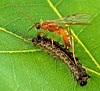
“The fundamental commandment of ethics, then, is that we cause no suffering to any living creature, not even the lowest, unless it is to effect some necessary protection for ourselves, and that we be ready to undertake, whenever we can, positive action for the benefit of other creatures.”
“I too am subject to division of my will-to-life against itself. In a thousand ways my existence stands in conflict with that of others. The necessity to destroy and to injure life IS imposed upon me. If I walk along an unfrequented path, my foot brings destruction and pain upon the tiny creatures which populate it. In order to preserve my own existence, I must defend myself against the existence which injures it. I become a persecutor of the little mouse which inhabits my house, a murderer of the insect which want to have its nest there, a mass-murderer of the bacteria which may endanger my life. I get my food by destroying plants and animals. My happiness is built upon injury done to my fellow-men.”
“A man is really ethical only when he obeys the constraint laid on him to help all life which he is able to succor, and when he goes out of his way to avoid injuring anything living. He does not ask how far this or that life deserves sympathy as valuable in itself, nor how far it is capable of feeling. To him life as such is sacred. He shatters no ice crystal that sparkles in the sun, tears no leaf from its tree, breaks off no flower, and is careful not to crush any insect as he walks. If he works by lamplight on a summer evening, he prefers to keep the window shut and to breathe stifling air, rather than to see insect after insect fall on his table with singed and sinking wings.If he goes out in to the street after a rainstorm and sees a worm which has strayed there, he reflects that it will certainly dry up in the sunshine, if it does not quickly regain the damp soil into which it can creep, and so he helps it back from the deadly paving stones into the lush grass. Should he pass by an insect which has fallen into a pool, he spares the time to reach it a leaf or stalk on which it may clamber and save itself.”