Albert Schweitzer, "Civilization and Ethics", Preface, The Philosophy of Civilization, trans. C. T. Campion, part 2 (1949, reissued 1981), p. 79.
“
Ethics, too, are nothing but reverence for life. That is what gives me the fundamental principle of morality, namely, that good consists in maintaining, promoting, and enhancing life, and that destroying, injuring, and limiting life are evil.
— Albert Schweitzer on Morality
What It Means
This is a placeholder explanation generated by the low-overhead model. It interprets "Ethics, too, are nothing but reverence for life. That is what gives me the fundamental principle of morality, namely, that good consists in maintaining, promoting, and enhancing life, and that destroying, injuring, and limiting life are evil." in the context of "Albert Schweitzer, "Civilization and Ethics", Preface, The Philosophy of Civilization, trans. C. T. Campion, part 2 (1949, reissued 1981), p. 79." to mean that wisdom is timeless.

Source: Wikiquote: "Morality" (Quotes, Respectfully Quoted: A Dictionary of Quotations (1989): Platt, Suzy, ed. (2010), Respectfully Quoted: A Dictionary of Quotations, publisher: Dover Publications, ISBN: 9780486472881)
The 'What it means' explanation text was generated by Google Gemini Flash (accessed January 18, 2026). https://gemini.google.com/app
Tags
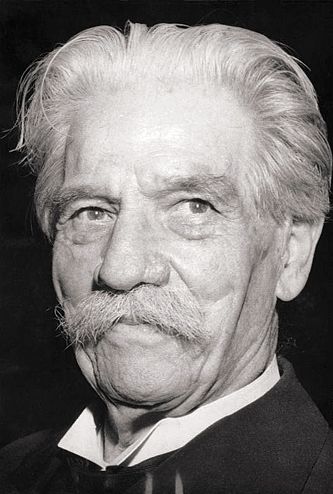
About Albert Schweitzer
Albert Schweitzer (14 January 1875 – 4 September 1965) was an Alsatian philosopher, philanthropist, physician, theologian, missionary, and musicologist who received the Nobel Peace Prize in 1952.
About Albert Schweitzer
Albert Schweitzer (14 January 1875 – 4 September 1965) was an Alsatian philosopher, philanthropist, physician, theologian, missionary, and musicologist who received the Nobel Peace Prize in 1952.
View all quotes →