Link Copied!
A. J. P. Taylor Quotes (1906-1990)


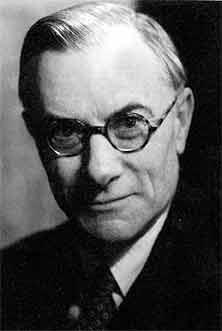









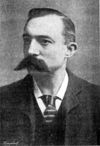


About A. J. P. Taylor
Alan John Percivale Taylor (25 March 1906 – 7 September 1990) was a British historian, journalist, broadcaster and scholar. His approachably written and sometimes contentiously revisionist studies of 19th and early 20th-century subjects brought academic history to a new audience.
Best A. J. P. Taylor Quotes
Shortest
Earliest
Explore our curated collection of the most famous and impactful A. J. P. Taylor quotes.
“Politically we are not Europeans and never have been.”



“The present enables us to understand the past, not the other way round.”


“He detested titles. This, no doubt, is why he distributed them so lavishly.”
“A revolution cannot be judged by the ordinary standards of academic morality.”

“Communists have no principle or belief except the seizure of power by their party.”
“The New Deal was the nearest thing to a revolution ever carried out in a democracy.”
“National freedom is as important as economic freedom or the freedom of the individual.”

“I am against inequality of the sexes, as much as I am against class privilege or colour prejudice.”
“Quakerism has always been in danger of smugness, and is redeemed from it only by an obstinate radicalism.”
“Monetarism has triumphed... whatever Callaghan and others may say Enoch Powell, it seems, has been right all along.”


“I think you can say that the British were more responsible than anyone for the destruction of Nazism and Fascism in Europe.”
“The failure of the "good Germans," not the ranting of the "bad" ones, was the real crime of Germany against European civilization.”

“The Arabs have justified grievances in the Middle East. The Palestinians should weigh heavy on the conscience of the Great Powers.”

“Many nations have made great sacrifices for others and none has made more than his own two countries, Great Britain and the United States.”
“The First World War had begun — imposed on the statesmen of Europe by railway timetables. It was an unexpected climax to the railway age.”
“In my experience Communism is intellectual alcohol – nasty and harmful if taken neat, but an essential ingredient of every stimulating drink.”

A. J. P. Taylor Quotes by Topic
Find exactly what you are looking for by browsing this categorized list of A. J. P. Taylor quotes by topic.
A. J. P. Taylor on French Revolution 3 quotes
“The French Revolution was the greatest event in modern history.”

A. J. P. Taylor on Revolutions of 1848 3 quotes
“Nationalism was the great common factor in the central European revolutions of 1848. Indeed it was a spirit never to be exorcised thereafter.”

A. J. P. Taylor on World War I
“The First World War had begun – imposed on the statesmen of Europe by railway timetables. It was an unexpected climax to the railway age.”

A. J. P. Taylor on History
“History gets thicker as it approaches recent times: more people, more events, and more books written about them. More evidence is preserved, often, one is tempted to say, too much. Decay and destruction have hardly begun their beneficent work.”

A. J. P. Taylor on Russian Revolution
“In 1917 European history, in the old sense, came to an end. World history began. It was the year of Lenin and Woodrow Wilson, both of whom repudiated the traditional standards of political behaviour. Both preached Utopia, Heaven on Earth. It was the moment of birth for our contemporary world.”

A. J. P. Taylor on Vocation
“Every historian loves the past or should do. If not, he has mistaken his vocation; but it is a short step from loving the past to regretting that it has ever changed. Conservatism is our greatest trade-risk; and we run psychoanalysts close in the belief that the only "normal" people are those who cause no trouble either to themselves or anybody else.”
What A. J. P. Taylor Said About Others
Discover personal opinions A. J. P. Taylor shared regarding contemporaries.
A. J. P. Taylor on Otto von Bismarck 6 quotes
“I found Bismarck's personality fascinating...and he became one of the few I should like to recall from the dead.”

A. J. P. Taylor on David Lloyd George 5 quotes
View all 5 quotes on David Lloyd George →A. J. P. Taylor on Leon Trotsky 5 quotes
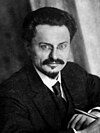
“Any scrap of Trotsky's writing is worth having. He can always provide the biting comment, the brilliant pen-portrait.”
A. J. P. Taylor on E. H. Carr 3 quotes
View all 3 quotes on E. H. Carr →A. J. P. Taylor on Henry Temple, 3rd Viscount Palmerston 3 quotes
“It is difficult to think of a Foreign Secretary with a more successful record.”
A. J. P. Taylor on Richard Nixon 3 quotes
“He accepted the realities of the world and would have gone down as a great President if it had not been for the trivial scandal of the Watergate.”

A. J. P. Taylor on Thomas Carlyle 3 quotes
“Carlyle senses the masses, as no other writer has ever done; he expressed their outlook against his own conscious convictions... In the French Revolution there is no fault or weakness at all; it is a book without peer.”

A. J. P. Taylor on H. H. Asquith 3 quotes
“Muddled and lethargic as usual, he bore the final responsibility for the killings after the Easter rising, just as he bore the main responsibility for the failure of Home Rule – one of the most disastrous prime ministers in British history.”

A. J. P. Taylor on Lewis Namier 3 quotes
“Even over George III we disagreed. I thought party principles still counted and once described Lewis as "the man who took the mind out of history". This was only another way of saying that he was a Tory Marxist. I was neither. Of course I admired his style. But mine was quite different except perhaps for always seeking a strong first sentence. I worked hard to make my style simple from the moment I began to write. Lewis was more oracular. Our methods, too, were different. I often relied on intuition; Lewis believed in laborious research.”

A. J. P. Taylor on Winston Churchill 2 quotes
View all 2 quotes on Winston Churchill →A. J. P. Taylor on William Cobbett 2 quotes
View all 2 quotes on William Cobbett →A. J. P. Taylor on Giuseppe Garibaldi 2 quotes
“All in all, there is no great figure of modern times so wholly admirable.”

Quotes About A. J. P. Taylor
Gain deeper perspective through quotes about A. J. P. Taylor from others.
Asa Briggs on A. J. P. Taylor
Sidney Bradshaw Fay on A. J. P. Taylor
“Mr. Taylor is a master of brilliant paradox, startling juxtapositions, and dogmatic brevity... But his brilliance suggests the crystal chandelier: sparkling at night but less impressive when closely examined by the cold light of day.”
Sebastian Haffner on A. J. P. Taylor
“Mr. Taylor is in the very first rank. He is among English historians to-day about what Mr. Evelyn Waugh is among English novelists, a rescuer of forgotten truths, a knight of paradox, a prince of story-telling, and a great, maybe the greatest, master of his craft.”
Michael Howard on A. J. P. Taylor
“Mr. Taylor carries out his revaluation in the clear, sharp, epigrammatic prose which makes all his work as stimulating as champagne – and which makes one wonder, sometimes, whether it was all really as simple as that. His mind is a convex mirror in which events appear brilliantly coloured, brilliantly distinct, and sometimes a little distorted. He has many of the virtues of Macaulay, and one or two of his faults. The pattern is too sharply etched; the epigrams are too neat; the judgements are too final: but how refreshing it is to read a historian who is not afraid of patterns, epigrams and judgements!”

Tony Judt on A. J. P. Taylor
“The fine line, it seems to me, goes thus: there has to be a plausibility in your story. A history book—assuming its facts are correct—stands or falls by the conviction with which it tells its story. If it rings true, to an intelligent, informed reader, then it is a good history book. If it rings false, then it’s not good history, even if it’s well written by a great historian on the basis of sound scholarship. The best-known example of the latter was A. J. P. Taylor's Origins of the Second World War. It is a beautifully written tract, the work of a consummate diplomatic historian: an expert in the relevant documents, a competent linguist and highly intelligent. At first sight, all of the constituent parts of a good history book were present. So what was missing? The answer is hard to pin down. Perhaps the issue is one of taste. To claim—as Taylor did—that Hitler was not responsible for World War II is absurdly counterintuitive. However subtly expressed, the argument is so implausible as to be poor history.”

John Keegan on A. J. P. Taylor
“His gritty, disrespectful, stay-at-home world contains nothing of the elements which made Britain the power whose passing he regretted – the derring-do of its soldiers and sailors, the colonial dynamism, the Kiplingesque ethos of its "imperial" working class. His is indeed a Little England, and one deformed by his insensitivity to anything aesthetic or spiritual in the way life is lived... [His influence conveyed contempt for] everything that the word "Establishment" stands for... a whole generation of schoolchildren was indirectly exposed to his wicked shafts of doubt and deflation.”

David Marquand on A. J. P. Taylor
“Mr. A.J.P. Taylor is the only English historian now writing who can bend the bow of Gibbon and Macaulay... The result is a masterpiece: lucid, compassionate, beautifully written in a bare, sparse style, and at the same time deeply disturbing.”
Malcolm Muggeridge on A. J. P. Taylor
“I picked up Alan Taylor at the Athenaeum and walked with him along the Strand and Fleet Street. Taxed him with being a fellow-traveller and asked him what he thought he was getting at. He was slightly disconcerted, I fancy, but said that he quite recognised the impracticability of the position of the Socialist who believes in working with the Communists, but that he prefers this position, even so, to working with Anti-Communists. I said it seemed to me quite insane. He is now a Fellow of Magdalen, Oxford and, altogether, very well dug into the economic system which he wants to destroy.”

Sigmund Neumann on A. J. P. Taylor
“A. J. P. Taylor has written just such a challenging essay, packed with substantial summaries and spiced with brilliant observations, reflecting his scholarly maturity, his lucid mind, and his Vienna training under Pribram and the Austrian school of Friedjung and Redlich... An answer to a burning query, it is an impatient book, vivid and tempestuous, pointed and pugnacious, concise and overzealous, severe and sarcastic, ambitious and angry. Grandiose in style it often overshoots its mark. The profound is mixed with the wisecrack. It has the shortcomings of its virtues. It will shock the scholarly reader but it must challenge him too.”
A. L. Rowse on A. J. P. Taylor
“A serious historian must abide religiously by what is true. So no wonder universities would not appoint Taylor to the chairs he was anxious to get. He never seems to have understood why not, nor why his dreadful book about Hitler's war shocked so many people. An Oxford colleague called him "a dishonest historian".”
Hugh Thomas on A. J. P. Taylor
“Alan Taylor I did find very exciting as an undergraduate. I must say I find today's undergraduates do so too.”
W. K. H. on A. J. P. Taylor
“The book will also suggest that students of world politics should draw for their rules of interpretation rather less on Marx and rather more on Machiavelli.”
About A. J. P. Taylor
Alan John Percivale Taylor (25 March 1906 – 7 September 1990) was a British historian, journalist, broadcaster and scholar. His approachably written and sometimes contentiously revisionist studies of 19th and early 20th-century subjects brought academic history to a new audience.