Link Copied!
Roland Quotes (778-)
Leader, King





About Roland
Roland (Old Frankish: Hrōþiland; Medieval Latin: Hruodlandus or Rotholandus; Italian: Orlando or Rolando; died 15 August 778) was a Frankish military leader under Charlemagne who became one of the principal figures in the literary cycle known as the Matter of France. The historical Roland was military governor of the Breton March, responsible for defending Francia's frontier against the Bretons. His only historical attestation is in Einhard's Vita Karoli Magni, which notes he was part of the Frankish rearguard killed in retribution by the Basques in Iberia at the Battle of Roncevaux Pass.
Roland Quotes by Topic
Find exactly what you are looking for by browsing this categorized list of Roland quotes by topic.
Roland on The Dark Tower (series) 24 quotes
“We deal in lead.”

Roland on Antinatalism 4 quotes
“What could be more obscene than a woman proudly carrying a future corpse in her belly?”

Roland on Fear 2 quotes
“Every time you go into battle, you are scared shitless. The panic will rise inside of you and you have to develop a technique to keep it down. The trick is to keep your fears under control. First, you have to know your fears. There are several kinds of fear a combat soldier has to deal with: First of all, there is a 'deployment or mission fear.' This starts the day when you get your orders to go into combat. It's like a fist in the stomach. From this day on, until you come back home to safety you will feel this fear. Sometimes it's just a gloomy feeling, the certainty that you are doomed and sometimes, it makes you wake up in the morning with thoughts like: "Fuck! What have I done?!" This fear is the easiest to control. Keep busy, avoid moments of lineliness and stay focused on the task at hand. Fortunately, as soon as a soldier gets his or her marching orders, life becomes very busy and there isn't much time to start with deep thinking, anyway.”

Roland on Lazarus of Bethany
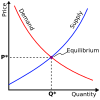
Roland on Price
“By reducing any quality to quantity, myth economizes intelligence: it understands reality more cheaply.”
Roland on Penguins
Roland on Alienation
Roland on Car
“I think cars today are almost the exact equivalent of the great Gothic cathedrals. I mean the supreme creation of an era, conceived with passion by unknown artists, and consumed in image if not in usage by a whole population which appropriates them as a purely magical object.”

Roland on Christianity
“I'm looking for the day when Jerry Falwell, Pat Robertson, Joyce Meyer, James Dobson, Tony Perkins, James Kennedy, Rod Parsley, " Patriot Pastors" and Rick Warren will sit at the same table as Jesse Jackson, Al Sharpton, Cynthia Hale, Eddie L. Long, James Meek, Fred Price, Emmanuel Cleaver and Floyd Flake to establish a call to arms on racism, AIDS, police brutality, a national health care policy, our sorry education system. If they all say they love and worship one God, one Jesus, let's see them rally their members behind one agenda. I stand here today not as a Republican or a liberal. And don't bother calling me a Democrat or a conservative. I am a man, an African-American man who has professed that Jesus Christ is Lord, and that's to whom I bow down.”

Roland on Epilepsy
“Epilepsy is one of the most common serious brain conditions, affecting over 70 million people worldwide. Its incidence has a bimodal distribution with the highest risk in infants and older age groups. Progress in genomic technology is exposing the complex genetic architecture of the common types of epilepsy, and is driving a paradigm shift. Epilepsy is a symptom complex with multiple risk factors and a strong genetic predisposition rather than a condition with a single expression and cause. These advances have resulted in the new classification of epileptic seizures and epilepsies. A detailed clinical history and a reliable eyewitness account of a seizure are the cornerstones of the diagnosis. Ancillary investigations can help to determine cause and prognosis. Advances in brain imaging are helping to identify the structural and functional causes and consequences of the epilepsies. Comorbidities are increasingly recognised as important aetiological and prognostic markers.”

Roland on Social responsibility
“Society's and law‐makers' demands for individual and corporate social responsibility as an alternative response to market and redistributive failures have recently become more prominent. Certainly, calls for people to contribute time and money to good causes have existed throughout history and in all societies, from Antiquity to, say, eighteenth century Quakers' and Mennonites' refusal to invest in weapons and slavery....the movement is gaining momentum, especially with the empowerment of civil society... and the equitable‐trade/responsible‐investment movement. A variety of factors probably combine to account for this trend: (i) social responsibility is likely to be a normal good; (ii) information about companies' practices throughout the world has become much more accessible and quick to travel; (iii) the scope of environmental and social externalities exerted by multinationals in less developed, more laxly regulated countries is likely to have expanded in pace with globalization; (iv) the long‐run cost of atmospheric pollution (e.g. global warming), or at least the public's awareness of it, has risen significantly.”

What Roland Said About Others
Discover personal opinions Roland shared regarding contemporaries.
Roland on Maurice Cowling
“[I]t is dangerous, pretentious and unpleasant.”

Roland on Marie Ebikake
“I think the significant thing to note is the reward of success for the hard work and fidelity to strategic ground plans of the party, and the all-inclusive campaigns that were hinged on self-evident achievements of the Douye Diri government.”
Roland on Ted Kennedy
“Senator Kennedy's devotion to our country and his lifetime legacy of fighting for causes such as civil rights, education, and health care are unparalleled. His life and legislative accomplishments will carry on through those he knew, inspired, and fought for.”

Roland on Greta Garbo
“Garbo still belongs to that moment in cinema when capturing the human face still plunged audiences into the deepest ecstasy, when one literally lost oneself in a human image as one would in a philtre, when the face represented a kind of absolute state of the flesh, which could be neither reached nor renounced.”

Roland on Historian
“What really happens is that the author discards the human persona but replaces it by an 'objective¿ one; the authorial subject is as evident as ever, but it has become an objective subject … At the level of discourse objectivity, or the absence of any clues to the narrator, turns out to be particular form of fiction, where the historian tries to give the impression that the referent is speaking for itself.”
Roland on Timothy Leary
“Timothy Leary really so discredited a scientific approach to studying this, because he may have started off doing interesting research, and then got into advocating use in a way that was incredibly threatening. Culturally, we reacted, and politically, it became impossible to do this sort of research. Funding agencies didn't make resources available. Regulatory agencies increased the practical hurdles for initiating this kind of research. And I think people who had interest in research of this type largely were discredited because of their interest in the research. Social, political and scientific issues that came together pushed these drugs out of the scientific marketplace.”

Roland on Angelus Silesius
“Meister Eckhart, Jacob Boehme and Angelus Silesius describe their spiritual vision of the sublime and ultimate reality of God, as well as their participation therein, by a dramatic use of the power of imagery of the German language which, although rooted in time and space, seems to be free from the constraints of these elements. Time and space alone are incapable of grasping eternity; only when struck by a shaft of eternal light can they reflect its splendor. Such a reflection of the eternal is present in the language of Meister Eckhart, Jacob Boehme and Angelus Silesius. It is, more-over, the light of eternity that makes it at all possible to see the teachings of these great metaphysicians and mystics as a unity, in spite of their having lived at different times and belonged to differing Christian confessions. The uniformity of their spiritual vision arises from the inner unity of Divine Reality itself. Human language becomes inadequate when confronted with this mystery of the inner unity of the Godhead; “the most beautiful statement about God of which man is capable is his silence in the face of his inner riches.”...Angelus Silesius summarized his spiritual vision in rhymes whose beauty is filled with an inner certainty that derives directly from the knowledge of the divine being. This direct knowledge of God is founded on the identity of essence between God and the soul, which occurs when the soul once more corresponds to its original state of being created in the image of God.”

Roland on Alfred Cobban
“It remained for Alfred Cobban to play the role of Copernicus and point out the emperor-theory's nakedness. At least his writings of some twenty years ago constitute the most apparent landmark of the revisionist school. Cobban's main points were that the French bourgeoisie of the eighteenth century — he did not question its existence — was neither (a) capitalist or industrial, (even in intent), nor (b) revolutionary. Rather than being a class of "industrial entrepreneurs and financiers of big business," the bourgeoisie was composed of "land-owners, rentiers, and officials." Itself a class deeply involved in privileges, it abhorred the thought of revolution. Moreover, this bourgeoisie was, he thought, not rising but declining. Cobban recognized the confusions in the situation and called for new, freshly directed research. He was sure that historians had imposed on the Old Regime a "sociological theory" drawn from a later age, one that did not fit that earlier epoch. They had looked into the mirror of their own age rather than into the past, and they had seen Rockefeller and Lenin rather than the real Necker and Voltaire, thus misreading the whole code. Cobban further noted the obvious fact that so far as France was concerned, the Revolution did not usher in a triumphant capitalism but in fact had impeded modernization, industrialization, technological innovation for a century or more. He added that when historians construed the Parisian sans culottes of the Revolution as an incipient proletariat they also mistook reality by importing later ideas, a point others had already made.”
Quotes About Roland
Gain deeper perspective through quotes about Roland from others.
Einhard on Roland
“While he was vigorously pursuing the Saxon war, almost without a break, and after he had placed garrisons at selected points along the border, [Charles] marched into Spain [in 778] with as large a force as he could mount. His army passed through the Pyrenees and [Charles] received the surrender of all the towns and fortified places he encountered. He was returning [to Francia] with his army safe and intact, but high in the Pyrenees on that return trip he briefly experienced the Basques. That place is so thoroughly covered with thick forest that it is the perfect spot for an ambush. [Charles's] army was forced by the narrow terrain to proceed in a long line and [it was at that spot], high on the mountain, that the Basques set their ambush. [...] The Basques had the advantage in this skirmish because of the lightness of their weapons and the nature of the terrain, whereas the Franks were disadvantaged by the heaviness of their arms and the unevenness of the land. Eggihard, the overseer of the king's table, Anselm, the count of the palace, and Roland, the lord of the Breton March, along with many others died in that skirmish. But this deed could not be avenged at that time, because the enemy had so dispersed after the attack that there was no indication as to where they could be found.”

Thomas Campbell on Roland
“The brave Roland,—the brave Roland! Sad tidings reached the Rhenish strand That he had fallen in fight: And thy faithful bosom swoon’d with pain, O loveliest maid of Allémayne, For the loss of thine own true knight.But why so rash has she ta’en the veil In yon Nonnenwerther’s cloisters pale? For her vow had scarce been sworn, And the fatal mantle o’er her flung, When the Drachenfels to a trumpet rung,— ’Twas her own dear warrior’s horn.Woe! woe! each heart shall bleed,—shall break! She would have hung upon his neck, Had he come but yester-’even! And he had clasped those peerless charms That shall never, never fill his arms, Or meet him but in Heaven.Yet Roland the brave—Roland the true— He could not bid that spot adieu; It was dear still ’midst his woes. For he loved to breathe the neighboring air, And to think she bless’d him in her prayer When the Hallelujah rose.There’s yet one window of that pile, Which he built above the nun’s green isle; Thence sad and oft looked he (When the chant and organ sounded slow) On the mansion of his love below, For herself he might not see.She died. He sought the battle-plain; Her image filled his dying brain When he fell and wished to fall: And her name was in his latest sigh, When Roland, the flower of Chivalry, Expired at Roncevall.”
Edwin Arlington Robinson on Roland
“Alone, as if enduring to the end A valiant armor of scarred hopes outworn, He stood there in the middle of the road Like Roland's ghost winding a silent horn.”

About Roland
Roland (Old Frankish: Hrōþiland; Medieval Latin: Hruodlandus or Rotholandus; Italian: Orlando or Rolando; died 15 August 778) was a Frankish military leader under Charlemagne who became one of the principal figures in the literary cycle known as the Matter of France. The historical Roland was military governor of the Breton March, responsible for defending Francia's frontier against the Bretons. His only historical attestation is in Einhard's Vita Karoli Magni, which notes he was part of the Frankish rearguard killed in retribution by the Basques in Iberia at the Battle of Roncevaux Pass.