Link Copied!
Laura Riding Quotes (1901-1991)
Poet
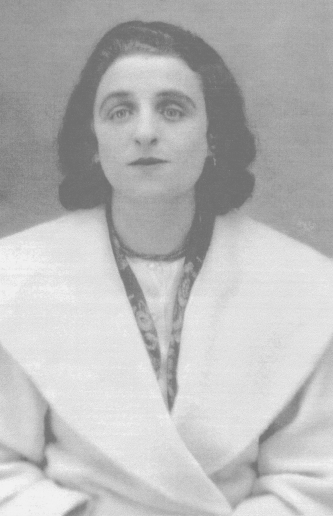
About Laura Riding
Laura Riding (January 16, 1901 – September 2, 1991) was a controversial modernist American poet and literary critic, associated initially with the Fugitives and later with Robert Graves. She was born Laura Reichenthal, and her married names were Laura Riding Gottschalk and Laura (Riding) Jackson.
Best Laura Riding Quotes
Shortest
Earliest
Explore our curated collection of the most famous and impactful Laura Riding quotes.
“The group is only interested in the formal publishing of individuals for the purpose of establishing their social solidarity.”
“We live on the circumference of a hollow circle. We draw the circumference, like spiders, out of ourselves: it is all criticism of criticism.”

“Polygamy and polyandry distribute the frightening physical solidarity of monogamy. Monogamous couples are always hungry for company: to dilute sex.”

“Anger is precious because it is an immediate, undeniable clue to what our minds (so much more cautious in rejection and resistance than our bodies) will not tolerate.”
“Every woman must live by some sense of victory over disappointments, and Olympias was not the sort of woman to find compensation in her own powers of self-control and endurance.”
“The terms ‘male’ and ‘female’ must be understood as representing no more primitive opposition of sex to sex; but as defining two worlds of differing quality, in either of which men and women may jointly move and live.”
“Their common assumption [communists and left-wing poets] is that every one must stand somewhere politically - and especially the poets, who are under suspicion as unpractical people who shirk the responsibility of taking a stand.”

“What is science? yard-measure and scale to philosophy, expert-accountant, bank clerk. What is poetry? miserable, ill-fed, underpaid, unionized labourer, pleased to oblige, grateful for work, flattering himself that poverty makes him an aristocrat.”
“Metaphor... is, as a common feature of linguistic practice, an incidental expediency, a homely administering of first-aid by mother-wit to jams or halts in expression suddenly confronting speakers, with no respectable linguistic solution immediately in sight.”
“All literature is written by the old to teach the young how to express themselves so that they in turn may write literature to teach the old how to express themselves. All literature is written by mentally precocious adolescents and by mentally precocious senescents.”


“What second love could she [Olympias] make out of her ruined first love? The second love that most women make out of their first love for husbands grows from a mutual and tacit sadness in both husband and wife that he is only in rare moments the man both would like him to be.”

“'God' is the name given to the most ‘important’ human idea. In English, as in other languages, the original sense of the word is obscure. But the character of the name is the same in all languages: it is a question. 'God' is the question 'Is there something more important than, something besides, man?'”
“I feel an intense intimacy with those who have this loathing interest in me. Further than this, I know what they mean, I sympathize with them, I understand them. There should be a name (as poetic as love) for this relationship between loather and loathed; it is of the closest and more full of passion than incest.”
“Because most people are not sufficiently employed in themselves, they run about loose, hungering for employment, and satisfy themselves in various supererogatory occupations. The easiest of these occupations, which have all to do with making things already made, is the making of people: it is called the art of friendship.”
“Much of the magical effect that poetry gives of rendering everything it touches pellucid comes from the necessity of compression that it imposes. The impossibility of pausing in poetry as long as may be needed to make sense clear causes many a set of words actually deficient in linguistic workmanship to pass for an eloquent brevity.”

“Daisy was a consciously happy young woman without any of the usual endowments that make for conscious happiness, money apart. She was not pretty, she was not clever, she had no friends, no talents, nor even an imagination to make her think she was happy when she was really miserable. As she was never miserable, she had no need of an imagination.”
“The anthology meets with two different kinds of reactions in living poets. They will either write toward the anthology or away from it. Anti-anthology poets often overreach themselves, inflicting protective distortions on their work - as parents in old Central Europe often deliberately maimed their sons to save them from compulsory military service.”
“Women from earliest times have been used as conveniences of communication with unseen, inaccessible powers, but always in the sense that such exposing of self to dangerous mysteries, such destruction of the understanding as was required to become the slave of unseen powers, did not matter because the communicant was only a woman, in herself an undetermined cipher – a nothing.”
“Pseudo-modernists pursue individual style because they know they cannot make a name without it; but if they had lived in the eighteenth century their sole object would have been to write correctly, to conform to the manner of the period. In practice, their conforming individualism means an imitation, studiously concealed, of the eccentricities of poems which really are individual.”
“Yet what representative trio do not make a mad trio? Blake, Mrs. Aphra Behn, Zeno - not a typical but a representative threesome... Things do not go in simple pairs. Poetry is not a case of Shakespeare and Marlowe, Shelley and Keats, Wordsworth and Coleridge, Bridges and Masefield, Emily Dickinson and T. S. Eliot. Poetry is some awkward trio - like Caedmon, Oliver Goldsmith, Edna St. Vincent Millay. So with the novel.”
“The child begins with crude sex alone. It innocently indulges itself in sensual pleasures. It loves kissing and to be kissed, stroking and to be stroked, fondly contemplating its excretions. The civilized society into which it is born magnifies the importance of these insignificant local sensations, gives them intellectual depth. It creates a handsome receptacle, love, to contain the humours of this unnaturally enlarged instinct.”

“Political statements all have a battle flavour - attack, counter-attack, defence. Left political statements generally have a counter-attack flavour, though the Conservative flavour is not attack but defence. A large part of Left rhetoric is spent in imposing the 'attack' flavour on the Conservative position (for example, in such phrases as: 'inspired Capitalist opinion', 'predatory imperialist interests', 'the ruling financial oligarchy').”
About Laura Riding
Laura Riding (January 16, 1901 – September 2, 1991) was a controversial modernist American poet and literary critic, associated initially with the Fugitives and later with Robert Graves. She was born Laura Reichenthal, and her married names were Laura Riding Gottschalk and Laura (Riding) Jackson.