Link Copied!
Hilary Putnam Quotes (1926-2016)
Philosopher

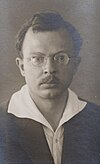
About Hilary Putnam
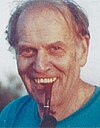
Hilary Whitehall Putnam (July 31, 1926 - March 13, 2016) was an American philosopher who has been a central figure in analytic philosophy since the 1960s, especially in philosophy of mind, philosophy of language, and philosophy of science. He is known for his willingness to apply an equal degree of scrutiny to his own philosophical positions as to those of others, subjecting each position to rigorous analysis until he exposes its flaws. As a result, he has acquired a reputation for frequently changing his own position.
Best Hilary Putnam Quotes
Shortest
Earliest
Explore our curated collection of the most famous and impactful Hilary Putnam quotes.
“No sane person should believe that something is 'subjective' merely because it cannot be settled beyond controversy.”

“Truth and falsity are the most fundamental terms of rational criticism, and any adequate philosophy must give some account of these, or failing that, show that they can be dispensed with.”

“[Oddly enough, Putnam believes part of the attraction of some of these formalisms is their obscurity]. "I think part of the appeal of mathematical logic is that the formulas look mysterious - you write backward Es!"”
“To require that all of these must be reducible to a single version is to make the mistake of supposing that 'Which are the real objects?' is a question that makes sense independently of our choice of concepts.”
“The physicist who states a law of nature with the aid of a mathematical formula is abstracting a real feature of a real material world, even if he has to speak of numbers, vectors, tensors, state-functions, or whatever to make the abstraction.”
“In sum, a theory is only accepted if the theory has substantial, non-ad hoc, explanatory successes. This is in accordance with Popper; unfortunately, it is in even better accordance with the 'inductivist' accounts that Popper rejects, since these stress support rather than falsification.”

“The problem with all this--the problem I discussed in the first lecture--is that if the causes/background conditions distinction is fundamentally subjective, not descriptive of the world in itself, then current philosophical explanations of the metaphysical nature of reference are bankrupt.”

“If reason is both transcendent and immanent, then philosophy, as culture-bound reflection and argument about eternal questions, is both in time and eternity. We don't have an Archimedean point; we always speak the language of a time and place; but the rightness and wrongness of what we say is not just for a time and a place.”
“Even though the model referred to satisfies the theory, etc., it is 'unintended'; and we recognize that it is unintended from the description through which it is given (as in the intuitionist case). Models are not lost noumenal waifs looking for someone to name them; they are constructions within our theory itself. and they have names from birth.”
“Philosophers today are as fond as ever of apriori arguments with ethical conclusions. One reason such arguments are always unsatisfying is that they always prove too much; when a philosopher 'solves' an ethical problem for one, one feels as if one had asked for a subway token and been given a passenger ticket valid for the first interplanetary passenger-carrying space ship instead.”
“The similarity between Marxism and neoconservativism might be expressed in the following way: both perspectives say that certain injustices can't be cured under our present system of political democracy and mixed economy. The Marxist concludes that we have to overthrow the present system and the neoconservative concludes that we have to live with the injustices. But they are both wrong.”

“These papers are all written from what is called a realist perspective. The statements of science are in my view either true or false (although it is often the case that we don't know which) and their truth or falsity does not consist in their being highly derived ways of describing regularities in human experience. Reality is not a part of the human mind; rather the human mind is a part - and a small part at that - of reality.”

“Philosophy was never just ontotheology, and even when philosophers were concerned with ontotheology, they were concerned with much more than that. That is the first reason that the idea of a fundamental “crisis” in philosophy and of the “end of philosophy” is deeply mistaken. And if the questions of philosophy are indeed “unsettleable,” in the sense that they will always be with us, that is a wonderful thing, not something to be regretted.”
“On another possible world or another planet a word might be associated with much the same stereotype and much the same criteria as our term 'water', but it might designate XYZ and not H₂O. At least this could happen in a prescientific era. And it would not follow that XYZ was water; it would only follow that XYZ could look like water, taste like water, etc. What 'water' refers to depends on the actual nature of the paradigms, not just on what is in our heads.”

“Now, moral philosophers generally prefer to talk about virtues, or about (specific) duties, rights, and so on, rather than about moral images of the world. There are obvious reasons for this; nevertheless, I think that it is a mistake, and that Kant is profoundly right. What we require in moral philosophy is, first and foremost, a moral image of the world, or rather--since, here again, I am more of a pluralist than Kant--a number of complementary moral images of the world.”

“To successfully adjudicate ethical problems, as opposed to 'solving' them, it is necessary that the members of the society have a sense of community. A compromise that cannot pretend to be the last word on an ethical question, that cannot pretend to derive from binding principles in an unmistakeably constraining way, can only derive its force from a shared sense of what is and is not reasonable, from loyalties to one another, and a commitment to 'muddling through' together.”
“My own view is that philosophy at its best has always, in every period, included some philosophers who brilliantly represent the moral face of the subject and some philosophers who brilliantly represent the theoretical face, as well as some geniuses whose insights span and unite both sides of the subject. To renounce either the moral ambitions of philosophy or its theoretical ambitions is not just to kill the subject of philosophy; it is to commit intellectual and spiritual suicide.”
“What we have is a device for producing sentences in response to sentences. But none of these sentences is at all connected to the real world. If one coupled two of these machines and let them play the Imitation Game with each other, then they would go on 'fooling' each other forever, even if the rest of the world disappeared! There is no more reason to regard the machine's talk of apples as referring to real world apples than there is to regard the ant's 'drawing' as referring to Winston Churchill.”
“To sum up: we have seen that of the three notions of 'partial interpretation' discussed, each is either unsuitable for Carnap's purposes (starting with observation terms), or incompatible with a rather minimal scientific realism; and, in addition, the second notion depends upon gross and misleading changes in our use of language. Thus in none of these senses is 'a partially interpreted calculus in which only the observation terms are directly interpreted' an acceptable model for a scientific theory.”

“What we are left with, if what I have said so far is right, is a conclusion that I initially found very distressing: either GRW or some successor, or else Bohm or some successor, is the correct interpretation—or, to include a third possibility to please Itamar Pitowski, we will just fail to find a scientific realist interpretation which is acceptable. (And the ghost of Bohr will laugh, and say, ‘I told you all along that the human mind cannot produce a realist interpretation of quantum mechanics’!)”
“Even if we consider not words by themselves but rules deciding what words may appropriately be produced in certain contexts — even if we consider, in computer jargon, programs for using words — unless those programs themselves refer to something extra-linguistic there is still no determinate reference that those words possess. This will be a crucial step in the process of reaching the conclusion that the Brain-in-a-Vat Worlders cannot refer to anything external at all (and hence cannot say that they are Brain-in-a-Vat Worlders).”

“Part of what makes moral philosophy an anachronistic field is that its practitioners continue to argue in this very traditional and aprioristic way even though they themselves do not claim that one can provide a systematic and indubitable 'foundation' for the subject. Most of them rely on what are supposed to be 'intuitions' without claiming that those intuitions deliver uncontroversial ethical premises, on the one hand, or that they have an ontological or epistemological explanation of the reliability of those intuitions, on the other.”
“In closing, I can only apologize for not having given any positive account of either mathematical truth or mathematical necessity. I can only say that I have not given such an account because I think that the search for such an account is a fundamental mistake. It is not that there is nothing special about mathematics; it is that, in my opinion, the investigation of mathematics must presuppose and not seek to account for the truth of mathematics. But this is the beginning of another paper and not the end of this one.”
“The philosophy of physics is continuous with physics itself. Just as certain issues in the Foundations of Mathematics have been discussed by both mathematicians and by philosophers of mathematics, so certain issues in the philosophy of physics have been discussed by both physicists and by philosophers of physics. And just as there are issues of a more epistemological kind that tend to concern philosophers of mathematics more than they do working mathematicians, so there are issues that concern philosophers of physics more than they do working physicists.”
Hilary Putnam Quotes by Topic
Find exactly what you are looking for by browsing this categorized list of Hilary Putnam quotes by topic.
Hilary Putnam on Many-worlds interpretation 2 quotes
“The philosophical moral behind my question is this: once you give up the distinction between actuality and possibility—as the Many Worlds interpretation in effect does, by postulating that all the quantum mechanical possibilities are actualized, each in its own physical universe—once you say that all possible outcomes are, ontologically speaking, equally actual— the notion of ‘probability’ loses all meaning. ‘No collapse and no hidden variables’ is incoherent.”

Hilary Putnam on No miracles argument
“The positive argument for realism is that it is the only philosophy that doesn't make the success of science a miracle.”
Hilary Putnam on Marxism
“The similarity between Marxism and neoconservatism might be expressed in the following way: both perspectives say that certain injustices can't be cured under our present system of political democracy and mixed economy. The Marxist concludes that we have to overthrow the present system and the neoconservative concludes that we have to live with the injustices. But they are both wrong.”

What Hilary Putnam Said About Others
Discover personal opinions Hilary Putnam shared regarding contemporaries.
Hilary Putnam on Rudolf Carnap
Hilary Putnam on Richard Rorty
“I think philosophy is both more important and less important than Rorty does. It is not a pedestal on which we rest (or have rested until Rorty). Yet the illusions that philosophy spins are illusions that belong to die nature of human life itself, and that need to be illuminated. Just saying "That's a pseudo-issue" is not of itself therapeutic; it is an aggressive form of the metaphysical disease itself.”

Hilary Putnam on Immanuel Kant
“I was shocked many years ago when a physicist said to me that Kant was the greatest astrophysicist in a hundred-year period. And I asked “Why do you say that? You talk about Kant-Lagrange hypothesis?” He said “No, that was only a hypothesis. Kant showed by a very eloquent geometrical argument that we live near the edge of landscape galaxy in the center of the sphere that resembles Andromeda nebula”. I never heard of that, no philosopher told me that, no historian of philosophy told me that, an astronomer told me that! It was Steven Weinberg; he then said that Kant was the only astrophysicist in about a hundred years who believed that star clustering could be accounted for by gravitation alone.”

Hilary Putnam on Ernst Schröder
“When I started to trace the later development of logic, the first thing I did was to look at Schröder's Vorlesungen über die Algebra der Logik, ...[whose] third volume is on the logic of relations (Algebra und Logik der Relative, 1895). The three volumes immediately became the best-known advanced logic text, and embody what any mathematician interested in the study of logic should have known, or at least have been acquainted with, in the 1890s. While, to my knowledge, no one except Frege ever published a single paper in Frege's notation, many famous logicians adopted Peirce-Schröder notation, and famous results and systems were published in it. Löwenheim stated and proved the Löwenheim theorem (later reproved and strengthened by Thoralf Skolem, whose name became attached to it together with Löwenheim's) in Peircian notation. In fact, there is no reference in Löwenheim's paper to any logic other than Peirce's. To cite another example, Zermelo presented his axioms for set theory in Peirce-Schröder notation, and not, as one might have expected, in Russell-Whitehead notation.”

Hilary Putnam on Willard van Orman Quine
“I do not agree with Quine, that there is no analytic-synthetic distinction to be drawn at all. But I do believe that his emphasis on the monolithic character of our conceptual system and his negative emphasis on the silliness of regarding mathematics as consisting in some sense of 'rules of language', represent exceedingly important theoretical insights in philosophy. I think that what we have to do now is to settle the relatively trivial question concerning analytic statements properly so called ('All bachelors are unmarried'). We have to take a fresh look at the framework principles so much discussed by philosophers, disabusing ourselves of the idea that they are 'rules of language' in any literal or lexicographic sense; and above all, we have to take a fresh look at the nature of logical and mathematical truths. With Quine's contribution, we have to face two choices: We can ignore it and go on talking about the 'logic' of individual words. In that direction lies sterility and more, much more, of what we have already read. The other alternative is to face and explore the insight achieved by Quine, trying to reconcile the fact that Quine is overwhelmingly right in his critique of what other philosophers have done with the analytic-synthetic distinction with the fact that Quine is wrong in his literal thesis, namely, that the distinction itself does not exist at all. In the latter direction lies philosophic progress. For philosophic progress is nothing if it is not the discovery of new areas for dialectical exploration.”

Quotes About Hilary Putnam
Gain deeper perspective through quotes about Hilary Putnam from others.
Sidney Morgenbesser on Hilary Putnam
“He’s a quantum philosopher. I can’t understand him and his position at the same time.”
About Hilary Putnam
Hilary Whitehall Putnam (July 31, 1926 - March 13, 2016) was an American philosopher who has been a central figure in analytic philosophy since the 1960s, especially in philosophy of mind, philosophy of language, and philosophy of science. He is known for his willingness to apply an equal degree of scrutiny to his own philosophical positions as to those of others, subjecting each position to rigorous analysis until he exposes its flaws. As a result, he has acquired a reputation for frequently changing his own position.