Link Copied!
George Peacock Quotes (1791-1858)
Author, Mathematician


About George Peacock
George Peacock (April 9, 1791 – November 8, 1858) was an English mathematician and author of books on mathematics and a biography of Thomas Young. He became a deacon, then priest, in the Church of England, and later, Vicar of Wymewold and Dean of Ely cathedral, Cambridgeshire. He was also professor of astronomy at the University of Cambridge.
Best George Peacock Quotes
Shortest
Earliest
Explore our curated collection of the most famous and impactful George Peacock quotes.
“This work... was designed in the first instance to be a second edition of a Treatise on Algebra, published in 1830, and which has been long out of print; but I have found it necessary, in carrying out the principles developed in that work, to present the subject in so novel a form, that I could not with propriety consider it in any other light than as an entirely new treatise.”

“This principle, which is thus made the foundation of the operations and results of Symbolical Algebra, has been called "The principle of the permanence of equivalent forms", and may be stated as follows:
"Whatever algebraical forms are equivalent, when the symbols are general in form but specific in value, will be equivalent likewise when the symbols are general in value as well as in form."”
"Whatever algebraical forms are equivalent, when the symbols are general in form but specific in value, will be equivalent likewise when the symbols are general in value as well as in form."”

“I have separated arithmetical from symbolical algebra, and I have devoted the present volume entirely to the exposition of the principles of the former science and their application to the theory of numbers and of arithmetical processes: the second volume, which is now in the press, will embrace the principles of symbolical algebra: it will be followed, if other and higher duties should allow me the leisure to complete them, by other works, embracing all the more important departments of analysis, with the view of presenting their principles in such a form, as may make them component parts of one uniform and connected system.”
“I have endeavoured... to present the principles and applications of Symbolical, in immediate sequence to those of Arithmetical, Algebra, and at the same time to preserve that strict logical order and simplicity of form and statement which is essential to an elementary work. This is a task of no ordinary difficulty, more particularly when the great generality of the language of Symbolical Algebra and the wide range of its applications are considered, and this difficulty has not been a little increased, in the present instance, by the wide departure of my own views of its principles from those which have been commonly entertained.”
“I Gladly avail myself of the opportunity of inscribing to you, for a second time, a work of mine on Algebra, as a sincere tribute of my respect, affection and gratitude.
I trust that I shall not be considered as derogating from the higher duties which, (in common with you), I owe to my station in the Church, if I continue to devote some portion of the leisure at my command, to the completion of an extensive Treatise, embracing the more important departments of Analysis, the execution of which I have long contemplated, and which, in its first volume I now offer to the public, under the auspices of one of my best and dearest friends.”
I trust that I shall not be considered as derogating from the higher duties which, (in common with you), I owe to my station in the Church, if I continue to devote some portion of the leisure at my command, to the completion of an extensive Treatise, embracing the more important departments of Analysis, the execution of which I have long contemplated, and which, in its first volume I now offer to the public, under the auspices of one of my best and dearest friends.”
“I assure you that I shall never cease to exert myself to the utmost in the cause of reform, and that I will never decline any office which may increase my power to effect it. I am nearly certain of being nominated to the office of Moderator in the year 1818-1819, and as I am an examiner in virtue of my office, for the next year I shall pursue a course even more decided than hitherto, since I shall feel that men have been prepared for the change, and will then be enabled to have acquired a better system by the publication of improved elementary books. I have considerable influence as a lecturer, and I will not neglect it. It is by silent perseverance only, that we can hope to reduce the many-headed monster of prejudice and make the University answer her character as the loving mother of good learning and science.”

“It is now more than twenty years since I somewhat rashly undertook to write the Life of Dr. Young. For many years, however, after making this engagement, I found myself so much occupied by the duties of a very laborious college office, that I had no leisure to commence the work; and when the possession of leisure would have enabled me to have done so, my health became so seriously deranged that I felt myself unequal to any continued and severe literary labour. The undertaking was consequently abandoned, and it was proposed to transfer it to other hands; but it was not found easy to secure the services of a person who possessed sufficient scientific knowledge to enable him to write the life of an author whose works were so various in their character and not unfrequently so difficult to understand and analyse, as those of Dr. Young.”

“In arithmetical algebra we consider symbols as representing numbers, and the operations to which they are submitted as included in the same definitions as in common arithmetic; the signs and denote the operations of addition and subtraction in their ordinary meaning only, and those operations are considered as impossible in all cases where the symbols subjected to them possess values which would render them so in case they were replaced by digital numbers; thus in expressions such as we must suppose and to be quantities of the same kind; in others, like , we must suppose greater than and therefore homogeneous with it; in products and quotients, like and we must suppose the multiplier and divisor to be abstract numbers; all results whatsoever, including negative quantities, which are not strictly deducible as legitimate conclusions from the definitions of the several operations must be rejected as impossible, or as foreign to the science.”
“Symbolical algebra adopts the rules of arithmetical algebra, but removes altogether their restrictions: thus symbolical subtraction differs from the same operation in arithmetical algebra in being possible for all relations of value of the symbols or expressions employed... all the results of arithmetical algebra which are deduced by the application of its rules, and which are general in form, though particular in value, are results likewise of symbolical algebra, where they are general in value as well as in form: thus the product of and , which is when and are whole numbers, and therefore general in form though particular in value, will be their product likewise when and are general in value as well as in form: the series for , determined by the principles of arithmetical algebra, when is any whole number, if it be exhibited in a general form, without reference to a final term, may be shewn, upon the same principle, to the equivalent series for , when is general both in form and value.”

George Peacock Quotes by Topic
Find exactly what you are looking for by browsing this categorized list of George Peacock quotes by topic.
George Peacock on History of algebra 2 quotes
“This principle, which is thus made the foundation of the operations and results of Symbolical Algebra, has been called "The principle of the permanence of equivalent forms", and may be stated as follows: "Whatever algebraical forms are equivalent, when the symbols are general in form but specific in value, will be equivalent likewise when the symbols are general in value as well as in form."”

What George Peacock Said About Others
Discover personal opinions George Peacock shared regarding contemporaries.
George Peacock on George Biddell Airy
“Newton pointed out and assigned generally, not only the nature and the magnitude of the periodical forces which are concerned in producing the tides, but likewise indicated their true character as undulations, in one very remarkable proposition, as well as in a special explanation of... the tides of the Port of Batsha. The equilibrium theory of Daniel Bernoulli adopted the first part of Newton's views but altogether neglected the second. ...Professor Airy ...has pronounced the theory proposed by La Place in the Mécanique Céleste,—if viewed with reference to the boldness and comprehensive character of its design rather than to the success of its execution—"as one of the most splendid works of the greatest mathematician of the past age." The problem, however, was not considered by [La Place] in the most general form which it is capable of receiving. He assumed the earth to be entirely covered by water, and its depth to be uniform, at least throughout the same parallel of latitude, and he neglected the resistance both of the particles of the fluid amongst each other, and of that which arises from the irregular surfaces in the channels over which the tide is transmitted. He was consequently obliged to omit the consideration of the tides in canals, rivers, and narrow seas, which constitute some of the most interesting, and by no means the most unmanageable, of the problems which later, and even in some respects more simple, investigations of the oscillations of the sea have brought within the control of analysis. Imperfect, however, as the results of this theory were as it came from the hand of its author, their importance cannot easily be estimated too highly. Dr. Young adopted the general principles which they involved, though he has subjected them to a totally different treatment; and Professor Airy, who has materially simplified the investigations which it contains, by rejecting some conditions which they included, such as the density of the sea, by which they were made needlessly difficult and complicated, has not only verified the more remarkable of the conclusions at which La Place arrived, but has also made important use of his methods in his own theory of waves and tides, which is by far the most complete and comprehensive that has ever yet appeared.”
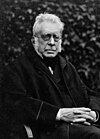
About George Peacock
George Peacock (April 9, 1791 – November 8, 1858) was an English mathematician and author of books on mathematics and a biography of Thomas Young. He became a deacon, then priest, in the Church of England, and later, Vicar of Wymewold and Dean of Ely cathedral, Cambridgeshire. He was also professor of astronomy at the University of Cambridge.