Link Copied!
Kwame Nkrumah Quotes (1909-1972)
President, Politician, Revolutionary

About Kwame Nkrumah
Kwame Nkrumah (21 September 1909 – 27 April 1972) was a Ghanaian politician, political theorist, and revolutionary. He was the first Prime Minister and President of Ghana, having led the Gold Coast to independence from Britain in 1957. An influential advocate of Pan-Africanism, Nkrumah was a founding member of the Organization of African Unity and winner of the Lenin Peace Prize from the Soviet Union in 1962.
Best Kwame Nkrumah Quotes
Shortest
Earliest
Explore our curated collection of the most famous and impactful Kwame Nkrumah quotes.

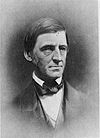
“The independence of Ghana is meaningless until it is linked to the total liberation of Africa.”

“The neo-colonialism of today represents imperialism in its final and perhaps its most dangerous stage.”


“Capitalism is too complicated a system for a newly independent nation. Hence the need for a socialistic society.”
“The difference between myself and Castro is that I am not aligned and he is; I am a socialist and he is a communist.”
“The only effective way to challenge this economic empire and to recover possession of our heritage, is for us to act on a Pan-African basis, through a Union Government.”

“"I prefer freedom in danger than servitude in tranquility"https://www.bbc.com/pidgin/tori-58639237”

“" The independence of Ghana is meaningless unless it is linked up with the total liberation of the African continent.” Source: “Africa Must Unite,” by Kwame Nkrumah.”
“The three essential components of neo-colonialism are:
1. Economic exploitation
2. Puppet governments and client states
3. Military assistance
4. Economic "aid."”
1. Economic exploitation
2. Puppet governments and client states
3. Military assistance
4. Economic "aid."”
“The critical study of the philosophies of the past should lead to the study of modern theories. For these latter, born of the fire of contemporary struggles, are militant and alive.”
“Capitalism is a development by refinement from feudalism just as feudalism is a development by refinement from slavery. Capitalism is but the gentleman's method of slavery.”

“As long as we are ruled by others we shall lay our mistakes at their door, and our sense of responsibility will remain dulled. Freedom brings responsibilities, and our experience can be enriched only by the acceptance of these responsibilities.”

“The essence of neo-colonialism is that the State which is subject to it is, in theory, independent and has all the outward trappings of international sovereignty. In reality its economic system and thus its political policy is directed from outside.”
“To the true African journalist, his newspaper is a collective organizer, a collective instrument of mobilization and a collective educator—a weapon, first and foremost, to overthrow colonialism and imperialism and to assist total African independence and unity.”
“The result of neo-colonialism is that foreign capital is used for the exploitation rather than for the development of the less developed parts of the world. Investment under neo-colonialism increases rather than decreases the gap between the rich and the poor countries of the world.”
“Today the need both to maintain a welfare state, i.e. a parasite State at home, and to support a huge and ever-growing burden of armament cost makes it absolutely essential for developed capitalist countries to secure the maximum return in profit from such parts of the international financial complex as they control.”

“For centuries, Europeans dominated the African continent. The white man arrogated to himself the right to rule and to be obeyed by the non-white; his mission, he claimed, was to "civilize" Africa. Under this cloak, the Europeans robbed the continent of vast riches and inflicted unimaginable suffering on the African people.”
“The principle of mutual inter-imperialist assistance whereby American, British, French and West German monopoly capital extends joint control over the wealth of the non-liberated zones of Africa, Latin America and Asia, finds concrete expression in the formation of interlocked international financial institutions and bodies of credit.”
Kwame Nkrumah Quotes by Topic
Find exactly what you are looking for by browsing this categorized list of Kwame Nkrumah quotes by topic.
Kwame Nkrumah on Neocolonialism 3 quotes
“The three essential components of neo-colonialism are: 1. Economic exploitation 2. Puppet governments and client states 3. Military assistance 4. Economic "aid."”
Kwame Nkrumah on Timbuktu 2 quotes
“Centres of learning at Walala, Djenna, and Timbuktu had a singular impact on African education in d medieval times.”

Kwame Nkrumah on Africa 2 quotes
“In unity lies strength. African states must unite or sell themselves out to imperialist and colonialist exploiters for a mess of pottage.”

Kwame Nkrumah on Ghana
“The independence of Ghana is meaningless until it is linked to the total liberation of Africa.”

Kwame Nkrumah on Philosophy
“The evaluation of one's own social circumstance is part of the analysis of facts and events, and this kind of evaluation is, I feel, as good a starting point of the inquiry into the relations between philosophy and society as any other. Philosophy, in understanding human society, call for an analysis of facts and events, and an attempt to see how they fit into human life, and so how they make up human experience. In this way, philosophy, like history, can come to enrich, indeed to define, the experience of man.”

Kwame Nkrumah on Foreign aid
“The methods of neo-colonialists are subtle and varied. They operate not only in the economic field, but also in the political, religious, ideological and cultural spheres.Faced with the militant peoples of the ex-colonial territories in Asia, Africa, the Caribbean and Latin America, imperialism simply switches tactics. Without a qualm it dispenses with its flags, and even with certain of its more hated expatriate officials. This means, so it claims, that it is ‘giving’ independence to its former subjects, to be followed by ‘aid’ for their development. Under cover of such phrases, however, it devises innumerable ways to accomplish objectives formerly achieved by naked colonialism. It is this sum total of these modern attempts to perpetuate colonialism while at the same time talking about ‘freedom’, which has come to be known as neo-colonialism.”

Quotes About Kwame Nkrumah
Gain deeper perspective through quotes about Kwame Nkrumah from others.
Daron Acemoglu on Kwame Nkrumah
“On the face of it, the sustained economic decline that soon set in in Ghana after independence from Britain was caused by ignorance. The British economist Tony Killick, then working as an adviser for the government of Kwame Nkrumah, recorded many of the problems in great detail. Nkrumah’s policies focused on developing state industry, which turned out to be very inefficient. Killick recalled: "The footwear factory … that would have linked the meat factory in the North through transportation of the hides to the South (for a distance of over 500 miles) to a tannery (now abandoned); the leather was to have been backhauled to the footwear factory in Kumasi, in the center of the country and about 200 miles north of the tannery. Since the major footwear market is in the Accra metropolitan area, the shoes would then have to be transported an additional 200 miles back to the South." Killick somewhat understatedly remarks that this was an enterprise “whose viability was undermined by poor siting.” The footwear factory was one of many such projects, joined by the mango canning plant situated in a part of Ghana which did not grow mangos and whose output was to be more than the entire world demand for the product. This endless stream of economically irrational developments was not caused by the fact that Nkrumah or his advisers were badly informed or ignorant of the right economic policies. They had people like Killick and had even been advised by Nobel laureate Sir Arthur Lewis, who knew the policies were not good. What drove the form the economic policies took was the fact that Nkrumah needed to use them to buy political support and sustain his undemocratic regime. Neither Ghana’s disappointing performance after independence nor the countless other cases of apparent economic mismanagement can simply be blamed on ignorance. After all, if ignorance were the problem, well-meaning leaders would quickly learn what types of policies increased their citizens’ incomes and welfare, and would gravitate toward those policies.”
The Autobiography of W.E.B. Du Bois: A Soliloquy on Viewing My Life from the Last Decade of Its First Century on Kwame Nkrumah
“big business in America, surprised by the success of the Ghana revolution set itself to influence Nkrumah. Nkrumah was invited to the United States in 1958, and treated as never a Negro had been treated by the government. Hershey, a great manufacturer of chocolate, sent a special plane to take him to his factories; and the New York Cocoa Board of Trade dined him at the Waldorf-Astoria.”
About Kwame Nkrumah
Kwame Nkrumah (21 September 1909 – 27 April 1972) was a Ghanaian politician, political theorist, and revolutionary. He was the first Prime Minister and President of Ghana, having led the Gold Coast to independence from Britain in 1957. An influential advocate of Pan-Africanism, Nkrumah was a founding member of the Organization of African Unity and winner of the Lenin Peace Prize from the Soviet Union in 1962.