Link Copied!
Maurice Merleau-Ponty Quotes (1908-1961)
Philosopher

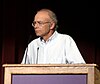



About Maurice Merleau-Ponty
Maurice Merleau-Ponty (March 14, 1908 – May 3, 1961) was a French phenomenological philosopher.
Best Maurice Merleau-Ponty Quotes
Shortest
Earliest
Explore our curated collection of the most famous and impactful Maurice Merleau-Ponty quotes.
“Language transcends us and yet, we speak.”

Unsourced — Primary work/page citation not yet verified in the QuotesCosmos archive. Per our Unnamed Sources & Verification Policy, quotes without confirmed primary editions are explicitly marked Unsourced while under editorial review.
“The world is nothing but 'world-as-meaning.'”

Unsourced — Primary work/page citation not yet verified in the QuotesCosmos archive. Per our Unnamed Sources & Verification Policy, quotes without confirmed primary editions are explicitly marked Unsourced while under editorial review.
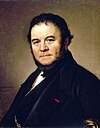
“It is a great good fortune, as Stendhal said, for one “to have his passion as a profession.””
Unsourced — Primary work/page citation not yet verified in the QuotesCosmos archive. Per our Unnamed Sources & Verification Policy, quotes without confirmed primary editions are explicitly marked Unsourced while under editorial review.
“[The sensate body possesses] an art of interrogating the sensible according to its own wishes, an inspired exegesis”
Unsourced — Primary work/page citation not yet verified in the QuotesCosmos archive. Per our Unnamed Sources & Verification Policy, quotes without confirmed primary editions are explicitly marked Unsourced while under editorial review.
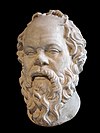
“Socrates reminds us that it is not the same thing, but almost the opposite, to understand religion and to accept it.”
Unsourced — Primary work/page citation not yet verified in the QuotesCosmos archive. Per our Unnamed Sources & Verification Policy, quotes without confirmed primary editions are explicitly marked Unsourced while under editorial review.
“Montaigne [puts] not self-satisfied understanding but a consciousness astonished at itself at the core of human existence.”
Unsourced — Primary work/page citation not yet verified in the QuotesCosmos archive. Per our Unnamed Sources & Verification Policy, quotes without confirmed primary editions are explicitly marked Unsourced while under editorial review.
“The philosopher will ask himself … if the criticism we are now suggesting is not the philosophy which presses to the limit that criticism of false gods which Christianity has introduced into our history.”

Unsourced — Primary work/page citation not yet verified in the QuotesCosmos archive. Per our Unnamed Sources & Verification Policy, quotes without confirmed primary editions are explicitly marked Unsourced while under editorial review.
“De Lubac discusses an atheism which means to suppress this searching, he says, “even including the problem as to what is responsible for the birth of God in human consciousness.””

Unsourced — Primary work/page citation not yet verified in the QuotesCosmos archive. Per our Unnamed Sources & Verification Policy, quotes without confirmed primary editions are explicitly marked Unsourced while under editorial review.
“Thinking which displaces, or otherwise defines, the sacred has been called atheistic, and that philosophy which does not place it here or there, like a thing, but at the joining of things and words, will always be exposed to this reproach without ever being touched by it.”

Unsourced — Primary work/page citation not yet verified in the QuotesCosmos archive. Per our Unnamed Sources & Verification Policy, quotes without confirmed primary editions are explicitly marked Unsourced while under editorial review.
“Hardness and softness, roughness and smoothness, moonlight and sunlight present themselves in our recollection not preeminently as sensory contents but as certain kinds of symbioses, certain ways outside has of invading us and certain ways we have of meets this invasion...”
Unsourced — Primary work/page citation not yet verified in the QuotesCosmos archive. Per our Unnamed Sources & Verification Policy, quotes without confirmed primary editions are explicitly marked Unsourced while under editorial review.
“Machiavelli is the complete contrary of a machiavellian, since he describes the tricks of power and “gives the whole show away.” The seducer and the politician, who live in the dialectic and have a feeling and instinct for it, try their best to keep it hidden.”
Unsourced — Primary work/page citation not yet verified in the QuotesCosmos archive. Per our Unnamed Sources & Verification Policy, quotes without confirmed primary editions are explicitly marked Unsourced while under editorial review.
“Thought without language, says Lavelle, would not be a purer thought; it would be no more than the intention to think. And his last book offers a theory of expressiveness which makes of expression not “a faithful image of an already realized interior being, but the very means by which it is realized.””
Unsourced — Primary work/page citation not yet verified in the QuotesCosmos archive. Per our Unnamed Sources & Verification Policy, quotes without confirmed primary editions are explicitly marked Unsourced while under editorial review.
“Philosophy is in history, and is never independent of historical discourse. But for the tacit symbolism of life it substitutes, in principle, a conscious symbolism; for a latent meaning, one that is manifest. It is never content to accept its historical situation. It changes this situation by revealing it to itself.”
Unsourced — Primary work/page citation not yet verified in the QuotesCosmos archive. Per our Unnamed Sources & Verification Policy, quotes without confirmed primary editions are explicitly marked Unsourced while under editorial review.
“By becoming the pure subject who knows the world objectively, man ultimately realizes that absolute consciousness with respect to which the body and individual existence are no longer anything but objects; death is deprived of meaning. Reduced to the status of object of consciousness, the body could not be conceived as an intermediary between "things" and the consciousness which knows them.”
Unsourced — Primary work/page citation not yet verified in the QuotesCosmos archive. Per our Unnamed Sources & Verification Policy, quotes without confirmed primary editions are explicitly marked Unsourced while under editorial review.
“Theology recognizes the contingency of human existence only to derive it from a necessary being, that is, to remove it. Theology makes use of philosophical wonder only for the purpose of motivating an affirmation which ends it. Philosophy, on the other hand, arouses us to what is problematic in our own existence and in that of the world, to such a point that we shall never be cured of searching for a solution.”
Unsourced — Primary work/page citation not yet verified in the QuotesCosmos archive. Per our Unnamed Sources & Verification Policy, quotes without confirmed primary editions are explicitly marked Unsourced while under editorial review.
“Lichtenberg … held something of the following kind: one should neither affirm the existence of God nor deny it. … It is not that he wished to leave certain perspectives open, nor to please everyone. It is rather that he was identifying himself, for his part, with a consciousness of self, of the world, and of others that was “strange” (the word is his) in a sense which is equally well destroyed by the rival explanations.”
Unsourced — Primary work/page citation not yet verified in the QuotesCosmos archive. Per our Unnamed Sources & Verification Policy, quotes without confirmed primary editions are explicitly marked Unsourced while under editorial review.
“Even those who have desired to work out a completely positive philosophy have been philosophers only to the extent that, at the same time, they have refused the right to install themselves in absolute knowledge. They taught not this knowledge, but its becoming in us, not the absolute but, at most, our absolute relation to it, as Kierkegaard said. What makes a philosopher is the movement which leads back without ceasing from knowledge to ignorance, from ignorance to knowledge, and a kind of rest in this movement.”

Unsourced — Primary work/page citation not yet verified in the QuotesCosmos archive. Per our Unnamed Sources & Verification Policy, quotes without confirmed primary editions are explicitly marked Unsourced while under editorial review.
“The function [of objective thinking] is to reduce all phenomena which bear witness to the union of subject and world, putting in their place the clear idea of the object as in itself and of the subject as pure consciousness. It therefore severs the links which unite the thing and the embodied subject, leaving only sensible qualities to make up our world (to the exclusion of the modes of appearance which we have described), and preferably visual qualities, because these give the impression of being autonomous, and because they are less directly linked to our body and present us with an object rather than introducing us into an atmosphere. But in reality all things are concretions of a setting, and any explicit perception of a thing survives in virtue of a previous communication with a certain atmosphere.”
Unsourced — Primary work/page citation not yet verified in the QuotesCosmos archive. Per our Unnamed Sources & Verification Policy, quotes without confirmed primary editions are explicitly marked Unsourced while under editorial review.
“The accidents of our bodily constitution can always play this revealing role on the condition that they become a means of extending our knowledge by the consciousness which we have of them, instead of being submitted to as pure facts which dominate us. Ultimately, El Greco's supposed visual disorder was conquered by him and so profoundly integrated into his manner of thinking and being that it appears finally as the necessary expression of his being much more than as a peculiarity imposed from the outside. It is no longer a paradox to say that "El Greco was astigmatic because he produced elongated bodies." Everything which was accidental in the individual, that is, everything which revealed partial and independent dialectics without relationship to the total signification of his life, has been assimilated and centered in his deeper life. Bodily events have ceased to constitute autonomous cycles, to follow the abstract patterns of biology and psychology, and have received a new meaning.”
Unsourced — Primary work/page citation not yet verified in the QuotesCosmos archive. Per our Unnamed Sources & Verification Policy, quotes without confirmed primary editions are explicitly marked Unsourced while under editorial review.
Maurice Merleau-Ponty Quotes by Topic
Find exactly what you are looking for by browsing this categorized list of Maurice Merleau-Ponty quotes by topic.
Maurice Merleau-Ponty on Philosophy 2 quotes
“What makes a philosopher is the movement which leads back without ceasing from knowledge to ignorance, from ignorance to knowledge, and a kind of rest in this movement.”
Unsourced — Primary work/page citation not yet verified in the QuotesCosmos archive. Per our Unnamed Sources & Verification Policy, quotes without confirmed primary editions are explicitly marked Unsourced while under editorial review.
Maurice Merleau-Ponty on Atheism 2 quotes
“The philosopher ... is well able to understand religion as one of the expressions of the central phenomenon of consciousness. But the example of Socrates reminds us that it is not the same thing, but almost the opposite, to understand religion and to accept it.”

Unsourced — Primary work/page citation not yet verified in the QuotesCosmos archive. Per our Unnamed Sources & Verification Policy, quotes without confirmed primary editions are explicitly marked Unsourced while under editorial review.
Maurice Merleau-Ponty on Religion
“Socrates reminds us that it is not the same thing, but almost the opposite, to understand religion and to accept it.”

Unsourced — Primary work/page citation not yet verified in the QuotesCosmos archive. Per our Unnamed Sources & Verification Policy, quotes without confirmed primary editions are explicitly marked Unsourced while under editorial review.
Maurice Merleau-Ponty on Critical theory
“The philosopher will ask himself … if the criticism we are now suggesting is not the philosophy which presses to the limit that criticism of false gods which Christianity has introduced into our history.”

Unsourced — Primary work/page citation not yet verified in the QuotesCosmos archive. Per our Unnamed Sources & Verification Policy, quotes without confirmed primary editions are explicitly marked Unsourced while under editorial review.
Maurice Merleau-Ponty on Esotericism
“Machiavelli is the complete contrary of a machiavellian, since he describes the tricks of power and “gives the whole show away.” The seducer and the politician, who live in the dialectic and have a feeling and instinct for it, try their best to keep it hidden.”

Unsourced — Primary work/page citation not yet verified in the QuotesCosmos archive. Per our Unnamed Sources & Verification Policy, quotes without confirmed primary editions are explicitly marked Unsourced while under editorial review.
What Maurice Merleau-Ponty Said About Others
Discover personal opinions Maurice Merleau-Ponty shared regarding contemporaries.
Maurice Merleau-Ponty on Michel de Montaigne
“Montaigne [puts] not self-satisfied understanding but a consciousness astonished at itself at the core of human existence.”

Unsourced — Primary work/page citation not yet verified in the QuotesCosmos archive. Per our Unnamed Sources & Verification Policy, quotes without confirmed primary editions are explicitly marked Unsourced while under editorial review.
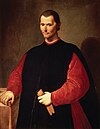
Maurice Merleau-Ponty on Niccolò Machiavelli
“Machiavelli is the complete contrary of a machiavellian, since he describes the tricks of power and “gives the whole show away.” The seducer and the politician, who live in the dialectic and have a feeling and instinct for it, try their best to keep it hidden.”
Unsourced — Primary work/page citation not yet verified in the QuotesCosmos archive. Per our Unnamed Sources & Verification Policy, quotes without confirmed primary editions are explicitly marked Unsourced while under editorial review.
Maurice Merleau-Ponty on El Greco
“The accidents of our bodily constitution can always play this revealing role on the condition that they become a means of extending our knowledge by the consciousness which we have of them, instead of being submitted to as pure facts which dominate us. Ultimately, El Greco's supposed visual disorder was conquered by him and so profoundly integrated into his manner of thinking and being that it appears finally as the necessary expression of his being much more than as a peculiarity imposed from the outside. It is no longer a paradox to say that "El Greco was astigmatic because he produced elongated bodies." Everything which was accidental in the individual, that is, everything which revealed partial and independent dialectics without relationship to the total signification of his life, has been assimilated and centered in his deeper life. Bodily events have ceased to constitute autonomous cycles, to follow the abstract patterns of biology and psychology, and have received a new meaning.”
Unsourced — Primary work/page citation not yet verified in the QuotesCosmos archive. Per our Unnamed Sources & Verification Policy, quotes without confirmed primary editions are explicitly marked Unsourced while under editorial review.
About Maurice Merleau-Ponty
Maurice Merleau-Ponty (March 14, 1908 – May 3, 1961) was a French phenomenological philosopher.