Link Copied!
Alfred Marshall Quotes (1842-1924)

About Alfred Marshall
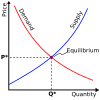
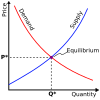
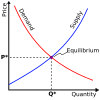
Alfred Marshall (26 July 1842 – 13 July 1924) was a British economist, considered one of the most influential economists of his time. His book, Principles of Economics (1890), was the dominant economic textbook in England for many years. It brings the ideas of supply and demand, marginal utility, and costs of production into a coherent whole. He is known as one of the founders of economics.
Best Alfred Marshall Quotes
Shortest
Earliest
Explore our curated collection of the most famous and impactful Alfred Marshall quotes.
“And thus the law may be worded:—
The marginal utility of a commodity to anyone diminishes with every increase in the amount of it he already has.”
The marginal utility of a commodity to anyone diminishes with every increase in the amount of it he already has.”

“Political Economy or Economics is a study of mankind in the ordinary business of life; it examines that part of individual and social action which is most closely connected with the attainment and with the use of the material requisites of wellbeing.”
“The increment of the commodity which he is only just induced to acquire (whether by... direct labor or by purchase) may be called its Marginal Increment; because he is on the margin of doubt whether it is worth his while to incur the outlay required to obtain it. And the benefit-giving power, or Utility, of that increment to him may be called the Marginal Utility of the commodity to him.”
“If we compare one country of the civilized world with another, or one part of England with another, or one trade in England with another, we find that the degradation of the working-classes varies almost uniformly with the amount of rough work done by women. The most valuable of all capital is that invested in human beings; and of that capital the most precious part is the result of the care and influence of the mother, so long as she retains her tender and unselfish instincts, and has not been hardened by the strain and stress of unfeminine work.”

“I am myself an uncompromising anti-Jingoe, a peace-at-almost-any-price man. Chamberlain is the only Unionist public man whom I have ever thoroughly distrusted. Excepting Napoleon, I believe that England's true greatness has had no such dangerous enemy since Lord North. When a radical, he delighted to dish his colleagues even more than to flout his opponents. He is now engaged in dishing his new colleagues and flouting his old friends.”

“I have not been able to lay my hands on any notes as to Mathematico-economics that would be of any use to you. I have very indistinct memories of what I used to think on the subject. I never read mathematics now: in fact I have even forgotten how to integrate a good many things.
But I know I had a growing feeling in the later years of my work at the subject that a good mathematical theorem dealing with economic hypotheses was very well unlikely to be good economics: and I went more and more on the rules—(1) Use mathematics as a shorthand language, rather than as an engine of inquiry. (2) Keep to them till you have done. (3) Translate into English. (4) Then illustrate by examples that are important in real life. (5) Burn the mathematics. (6) If you can’t succeed in (4), burn (3). This last I do often.”
But I know I had a growing feeling in the later years of my work at the subject that a good mathematical theorem dealing with economic hypotheses was very well unlikely to be good economics: and I went more and more on the rules—(1) Use mathematics as a shorthand language, rather than as an engine of inquiry. (2) Keep to them till you have done. (3) Translate into English. (4) Then illustrate by examples that are important in real life. (5) Burn the mathematics. (6) If you can’t succeed in (4), burn (3). This last I do often.”
“There has always been a temptation to classify economic goods in clearly defined groups, about which a number of short and sharp propositions could be made, to gratify at once the student’s desire for logical precision, and the popular liking for dogmas that have the air of being profound and are yet easily handled. But great mischief seems to have been done by yielding to this temptation, and drawing broad artificial lines of division where Nature has made none. The more simple and absolute an economic doctrine is, the greater will be the confusion which it brings into attempts to apply economic doctrines to practice, if the dividing lines to which it refers cannot be found in real life. There is not in real life a clear line of division between things that are and are not Capital, or that are and are not Necessaries, or again between labour that is and is not Productive.”

“[E]ach several want is limited, and... with every increase in the amount of a thing which a man has, the eagerness of his desire to obtain more of it diminishes; until it yields place to the desire for some other thing, of which perhaps he hardly thought, so long as his more urgent wants were still unsatisfied. There is an endless supply of wants, but there is a limit to each separate want. This familiar and fundamental law of human nature may pass by the name of the Law of Satiable Wants or the Law of Diminishing Utility.
It may be written thus:—
The Total Utility of a commodity to a person (...the total benefit or satisfaction yielded ...by it) increase with every increase in his stock of it, but not as fast as his stock increases. ...[i.e.,] the additional benefit ...from an additional increment of his stock of anything, diminishes with every increase in the stock ...”
Alfred Marshall Quotes by Topic
Find exactly what you are looking for by browsing this categorized list of Alfred Marshall quotes by topic.
Alfred Marshall on Economics 2 quotes
“Political Economy or Economics is a study of mankind in the ordinary business of life; it examines that part of individual and social action which is most closely connected with the attainment and with the use of the material requisites of wellbeing.”
Alfred Marshall on Economic methodology
Alfred Marshall on Mathematics
“I have not been able to lay my hands on any notes as to Mathematico-economics that would be of any use to you. I have very indistinct memories of what I used to think on the subject. I never read mathematics now: in fact I have even forgotten how to integrate a good many things. But I know I had a growing feeling in the later years of my work at the subject that a good mathematical theorem dealing with economic hypotheses was very well unlikely to be good economics: and I went more and more on the rules—(1) Use mathematics as a shorthand language, rather than as an engine of inquiry. (2) Keep to them till you have done. (3) Translate into English. (4) Then illustrate by examples that are important in real life. (5) Burn the mathematics. (6) If you can’t succeed in (4), burn (3). This last I do often.”
Alfred Marshall on Mathematical economics
“I have not been able to lay my hands on any notes as to Mathematico-economics that would be of any use to you. I have very indistinct memories of what I used to think on the subject. I never read mathematics now: in fact I have even forgotten how to integrate a good many things. But I know I had a growing feeling in the later years of my work at the subject that a good mathematical theorem dealing with economic hypotheses was very well unlikely to be good economics: and I went more and more on the rules—(1) Use mathematics as a shorthand language, rather than as an engine of inquiry. (2) Keep to them till you have done. (3) Translate into English. (4) Then illustrate by examples that are important in real life. (5) Burn the mathematics. (6) If you can’t succeed in (4), burn (3). This last I do often.”
Alfred Marshall on Atomic theory
“The ancient Greek philosopher, Democritus, propounded an hypothesis of the constitution of matter, and gave the name of atoms to the ultimate unalterable parts of which he imagined all bodies to be constructed. In the 17th century, Gassendi revived this hypothesis, and attempted to develope it, while Newton used it with marked success in his reasonings on physical phenomena; but the first who formed a body of doctrine which would embrace all known facts in the constitution of matter, was Roger Joseph Boscovich, of Italy, who published at Vienna, in 1759, a most important and ingenious work, styled Theoria Philosophiæ Naturalis ad unicam legem virium, in Natura existentium redacta. This is one of the most profound contributions ever made to science; filled with curious and important information, and is well worthy of the attentive perusal of the modern student. In more recent days, the theory of Boscovich has received further confirmation and extension in the researches of Dalton, Joule, Thomson, Faraday, Tyndall, and others.”

What Alfred Marshall Said About Others
Discover personal opinions Alfred Marshall shared regarding contemporaries.
Alfred Marshall on John Maynard Keynes
“I think that if you went in for the Tripos, merely re-reading Economics in the ten days before it, you would probably get a first class: & that if you did not, you wd not injure your position, since it wd.. be known that you had had very little time free for economics.”
Alfred Marshall on Roger Joseph Boscovich
“The ancient Greek philosopher, Democritus, propounded an hypothesis of the constitution of matter, and gave the name of atoms to the ultimate unalterable parts of which he imagined all bodies to be constructed. In the 17th century, Gassendi revived this hypothesis, and attempted to develope it, while Newton used it with marked success in his reasonings on physical phenomena; but the first who formed a body of doctrine which would embrace all known facts in the constitution of matter, was Roger Joseph Boscovich, of Italy, who published at Vienna, in 1759, a most important and ingenious work, styled Theoria Philosophiæ Naturalis ad unicam legem virium, in Natura existentium redacta. This is one of the most profound contributions ever made to science; filled with curious and important information, and is well worthy of the attentive perusal of the modern student. In more recent days, the theory of Boscovich has received further confirmation and extension in the researches of Dalton, Joule, Thomson, Faraday, Tyndall, and others.”

Alfred Marshall on Pierre Gassendi
“The ancient Greek philosopher, Democritus, propounded an hypothesis of the constitution of matter, and gave the name of atoms to the ultimate unalterable parts of which he imagined all bodies to be constructed. In the 17th century, Gassendi revived this hypothesis, and attempted to develope it, while Newton used it with marked success in his reasonings on physical phenomena; but the first who formed a body of doctrine which would embrace all known facts in the constitution of matter, was Roger Joseph Boscovich, of Italy, who published at Vienna, in 1759, a most important and ingenious work, styled Theoria Philosophiæ Naturalis ad unicam legem virium, in Natura existentium redacta. This is one of the most profound contributions ever made to science; filled with curious and important information, and is well worthy of the attentive perusal of the modern student. In more recent days, the theory of Boscovich has received further confirmation and extension in the researches of Dalton, Joule, Thomson, Faraday, Tyndall, and others.”

Alfred Marshall on Alfred M. Mayer
“The ancient Greek philosopher, Democritus, propounded an hypothesis of the constitution of matter, and gave the name of atoms to the ultimate unalterable parts of which he imagined all bodies to be constructed. In the 17th century, Gassendi revived this hypothesis, and attempted to develope it, while Newton used it with marked success in his reasonings on physical phenomena; but the first who formed a body of doctrine which would embrace all known facts in the constitution of matter, was Roger Joseph Boscovich, of Italy, who published at Vienna, in 1759, a most important and ingenious work, styled Theoria Philosophiæ Naturalis ad unicam legem virium, in Natura existentium redacta. This is one of the most profound contributions ever made to science; filled with curious and important information, and is well worthy of the attentive perusal of the modern student. In more recent days, the theory of Boscovich has received further confirmation and extension in the researches of Dalton, Joule, Thomson, Faraday, Tyndall, and others.”
Quotes About Alfred Marshall
Gain deeper perspective through quotes about Alfred Marshall from others.
W. Brian Arthur. "Increasing Returns on Alfred Marshall
“Our understanding of how markets and businesses operate was passed down to us more than a century ago by a handful of European economists — Alfred Marshall in England and a few of his contemporaries on the continent. It is an understanding based squarely upon the assumption of diminishing returns: products or companies that get ahead in a market eventually run into limitations, so that a predictable equilibrium of prices and market shares is reached. The theory was roughly valid for the bulk-processing, smokestack economy of Marshall’s day. And it still thrives in today’s economics textbooks. But steadily and continuously in this century, Western economies have undergone a transformation from bulk - material manufacturing to design and use of technology — from processing of resources to processing of information, from application of raw energy to application of ideas. As this shift has occurred, the underlying mechanisms that determine economic behavior have shifted from ones of diminishing to ones of increasing returns.”
Kenneth Boulding on Alfred Marshall
“One of the most important skills of the economist, therefore, is that of simplification of the model. Two important methods of simplification have been developed by economists. One is the method of partial equilibrium analysis (or microeconomics), generally associated with the name of Alfred Marshall and the other is the method of aggregation (or macro-economics), associated with the name of John Maynard Keynes.”

William Stanley Jevons on Alfred Marshall
“[Y]our letter concerning my paper... has told me much... concerning the ideas current in philosophical subjects in Cambridge. I was not aware that Marshall had so long entertained notions of a quantitative theory of political economy, and think it a pity that he has so long delayed publishing something on the subject.”

John Maynard Keynes on Alfred Marshall 2 quotes
“The study of economics does not seem to require any specialized gifts of an unusually high order. Is it not, intellectually regarded, a very easy subject compared with the higher branches of philosophy and pure science? Yet good, or even competent, economists are the rarest of birds. An easy subject, at which very few excel! The paradox finds its explanation, perhaps, in that the master-economist must possess a rare combination of gifts. He must reach a high standard in several different directions and must combine talents not often found together. He must be mathematician, historian, statesman, philosopher – in some degree. He must understand symbols and speak in words. He must contemplate the particular in terms of the general, and touch abstract and concrete in the same flight of thought. He must study the present in the light of the past for the purposes of the future. No part of man's nature or his institutions must lie entirely outside his regard. He must be purposeful and disinterested in a simultaneous mood; as aloof and incorruptible as an artist, yet sometimes as near the earth as a politician. Much, but not all, of this many-sidedness Marshall possessed. But chiefly his mixed training and divided nature furnished him with the most essential and fundamental of the economist's necessary gifts – he was conspicuously historian and mathematician, a dealer in the particular and the general, the temporal and the eternal, at the same time.”
Arthur Cecil Pigou ed. on Alfred Marshall
“Though a skilled mathematician, he used mathematics sparingly. He saw that excessive reliance on this instrument might lead us astray in pursuit of intellectual toys, imaginary problems not conforming to the conditions of real life: and further, might distort our sense of proportion by causing us to neglect factors that could not easily be worked up in the mathematical machine.”
Joan Robinson on Alfred Marshall
“Marshall did something much more effective than changing the answer. He changed the question. For Ricardo the Theory of Value was a means of studying the distribution of total output between wages, rent and profit, each considered as a whole. This is a big question. Marshall turned the meaning of Value into a little question: Why does an egg cost more than a cup of tea? It may be a small question but it is a very difficult and complicated one. It takes a lot of time and algebra to work out the theory of it. So it kept all Marshall’s pupils preoccupied for fifty years. They had no time to think about the big question, or even to remember that there was a big question, because they had to keep their noses right down to the grindstone, working out the theory of the price of a cup of tea.”

About Alfred Marshall
Alfred Marshall (26 July 1842 – 13 July 1924) was a British economist, considered one of the most influential economists of his time. His book, Principles of Economics (1890), was the dominant economic textbook in England for many years. It brings the ideas of supply and demand, marginal utility, and costs of production into a coherent whole. He is known as one of the founders of economics.