David on Jacob Maris
← Back to David Profile
“It will be observed that James [= Jacob] Maris frankly accepts the subjects which are laid to his hand - he paints nothing but what can be found in Holland at the present day, and lands foreign to Holland have never been able to induce him to portray their landscape or their inhabitants.”
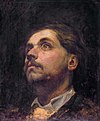
“The pictures of 1870 [during his last year in Paris] and later of James [= Jacob, in Dutch] Maris, though mostly small, show an appreciation of tone indicating how the mind of the artist was awaking. Colour he did not strive after, as in his later years, but in the general arrangement of composition, the tones of sky and landscape, can be observed the first indications of the [later] success of the painter of The Windmill, The Bridge, and a dozen other masterpieces. James Maris and his family returned to The Hague in 1871, glad no doubt to be back in the land of peace and prosperity after their semi-starvation in the beleaguered city [Paris; the end of the Commune and the war with Germany]”
“James Maris also was always honoured in the 'Boulevard' [so they called the 'little place' of art-dealer Goupil, near the Cafe Richelieu at Boulevard Montmartre], and although he went back to the Hague soon after the close of the war [1871], his relations with the Goupils continued until his death, greatly fostered by the courageous manager of the branch house in Holland, Mr. H. G. Tersteeg. From this time onwards the story of the life of James Maris is the experience of every successful artist who has found his metier and reached his market. Under the farseeing guidance of Mr. Tersteeg, James [= Jacob, in Dutch] Maris had little further anxiety even in the rearing and educacating of his numerous family.”