Link Copied!
Margaret Caroline Anderson Quotes (1886-1973)
Writer
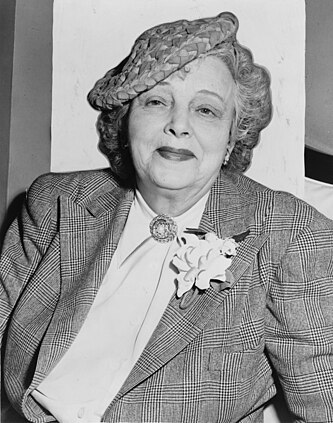
About Margaret Caroline Anderson
Margaret Caroline Anderson (November 24, 1886 – October 18, 1973) was founder and editor of the celebrated literary magazine The Little Review, which published modern American, English and Irish writers between 1914 and 1929.
Best Margaret Caroline Anderson Quotes
Shortest
Earliest
Explore our curated collection of the most famous and impactful Margaret Caroline Anderson quotes.
“Intellectuals are too sentimental for me.”
“People with heavy physical vibrations rule the world.”
“It has been years since I have seen anyone who could even look as if he were in love. No one's face lights up any more except for political conversation.”

“Life seems to be an experience in ascending and descending. You think you're beginning to live for a single aim — for self-development, or the discovery of cosmic truths — when all you're really doing is to move from place to place as if devoted primarily to real estate.”
“How can anyone be interested in war? — that glorious pursuit of annihilation with its ceremonious bellowings and trumpetings over the mangling of human bones and muscles and organs and eyes, its inconceivable agonies which could have been prevented by a few well-chosen, reasonable words. How, why, did this unnecessary business begin? Why does anyone want to read about it — this redundant human madness which men accept as inevitable? If you're involved in it, you die; if you read about it, you can't sleep.”

“I was born to be an editor, I always edit everything. I edit my room at least once a week. Hotels are made for me. I can change a hotel room so thoroughly that even its proprietor doesn't recognize it... I edit people's clothes, dressing them infallibly in the right lines... I change everyone's coiffure — except those that please me — and these I gaze at with such satisfaction that I become suspect, I edit people's tones of voice, their laughter, their words. I change their gestures, their photographs. I change the books I read, the music I hear... It's this incessant, unavoidable observation, this need to distinguish and impose, that has made me an editor. I can't make things. I can only revise what has been made.”

Quotes About Margaret Caroline Anderson
Gain deeper perspective through quotes about Margaret Caroline Anderson from others.
Margaret S Marsh on Margaret Caroline Anderson 2 quotes
“The quality in the anarchists that Anderson found most appealing was their explosive individualism, a trait she shared. Deliberately, provokingly, and often charmingly outrageous, Anderson never concerned herself with public opinion. Her unconventionality in this regard endeared her to Emma Goldman, who had begun to enjoy the attention and homage of the young middle-class rebels who formed the core of the new bohemia. Anderson's anarchism in fact stemmed directly from her friendship with Goldman. Anderson remained an anarchist for three years. Her drift away from the movement was actuated by her realization that Goldman and Alexander Berkman were human beings with frailties as well as strengths, not superbeings whom she could worship uncritically … Anderson never entered the mainstream of the movement. Despite her later assertion that during her years as an anarchist she found "people in clean collars uninteresting" and that she "even accepted smells, personal as well as official," since "everyone who came to the studio smelled of machine oil or herring." Anderson actually spent most of her time with the movement's leaders." An elitist, she was simply drawn to people who emanated powerful individual strength or who seemed to her unique. Further, anarchism for her had all the romanticism of a lost cause. Involved with the movement between 1914 and 1917, during its decline, Anderson believed herself a member of an elite community, not a participant in a rebellion of the masses. In one sense, Margaret Anderson can be viewed as the personification of the alienated artist or intellectual attracted to radical causes as a by-product of her aesthetic rebellion. While others who had a greater sense of social purpose turned to socialism, her wildly emotional individualism led her directly to the anarchists. As long as the anarchists as individuals retained their fascination for her, she immersed herself in their cause; when they exhibited human weakness, she became disillusioned. Needing to worship, she was not content merely to participate.”
About Margaret Caroline Anderson
Margaret Caroline Anderson (November 24, 1886 – October 18, 1973) was founder and editor of the celebrated literary magazine The Little Review, which published modern American, English and Irish writers between 1914 and 1929.