Link Copied!
Clarice Lispector Quotes (1920-1977)
Writer
About Clarice Lispector
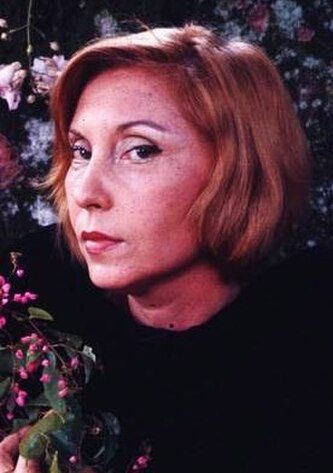
Clarice Lispector (born Chaya Pinkhasivna Lispector; December 10, 1920 – December 9, 1977) was a Brazilian writer. Acclaimed internationally for her innovative novels and short stories, she was also a journalist and a translator. A legendary figure in Brazil, renowned for her uncommon and unique writing style, her great personal beauty — the American translator Gregory Rabassa recalled being "flabbergasted to meet that rare person who looked like Marlene Dietrich and wrote like Virginia Woolf," — and her eccentric personality.
Best Clarice Lispector Quotes
Shortest
Earliest
Explore our curated collection of the most famous and impactful Clarice Lispector quotes.







“I am not a professional writer, because I write only when I want to.”


“There it is, the sea, the most incomprehensible of non-human existences.”
“He who emphasizes the ritual of faith can lose the point of faith. (p141)”

“I must live little by little, it's no good living everything at once. (p27)”

“...danger is what makes life precious.
Death is the constant danger of life.”
Death is the constant danger of life.”

“As for Martim, he had time. In fact, he seemed to have discovered time. (Chapter 10)”
“Let the author beware of popularity, otherwise he will be defeated by success. (p144)”

Clarice Lispector Quotes by Topic
Find exactly what you are looking for by browsing this categorized list of Clarice Lispector quotes by topic.
Clarice Lispector on Yes
“Everything in the world began with a yes. One molecule said yes to another molecule and life was born.”
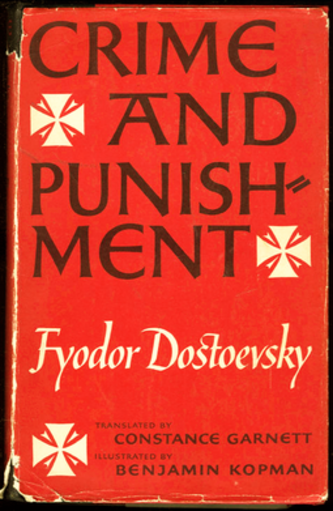
Clarice Lispector on Crime and Punishment
“(You never felt a violent impact from a book?) CL: A bit, sometimes. I felt it with “Crime and Punishment,” by Dostoyevsky, which gave me a real fever.”

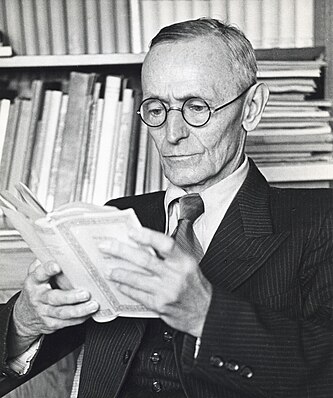
Clarice Lispector on Steppenwolf
“I read that when I was thirteen. It had a huge impact on me, it gave me a terrible fever, and I started to write...“Steppenwolf” turned me upside down.”
Quotes About Clarice Lispector
Gain deeper perspective through quotes about Clarice Lispector from others.
Marjorie Agosín fragment of the poem "Clear Clarice" on Clarice Lispector
Marjorie Agosín Introduction on Clarice Lispector
“Clarice Lispector has been, without doubt, one of the most original and extraordinary voices of Brazilian literature and of Latin American literature generally. Since her death, she has become a literary icon, not only in Latin America, but in Europe as well, especially thanks to the work of the feminist critic Helene Cixous. Lispector's literary presence has been reaffirmed in the last ten years, and not just because of her death, but rather because of her exquisitely sensirive prose.”
Katrina Dodson on Clarice Lispector
“What remains constant is the intimate physicality of Clarice's voice-its strong rhythms and the way she seems to be whispering in your ear like a sister, mother, and lover, somehow touching you from far away. Part of her rhythm comes from a fondness for repetition: refrains that produce an incantatory feel or thematic crescendo, anaphoric structures that lend a biblical tone, the slapstick effect of a repeated catchphrase, or the compulsive reiterations of an obsessive mind, like Laura's in "The Imitation of the Rose." Her words hold onto a sensory coherence, even when their semantic logic threatens to come undone. Clarice inspires big feelings. As with "the rare thing herself" from "The Smallest Woman in the World," those who love her want her for their very own. But no one can claim the key to her entirely, not even in the Portuguese. She haunts us each in different ways.”
Rachel Kushner used as blurb for on Clarice Lispector
“Clarice lispector had a diamond-hard intelligence, a visionary instinct, and a sense of humor that veered from naif wonder to wicked comedy...She attempts to capture what it is to think our existence as we are in it-in the marvelous scandal, as Lispector puts it, of life. An astounding body of work that has no real corollary inside literature or outside it.”
Lorrie Moore used as on Clarice Lispector
“Lispector reads with lively intelligence and is terrifically funny. Language, for her, was the self’s light.”
Grace Paley "Language on Clarice Lispector 2 quotes
“Clarice Lispector spent the first two months of her life in the town of Chechelnik in Ukraine. This is a small, short fact. The interesting question, unanswered in the places I've looked for it, is: At what age did she enter the Portuguese language? And how much Russian did she bring with her? Any Yiddish? Sometimes I think this is what her work is about . . . one language trying to make itself at home in another. Sometimes there's hospitality, sometimes a quarrel”
Parul Sehgal on Clarice Lispector
Judith Thurman used as blurb for on Clarice Lispector
“Everything about Clarice Lispector was unlikely: her great beauty, her early fame, her unique voice, her status as an icon to Brazilians, her passions and masks, and her family history as the daughter of destitute Jews who barely escaped the murderous pogroms of their native Ukraine to settle in Recife. Perhaps as important to modern literature as Virginia Woolf.”
Colm Tóibín used as blurb for on Clarice Lispector
“Lispector had an ability to write as though no one had ever written before. One of the hidden geniuses of the twentieth century, in the same league as Flann O'Brien, Borges, and Pessoa utterly original and brilliant. haunting and disturbing.”
Luisa Valenzuela on Clarice Lispector
“Women's place is unfortunately the place society will allow us to have, for the time being. There are very fine women writers such as Clarice Lispector, who was an extraordinary writer and should have been part of the Boom. She belonged to the same generation as Cabrera Infante, so why was she not included in the Boom? Because she was a woman.”

Nelson H. Vieira on Clarice Lispector
““I can’t sum myself up because it’s impossible to add up a chair and two apples. I’m a chair and two apples. And I don’t add up,” states the female narrator of Clarice Lispector’s novel Agua Viva (The Stream of Life) as she pursues a narrative quest of self-discovery only to realize that her identity is compound and words cannot always convey what she actually feels. If the apple symbolizes knowledge and the chair an aspect of domesticity, this voice is affirming that she is greater than her gender. Despite an intense struggle with words, Lispector’s female protagonists nevertheless burst forth, sparked by unexpected epiphanies that lead them to probe their existential condition with a self-conscious awareness of the limitations of language and of their beleaguered situations. These narrator/protagonists also manifest experiences of displacement and otherness that, rather than inducing alienation, expand the knowledge of self, as exemplified by the words of another female narrator, GH: “He who lives totally is living for others.” Lispector’s prose also transmits the evocative and spiritual sense of the ineffable, an openness to a form of mystical and linguistic reception that transcends the concreteness of the written word to enable her characters and readers to experience a lyrical sense of the sublime, the “unsayable,” which scholar and theologian Abraham Joshua Heschel, in Man Is Not Alone (1951), recognized as “the root of man’s creative activities in art, thought and noble living.””
Edmund White used as blurb for on Clarice Lispector
“Glamorous, cultured, moody, Lispector is an emblematic twentieth-century artist who belongs in the same pantheon as Kafka and Joyce”
About Clarice Lispector
Clarice Lispector (born Chaya Pinkhasivna Lispector; December 10, 1920 – December 9, 1977) was a Brazilian writer. Acclaimed internationally for her innovative novels and short stories, she was also a journalist and a translator. A legendary figure in Brazil, renowned for her uncommon and unique writing style, her great personal beauty — the American translator Gregory Rabassa recalled being "flabbergasted to meet that rare person who looked like Marlene Dietrich and wrote like Virginia Woolf," — and her eccentric personality.