Link Copied!
Henrietta Swan Leavitt Quotes (1868-1921)
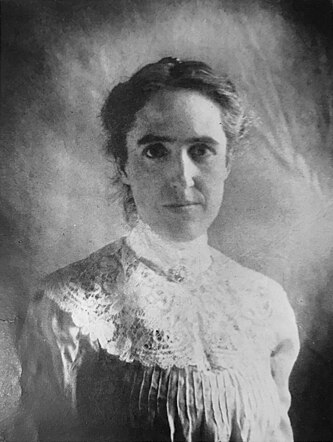
About Henrietta Swan Leavitt
Henrietta Swan Leavitt (July 4, 1868 – December 12, 1921) was the American astronomer who discovered the relationship between the luminosity and the period of Cepheid variable stars. She made this discovery, among others, while employed at the Harvard College Observatory as a human computer examining photographic plates to measure and catalog the brightness of stars.
Best Henrietta Swan Leavitt Quotes
Shortest
Earliest
Explore our curated collection of the most famous and impactful Henrietta Swan Leavitt quotes.
Unsourced — Primary work/page citation not yet verified in the QuotesCosmos archive. Per our Unnamed Sources & Verification Policy, quotes without confirmed primary editions are explicitly marked Unsourced while under editorial review.
“It is hoped that systematic study of the light changes of all the variables, nearly two thousand in number, in the two Magellanic Clouds may soon be undertaken at this Observatory.”
Unsourced — Primary work/page citation not yet verified in the QuotesCosmos archive. Per our Unnamed Sources & Verification Policy, quotes without confirmed primary editions are explicitly marked Unsourced while under editorial review.
“It is worthy of notice that in Table VI the brighter variables have the longer periods. It is also noticeable that those having the longest periods appear to be as regular in their variations as those which pass through their changes in a day or two.”
Unsourced — Primary work/page citation not yet verified in the QuotesCosmos archive. Per our Unnamed Sources & Verification Policy, quotes without confirmed primary editions are explicitly marked Unsourced while under editorial review.
“Apparently no sharp dividing line can be drawn between true Algol stars and those whose variations are continuous. Periods of nine variables in this region, which are of the Algol type or closely resemble it, have been determined and are here discussed.”
Unsourced — Primary work/page citation not yet verified in the QuotesCosmos archive. Per our Unnamed Sources & Verification Policy, quotes without confirmed primary editions are explicitly marked Unsourced while under editorial review.
“Since the [ Cepheid] variables are probably at nearly the same distance from the Earth, their periods are apparently associated with their actual emission of light, as determined by their mass, density, and surface brightness.”
Unsourced — Primary work/page citation not yet verified in the QuotesCosmos archive. Per our Unnamed Sources & Verification Policy, quotes without confirmed primary editions are explicitly marked Unsourced while under editorial review.
“The discovery of variable stars, at this Observatory and elsewhere, has progressed so rapidly during the last five years, that the difficulty of keeping pace in observing and discussing them has become very great. In the study of distribution now in progress here, the actual time devoted to the search for new variables is small, but thorough observation requires much time, while the discussion of results may be prolonged almost indefinitely. When new lists of variables are published, therefore, it should be remembered that their discovery does not interfere materially with the study of individual objects. The number of these is so large that the publication of full results for all must be greatly delayed.”
Unsourced — Primary work/page citation not yet verified in the QuotesCosmos archive. Per our Unnamed Sources & Verification Policy, quotes without confirmed primary editions are explicitly marked Unsourced while under editorial review.
“A remarkable relation between the brightness of these [ Cepheid] variables and the length of their periods will be noticed. In H.A. 60, No.4, attention was called to the fact that the brighter variables have the longer periods, but at that time it was felt that the number was too small the drawing of general conclusions. The periods of 8 additional variables which have been determined since that time, however, conform to the same law. The relation is shown graphically in Figure 1... The two resulting curves, one for the maxima and one for the minima, are surprisingly smooth, and of remarkable form. In Figure 2, the abscissas are equal to the logarithms of the periods, and the ordinates to the corresponding magnitudes, as in Figure 1. A straight line can readily be drawn among each of the two series of points corresponding to the maxima and minima, thus showing that there is a simple relation between the brightness of the variables and their periods. The logarithm of the period increases by about 0.48 for each increase of one magnitude in brightness.”
Unsourced — Primary work/page citation not yet verified in the QuotesCosmos archive. Per our Unnamed Sources & Verification Policy, quotes without confirmed primary editions are explicitly marked Unsourced while under editorial review.
“The range of H 1255 is only four tenths of a magnitude, and on account of its brightness it is difficult to observe on all plates except those taken with the 1-inch Cooke lens. It seemed necessary, therefore, to take unusual precautions in order to secure accurate observations, and to give each one its full weight. Accordingly, one hundred and thirty six photographs were selected, including nearly all of those taken with the Cooke lens, and also those taken with the 8 inch Bache Telescope on which the variable was certainly faint. Four independent estimates of brightness were made on each plate, and means were taken, thus reducing the probable error one half. The phase was computed for each observation, thus covering all parts of the light curve. ...H 1255 and H 1303 differ from the other variables in a marked degree as in each case the duration of the phase of minimum is very long in proportion to the length of the period. This fact led to considerable difficulty in determining their periods as they were apparently at their minimum brightness for some time before and after the actual minima occurred. In H 1255, the change in brightness is obviously continuous throughout the period, although it is much more rapid near minimum than near maximum. This is clearly seen in Plate IV, Figs. 5 and 6.”
Unsourced — Primary work/page citation not yet verified in the QuotesCosmos archive. Per our Unnamed Sources & Verification Policy, quotes without confirmed primary editions are explicitly marked Unsourced while under editorial review.
Quotes About Henrietta Swan Leavitt
Gain deeper perspective through quotes about Henrietta Swan Leavitt from others.
Solon I. Bailey on Henrietta Swan Leavitt 5 quotes
“A determination of the visual magnitudes of the stars had a very large place in the work of the Observatory during the first half of Professor Pickering's directorate. As soon as the need of photographic magnitudes became urgent, the importance of a standard sequence, from which the photographic magnitudes could be derived for stars anywhere in the sky, became evident. A sequence of stars of varying magnitudes had been early selected near the North Pole, and the determination of the magnitudes of the stars involved was assigned to Miss Leavitt. This work was carried out with unusual originality, skill, and patience.”
Unsourced — Primary work/page citation not yet verified in the QuotesCosmos archive. Per our Unnamed Sources & Verification Policy, quotes without confirmed primary editions are explicitly marked Unsourced while under editorial review.
Jeremy Bernstein on Henrietta Swan Leavitt
“Apart from her few and very important scientific papers, Leavitt left behind almost no traces of her life. She was born on the Fourth of July 1868 in Lancaster, Mass., and died of cancer on Dec. 12, 1921. Her will tells nearly all. She left an estate worth $314.91, mostly in Liberty Bonds, with a few items such as a desk valued at $5. She never married and had few living relatives. She also left behind a legacy of a great astronomical discovery.”
Unsourced — Primary work/page citation not yet verified in the QuotesCosmos archive. Per our Unnamed Sources & Verification Policy, quotes without confirmed primary editions are explicitly marked Unsourced while under editorial review.
Bill Bryson on Henrietta Swan Leavitt
“Hubble tackled two of the most fundamental questions of the universe: how old is it, and how big? To answer both it is necessary to know two things—how far away certain galaxies are and how fast they are flying away from us. The red shift gives the speed at which galaxies are retiring, but doesn't tell us how far away they are to begin with. For that you need what are known as "standard candles"—stars whose brightness can be reliably calculated and used as benchmarks... Hubble's luck was to come along soon after an ingenious woman named Henrietta Swan Leavitt had figured out a way to do so.”

Unsourced — Primary work/page citation not yet verified in the QuotesCosmos archive. Per our Unnamed Sources & Verification Policy, quotes without confirmed primary editions are explicitly marked Unsourced while under editorial review.
David H. Clark on Henrietta Swan Leavitt
“As a senior in 1892 Leavitt was introduced to astronomy. She was fascinated by it, and after graduation she enrolled in a course to study the subject full time. Tragically Henrietta Leavitt was suddenly struck down by a serous illness, and she was forced to spend over two years at home recovering. Her illness left her profoundly deaf. ...when she felt fit enough she put forward her name in 1895 as a volunteer worker at Harvard College Observatory.”
Unsourced — Primary work/page citation not yet verified in the QuotesCosmos archive. Per our Unnamed Sources & Verification Policy, quotes without confirmed primary editions are explicitly marked Unsourced while under editorial review.
John Gribbin on Henrietta Swan Leavitt
“The photographic plates from Peru that Leavitt was studying in Harvard covered two clouds of stars, known as the Large and Small Magellanic Clouds... During the course of her painstaking work, Leavitt noticed that the Cepheids in the Small Magellanic Cloud (SMC) showed an overall pattern of behaviour in which the brighter Cepheids... went through their cycle more slowly. The initial discovery was reported in 1908, and by 1912 Leavitt had enough data to pin down this period-luminosity relationship in a mathematical formula, established from her study of twenty-five Cepheids in the SMC. ...Leavitt found a clear mathematical relationship between the apparent brightness of a Cepheid in the SMC and its period... This could only mean that the absolute magnitudes of Cepheids are related to one another in the same way, since the distance effect is essentially the same for all of the Cepheids in the SMC. All that was needed now was to find the distance to just one or two Cepheids in our neighborhood... so that distances... could be worked out from the period-luminosity law that Leavitt had discovered.”
Unsourced — Primary work/page citation not yet verified in the QuotesCosmos archive. Per our Unnamed Sources & Verification Policy, quotes without confirmed primary editions are explicitly marked Unsourced while under editorial review.
About Henrietta Swan Leavitt
Henrietta Swan Leavitt (July 4, 1868 – December 12, 1921) was the American astronomer who discovered the relationship between the luminosity and the period of Cepheid variable stars. She made this discovery, among others, while employed at the Harvard College Observatory as a human computer examining photographic plates to measure and catalog the brightness of stars.