Link Copied!
Jovita Idar Quotes (1885-1946)
Activist, King
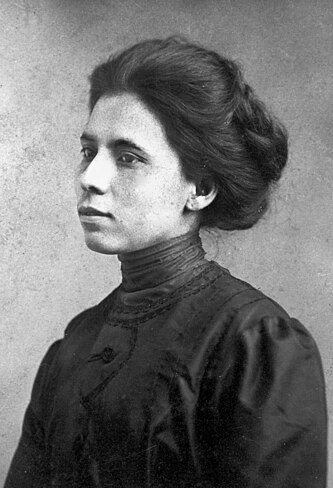
About Jovita Idar
Jovita Idar Vivero (September 7, 1885 – June 15, 1946) was a Mexican American journalist, teacher, political activist, and civil rights worker who championed the cause of Mexican Americans and Mexican immigrants. Against the backdrop of the Mexican Revolution, which lasted a decade from 1910 through 1920, she worked for a series of newspapers, using her writing to work towards making a meaningful and effective change. She began her career in journalism at La Crónica, her father's newspaper in Laredo, Texas, her hometown.
Best Jovita Idar Quotes
Shortest
Earliest
Explore our curated collection of the most famous and impactful Jovita Idar quotes.
“It is certain that we are in the country of business and that "time is money," but although history and geography are not indispensable to earn a living, they are good for the preservation of our patriotism.”


“The Mexican children in Texas need to be educated. Neither our government nor that of the U.S.A. can do anything for them, and there remains no other recourse than to undertake it through our own efforts, in exchange for not continuing to be despised and humiliated by the foreigners who surround us.”

“The working woman, by recognizing her rights, raises her head in pride and gets ready for the struggle. The time of her degradation has passed, she is no longer the slave sold for a few coins, she is no longer the servant of, but the equal to man, his partner, by his being her natural protector, and not her lord and master.”
“Men flatter the vanity of those women who seek praise, who always want to be complimented and enthroned because they know their weak side, but the woman who is pure, with her own chastity she is protected, because men, no matter how uneducated they are, always respect the woman who shows herself to be worthy of respect. The woman should always try to acquire useful and beneficial knowledge, because in these modern times she has wide horizons; the sciences, industries, workshops, and even her very home demand her better abilities, her perseverance and consistency in her work, and her influence and aid for everything that is progress and advancement for humanity.”

“Nations disappear and lineage sinks into oblivion once the national language is forgotten; that is why the Aztecs do not exist anymore as a nation. Rome had so much influence in all the nations that it had conquered because of its language, and if the Jews are not a nation today it is because each one of them speaks the language of the land they inhabit. We do not say that English should not be taught to Mexican-Texan children, it is very fortunate, we do say that it should not be forgotten to teach them Spanish, just as arithmetic and grammar is useful to them, English is useful to those who live among those who speak that language. We are all shaped by our surroundings: we love the things that we have seen since our childhood and we believe in what was infused into our spirit since the first years of our lives; therefore, if in the American schools that our children attend they are taught the biography of Washington and not that of Hidalgo and if instead of the glorious acts of Juárez they are told of the accomplishments of Lincoln, no matter how noble and just they might be, that child will never know the glories of his country, he will not love it, and will even look with indifference at the countrymen of his parents.”

Quotes About Jovita Idar
Gain deeper perspective through quotes about Jovita Idar from others.
Martha P. Cotera on Jovita Idar
“Chicana feminist activities in the 1904 to 1920 period were channeled through civil rights activities and labor organization work. Some outstanding women were Jovita Idar, a journalist and civil rights worker from Laredo, Texas; Soledad Peña, orator and educator; María Renteria; and María Villarreal. These women were speakers and participants in a historical civil rights conference, the Primer Congreso Mexicanista. On October 15, 1911 they also founded the Liga Femenil Mexicanista.”
Jessica Enoch on Jovita Idar 3 quotes
“Scholar Jose Limón explains that through the newspaper, the Idars launched a "campaign of journalistic resistance" in which the press and its contributors actively fought the "social conditions oppressing Texas-Mexicans"”
Clara Lomas on Jovita Idar
“At the turn of the century, Sara Estela Ramírez, the Villarreal sisters, Leonor Villegas de Magnón, Jovita Idar and the staff members of La Voz de la Mujer and Pluma Roja were organic intellectuals of their times who revealed different discursive positionings of women within their societies, positionings informed by the master narratives of nationalism, religion and anarchism. Until now these women's work as publishers and their written contributions have remained virtually unrecognized. Either because of political affiliations or gender discrimination, their work has not been recognized in Mexico. In the United States, these factors, as well as linguistic biases, have relegated their work to oblivion. These women's stories and their publishing efforts, nonetheless, capture the realities of a people, the significance of whose daily existence transcends the limitations imposed by political and national borders.”
Elizabeth Martinez on Jovita Idar
“A Brave Journalist:While many mexicanas fought for justice against the dictatorship in Mexico, others struggled against Anglo injustice in Texas. Born in Laredo to an activist family, Jovita Idar soon joined the struggle against racist discrimination inflicted on tejanos. She was enraged by school segregation, lower wages than Anglos, and horrible lynchings. Texas Rangers were responsible for 5,000 tejanos killed in 1914-19, a state investigation revealed. Working at La Crónica and three other Texas newspapers, Jovita exposed the abuse. When Rangers came to close down La Crónica, she stood in the doorway blocking them. Her courage extended to many other fronts. She also worked as a teacher and served as a nurse in the Mexican revolution.”

Vicki L. Ruiz on Jovita Idar
“Tejana socialist labor leader and political activist Sara Estela Ramirez would not live to participate in El Primer Congreso Mexicanista held the following year. Ramirez's ideas, however, would resonate in the words of her compañeras. Composed of South Texas residents, this Congreso was the first civil rights assembly among Spanish-speaking people in the United States. With delegates representing community organizations and interests from both sides of the border, its platform addressed discrimination, land loss, and lynching. Women delegates, such as Jovita Idar, Soldedad Peña, and Hortensia Moncaya, spoke to the concerns of Tejanos and Mexicanos.”
About Jovita Idar
Jovita Idar Vivero (September 7, 1885 – June 15, 1946) was a Mexican American journalist, teacher, political activist, and civil rights worker who championed the cause of Mexican Americans and Mexican immigrants. Against the backdrop of the Mexican Revolution, which lasted a decade from 1910 through 1920, she worked for a series of newspapers, using her writing to work towards making a meaningful and effective change. She began her career in journalism at La Crónica, her father's newspaper in Laredo, Texas, her hometown.