Link Copied!
John Buchan Quotes (1875-1940)
Poet, Politician, Novelist




About John Buchan
John Buchan, 1st Baron Tweedsmuir (26 August 1875 – 11 February 1940) was a Scottish novelist, poet, and politician who was Governor-General of Canada from 1935 to 1940.
Best John Buchan Quotes
Shortest
Earliest
Explore our curated collection of the most famous and impactful John Buchan quotes.



“The secret of life is to find out what one really wants.”

“It is only a dying cause which can attain to perfect taste.”
“The Simple Life is the last refuge of complicated and restless souls.”


“He disliked emotion, not because he felt lightly, but because he felt deeply.”
“It's the Idea that wins every time — the Idea with brains and guts behind it.”



“Every man at the bottom of his heart believes that he is a born detective.”


“The robe of flesh wears thin, and with the years God shines through all things.”
“I have heard an atheist defined as a man who had no invisible means of support.”
John Buchan Quotes by Topic
Find exactly what you are looking for by browsing this categorized list of John Buchan quotes by topic.
John Buchan on Taste (sociology)
“It is only a dying cause which can attain to perfect taste.”
John Buchan on Atheism
“I have heard an atheist defined as a man who had no invisible means of support.”

John Buchan on Joy
John Buchan on Happiness
John Buchan on Intelligibility
“Space is not an empty homogeneous medium, but full of intricate differences, intelligible and real, though not with our common reality.”

John Buchan on Statesmanship
“Statesmanship […] must consider first the fortunes of the common people. No statesman has a right to risk these fortunes unless he be reasonably assured of success.”

John Buchan on History
“History gives us a kind of chart, and we dare not surrender even a small rushlight in the darkness. The hasty reformer who does not remember the past will find himself condemned to repeat it.”

John Buchan on Rationalism
“In our modern world we have seen inaugurated the reign of a dull bourgeois rationalism, which finds some inadequate reason for all things in heaven and earth and makes a god of its own infallibility.”
John Buchan on Civilization
“You think that a wall as solid as the earth separates civilization from barbarism. I tell you the division is a thread, a sheet of glass. A touch here, a push there, and you bring back the reign of Saturn.”

John Buchan on Saturn
“You think that a wall as solid as the earth separates civilization from barbarism. I tell you the division is a thread, a sheet of glass. A touch here, a push there, and you bring back the reign of Saturn.”

John Buchan on Saturn (Astrology)
“You think that a wall as solid as the earth separates civilization from barbarism. I tell you the division is a thread, a sheet of glass. A touch here, a push there, and you bring back the reign of Saturn.”

John Buchan on Mystery fiction
John Buchan on Sacrosanct
“Democracy is a spiritual testament and not an economic structure of a political machine; it was a testament with basic beliefs: that the personality was sacrosanct, which was the meaning of liberty; that policy should be settled by free discussion; that normally a minority should be ready to yield to a majority, which in turn should respect a minority’s sacred things.”

John Buchan on Democracy
“When I examined my political faith I found that my strongest belief was in democracy according to my own definition. Democracy—the essential thing as distinguished from this or that democratic government—was primarily an attitude of mind, a spiritual testament, and not an economic structure or a political machine. The testament involved certain basic beliefs—that the personality was sacrosanct, which was the meaning of liberty; that policy should be settled by free discussion; that normally a minority should be ready to yield to a majority, which in turn should respect a minority's sacred things. It seemed to me that democracy had been in the past too narrowly defined and had been identified illogically with some particular economic or political system such as laissez-faire or British parliamentarism. I could imagine a democracy which economically was largely socialist and which had not our constitutional pattern.”

What John Buchan Said About Others
Discover personal opinions John Buchan shared regarding contemporaries.
John Buchan on Daniel Morgan
“This untutored son of the frontier was the only general in the American Revolution, on either side, to produce a significant original tactical thought.”
John Buchan on Robert Louis Stevenson
“The writer of modern times who seems to us most like the "simple great ones gone," Robert Louis Stevenson, owes much of his excellence to his modesty in being subject to restraint and his good sense in burdening himself with no partial doctrines to expound.”
John Buchan on Archibald Primrose, 5th Earl of Rosebery
“His eye kept watch too constantly over man's mortality. He told the people of Bristol on one occasion that Burke's exclamation, "What shadows we are and what shadows we pursue!" summed up "the life of every politician and perhaps of every man." Behind all his exterior urbanity and humour lay this haunting sense of transience, and, while to the world he seemed like some polished eighteenth-century grandee, at heart he was the Calvinist of seventeenth-century Scotland.”
John Buchan on Oliver Cromwell
“A devotee of law, he was forced to be often lawless; a civilian to the core, he had to maintain himself by the sword; with a passion to construct, his task was chiefly to destroy; the most scrupulous of men, he had to ride roughshod over his own scruples and those of others; the tenderest, he had continually to harden his heart; the most English of our greater figures, he spent his life in opposition to the majority of Englishmen; a realist, he was condemned to build that which could not last.”
John Buchan on Arthur Balfour
“One key to the understanding of Arthur Balfour was his conversation. Unhesitatingly I should put him down as the best talker I have ever known, one whose talk was not a brilliant monologue or a string of epigrams, but a communal effort which quickened and elevated the whole discussion and brought out the best of other people. He would take the hesitating remark of a shy man and discover in it unexpected possibilities, would probe it and expand it until its author felt that he had really made some contribution to human wisdom.”

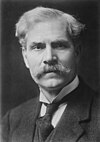
John Buchan on Ramsay MacDonald
“The Prime Minister had always had that gift of imagination, that touch of the quixotic, which might be called Scottish rather than Celtic, because it was the birthright of all their people. He had dreamed dreams which perhaps were not the dreams of many of them, but at any rate he had always had vision and a long perspective in life. There was a great deal of the Covenanter in him, and there was a great deal of the Cavalier. He had an acute sense of the past, and history was a living thing to him; but at the same time he was no drab antiquarian. He embodied, too, all their local affections, and he was a Highlander by descent and by domicile.”
Quotes About John Buchan
Gain deeper perspective through quotes about John Buchan from others.
Jeremy Black on John Buchan
“Alongside politicians and the press, writers of fiction picked up the theme of a sinister Communist threat, a theme that drew on the intelligence wars between the Soviet Union and the West. John Buchan, a Scottish novelist who had served in intelligence during World War One before becoming an MP, saw the hidden hand of a Communist plot to take over the world. In her novel The Big Four (1927), Agatha Christie, a successful British novelist, referred to ‘the world-wide unrest, the labour troubles that beset every nation, and the revolutions that break out in some’. The sense of menace played an important role in imaginative fiction. It took forward the pre-war strand of spy fiction, but added a theme of social disorder. There was also frequently a racial dimension, with a tendency to depict hostile figures as Slav and Jewish, frequently in league with sinister elements in British (or French or American) society. This theme drew on a broader hostility to Jews that was given renewed energy by the association of the Russian Revolution in hostile eyes with them. Russian émigrés spread this assessment. In turn, there was similar material in the Soviet Union about Western plots to overthrow the Revolution, a theme that long continued.”
Misattributed Quotes
Quotes mistakenly credited to John Buchan
“The best prayers have often more groans than words.”
About John Buchan
John Buchan, 1st Baron Tweedsmuir (26 August 1875 – 11 February 1940) was a Scottish novelist, poet, and politician who was Governor-General of Canada from 1935 to 1940.